












Blog
Blog

Best Acoustic Rafts for Offices
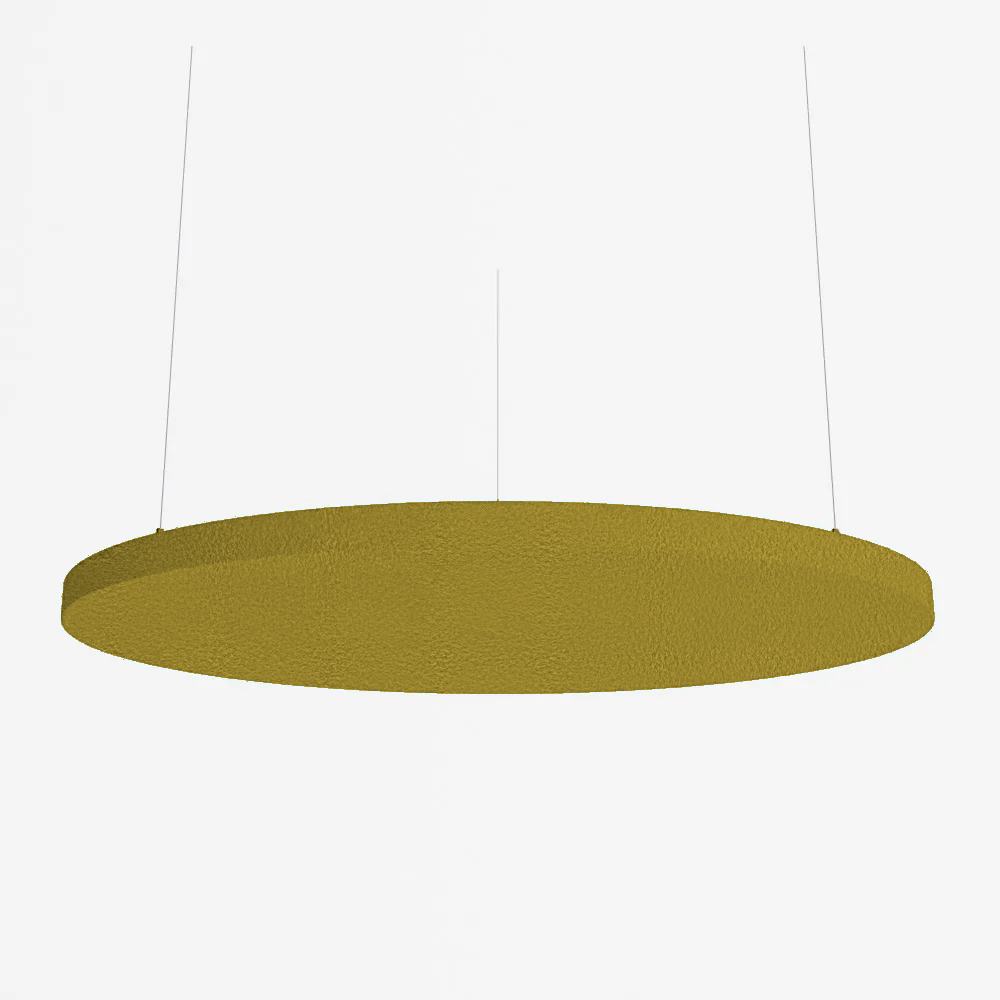
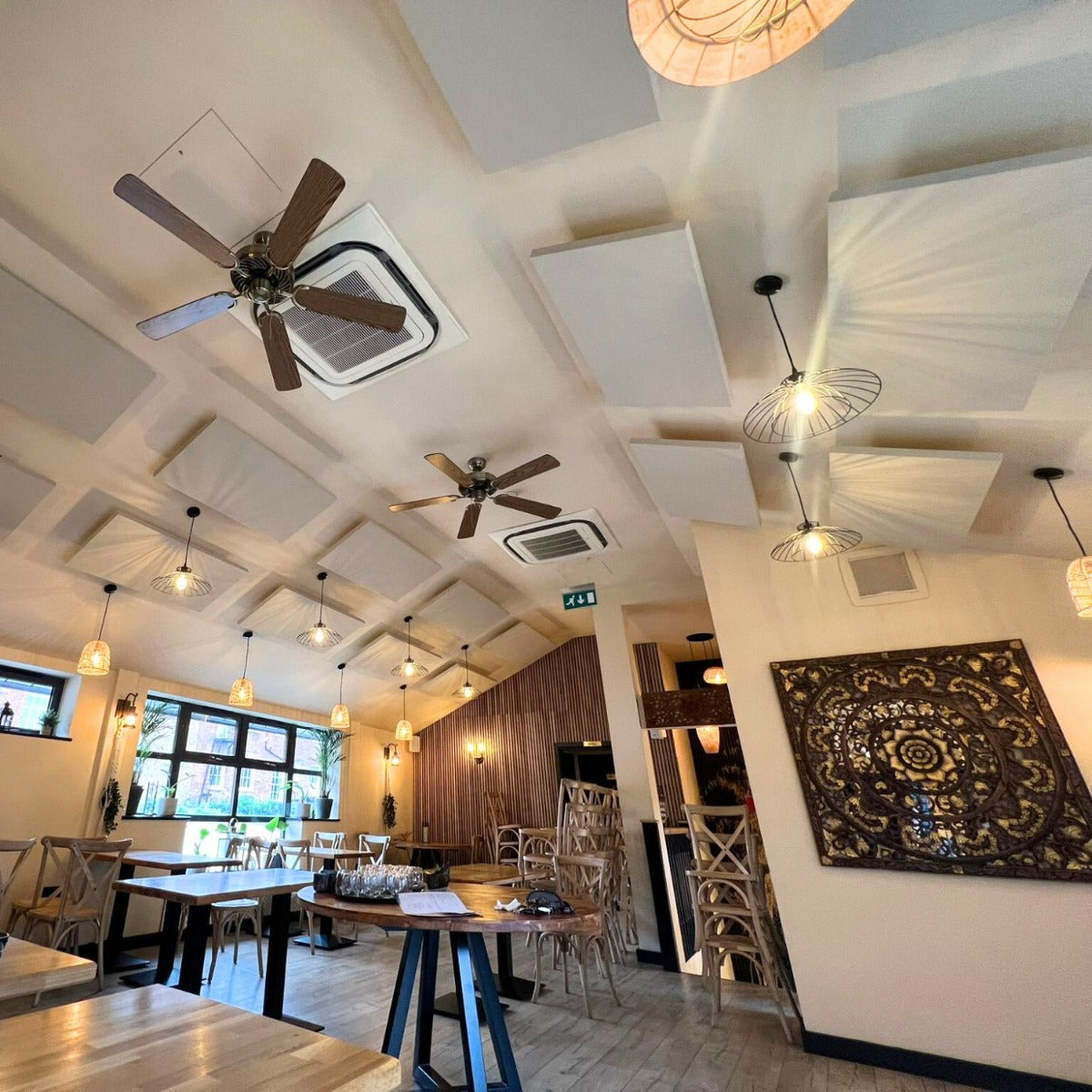
Acoustic rafts are suspended panels that hang below the ceiling and absorb sound on both faces. In offices with exposed soffits, hard floors and glazing, they are usually the most efficient way to bring reverberation down without losing wall space or altering the ceiling itself. This guide covers what to compare, how much coverage you need, and which rafts in our range suit which type of space. How acoustic rafts work A fixed ceiling tile or wall panel absorbs sound on one face. A suspended raft is exposed on both faces and around its edges, so it removes more sound energy per square metre of panel. That makes rafts efficient where usable surface area is limited — which describes most modern offices, where walls are glazed and the ceiling is open services. The result is fewer reflections, a lower background noise level, and clearer speech across the room. Rafts reduce reverberation within a space. They do not stop sound passing between rooms — that is a separate problem requiring mass and sealing, not absorption. Compare our acoustic rafts at a glance Specification SilentSpace Custom Raft Ecophon Solo Circle Ecophon Solo Square Absorption Class A at 40mm(Class C at 25mm) Class A Class A Sizes Made to order, 300 × 300mm up to 2400 × 1200mm 800mm or 1200mm diameter 1200 × 1200mm Finish Camira Lucia or Sonus fabric, 48+ colourways Akutex FT, White Frost Akutex FT, 16 colours Fire classification Euroclass B-s1,d0 Euroclass A2-s1,d0 Euroclass A2-s1,d0 Fixings Gripple hangers and spirals included Suspension kit selected at checkout Suspension kit selected at checkout Supplied as Single panels Pack of 4 Single panel Price from £159 £780 (800mm)£820 (1200mm) £175 Lead time 2–3 weeks, made to order Stock item Stock item Prices correct at August 2026. Standard shapes are also available: square rafts from £99.95, circles from £139 and rectangles from £145. Understanding absorption class Absorption performance in the UK is rated under BS EN ISO 11654, which converts measured absorption into a single weighted figure, αw, and then into a class from A to E: Class Weighted coefficient (αw) Suitability for offices A 0.90 – 1.00 The highest rating, and what you should be specifying B 0.80 – 0.85 Effective, slightly more coverage needed C 0.60 – 0.75 Usable, but noticeably more coverage for the same result D – E 0.30 – 0.55 Not worth the ceiling area in a speech environment You will also see NRC quoted, particularly on products imported from the US. It is a different calculation based on four frequency bands and is not directly interchangeable with an absorption class. If a product is only quoted in NRC, ask for the αw figure or the full octave-band data before you compare it against anything else. Thickness matters as much as the badge on the box. Our SilentSpace rafts are Class A at 40mm and Class C at 25mm — same fabric, same construction, materially different performance. If the specification says Class A, check the thickness you are actually ordering. Fire classification Commercial fit-outs will normally need a Euroclass rating under BS EN 13501-1, expressed as a letter for reaction to fire plus two suffixes: s for smoke production and d for flaming droplets. Do not accept a "Class 0" claim: that was a British Standard classification withdrawn from the Building Regulations and it tells you nothing under the current framework. Both ratings in our raft range carry the best available smoke and droplet performance, s1 and d0. They differ on the letter: Ecophon Solo rafts are A2-s1,d0. A2 is the highest classification achievable by a product that is not entirely non-combustible, and reflects the glass wool core. This is the rating to specify where a fire strategy sets a limited-combustibility requirement — common in escape routes, atria, and taller buildings. SilentSpace ceiling rafts are B-s1,d0. B is the next class down and is accepted in the great majority of standard office fit-outs. If you are working to a fire strategy written by someone else, check which letter it calls for before you order — it is the one specification detail that most often forces a product change late in a project. Certification documents are available on request for anything in the range. Which raft for which space Open-plan offices Distributed circular rafts in clusters work well here. Breaking the treatment into smaller units spread across the ceiling gives more even absorption than the same area concentrated in one place, and it lets you create visual zoning between desk groups without putting up screens. SilentSpace circle rafts come in 48 Camira colourways, so zoning by colour is straightforward. Exposed concrete soffits and high ceilings A bare concrete soffit reflects mid and high frequencies straight back into the room, which is exactly the range that carries speech. Large-format rectangular rafts give you more absorbing area per fixing point and per hour of installation time. Our custom-size SilentSpace rafts go up to 2400 × 1200mm, which helps when you are working around existing services and want the panels to sit within the structural grid rather than fight it. Meeting rooms Meeting rooms are about intelligibility rather than volume. The reflection you most want to catch is the one bouncing off the ceiling directly above the table, which arrives at the listener just behind the direct sound and smears consonants. A raft centred over the table addresses it directly, and the improvement on video calls is usually the thing people notice first. The Ecophon Solo Circle is supplied in packs of four, which typically covers a room of this size. Design-led spaces Where the ceiling is part of the design intent, square rafts in a repeated grid keep the visual rhythm clean while still delivering Class A absorption. The Ecophon Solo Square comes in sixteen Akutex FT colours, and our custom SilentSpace rafts can be made to any size within the range if you need the panels to align to a specific grid or lighting layout. How many rafts do you need? The honest answer is that it depends on room volume, ceiling height, and what the existing surfaces are made of. As a working starting point for a typical office: Aim for 20–40% ceiling coverage with Class A rafts. Lower end for rooms with carpet and soft furnishings, higher end for hard floors, glazing and exposed concrete. Prioritise the ceiling area directly above desks and meeting tables over circulation space. Spread the coverage rather than clustering it — distributed panels outperform a single concentrated block of the same area. If reverberation is still high after ceiling treatment, add wall panels rather than more rafts. For a number specific to your room, our acoustic calculator takes about two minutes and gives you a panel quantity and a working budget before you speak to anyone. Practical points before you order Drop height. Rafts perform better with an air gap behind them, but check the drop against sprinkler coverage, lighting and any fire strategy for the space. Coordination is usually what delays a raft scheme, not the panels. Fixings. Our SilentSpace rafts include hangers and spirals. Ecophon suspension kits are selected separately at checkout — worth checking before you place the order. Samples. Fabric colour reads differently under office lighting than on screen. Order a sample card before committing to a large order. Installation. Prices are supply only. We offer a fitting service — arrange it before purchase rather than after. Rafts or baffles? Rafts hang horizontally, flat to the ceiling. Baffles hang vertically, edge-on, exposing more edge area and less face area to sound arriving from below. Rafts suit offices with normal ceiling heights, where you want a clean horizontal plane and coordination with lighting and services. Baffles suit tall volumes — atria, sports halls, warehouse conversions — where sound is arriving from many directions and vertical fins intercept more of it. For most commercial offices, rafts are the more practical choice. We stock both if you want to compare. When you need more than panels If you are treating a large or acoustically complicated space, working to a specified RT60 target, or dealing with sound transferring between rooms, a measured survey will save you money over guessing at panel quantities. Our sister company Resonics handles survey, design and installation for commercial projects across the UK. For everything else — a meeting room, a floor plate, a studio — buying the panels directly and fitting them yourself is usually the sensible route, and it is what Sonio exists to make straightforward. Frequently asked questions What are acoustic rafts and how do they work? Acoustic rafts are panels suspended below the ceiling that absorb sound on both faces. They reduce reverberation time and improve speech clarity by intercepting reflections before they spread across the room. Are acoustic rafts better than wall panels? They absorb more sound per square metre of panel because both faces are exposed. In offices with glazed walls and limited usable wall space, they are often the more efficient option, though a combination of both usually gives the best result. How many acoustic rafts do I need for an office? Between 20% and 40% ceiling coverage is a reasonable starting point, depending on ceiling height and how reflective the existing floors and walls are. Our acoustic calculator will give you a figure for your specific room. Do acoustic rafts block noise between rooms? No. Rafts absorb sound within a room. Stopping sound transmitting between rooms requires mass and airtight sealing, which is a construction problem rather than a panel problem. What absorption rating should acoustic rafts have? Class A under BS EN ISO 11654, meaning a weighted absorption coefficient of 0.90 or above. Lower classes work, but you will need considerably more ceiling coverage to achieve the same reduction in reverberation. Can acoustic rafts be fitted in an occupied office? Yes. Rafts suspend from the existing soffit or structure with hangers and require no alteration to the ceiling, which makes them well suited to retrofits and out-of-hours installation. What fire rating do acoustic rafts need? Most commercial offices will require a Euroclass rating under BS EN 13501-1. Ecophon Solo rafts are classified A2-s1,d0 and SilentSpace ceiling rafts are B-s1,d0. Where a fire strategy specifies limited combustibility, you will need the A2 rating. Certification is available on request.
Read more
Custom Size Acoustic Panels from Sonio
Made-to-measure acoustic treatment for offices, studios and commercial interiors. Bespoke dimensions, Class A absorption, and a finish that works with your design rather than around it. Request a Custom Quote Why Standard Sizes Rarely Fit Off-the-shelf panels are made to a grid. Buildings aren't. Pillar returns, window reveals, service runs and irregular wall sections all mean a standard panel leaves gaps — and gaps are untreated surface doing nothing for your reverberation time. Made-to-measure panels solve two problems at once. Acoustically, you cover more of the wall with active absorbing material. Visually, the panelling reads as part of the interior rather than something applied to it afterwards. The practical benefit Custom sizing maximises the active area of a wall, removing the dead zones that standard-size grids leave behind. More absorption per square metre of wall, and a cleaner finish. Bespoke Fabric-Wrapped Panels Where appearance matters as much as performance, our fabric-wrapped acoustic wall panels are built to your exact dimensions. A mineral or glass wool core does the acoustic work; the fabric is tensioned over the frame and finished at the edges. Fabric choice Hundreds of textures and colourways from Camira, Maharam, Kvadrat and Gabriel. Because each panel is made to order, tension and edge finishing are set for your specific dimensions. Class A absorption At 40mm and above, our fabric-wrapped panels reach Class A under EN ISO 11654 — the highest sound absorption class available. Fabric-wrapped panels cannot be cut on site. The fabric is tensioned and finished over the edges during manufacture, so trimming destroys the panel. This is exactly why the made-to-measure service matters when you're fitting around existing switches, trim or fixtures — the measuring happens before production, not after delivery. Performance by Material Sound absorption is graded from Class A to E under EN ISO 11654, based on the weighted absorption coefficient (αw). Class A means αw of 0.90 or above. You'll also see NRC quoted on internationally sourced products — that's the US equivalent and the two aren't directly interchangeable. Material Thickness Absorption Best for Autex Cube (PET) 12–24mm Class C–D General office echo, large wall coverings, high-traffic areas SilentSpace fabric-wrapped 25-40mm Class A-C Meeting rooms, restaurants, classrooms, studios Ecophon Solo & Akusto 20–40mm Class A-C Ceiling rafts, baffles, professional wall systems What thickness actually buys you 12–15mm — High frequencies. Tackles flutter echo and sibilance. Effective as decorative wall treatment, limited as a primary acoustic fix. 25–40mm — The commercial standard. Covers the 500–2000Hz speech band where intelligibility problems concentrate. 50mm, or 40mm on a stand-off — Extends absorption into the lower mids, roughly down to 250Hz. An honest note on bass No panel at these thicknesses does meaningful work below about 200Hz. Low-frequency absorption is governed by depth and air gap, not material type — genuine bass control needs 100mm or more, or a purpose-built absorber. If you're treating a cinema room or a music production space, talk to us rather than ordering from a table. Custom Options Across the Range Lightweight PET panels The Autex Cube is made from polyester fibre with a minimum 60% recycled content. It can be CNC cut into bespoke shapes, grooved for texture, or printed with custom artwork — and unlike fabric-wrapped panels, it can be cut on site. Lightweight, durable, and efficient across large wall areas. Acoustic rafts and baffles Where wall space is limited, treat the ceiling. From SilentSpace Circle rafts to Ecophon Solo baffles, suspended elements intercept sound on its way up and absorb across both faces at once. In high-ceiling spaces this delivers the largest reduction in reverberation time per square metre installed. 3D and textured panels For schemes where the treatment is part of the design, the Offecct Soundwave series and BAUX 3D Pixel tiles are modular systems whose layout can be configured to any wall dimension. Popular in boutique hospitality and reception spaces. How to Size Your Panels Work out coverage 20–40% of total surface area is the usual starting point for noticeable improvement in speech clarity. Critical listening environments and high-noise spaces such as canteens may need 40% or more. Find the first reflection points Treat where sound arrives first. In a meeting room that's usually seated head height on the wall opposite the main speaker or screen. Measure twice Bespoke fabric panels can't be adjusted after manufacture. Allow 2–3mm tolerance on tight wall-to-wall runs so panels can be manoeuvred into position. Before you order Our acoustic calculator estimates your current reverberation time from room dimensions and surface types, and tells you how much absorption you need. Two minutes, and it gives you a working budget before you commit to a spec. Fixings and Installation Spiral fixings and wire hangers — For ceiling rafts and baffles, including Ecophon Solo connectors. Adjustable drop height. Impaling clips and adhesive — Standard for permanent wall installation of PET and fabric-wrapped panels. Rotofast fixings — For removable panels, or where a deliberate stand-off from the wall is wanted. The air gap behind the panel extends absorption further into the low-mid frequencies. Our fitting guidance covers the practical detail. For larger commercial projects needing a full acoustic survey, measurement and installation, our parent company Resonics has completed over 7,000 projects since 2013 and can take the whole job end to end. Frequently Asked Questions Does panel size affect performance? Yes — absorption is proportional to surface area. A small panel may look right but won't contain enough absorbing material to shift the reverberation time in a large room. Custom sizing lets you cover more of the available surface efficiently, which is where the acoustic gain comes from. Can I cut acoustic panels to size myself? It depends on the material. PET panels such as the Autex Cube can be cut on site with a heavy-duty blade or CNC machine. Fabric-wrapped panels cannot — the fabric is tensioned and finished over the edges during manufacture, so cutting one destroys it. Those must be ordered to size. What's the largest single panel available? Large-format PET sheets are typically 2400 × 1200mm. For fabric-wrapped panels the maximum is usually governed by the width of the fabric roll, often 1200mm to 1500mm. Larger areas are covered by joining panels, which can be detailed to read as a continuous surface. Are custom acoustic panels fire rated? Our commercial ranges are classified under BS EN 13501-1, the UK and European reaction-to-fire standard. Most fabric-wrapped and PET panels achieve Euroclass B-s1,d0, with A2-s1,d0 available on mineral cores where a project demands it. Be aware that the old British Class 0 and Class 1 ratings were withdrawn from Approved Document B for reaction to fire in March 2025 and are not equivalent to Euroclass B-s1,d0. Requirements also vary by room — corridors and escape routes are stricter than the rooms they serve. See our guide to fire rated acoustic panels for the full picture. How long do bespoke panels take to make? Lead times vary by product, fabric availability and order size. Get in touch with your dimensions and we'll confirm a delivery date before you commit. Ready to Specify Your Space? From bespoke fabric finishes to custom-cut PET, we'll help you calculate coverage and get the dimensions right first time. Request a Bespoke Quote Try the Acoustic Calculator
Read more
Fire Rated Acoustic Panels: A UK Guide to Euroclass and BS EN 13501-1
Search for "Class A fire rated acoustic panels" and you'll get thousands of results. Here's the problem: there is no Class A fire rating in the UK. It's an American term from an American test. Specify against it here and you risk buying a panel that doesn't meet your building's actual requirement. This guide covers the classification that does apply — Euroclass, under BS EN 13501-1 — what Building Regulations actually demand, and which panels to use where. Key Takeaways UK fire classification is Euroclass, under BS EN 13501-1. The scale runs A1, A2, B, C, D, E, F. There is no "Class A". "Class A" is a US rating (ASTM E84). It doesn't convert to Euroclass and won't satisfy Building Control on its own. Class 0 is dead. BS 476 reaction-to-fire classifications were withdrawn from Approved Document B for new building work from 2 March 2025. The minimum depends on the room, not the building. A small room needs D-s3,d2; a corridor needs B-s3,d2. B-s1,d0 is the best-practice baseline most commercial projects now specify, comfortably above the regulatory minimum. There's a second, unrelated Class A — sound absorption class under EN ISO 11654. Always ask which one a supplier means. Fire rating says nothing about acoustics. Painted plasterboard is non-combustible and absorbs almost nothing. The Euroclass Scale, Top to Bottom BS EN 13501-1 classifies how much a product contributes to a fire. Seven levels, best to worst: Reaction to fireBS EN 13501-1 A1 Non-combustibleWill not contribute to fire at any stage. Stone, glass, metal, mineral wool. A2 Limited combustibilityVery limited contribution. Glass wool cores, wood wool cement, plasterboard. B Combustible — very limited contributionTargetHigh-spec PET, treated timber, correctly specified fabric systems. C Combustible — limited contributionStandard PET, some untreated timber systems. D Combustible — medium contributionUntreated timber, standard textiles. E–F High contribution, or untestedPolyurethane acoustic foam. Not suitable for commercial or public buildings. A full classification also carries smoke and droplet suffixes — written as B-s1,d0. Both matter as much as the letter. Smoke production Smoke destroys visibility during evacuation. s1 Little to no smoke s2 Limited smoke production s3 No restriction on smoke Flaming droplets Burning droplets spread fire downward and ignite what's below. d0 No flaming droplets d1 Limited droplets d2 No restriction on droplets The other Class A EN ISO 11654 grades sound absorption from A to E, where Class A means a weighted absorption coefficient (αw) of 0.90 or above. A panel can be Class A for absorption and Euroclass D for fire. The two say nothing about each other. If a supplier quotes "Class A" without naming the standard, ask which. What Approved Document B Actually Requires Acoustic panels fixed to walls or ceilings are internal linings under Requirement B2 of Approved Document B (Volume 2). The minimum classification depends on the room's function, not the building type: Location Minimum classification Why Small room (≤30m²) D-s3,d2 Lower risk of large-scale fire spread Other rooms C-s3,d2 Larger volume needs better surface flame control Circulation spaces(corridors, lobbies, stairways) B-s3,d2 These are escape routes and need the highest protection This is the detail most buyers miss: a panel that's perfectly compliant in a classroom may not be acceptable in the corridor outside it. Confirm the requirement zone by zone. Above minimum Minimum compliance isn't best practice. Most commercial projects now specify B-s1,d0 as a baseline and A2-s1,d0 for high-occupancy or higher-risk environments — driven by insurer requirements, corporate risk policy and fire engineer recommendations. Note that the regulatory minimums above allow s3 and d2, meaning unrestricted smoke and droplets. Specifying s1,d0 closes that gap. Why Class 0 and ASTM E84 Don't Cut It Class 0 was the old British benchmark for surface linings, from BS 476 Parts 6 and 7. It measured surface flame spread but never the combustibility of a product's core — which is exactly how combustible cladding achieved it. Following Grenfell, the national classifications were removed from Approved Document B, and from 2 March 2025 a Class 0 rating alone no longer satisfies Building Control for new work. ASTM E84 is the US equivalent and appears constantly on internationally sourced products. It's a legitimate test — just not a UK one, and there's no reliable conversion between the two systems. If a datasheet shows only ASTM E84, treat the product as unclassified until you see BS EN 13501-1 documentation. Watch for this You may also see B1 on European datasheets. That's the German DIN 4102 system, not Euroclass. B1 is not the same as B-s1,d0 and shouldn't be quoted as if it were. Ask for the BS EN 13501-1 classification report. How Different Materials Perform Material choice largely determines the classification you can reach: Material Typical classification Best suited for Mineral fibre / wood wool cement A1 – A2-s1,d0 Circulation spaces, stairways, high-occupancy environments Glass wool A2-s1,d0 Offices, schools, public buildings, suspended ceilings PET (recycled polyester) B-s1,d0 / C-s1,d0 Offices, meeting rooms, education, general commercial Fabric-wrapped systems B-s1,d0 (system dependent) Feature walls, meeting rooms, hospitality Timber — untreated C – D Low-risk rooms only Timber — fire-retardant treated up to B-s1,d0 Offices and meeting rooms Polyurethane acoustic foam C – F Rarely suitable — never on escape routes Two things worth flagging. First, fabric-wrapped panels are classified as a complete system, not by their core — a non-rated decorative fabric will pull down an otherwise compliant panel. Second, fire-retardant treatments are not permanent. Sprays typically last one to five years and may need reapplication, so always request the classification report and confirmation of maintenance requirements. Standard Office and Retail Walls For general commercial walls you're absorbing the mid and high frequencies that wreck speech clarity. A modular fabric-wrapped panel on a mineral or glass wool core is the straightforward answer. SilentSpace Square From £45.68 40mm Absorption Class A B-s1,d0 The panel we recommend most often for a fast, low-disruption retrofit across a large plain wall. Wrapped in Camira, Maharam, Kvadrat or Gabriel — and because the fabric carries its own rating, every fabric we stock is specified with its own test data. SilentSpace Circle From £115.00 40mm Absorption Class A B-s1,d0 The same construction and absorption class in a softer geometric format, for schemes where the panel layout is part of the interior rather than hidden behind furniture. Browse fabric wrapped acoustic wall panels Schools, Sports Halls and High-Traffic Buildings A standard fabric panel won't survive a stray basketball or a corridor full of moving furniture. Different problem, different product. SilentSpace High-Impact Square £65.00 per panel Impact tested Absorption Class A B-s1,d0 Class A absorption with independently tested impact resistance. Spikes and adhesive included, and the modular grid means a damaged panel gets swapped individually rather than replacing a wall. For school projects, note that BB 100 (Design for Fire Safety in Schools) may apply alongside Approved Document B, and corridors will need to meet the circulation-space requirement rather than the room one. Wood Wool for Natural, Textured Interiors BAUX Diagonal RH £105.72 Wood wool Matching LH available B-s1, d0 Tested to BS EN 13501-1. The open wood wool structure absorbs well across the mid and high frequencies, and a matching LH panel is available for symmetrical tiling — which matters more than it sounds across a large feature wall. A realistic note on frequency: no 25–40mm panel of any material does much below about 250Hz. Low-frequency absorption is a function of thickness and air gap, not material type. If you have a genuine low-end problem you need depth behind the panel, and that's worth a conversation rather than a product page. Recycled PET for Design-Led Interiors Autex Cube £285.00 per sheet 2440 × 1220mm Two thicknesses 12mm B-s1, d0 24mm B-s2,d0 Usable as full wall covering or cut to bespoke shapes without losing acoustic performance. Certification supplied with every order. Custom Fabric Wraps SilentSpace Custom Fabric-Wrapped From £99.95 Camira / Maharam / Kvadrat / Gabriel B-s1, d0 Nearly any fabric over the same tested core. Because the classification applies to the finished system, we'll confirm the combined figure for your chosen fabric before the order goes into production. For ceilings rather than walls, the SilentSpace rectangle acoustic raft suspends the same tested core above the room, absorbing across both faces at once. Rafts are classified differently to flat wall panels because both faces are exposed — always check the certification covers your mounting method. Fire Rating Tells You Nothing About Acoustics This is the trap. Painted plasterboard is non-combustible and absorbs roughly 5% of the sound hitting it. A room specified purely for fire compliance is still a room full of hard, reflective surfaces. Good acoustic panels sit at αw 0.70 to 0.95 — absorbing 70% to 95% of incident sound energy. That's the number doing the actual work. The fire classification is what makes it legal to put on the wall. Two separate specifications, both required. Before you specify Our acoustic calculator takes about two minutes and gives you a realistic coverage figure and working budget before you talk to anyone. Four Questions Before You Specify What's the room's function? Classification is set by room type, not building type. Circulation routes are stricter than the rooms they serve. Wall, ceiling, or both? Rafts and baffles are certified differently to flat panels because both faces are exposed. High-traffic or low-traffic? Impact resistance is a separate requirement layered on top of fire performance. What's the current reverberation time, and what's the target? That determines how much absorption you actually need. Sonio is the direct arm of Resonics, an acoustic treatment specialist established in 2013 and based in Deptford, London, with over 7,000 completed projects. Their full technical guide to acoustic panel fire ratings goes deeper on testing methodology and material behaviour. For project-specific fire compliance, always consult a qualified fire engineer. Frequently Asked Questions Is there such a thing as a Class A fire rated acoustic panel in the UK? No. "Class A" is a US fire rating from ASTM E84. UK products are classified under BS EN 13501-1 as A1, A2, B, C, D, E or F. Confusingly, "Class A" does exist in the UK as a sound absorption class under EN ISO 11654 — which is why the term causes so much confusion. Always ask a supplier which standard they're quoting. What Euroclass do acoustic panels need? It depends on the room. Under Approved Document B, small rooms up to 30m² need D-s3,d2, other rooms need C-s3,d2, and circulation spaces such as corridors and stairways need B-s3,d2. Most commercial projects now specify B-s1,d0 as a best-practice baseline, with A2-s1,d0 in high-occupancy or higher-risk environments. What do s1 and d0 mean in a fire rating? They're smoke and droplet ratings. The s value covers smoke production, from s1 (little to no smoke) to s3 (no restriction). The d value covers flaming droplets, from d0 (none) to d2 (no restriction). B-s1,d0 is the best combined result achievable for most organic materials. Is Class 0 still valid in the UK? Not for new work. Class 0 came from the BS 476 series, which was removed from Approved Document B for reaction to fire from 2 March 2025. It measured surface flame spread but never core combustibility. If a product only holds a Class 0 rating, ask for BS EN 13501-1 documentation. Are fabric-wrapped acoustic panels fire safe? They can be, but classification applies to the complete system, not the core alone. A mineral or glass wool core will typically perform well, while a non-rated decorative fabric over it can pull the combined classification down — fabric choice particularly affects the smoke rating. Always specify fire-rated fabrics where smoke control matters. Is acoustic foam fire rated? Usually poorly. Standard polyurethane acoustic foam frequently sits at Euroclass C or D and is rarely suitable for escape routes without specialist treatment. Tested cores — mineral wool, glass wool, wood wool, certified PET — are the appropriate choice for commercial and public buildings. Do fire-retardant treatments last? Not indefinitely. Fire-retardant sprays on timber and fabric systems typically last one to five years, and performance depends on correct application and maintenance. Reapplication may be required. Always request a BS EN 13501-1 classification report plus confirmation of maintenance requirements. How much do fire rated acoustic panels cost? From around £45.68 for a SilentSpace square fabric panel up to £285.00 for a full Autex Cube PET sheet. Impact-resistant and custom fabric options generally sit between £65 and £115 per panel. Prices shown are current at the time of writing.
Read more
How to Choose Fabric Wrapped Acoustic Panels
Hard surfaces — concrete, plasterboard, glass — bounce sound around a room until it builds into noise. Fabric wrapped panels fix that: a dense absorbent core (mineral fibre or foam) wrapped in acoustically transparent fabric, absorbing sound before it reflects back. Less reverb, clearer speech, quieter rooms. Here's how to choose the right ones. 1. Check the NRC rating NRC (Noise Reduction Coefficient) measures how much sound a panel absorbs, from 0 (none) to 1.0 (total). 0.80+ — solid baseline for most rooms 0.90+ (Class A, ISO 11654) — the benchmark for meeting rooms, classrooms, open-plan offices Don't just compare headline numbers. Check the test method (ASTM C423 is standard), the thickness tested, and the mounting condition — all three swing the result. Our SilentSpace range is built to Class A across the board. 2. Get the thickness right Thickness drives low-mid frequency absorption — the range human speech sits in. 25mm — good at higher frequencies 40mm — meaningfully better lower down, where reverberation actually hurts clarity SilentSpace uses 40mm throughout, wall panels and ceiling rafts alike. For tough rooms — exposed concrete, high ceilings, big floor areas — combine both. 3. Pick a format: wall or ceiling Wall panels — best for lateral reflections bouncing between parallel walls. Easiest to install, widest size range. Ceiling rafts — best for floor-to-ceiling bounce, especially with hard flooring or high ceilings. Often the better call in open-plan offices and restaurants where wall space is tight. Hard walls and hard ceiling? Do both — the combined effect beats either alone. 4. Cover enough surface area One or two panels on a hard wall won't move the needle. Aim for 20–40% of total wall area. Spread coverage across opposing walls rather than clustering it on one. Even distribution beats concentrated treatment every time. The same principle applies to ceilings. If you've gone with rafts, treat 20–40% of the ceiling area too, spread across the room rather than bunched centrally — a scattered layout intercepts reflections from more angles than one large cluster. In rooms with both hard walls and a hard ceiling, splitting coverage across both surfaces gets you a faster reduction in reverberation than maxing out one surface alone. Use our panel calculator if you want a number based on your actual room. 5. Don't ignore mounting Flush-mounted panels have no air gap behind them, which reduces their effectiveness. Ceiling panels are more effective with even 50mm of airspace; low-frequency absorption improves — the gap adds effective acoustic depth without changing the panel itself. 6. Colour is aesthetic, not acoustic Fabric colour has no effect on NRC — but the fabric must be acoustically transparent, or you lose the performance you're paying for. Always confirm the spec. Practical notes: Light fabrics show marks faster in high-traffic areas Darker tones are more forgiving Mid-tones work best across varied lighting SilentSpace comes in 47 colours, so this shouldn't be a compromise. 7. Check the fire rating Fire performance matters as much as acoustic performance, especially for commercial spaces — offices, schools, hospitality — where building regulations and insurers will ask for it. Look for panels tested to EN 13501-1, the European standard for reaction-to-fire classification. Ratings run from A1 (non-combustible) down to F (untested/unclassified), with most commercial acoustic panels falling in the B or C range depending on core material and fabric. A few things worth checking with any supplier: Is the rating for the full assembly (core + fabric + backing) or just the core material on its own? A panel is only as fire-safe as its weakest component. Does the certificate cover the specific product you're buying, or a similar one in the same range? For public buildings, schools, and high-occupancy commercial spaces, check what your local building regulations actually require — the minimum acceptable class varies by use and wall/ceiling application. SilentSpace panels are tested under EN 13501-1 — ask us for the certificate if you need it for a spec or building control submission. Choosing by space Space What matters Open-plan office Speech privacy — distribute panels across walls and ceiling zones, not one spot Meeting/conference room Mid-frequency clarity (500Hz–2kHz) — Class A, 40mm, on primary reflective surfaces Restaurant/hospitality Ceiling rafts usually win — treat reflections without closing off the space visually Home office/studio Even 4–6 panels make an audible difference given the smaller room volume Classroom Even distribution at mid-height — don't cluster at the front The SilentSpace range Panel Format From Best for Fabric Wrapped Wall Panel Wall, made-to-measure £99.95 Offices, meeting rooms, classrooms Circle Ceiling Raft Suspended, 40mm £139.00 Open-plan offices, restaurants Rectangle Acoustic Raft Suspended, multiple sizes £145.00 Flexible ceiling zones Square Acoustic Panels Wall or ceiling £45.68 Feature walls, design-led spaces All Class A, all 40mm, all made-to-measure, 47 colours. FAQ What NRC should I look for? 0.80 minimum, 0.90+ (Class A) for meeting rooms, offices, and classrooms. How many panels do I need? Cover 20–40% of wall area — six to eight panels for a typical 20–25m² room. If you're using ceiling rafts, apply the same 20–40% target to the ceiling too. Use a calculator for precision. Does thickness really matter? Yes — 40mm outperforms 25mm at the mid and low frequencies where speech clarity lives. Can printed/custom panels still perform? Yes, provided the print doesn't block sound transmission through the fabric face. Should I treat the ceiling too? Often it's the higher-impact move — ceiling rafts tackle floor-to-ceiling bounce, which drives a lot of reverberation in open-plan spaces. Is custom sizing worth it over standard? Usually — standard sizes can leave coverage gaps or force awkward spacing. Made-to-measure fits your wall properly. Does mounting method matter? Yes — an air gap behind the panel improves low-frequency absorption versus flush mounting. Browse the full range or use the free panel calculator to get a coverage figure for your room.
Read more
Fabric vs PET Acoustic Panels: Which Sounds Better?
When you're comparing fabric vs PET acoustic panels for an office, studio, or village hall, the number that matters most is the Noise Reduction Coefficient, and the gap between the two materials is bigger than you might expect. Professional fabric-wrapped panels can achieve an αw of 0.85 to 1.00, meaning they absorb almost every sound wave that hits them, while budget alternatives routinely fall well short of that mark. We get asked which material performs better almost every week, and the honest answer depends on what you're treating, how the room is used, and how much of your budget goes toward the fabric or facing rather than the acoustic core underneath it. Fabric-Wrapped PET Felt αw rating 0.85 – 1.00 0.40 – 0.60 Best for Full-spectrum absorption, reverberation control Speech clarity, mid/high frequencies Typical use case Offices, churches, village halls, sports halls Classrooms, small meeting pods, corridors Weight Heavier Lighter Cost per m² £149 – £278 (SilentSpace fabric-wrapped, size-dependent) £93 – £96 (Autex Cube 12mm) Lifespan 20+ years 2–3 years (budget grades) Autex - 10+ years Fabric vs PET Acoustic Panels: The Headline Difference Walk into a room with painted plaster walls, a hard floor, and a bank of windows, and sound will bounce back and forth rapidly, building up into a noise floor that makes speech hard to follow. Both fabric-wrapped and PET felt panels are designed to interrupt that cycle. The headline difference is what happens once sound energy reaches the panel face. Fabric-wrapped panels wrap a porous acoustic core, usually mineral wool or high-density glass fibre, in a taut textile. That combination lets sound pass through the fabric, get trapped and dissipated inside the dense core, and never bounce back. PET panels use compressed recycled polyester fibre as both the structure and the finish, which absorbs well at certain frequencies but is typically less dense than a wrapped mineral wool core. How Fabric-Wrapped Panels Work: αw, Absorption, and Speech Intelligibility Fabric-wrapped acoustic panels work because the core does the heavy lifting and the fabric simply lets sound in without reflecting it. Our SilentSpace Fabric Wrapped Acoustic Ceiling Raft uses a 40mm core faced in Camira Sonus or Lucia fabric, and because it's suspended below the concrete soffit, it absorbs across both faces and its exposed edges. That's a meaningful practical detail: a ceiling raft removes more total sound energy per square metre than a flat wall panel of the same size, because there's no wall behind it reflecting energy back. Baffles work on the same principle but hang vertically, which is useful when ceiling height is limited or you need to break up long, flat expanses of soffit without losing headroom. Both approaches deliver high αw performance because the fabric never gets in the way of absorption, it simply hides the core underneath a finish that suits the room. How PET Felt Panels Work: Recycled Fibre and Its Acoustic Limits PET acoustic panels are made from compressed recycled polyester fibre, often sourced from post-consumer plastic bottles, pressed into rigid or semi-rigid boards. The fibre structure traps sound in the gaps between strands, which works reasonably well at mid and high frequencies but tends to struggle with lower ones. Standard acoustic foam and many entry-level PET boards only rate between 0.4 and 0.6 NRC, meaning they absorb just 40% to 60% of incoming sound rather than the near-total absorption fabric-wrapped mineral wool panels can achieve. Did You Know? Standard acoustic foam and many budget PET panels rate between just 0.4 and 0.6 αw, absorbing only 40% to 60% of incoming sound. That doesn't make PET a bad choice. It makes it a specific one, better suited to spaces where speech clarity in the 500Hz to 2kHz range is the priority rather than deep bass control, and where the lighter weight and lower cost per square metre matter more than absolute absorption. Fabric vs PET Acoustic Performance: Comparing NRC Ratings Side by Side The clearest way to see the fabric vs PET acoustic gap is to look at NRC ratings across a typical product range rather than a single panel. Fabric-wrapped panels with a dense mineral wool core consistently land at the top of the scale, often rated 0.85 or higher, while PET felt boards vary more depending on thickness and density. αw ratings show fabric panels can hit near-total absorption, while typical PET foam panels trail behind A panel with an αw of 0.85, which is common across our fabric-wrapped range, absorbs 85% of the sound waves that strike it. That single figure explains why fabric wrapping tends to win out in rooms where reverberation time is the core problem, such as sports halls, open-plan offices, and double-height atriums. Best Fabric-Wrapped Panels for Offices and Meeting Rooms Open-plan offices are one of the clearest cases for fabric over PET, because the acoustic problem usually spans the full frequency range, not just speech frequencies. Reflections off desks, glass partitions, and hard ceilings compound quickly in a busy office, and a joined-up approach using both ceiling rafts and wall panels tends to outperform a single-surface fix. The SilentSpace Circle Acoustic Panels (from £115.00) and the Fabric Wrapped Rectangle Acoustic Raft (from £145.00) both use the same fabric-wrapped construction, just in different silhouettes, so you can mix shapes on a single ceiling plan without mixing acoustic performance. For a deeper look at layout options, our guide on meeting room acoustic panels covers coverage ratios room by room. Fabric Wrapped Wall Panels: Squares, Rafts, and Custom Shapes Wall-mounted fabric panels give you the same absorption performance as ceiling rafts, without needing suspension hardware or a clear ceiling void. That makes them the low-disruption retrofit option for tenanted offices or listed buildings where you can't touch the ceiling structure. The Fabric Wrapped Square Acoustic Raft (from £99.95) ships in multiple sizes with installation fixings included, which keeps the total cost predictable rather than adding fixings as a separate line item later. Fabric options like Camira Sonus and Lucia let you match a colour scheme without compromising the αw rating underneath, since the acoustic performance sits entirely in the core, not the finish. Where PET Acoustic Panels Still Make Sense None of this means PET panels are the wrong choice. They're genuinely useful where weight, cost, or a specific decorative pattern matter more than maximum absorption, and where the room's biggest problem is speech clarity rather than deep reverberation. A classroom with a modest ceiling height, a small meeting pod, or a corridor with light foot traffic often doesn't need 0.85+ αw treatment across every surface. PET's lighter weight also makes it easier to specify across very large wall or ceiling runs without loading the structure, and recycled polyester content supports sustainability targets that some organisations now require in a tender. Our Autex Cube PET Acoustic Panel is a good example of the category done properly: a rigid, patterned PET board that's fast to install across large areas at a lower cost per square metre than fabric wrapping. Durability and Long-Term Cost: Fabric vs PET Acoustic Panels Over Time Acoustic treatment is a long-term investment, not a one-off decoration job, and durability is where fabric-wrapped panels often justify a higher upfront cost. Quality fabric panels routinely last 20 or more years without meaningful degradation in either appearance or absorption performance. Budget foam and lower-grade PET options tell a different story. Cheap foam and thin felt boards can crumble, discolour, or lose structural integrity in as little as 2 to 3 years, especially in rooms with UV exposure or high humidity. Did You Know? Cheap foam and low-grade felt panels can crumble or discolour in just 2 to 3 years, while quality fabric-wrapped panels last two decades or more. Fabric vs PET Acoustic: Which Should You Choose for Your Space? The best choice depends on your room, your ceiling height, your budget, and the specific acoustic problem you need to solve. A church nave with a long reverberation tail and a lot of hard stone surface almost always calls for fabric-wrapped rafts and wall panels, because the goal is controlling low-frequency buildup as much as clarifying speech. A home office or small pod, by contrast, might do everything it needs with PET panels at a fraction of the material cost. Our guide to the best acoustic panels for productive home offices breaks this down room type by room type, and our buyer's guide for churches does the same for larger, more reverberant spaces. The fix is rarely to deaden the entire room. It's to treat the surfaces causing the worst reflection points, whichever material gets you there most efficiently. Conclusion When it comes down to fabric vs PET acoustic panels, the science is straightforward even if the decision isn't always simple. Fabric-wrapped panels deliver higher NRC ratings, longer working lives, and better performance across the full frequency range, which is why we specify them for offices, churches, and village halls where reverberation time is the dominant problem. PET panels earn their place where weight, budget, or a specific pattern matter more than absolute absorption. Whichever direction you lean, browsing our acoustic wall panels collection is the fastest way to compare real αw figures, fabric options, and pricing before you commit to a spec for your space. Frequently Asked Questions Is fabric or PET better for acoustic panels? Fabric-wrapped panels generally outperform PET on raw absorption, with αw ratings of 0.85 to 1.00 versus 0.40 to 0.60 for PET. Which is "better" depends on the problem: fabric earns its cost against genuine reverberation in hard-surfaced offices or halls, while PET does the job for less in smaller rooms where speech clarity is the main concern. What's the actual cost difference between fabric and PET panels? Based on our SilentSpace and Autex ranges, fabric-wrapped rafts run roughly £149 to £278 per square metre depending on panel size, while Autex Cube PET panels run a flatter £93 to £96 per square metre. Larger fabric panels bring the per-square-metre cost down significantly, since fixings and labour are spread over more area. Can I mix fabric and PET panels in the same room? Yes, and it's often the smart approach. A common spec pairs fabric-wrapped ceiling rafts for maximum overhead absorption with PET wall panels at eye level for a lighter finish and lower cost. Calculate total αw coverage across both surfaces together rather than treating each material separately. Do PET panels need replacing sooner than fabric? Budget PET and foam can degrade within 2 to 3 years, particularly with UV or humidity exposure. Better-quality PET boards last considerably longer than that, so the 2 to 3 year figure applies to entry-level products rather than the category as a whole. Will either material stop noise from next door? No. Both fabric and PET panels absorb sound within a room to reduce echo and reverberation, but neither blocks sound transmission between rooms. That requires a separate approach, such as acoustic plasterboard, sealed openings, or added mass, distinct from acoustic treatment. How do I know how much coverage I need? Coverage depends on room volume, existing hard surfaces, and your target reverberation time, not a fixed percentage. A starting point is 20-40%. An acoustic calculator can give a specific panel count based on your room dimensions rather than a general rule of thumb.
Read more
Comparing Wall Panels vs Ceiling Rafts for Office Noise: Which Should You Choose?
When you compare wall panels and ceiling rafts for office noise, the headline difference comes down to efficiency. Because a ceiling raft is suspended, it absorbs sound across both faces and its exposed edges, so it removes more total sound energy per square metre than a wall panel of the same size and material. That efficiency doesn't make rafts the right answer for every office, though. The best choice depends on your room, your ceiling height, your budget, and the specific acoustic problem you need to solve. Key Takeaways Question Answer What is the main purpose of both solutions? Both reduce reverberation and echo by absorbing sound before it builds up and bounces around the room. Which absorbs more sound per square metre? Ceiling rafts. Suspended in the room, they absorb across both faces and their edges, removing more total sound energy per square metre than a single-faced wall panel of the same size. Which is easier to install in a retrofit? Wall panels. They mount directly to a wall and need no ceiling suspension work, which is why they dominate retrofit projects. What is RT60 and why does it matter? RT60 is the time it takes for sound to decay by 60 decibels after the source stops. A shorter RT60 means speech clears faster and conversations are easier to follow. Can you use both together? Yes. In many open-plan offices, combining the two is the most effective way to control reverberation across the full frequency range. What NRC rating should I look for? For offices, look for panels rated NRC 0.80 or above. A panel rated NRC 0.85 absorbs roughly 85% of the sound that strikes its surface, which makes a measurable difference to speech clarity. Where can I buy acoustic ceiling rafts in the UK? Browse our full range of acoustic ceiling panels and rafts, with Class A absorption options and fast UK delivery. Why Office Noise Is a Bigger Problem Than Most People Realise Noise is everywhere in offices, whether it's an open-plan floor of fifty people, a glass-walled meeting room, or a hybrid workspace with a hard exposed ceiling. The acoustic environment in most modern offices simply isn't designed for focused work or clear conversation. Our brains find it difficult to tune out colleague discussions, phone calls, and the general hum that poor office acoustics amplify. The problem isn't just volume; it's the build-up of reflected sound that makes the whole space feel louder and more chaotic than it really is. When sound waves hit hard surfaces such as concrete floors, glass partitions, painted plasterboard, and exposed ceilings, they bounce back into the room instead of being absorbed. That build-up is reverberation, and it's what makes an untreated space tiring to work in. The metric that captures this is RT60: the time, in seconds, it takes for sound in a room to decay by 60 decibels after the source stops. A long RT60 means speech constantly overlaps with its own echoes, so following a discussion takes effort and fatigue sets in quickly. To calculate RT60 in your space, try our acoustic calculator. How Acoustic Wall Panels and Ceiling Rafts Actually Work Both solutions share the same mechanism. Acoustic panels are made from porous, fibrous, or foam-based materials that convert sound energy into a tiny amount of heat as sound passes through them. The waves enter the material, travel through a tortuous path of fibres, and lose energy with every pass. The more surface area exposed to the room, and the denser the material, the more effective the absorption across the frequency range. The performance rating to look for is the Class, with an averaged figure on a scale from 0 to 1 where a higher number means more absorption. A panel rated 0.90 absorbs roughly 90% of the sound that strikes its surface. Products in the highest sound-absorption class — Class A products under ISO 11654 have a weighted absorption coefficient (αw) of 0.90 or above Wall panels and ceiling rafts both rely on this mechanism. The difference lies in their geometry, their placement, and the way each one intercepts sound in the room. Comparing Wall Panels and Ceiling Rafts: The Core Differences Wall panels are flat, fabric-wrapped or foam-based panels that mount directly onto vertical wall surfaces. They're straightforward to position, need no rigging or suspension hardware in most cases, and come in a wide range of sizes and colours to suit the interior. Ceiling rafts are horizontal panels suspended below the ceiling, hanging parallel to the floor. They intercept sound as it rises and falls through the room, absorbing across both their top and bottom faces as well as their exposed edges. That extra absorbing area is what gives a raft its efficiency advantage over a wall panel of the same size. A quick visual guide to three key differences between wall panels and ceiling rafts for office noise. Learn which option better reduces sound in open offices. Here is a direct comparison across the criteria that matter most for offices: Criteria Wall Panels Ceiling Rafts Absorption Typically 0.75–1.00 Typically 0.90+ (Class A) Effective absorption Single absorbing surface Both faces plus edges — more total absorption per m² Installation complexity Low (wall mounting) Moderate (suspension from ceiling) Best for Meeting rooms, enclosed offices, retrofit projects Open-plan floors, high-ceiling spaces, new builds Visual impact Discreet, wall-art style Architectural feature that floats above the workspace Frequency performance Strong mid-to-high absorption Broad absorption, especially mid-range Cost entry point (UK) Lower per panel From £99.95 (SilentSpace fabric-wrapped raft) Did You Know? Fabric-wrapped panels are the single largest product format in the acoustic wall coverings market, holding around 45% share — driven in large part by how easily they retrofit into existing offices. Source: Fact.MR, Acoustic Wall Coverings Market (2026) Wall Panels for Office Noise: What They Do Best Wall panels excel in enclosed or semi-enclosed spaces. Meeting rooms, private offices, video-conferencing booths, and breakout areas with defined walls are all places where wall panels deliver reliable, consistent results at an accessible cost. Their core strength is treating the reflective surfaces that surround a conversation directly. When sound hits a treated wall instead of bare plasterboard or glass, it's absorbed rather than reflected, so the room's RT60 shortens and speech becomes noticeably cleaner. Placement matters, though. The most impactful positions are: On the wall directly opposite the primary speaker or screen On side walls at ear height, roughly 1 to 2 metres from the floor In corners, where lower frequencies tend to accumulate Behind and to the sides of any microphone or conferencing equipment Acoustic comfort is often an afterthought in a fit-out, and wall panels are frequently chosen precisely because they can be added afterwards without any structural alteration. For retrofit projects in particular, they're the fastest, most cost-effective route to a noticeably better acoustic environment. Ceiling Rafts for Office Noise: When Suspended Panels Win In most modern offices, the ceiling is one of the largest hard surfaces in the room — and it's rarely treated. Left bare, it keeps sound circulating through the air far longer than it should. A ceiling raft interrupts that cycle. Suspended below the structural ceiling on wire or rod hangers, it sits directly in the path of rising and falling sound waves. Because it hangs free, sound reaches both its faces and its edges, so its effective absorbing area is far greater than a wall-mounted panel of the same dimensions. In an open-plan office with a ceiling height of three metres or more, rafts placed above workstations or meeting clusters can dramatically reduce RT60 without using any wall space at all. Rafts are also a strong aesthetic choice. They read as an architectural feature rather than a retrofit, and products like the SilentSpace Fabric Wrapped Acoustic Ceiling Raft have made that performance available without compromising the look of the space. The SilentSpace raft starts from £159, is lightweight and straightforward to install, and is available in custom sizes — useful in open-plan offices where coverage needs to be planned precisely around the floor layout below. Which Office Type Suits Which Solution? The right choice often comes down to the room rather than a universal rule. Here's a practical breakdown. Meeting rooms and boardrooms These are typically enclosed, with defined walls and lower ceilings. Wall panels are usually the better primary treatment, placed on the walls around the table to shorten RT60 where conversations actually happen. A raft above the table can complement them in rooms with hard exposed ceilings, but the walls usually offer the most practical absorption area. If a room hosts video calls regularly, well-placed meeting room acoustic panels improve both the in-room and the remote listening experience. Open-plan offices This is where rafts tend to perform best. The sheer volume of the space, combined with a limited wall-to-floor ratio and high ceilings, means wall panels alone rarely provide enough coverage. Rafts suspended in clusters above desks and collaboration zones intercept sound before it travels across the floor, bringing down the ambient noise level that makes open offices so uncomfortable. Collaborative zones and breakout areas These often combine both space types: some defined walls, plus openings into the wider floor. A combination works well — wall panels on any solid surfaces, and a raft or two above the main seating area — keeping conversations contained rather than radiating outward. Pods and focus booths In an enclosed pod or phone booth, wall panels on three or four sides are usually enough on their own. The compact volume means even moderate absorption brings RT60 down quickly. If the booth has a hard ceiling, a single small raft makes the comfort feel more complete. Which Delivers Better Acoustic Performance? This is a more interesting question than it first appears. A high-quality wall panel rated NRC 0.95 absorbs about 95% of the sound striking its face — excellent performance by any measure. But a raft of the same material, suspended free in the room, absorbs across both faces and its edges. Its total absorption per square metre is therefore substantially higher, even though the single-face coefficient is the same. In practical terms, that means fewer square metres of raft are needed to achieve the same RT60 reduction as wall panels alone. For large open-plan spaces where wall area is limited or already occupied, that efficiency is exactly why rafts are specified so often. Did You Know? Because a suspended raft absorbs across both faces and its open edges, its total absorption per square metre is significantly higher than a wall-mounted panel of identical material — which is why fewer rafts are often enough to hit a target RT60 in open-plan spaces. Installation: What to Expect Ease of installation is a real factor, and it's the one area where wall panels hold a clear practical advantage for most offices. They typically attach directly to plasterboard or masonry using impaling clips, adhesive mounts, or standard fixings. Most installations need no specialist trades, and a set of panels can usually go up in a few hours — which is what makes them the default for low-disruption retrofits. Ceiling rafts need suspension hardware fixed to the structural ceiling, usually via threaded rods or wire kits. In offices with accessible ceiling voids or concrete soffits, that's straightforward. In spaces with complex services, an existing suspended ceiling grid, or restricted access, it takes more planning and possibly specialist help. The SilentSpace raft is designed with this in mind: lightweight construction and a simple suspension system keep the process as easy as possible, and for an open-plan office with a clear concrete soffit it's genuinely manageable without acoustic contractors. If you're unsure about the structural requirements for your ceiling, our team at Sonio is happy to advise — just get in touch. Should You Use Both Together? When panels are already on the walls and the room still won't settle, the ceiling is usually the culprit that's been left untreated. In larger offices, the most effective treatments combine both solutions. Wall panels control lateral reflections, shortening RT60 at head height and improving speech clarity between colleagues seated nearby. Rafts intercept the vertical reflections, stopping sound from accumulating in the upper volume of the room and spilling back down across the floor. The combined result is a shorter RT60 across a broader range of frequencies, so the whole space feels calmer and easier to work in. We generally target an RT60 of 0.4 to 0.6 seconds for open-plan offices and 0.3 to 0.5 seconds for meeting rooms, and a combined approach makes hitting those targets far more achievable than relying on a single surface. You can explore our full range of ceiling solutions, including Class A options, on the acoustic ceiling panels collection page. Conclusion Neither solution is universally better. Each has a specific role, and the right choice depends on your space, your ceiling height, the scale of the problem, and how much disruption you can manage during installation. Wall panels are the practical, flexible, lower-cost starting point for most enclosed offices and meeting rooms. They're easy to install, highly effective at reducing reverberation at ear height, and available in designs that work with the interior. Ceiling rafts deliver more absorption per square metre in open-plan environments and large rooms with high, hard ceilings. Their dual-face geometry makes them exceptionally efficient, and their visual presence can enhance rather than compromise the look of a modern office. For many offices, the real answer is both. Start with whatever addresses your most pressing problem, add the complement where the budget allows, and you'll find that acoustic comfort — so often an afterthought — becomes one of the most noticeable improvements you've ever made to the working environment. Frequently Asked Questions What is the difference between acoustic wall panels and ceiling rafts for office noise? Wall panels mount on vertical surfaces and absorb sound on one face, which suits meeting rooms and enclosed offices. Ceiling rafts hang horizontally below the ceiling and absorb across both faces and their edges, making them more efficient per square metre in open-plan offices and larger spaces. Which is better for reducing echo in an open-plan office? Ceiling rafts are usually the better primary solution, because the large untreated ceiling is typically the dominant source of reverberation in those spaces. Rafts intercept sound as it rises and falls, and their extra absorbing area means fewer panels are needed to achieve a meaningful RT60 reduction than wall panels alone. Can I use both wall panels and ceiling rafts in the same office? Yes, and it's often the most effective approach where acoustic problems are significant. Wall panels address lateral reflections at head height while rafts deal with vertical reflections above the room, together delivering a shorter RT60 across a broader frequency range than either manages on its own. How many ceiling rafts do I need for an open-plan office? As a starting guide, aim to cover roughly 20 to 40% of the ceiling area, concentrating rafts over the most acoustically active zones such as desk clusters and collaboration areas. The exact number depends on the room volume, ceiling height, and the NRC rating of the raft you choose. Are ceiling rafts difficult to install in an existing office? Installation means fixing suspension hardware to the structural ceiling, which is more involved than mounting a wall panel but still manageable in most offices with standard concrete or steel soffits. The SilentSpace Fabric Wrapped Acoustic Ceiling Raft is designed to keep this simple, with lightweight construction and straightforward suspension kits. What aborption rating should office acoustic panels have? Look for panels rated 0.80 or above, with Class A products (NRC 0.90 and higher under ISO 11654) being the most effective for demanding environments such as open-plan floors and meeting rooms. A panel rated 0.85 absorbs roughly 85% of the sound that strikes it, which translates to a clearly audible improvement in speech clarity. Is it worth comparing wall panels and ceiling rafts for a small meeting room? For a small meeting room, wall panels are almost always the more practical and cost-effective choice, since the enclosed geometry means the walls account for a large share of the total reflective area. A single raft above the table can complement them in rooms with hard ceilings, but in most cases well-placed wall panels will reach the target RT60 on their own.
Read more
Acoustic Panels vs Soundproofing: What's the Difference and Which Do You Need?
When people search for a solution to a noise problem, the terms acoustic panels vs soundproofing are often used interchangeably — but they describe two completely different things, and choosing the wrong one can mean wasting time, budget, and a great deal of frustration. Noise annoys us. It stresses us out. In fact, 70% of employees identify noise in open-plan environments as their number one workplace distraction, which tells you just how significant an untreated acoustic problem can be. Source: Mohawk Group Key Takeaways Question Answer Are acoustic panels the same as soundproofing? No. Acoustic panels absorb sound to reduce echo and reverberation within a space. Soundproofing blocks sound from travelling between spaces. What do acoustic panels actually do? They absorb sound energy to reduce reverberation, echo, and ambient noise levels inside a room, making speech clearer and the environment more comfortable. Will acoustic panels stop noise from coming through a wall? No. To stop noise passing through walls, floors, or ceilings, you need true soundproofing — mass, decoupling, or specialist construction materials. Which is better for offices: acoustic panels or soundproofing? For most offices, acoustic wall panels and ceiling treatments are the primary fix. Soundproofing is relevant where you need to isolate specific rooms like board rooms or phone booths. Can you use acoustic panels and soundproofing together? Absolutely. In many professional environments, the best results come from combining structural soundproofing with internal acoustic treatment panels. Are acoustic panels suitable for home use? Yes. Acoustic panels work very well in home offices, living rooms, and music studios to reduce echo and improve sound quality without structural works. Where can I find acoustic panels in the UK? Sonio offer a carefully selected range of panels across wall, ceiling, and baffle formats. Browse our full acoustics collection to find the right fit for your space. What Is the Difference Between Acoustic Panels and Soundproofing? This is the most important question to answer before buying anything. Acoustic panels vs soundproofing is not a choice between two products that do the same job differently — it is a choice between two solutions that address two entirely separate problems. Acoustic panels are sound-absorbing materials installed inside a space. Their job is to reduce the amount of sound energy bouncing around that room. They tackle echo, reverberation, and general noise buildup. They do not create a barrier to sound. Soundproofing, by contrast, is about blocking sound from passing from one area to another. This is achieved through mass (heavy construction materials), decoupling (isolating surfaces so vibration cannot transfer), and sealing gaps. It is primarily a structural intervention. Think of it this way. If you are in a large restaurant and the noise from conversations makes it impossible to hear the person across the table, that is a reverberation problem. Acoustic panels fix it. If you are in a bedroom above a nightclub and the bass is shaking your floor, that is a sound transmission problem. Soundproofing addresses it. Both are legitimate, important solutions. But they are not interchangeable, and knowing which one applies to your situation will save you significant cost. How Acoustic Panels Work: Sound Absorption Explained When sound waves travel through a room, they bounce off hard surfaces — walls, ceilings, floors, glass. Every time they bounce, they add to the ambient noise level and create echo. This is called reverberation. Acoustic panels are made from porous, sound-absorbing materials. When sound waves hit their surface, the energy is converted into a tiny amount of heat through friction within the material's fibres, rather than bouncing back into the room. The performance of an acoustic panel is measured by its absorption coefficient, rated from 0 to 1. A rating of 1 means all sound energy is absorbed. Panels with a Class A rating (the highest classification) have an absorption coefficient of 0.90 or above across most frequencies. Common materials used in acoustic panels include: PET felt — made from recycled polyester fibres, highly effective and environmentally responsible Glass wool — a dense, high-performance absorber used in products like the Ecophon range Fabric-wrapped panels — a porous internal core wrapped in an acoustic fabric, often used for design-led spaces Wood wool — a rigid, natural material from brands like BAUX that offers both absorption and a striking visual texture Where you place them also matters. Acoustic ceiling panels — also known as ceiling rafts — suspend above a space and absorb sound on multiple sides simultaneously, making them particularly effective in high-ceiling areas like offices, sports halls, and village halls. How Soundproofing Works: Blocking Sound Transmission Soundproofing is a structural challenge. Sound travels through the air (airborne sound) and through solid structures like walls and floors (impact or structure-borne sound). Addressing either requires physical changes to the building fabric. There are four core principles behind effective soundproofing: Mass — heavier materials are harder for sound waves to move through. Dense plasterboard, concrete, and specialist acoustic boards all add mass. Decoupling — separating surfaces so that vibration cannot travel through contact points. Independent wall structures and resilient bars are common examples. Absorption — filling cavities with acoustic insulation to prevent sound bouncing through the construction. Sealing — closing every gap, because even a small gap around a door or pipe penetration can dramatically reduce performance. True soundproofing is almost always a construction project. It typically involves skilled tradespeople, significant disruption, and a meaningful budget. It is the right solution when the problem is sound transmission, but it is not something you can achieve by putting a few panels on the wall. Soundproofing and sound absorption are both legitimate acoustic solutions — but they solve different problems. Getting clear on which problem you have is the first step to solving it properly. One important note: many people invest in soundproofing a room and then find it still sounds bad inside because internal reverberation was never addressed. Soundproofing keeps sound out (or in). Acoustic panels make the internal environment comfortable. In many projects, both are needed. Acoustic Panels vs Soundproofing: A Direct Comparison The table below gives a clear side-by-side view. This is probably the most useful reference point when deciding which solution applies to your situation. Factor Acoustic Panels Soundproofing Primary function Absorb sound within a room Block sound between rooms Fixes echo/reverberation Yes No Stops noise through walls No Yes Installation complexity Low — typically wall-mounted or suspended High — structural construction required Disruption to space Minimal Significant Typical cost Accessible — panels from a few hundred pounds Can run into thousands depending on scope Aesthetic options Extensive — wide range of colours, shapes, materials Usually hidden within the building structure Reversible Yes, in most cases No — changes are permanent Did You Know? 70% of employees identify noise in open-plan environments as their number one workplace distraction. Source: Mohawk Group Acoustic Panels vs Soundproofing: Which One Solves Your Noise Problem? The quickest way to identify which solution you need is to diagnose the nature of your noise problem. Ask yourself one question: Is the noise coming from inside the room, or from outside it? If the problem is inside the room — conversations overlapping, echo on calls, poor speech clarity, a room that feels "live" and harsh — you need acoustic treatment. Acoustic panels are the right tool. If the problem is noise coming through walls, floors, or ceilings — a neighbour's music, traffic, machinery in an adjacent space — you need soundproofing measures. Panels placed on a wall will not stop that noise from penetrating the structure. The honest reality is that the vast majority of noise complaints in offices, restaurants, classrooms, and community spaces are caused by excessive reverberation — not by sound leaking through walls. This means acoustic panels solve the problem for most people, most of the time. Noise costs European companies up to £30 billion annually in lost productivity. Whether you manage an office, a classroom, a restaurant, or a village hall, untreated acoustics have a measurable impact on performance, comfort, and wellbeing. When to Use Acoustic Panels (The Right Situations) Acoustic panels are the correct solution in a wide range of everyday scenarios. Here is where we consistently see them make the biggest difference: Open-plan offices — too much ambient noise, poor speech privacy, distracting conversations Meeting and conference rooms — echo makes calls difficult to follow, speech intelligibility is poor Classrooms and schools — reverberation makes it harder for pupils to hear clearly, impacting learning outcomes Restaurants and bars — high ceilings and hard surfaces create overwhelming noise levels at busy service times Music studios and home theatres — unwanted reflections colour the sound and compromise audio quality Sports halls and swimming pools — notoriously live acoustic environments with very long reverberation times Worship spaces and village halls — large volumes and hard surfaces that cause significant echo on speech and music Home offices — reducing background echo to improve video call quality and concentration In each of these situations, adding sound-absorbing material to walls and ceilings reduces the reverberation time and brings the acoustic environment back under control. No structural work is required. No planning permission. No building downtime beyond the installation period itself. When Soundproofing Is the Right Choice There are situations where acoustic panels simply cannot solve the problem, and soundproofing is genuinely necessary. Being clear about this saves both your budget and your expectations. Consider soundproofing when: You can hear a neighbour's conversation or music through a shared wall at reasonable volume You need a recording studio to be completely isolated from external noise Plant machinery or mechanical equipment is transmitting vibration and noise into an adjacent space You need to build a private meeting room inside a busy open-plan floor You are converting a space into a cinema room or home studio where external noise intrusion must be essentially zero In these cases, structural measures including resilient bars, dense insulation batts, acoustic-grade plasterboard, and robust sealing are required. This is a different scope of work to fitting panels, and it comes with a different budget. One thing worth noting: even after soundproofing works are complete, the internal acoustic environment still needs to be addressed. A perfectly soundproofed room with bare walls and a concrete floor will still have terrible acoustics. This is why soundproofing and acoustic panel treatment often go hand in hand in professional builds. Types of Acoustic Panels: What We Offer at Sonio As the UK's first interior acoustic specialists with over a decade of experience in the field, we have assembled a carefully selected range of products from the world's leading acoustic brands. Every product we stock has been chosen because it genuinely performs. Our range covers the full spectrum of acoustic panel types: Acoustic Wall Panels Acoustic wall panels are the most flexible starting point for most spaces. They mount directly onto walls and are available in PET felt, fabric-wrapped, timber slat, and printed art formats. Brands in our range include Autex, SilentSpace, BAUX, De Vorm, and Abstracta. Acoustic Ceiling Panels and Rafts Ceiling rafts are suspended horizontally from the ceiling, absorbing sound on their upper and lower surfaces simultaneously. They are one of the most effective solutions for open-plan areas, high-ceiling spaces, and rooms where wall space is limited. Our ceiling panel range includes the Ecophon Solo series — a Class A glass-wool product available in circle, square, and rectangle formats. The Ecophon Solo Circle (from £780.00 per pack) and Ecophon Solo Square (1200 x 1200mm, from £780.00) are two of the most specified products in commercial acoustic design in 2026. Acoustic Ceiling Baffles Acoustic ceiling baffles are vertical panels suspended from the ceiling. Because they hang vertically, they present absorption surfaces to sound arriving from multiple directions, which makes them particularly effective in sports halls, pools, and open industrial or commercial spaces where coverage needs to be maximised. The Ecophon Solo Baffle (from £780.00 per pack) is one of our most specified options for large open volumes. Its adjustable suspension allows baffles to be angled for both visual impact and optimised acoustic coverage. Acoustic Screens For open-plan offices, acoustic screens provide a flexible hybrid solution. They add absorption to the space while also creating physical divisions that improve speech privacy between workstations. Our range includes desk screens, free-standing screens, and hanging screens from Autex, Abstracta, De Vorm, and 14six8. Screens are particularly useful in 2026's hybrid working environments where desking layouts change regularly. They move with you. How Much Coverage Do You Need? Acoustic Panels vs Soundproofing Coverage Principles A common question we hear is: "How many panels do I need?" The answer depends on the volume of the space and the target reverberation time (RT60 — the time it takes for sound to decay by 60dB). As a general starting point: Offices — aim for an RT60 of 0.4 to 0.6 seconds. This requires significant ceiling and wall coverage, typically 20-30% of total surface area. Classrooms — the UK Building Bulletin BB93 recommends an RT60 of 0.4 to 0.6 seconds, with acoustic ceiling tiles or cloud rafts being one of the most reliable ways to achieve it. Restaurants — 0.6 to 0.8 seconds is typically comfortable. Ceiling baffles and wall panels in combination work well. Music studios — target RT60 varies significantly depending on the type of music and recording requirement. We always recommend requesting samples before committing to a large installation. Our sample service lets you see and feel the materials in your own space before you order. Did You Know? 70% of employees identify noise in open-plan environments as their number one workplace distraction — making acoustic treatment one of the highest-impact investments in any office fit-out. The Aesthetic Factor: Why Acoustic Panels Win on Design One significant practical advantage of acoustic panels over structural soundproofing is their visual potential. Acoustic treatment does not have to look like a fix. Done well, it becomes a feature of the space. Our approach at Sonio has always centred on a dual focus: spaces should perform acoustically and look considered. This is why we work with brands like BAUX, Abstracta, De Vorm, Offecct, and Impact Acoustic — all of whom design acoustic products that are genuinely beautiful. PET felt panels come in broad colour palettes. Fabric-wrapped panels can be covered in almost any acoustic fabric from our Camira range. Printed art panels can carry bespoke photographic or graphic imagery. Timber slat panels bring warmth and texture. With acoustic panels, performance and aesthetics are not opposing forces. They work together. Soundproofing, by contrast, is almost entirely hidden inside construction — effective, but invisible. Conclusion: Choosing Between Acoustic Panels vs Soundproofing The acoustic panels vs soundproofing debate comes down to one fundamental question: are you trying to improve the sound inside a space, or stop sound from travelling between spaces? Acoustic panels handle the first scenario with precision, at a fraction of the cost and disruption of construction. Soundproofing handles the second, but requires meaningful structural investment. For the majority of commercial and residential spaces in 2026 — offices, classrooms, restaurants, studios, and community halls — acoustic panels are the right answer. They are accessible, aesthetically powerful, reversible, and highly effective at solving the reverberation and echo problems that most people actually face. We have been solving acoustic problems for over a decade as the UK's first interior acoustic specialists. Our Design, Supply, and Install approach means we handle the full project lifecycle — from the initial acoustic assessment right through to the finished installation. If you are unsure which approach is right for your space, get in touch. We are here to help you find the right solution, not just sell you the most expensive one. Browse our complete acoustic panel range or request samples to get started. Frequently Asked Questions Do acoustic panels actually work for soundproofing? Acoustic panels do not soundproof a space in the traditional sense. They absorb sound energy to reduce reverberation and echo within a room, but they do not stop sound from passing through walls, floors, or ceilings. If your problem is noise transmission between rooms, you need structural soundproofing, not acoustic panels. What is the difference between acoustic panels and soundproofing panels? Acoustic panels are designed to absorb sound within a room, reducing echo and reverberation. The term "soundproofing panels" is often used loosely in marketing, but true soundproofing requires mass, decoupling, and sealing — not just a panel on the wall. When comparing acoustic panels vs soundproofing, always check what specific problem the product is designed to solve. Will acoustic panels reduce noise from neighbours? No — acoustic panels will not meaningfully reduce noise coming through a party wall from a neighbour. That type of problem requires structural soundproofing. Acoustic panels will, however, improve the quality of sound inside your room by reducing reflections and reverberation, which can make the overall listening environment more comfortable. Are acoustic panels worth it in 2026? Absolutely. With 70% of office workers citing noise as their biggest distraction, and noise costing European businesses up to £30 billion per year in lost productivity, investing in acoustic treatment delivers measurable returns. In 2026, acoustic panels are better designed, more affordable, and more readily available than at any point previously. Can I use acoustic panels and soundproofing together? Yes, and in professional projects this combination is common. Soundproofing addresses the structural issue of sound transmission between spaces, while acoustic panels address the internal reverberation environment within those spaces. Music studios, broadcast rooms, and high-specification meeting rooms often require both approaches working together. How many acoustic panels do I need for a room? The quantity depends on the room's volume, the target reverberation time, and the absorption coefficient of the panels chosen. As a rough starting point, treating 20-30% of the total surface area with Class A acoustic panels will produce a noticeable improvement in most commercial spaces. We recommend requesting a sample first and speaking to our team for project-specific guidance. What type of acoustic panels are best for an open-plan office? For open-plan offices, a combination of ceiling rafts (to address the large overhead surface area), acoustic wall panels (to treat reflective walls), and acoustic desk screens (to create localised privacy) tends to produce the best results. Ceiling-based solutions like the Ecophon Solo range are particularly effective because they intercept sound at its point of first reflection above the workspace.
Read more
Village Hall Acoustics: Panels and Layouts — A Complete Guide to Getting It Right in 2026
If you've ever tried to chair a meeting or watch a performance in a village hall, you'll know the frustration of sound bouncing off bare walls and hard floors with nowhere to go. When it comes to village hall acoustics, panels and layouts matter enormously, and the stakes are real: we generally target an RT of 0.8–1.5 seconds, with untreated halls often reaching 3 or even 4 times that. This results in quite extreme echo and reverberation. Key Takeaways Question Answer What are the best acoustic panels for village halls? Wall-mounted absorbers and suspended ceiling rafts or baffles work best. Products like the Sonio Fabric Wrapped Rafts and wall panels are excellent choices for large, echo-prone spaces. Should I use wall panels or ceiling panels in a village hall? Both. Wall panels tackle direct reflections; ceiling rafts and baffles address reverberation in high-volume spaces. A combination gives the best results. How many panels does a village hall need? Try our acoustic calculator to identify the current RT and how much coverage you will need. Can acoustic panels improve speech clarity in village halls? Yes. Absorbing panels reduce echo and reverberation, which are the main causes of muddy or hard-to-understand speech in large halls. What is the best layout for acoustic panels in a village hall? Distribute panels evenly across walls and suspend rafts from ceilings over the audience area. Avoid clustering all panels in one spot for more balanced coverage. Are there decorative acoustic panel options for village halls? Absolutely. Options like the Offecct Soundwave range and BAUX wood wool panels combine strong acoustic performance with striking visual design. Browse our full village hall acoustic panel collection for ideas. Can I install village hall acoustic panels myself? Many of our panels are designed to be simple to install. For larger or more complex projects, our professional fitting team has completed over 3,500 projects across the UK and Europe. Why Village Hall Acoustics Are Such a Challenge Village halls are built for flexibility, not for sound. High ceilings, bare brick or plaster walls, wooden floors, and large open volumes create the perfect conditions for sound to bounce, echo, and build up into a wall of noise. The result? Meetings where no one can hear the speaker clearly. Performances where the music blurs into mush. Children's events where the noise level becomes genuinely stressful for everyone in the room. Noise annoys us. It stresses us out. And in a community space that's supposed to bring people together, bad acoustics actively work against everything the hall is for. The good news is that fixing village hall acoustics with the right panels and layouts is one of the most straightforward acoustic improvement projects you can take on. You don't need to rebuild the space. You just need the right products, placed in the right positions. Understanding Reverberation: The Core Problem in Village Hall Acoustics Reverberation is what happens when sound keeps bouncing around a room after the source has stopped. In a village hall, this can mean words overlap themselves, music loses its definition, and background noise builds up to uncomfortable levels. The measurement used to describe this is called RT60, which is the time it takes for sound to decay by 60 decibels. For a multipurpose hall used for speech, meetings, and performances, you're typically aiming for an RT60 in the range of 0.8 to 1.2 seconds. An untreated hall can easily have an RT60 of 3 to 5 seconds or more. That's the gap that acoustic panels are there to close. Wall panels, ceiling rafts, and suspended baffles all absorb sound energy instead of letting it bounce. The more surface area you treat, and the better you distribute that treatment, the closer you get to a comfortable, usable acoustic environment. Best Panel Types for Village Hall Acoustics and Layouts Not all acoustic panels perform the same way, and village halls have some specific requirements that make certain products better suited than others. Here's a breakdown of the main types and what they do best. Fabric-Wrapped Acoustic Wall Panels These are the workhorses of village hall acoustic treatment. Fabric-wrapped panels are highly effective mid-to-high frequency absorbers that reduce reverberation and prevent echoes from travelling across large spaces. They mount directly to walls, come in a wide range of sizes and fabric colours, and can even be printed with custom artwork if you want to add something personal to the hall. Our acoustic wall panel range includes options in PET felt, fabric-wrapped, and wood-wool finishes. Suspended Ceiling Rafts In a village hall with a high ceiling, wall panels alone often can't do enough work. Suspended ceiling rafts hang horizontally from the ceiling, intercepting sound as it travels upward and preventing it from bouncing back down into the room. Rafts are particularly effective over the main audience or seating area, where speech intelligibility matters most. Our acoustic ceiling panel collection includes Class A absorbers from brands like Ecophon and SilentSpace. Acoustic Ceiling Baffles Where a flat raft layout isn't possible, baffles hang vertically from the ceiling in rows. They expose two absorbing faces rather than one, making them highly efficient per unit and very well-suited to halls with structural obstacles or roof trusses. Browse our acoustic ceiling baffles for options that work in tricky ceiling configurations. Best Layout Strategies for Village Hall Acoustic Panels Choosing the right panels is only half the job. Where you put them matters just as much as what you buy. Poor layout means you could install a lot of panels and still have an echoey, uncomfortable space. Spread Treatment Evenly, Don't Cluster It One of the most common mistakes in village hall acoustic treatment is placing all the panels on one wall. Sound bounces in all directions, so treatment needs to be distributed across multiple walls and the ceiling to work properly. A good rule of thumb is to aim for coverage across the two longest walls plus a ceiling treatment, rather than loading up just one surface. Focus on First Reflection Points Sound that bounces directly off a wall and reaches a listener shortly after the direct sound is the main cause of echo. These are called "first reflection points", and covering them is the most efficient use of your panel budget. To find them, imagine a line from the speaker or PA system to the nearest hard wall at ear height. That's your primary target zone. Use the Ceiling for the Heavy Lifting In a tall hall, ceiling treatment is often more impactful than wall treatment because it intercepts sound travelling in the largest open volume of the space. Suspended rafts clustered over the audience or performance area consistently deliver the biggest improvement in perceived clarity. Think of ceiling rafts as your first move, and wall panels as the fine-tuning that gets you to a great result. Did You Know? In a study of micro-perforated panels, extending the back cavity from 30 mm to 70 mm decreased maximum sound absorption by 7.7% but increased broadband SACA performance by 24%. The gap between your panel and the wall isn't just cosmetic — it directly changes where and how well the panel absorbs sound. Source: Journal of Building Engineering Leave Space Behind Wall Panels Where You Can Mounting panels with a small air gap behind them rather than flush against the wall improves low-frequency absorption. For a village hall where bass frequencies can build up from music or amplified speech, this is a simple layout trick that costs nothing extra. Even a 30–50mm standoff can make a meaningful difference to how the panel handles the full range of sound in the space. Our Top Product Picks for Village Hall Acoustic Panels and Layouts We've worked on over 3,500 acoustic projects across the UK and Europe, and these are the products we consistently recommend for village halls. All of them are available now with fast delivery. Offecct Soundwave Village Acoustic Panel — £121.80 The panel that practically named itself for this job. The Offecct Soundwave Village is a 585 x 585mm sculptured polyester felt panel designed to absorb and diffuse sound simultaneously. Its textured architectural surface is inspired by a city skyline, which means it does a genuinely attractive job on the wall while reducing reverberation. It's lightweight, made from recyclable materials, and comes in a range of colours. Lead time is 4–6 weeks. Fabric Wrapped Acoustic Wall Panels — from £99.95 A lightweight, cost effective acoustic wall panel solution that is super easy to install. Ideal for reducing reverberation in a wide variety of spaces. Order your panels to your exact size requirements below. Wall spikes and adhesive included. BAUX Diagonal Wood Wool Acoustic Panel — £105.72 The BAUX Diagonal RH Panel is 1160 x 580mm and made from sustainable wood wool with strong directional aesthetics. You can rotate panels to create zigzag, chevron, or parallel layouts, which gives you a lot of design flexibility for larger wall areas. It's moisture-resistant, fire-safe, and available in multiple colours. For village halls where durability and easy maintenance matter alongside acoustics, the BAUX Diagonal is a seriously good choice. Acoustic Ceiling Panels and Rafts: Best for High-Ceiling Village Hall Layouts Village halls with high ceilings need ceiling treatment as part of any serious acoustic plan. Wall panels alone can't address the sheer volume of reverberant energy building up in a tall space. We recommend Class A absorbers for ceiling applications in village halls. Products like Ecophon Solo or SilentSpace fabric-wrapped rafts are reliable workhorses that deliver measurable reductions in reverberation time. They hang horizontally from the ceiling using drop rods, and you can arrange them in a grid or cluster layout depending on the room. For halls with exposed roof trusses or beams that make a flat raft layout tricky, vertical baffles are the answer. They thread between structural elements and provide double-sided absorption, making them more efficient per square metre than a single flat raft in many situations. If your village hall has a particularly challenging ceiling or a listed structure where drilling is restricted, get in touch with our team. We've handled all kinds of tricky spaces in over 3,500 completed projects. Acoustic Wall Panels: Best Placement in a Village Hall Layout Wall panels for village hall acoustic treatment work best when they're placed at the right height and in the right positions, not just scattered randomly across available space. Here are the key placement principles we recommend: Primary reflective walls first: Treat the two longest walls before the shorter end walls. Ear-height coverage: Panels installed between 1.2m and 2.5m from the floor address the zone where most first reflections travel. Corner gaps: Leave corners clear where possible — bass frequency buildup in corners needs different treatment than mid-high absorbers provide. Consistent spacing: Evenly spaced panels across a wall absorb more uniformly than panels clustered together with large bare patches between them. Stage or speaker end first: If the hall has a stage or fixed PA position, treat the wall behind the audience first — this is where reflected sound causes the most intelligibility problems. Did You Know? Research on hybrid acoustic panel systems shows that adding an air gap behind panels can shift the peak absorption frequency by as much as 1000 Hz — from around 1600–1800 Hz down to 600–800 Hz. For village halls used for speech, this means a carefully planned wall gap could push the panel's best performance right into the critical mid-frequency range where voice clarity lives. Source: PMC / Journal of Acoustic Performance Optimization How Acoustic Panel Layouts Change for Different Village Hall Uses One of the challenges with village hall acoustics is that the same space needs to work for very different activities. A layout that's perfect for speech and meetings might need adjustment for music performances or children's events. Here's how to think about it: Hall Use Target RT60 Recommended Layout Focus Meetings and talks 0.6–0.9 seconds Prioritise wall panels at ear height; ceiling rafts over seating area Music performances 1.0–1.5 seconds Lighter treatment; focus on ceiling to even out reverb without over-damping Children's events and groups 0.6–0.8 seconds Maximum practical treatment; ceiling baffles plus distributed wall panels Community cinema or AV screenings 0.4–0.6 seconds Heavy wall coverage behind audience; ceiling treatment over viewing area For a multipurpose hall that does all of these, the practical answer is to design the layout for the most demanding use case (speech clarity), using products with enough aesthetic quality that the room still feels welcoming for events. Professional Installation vs. DIY: What Works for Village Hall Acoustic Projects Many of the panels in our range are genuinely simple to install. Wall-mounted panels from the Offecct Soundwave family and BAUX wood wool panels can be fitted by a competent DIYer with the right fixings and a level. Ceiling rafts and baffles are a different matter. Getting the drop height right, distributing the load correctly across ceiling joists or trusses, and ensuring everything is safely suspended takes experience. As the sister company of the UK's first dedicated acoustic installation business, with over a decade of experience, we have a team that has installed every product you'll find on this website. Our installers can handle any space or project, and they know village halls well. If you're planning a larger project or need ceiling work, get a quote from our fitting team. It's often less expensive than you'd expect, and it removes the risk of a costly mistake. Practical Planning Tips Before You Buy Village Hall Acoustic Panels Before you pick up the phone or add panels to your basket, a few minutes of planning will save you money and get you a better result. Measure the room volume (length x width x height). This determines how much treatment you need and helps predict your expected RT60 improvement. Photograph the walls and ceiling so you can map out panel positions before ordering. Identify the primary use case for the hall. This tells you what target RT60 to aim for. Check the ceiling structure before specifying suspension systems. Concrete, timber, and steel all need different fixings for ceiling rafts. Request samples if you're deciding between fabric colours or finishes. We can send them out so you can see how products look in your space before committing. Consider your budget across both walls and ceiling. Spending everything on wall panels and ignoring the ceiling is the most common mistake we see. Check whether you need planning consent for any work in a listed building or conservation area before you start installation. If you'd like a hand with the planning, our team is genuinely knowledgeable on this. We're not just an online shop — we've been doing this for over ten years. Conclusion: Getting Village Hall Acoustics Right With the Right Panels and Layout Improving village hall acoustics with the right panels and layouts is one of the most practical and cost-effective upgrades a community space can make. The difference between an untreated hall with a 4-second reverberation time and a treated one hitting the 0.8–1.2 second target is the difference between a space that's frustrating to use and one that works properly for everything from committee meetings to live music. The key points to take away are straightforward: use a combination of wall panels and ceiling rafts, distribute treatment evenly rather than concentrating it in one area, plan your layout around the hall's primary use, and choose products that perform at the frequencies that matter most for speech intelligibility. Our range of village hall acoustic panels includes options to suit every budget and every aesthetic, from the sculptural Offecct Soundwave series to durable BAUX wood wool panels. And if your project needs professional installation, our team has the experience to get it right. Spend over £2,000 on your village hall acoustic project and get 20% discount. Browse our full collection and get in touch if you need a hand working out what your hall needs. Frequently Asked Questions What is the best acoustic panel layout for a village hall? The best village hall acoustic panel layout combines ceiling rafts suspended over the audience or seating area with wall panels distributed evenly across the two longest walls at ear height. Avoid clustering all panels in one area. Spreading treatment across multiple surfaces gives a more even, natural result than loading up just one wall. How many acoustic panels does a village hall need? There's no single number, because it depends on the hall's volume and current reverberation time. As a starting point, aim to treat roughly 15–25% of the total wall and ceiling surface area. A larger or taller hall with hard surfaces will need coverage toward the higher end of that range to hit a comfortable RT60 of 0.8–1.2 seconds. Are ceiling rafts or wall panels better for village hall acoustics? For most village halls, ceiling rafts deliver the biggest single improvement because they address sound in the largest volume of the space. Wall panels are essential for controlling first reflections and fine-tuning the result. The best village hall acoustic treatment uses both in combination rather than choosing one over the other. Can I improve village hall acoustics without professional installation? Wall panels from ranges like Offecct Soundwave or BAUX Diagonal are straightforward enough for a competent DIY installation. Ceiling rafts and suspended baffles typically require professional installation to ensure they're safely fixed to the ceiling structure. If you're planning ceiling work, it's worth getting a quote from an experienced installer. What is a good reverberation time (RT60) for a village hall in 2026? For a multipurpose village hall used mainly for speech, meetings, and community events, an RT60 of 0.8–1.2 seconds is a practical and comfortable target in 2026. Halls used primarily for music can tolerate up to 1.5 seconds. Halls used for AV screenings or speech-only purposes benefit from RT60 values closer to 0.5–0.7 seconds. Do acoustic panels for village halls need to look good as well as perform? Yes, and the good news is that the best-performing products are often the most visually interesting. Panels like the Offecct Soundwave Village and BAUX Diagonal wood wool range are designed to be architectural features in their own right. Acoustic panels no longer have to look like functional add-ons bolted to a wall — they can actually improve the look of the space. Is it worth treating a village hall with acoustic panels if it's only used occasionally? Absolutely. The acoustic quality of a village hall directly affects how useful and comfortable it is for the community, which in turn affects how often it gets booked and used. Better acoustics mean better meetings, better events, and a more inviting space overall. The panels pay for themselves relatively quickly when measured against the improvement in usability and the increased confidence of hirers booking the space.
Read more
How to Reduce Office Noise for Better Employee Productivity (Practical Acoustic Fixes for 2026)
When we talk about reducing office noise we usually mean two things: cutting the echo that makes chatter sound louder, and reducing the transfer of noise between working zones. In 2026, teams expect open-plan flexibility, but they still need focus time, clear speech in meetings, and fewer distractions from background noise. TL;DR What should we do first? Fix echo with ceiling and wall absorption before you try to block sound. Where do we get the biggest gains? Ceilings and open-plan zones, then screens for privacy. How do we choose materials? Use durable, fire-safe and sustainable options for the workplace. Which collections match office noise problems? Start with office acoustic panels, then add acoustic ceiling panels and acoustic screens. Key Takeaways What to do Why it helps Best place to use Start with absorption (especially ceilings) Echo control lowers perceived noise fast Open plan and high-ceiling areas Add desk and zone screens Creates privacy and reduces distractions Hot desks, team rows, project areas Use office acoustic wall panels Reduces reverberation near workstations Perimeter walls and collaboration edges Tune meeting rooms for speech clarity Lower echo improves intelligibility Huddle rooms and conference spaces Pick the right product type (not just “soundproofing”) There’s an important difference between absorption and blocking Every project phase Plan quick, non-invasive installs Keeps downtime low in 2026 workplace rollouts Occupied offices Quick clarification (because it matters): We often see people mix up sound absorption (echo control) and sound proofing (blocking noise between rooms). If you want better focus and fewer distractions, you usually start with absorption. Why office noise hits productivity (and what teams can do in 2026) Office noise is rarely just “one sound.” It is often a stack of conversation bleed, printer and call noise, HVAC hum, and the way your room reflects sound back into the workspace. In 2026, many offices are still built around open collaboration, which is great for teamwork but challenging for deep work. If the room has strong reverberation, every additional voice becomes louder and harder to ignore. That is why reducing office noise usually starts with acoustic treatments that control echo and improve comfort. We also see a common symptom pattern: People speak louder to be heard across desks. Meetings run less smoothly because speech gets muddy. Focus time shrinks as distractions stack up during the day. The fastest route to calmer working usually involves ceiling and wall absorption, then privacy tools like acoustic screens to break up sightlines and sound paths. Step 1: Use acoustic ceiling panels to cut the echo at the source If your office feels “bright” or “ringy,” the ceiling is often doing more harm than people realise. Acoustic ceiling panels are designed to hang horizontally from above and absorb sound from multiple angles, which is ideal for open areas. On our site, Acoustic Ceiling Panels are positioned as the best option to perform the bulk absorption work for spaces with excess reverberation and echo. The Ecophon Solo range is a popular option. In practical terms, we recommend thinking in coverage zones: Cover the highest-activity area first (team clusters, training zones, reception flow). Prioritise long, open runs where sound can travel and reflect. Match your aesthetic with fabric and branded finishes, so the acoustic solution looks like part of the workplace, not an afterthought. Step 2: Add office acoustic wall panels where conversations bounce back Once you have ceiling absorption, the next big improvement is controlling reflections from walls. Acoustic wall panels are one of the most flexible solutions for common noise issues, including excess reverberation in home offices, meeting rooms, and classrooms. For an office-specific starting point, acoustic panels for offices are described as reducing echo, boosting focus, and supporting modern workplace design. We also like wall panels because they help you “shape” the sound environment. In busy offices, that often means: Placing panels near walkways and desk rows where chatter bounces. Covering collaboration edges rather than only blank perimeter areas. Using a consistent finish so the room feels intentional. Step 3: Use acoustic screens to create privacy without closing the office Even when you control echo, you still need privacy. Acoustic screens act as flexible barriers, helping reduce distractions while also adding stylish divisions inside an office. On our acoustic screens collection, acoustic desk screens are described as a flexible way to ensure privacy while improving workplace acoustics. This is where reducing office noise becomes very “workflow-aware.” Screens work best when you treat them like furniture: Put them at speech-transfer points (between call areas and desk zones). Use screens to align with team layouts so they block attention-stealing sightlines too. Keep maintenance simple, especially for hybrid offices where spaces change often. Step 4: Consider baffles and ceiling geometry for open-plan zones Not all offices have the same ceiling layout. If you have open structure, high ceilings, or a need for vertical acoustic performance, acoustic baffles can be the practical answer. On our acoustic baffles page, baffles are described as vertical panels suspended from the ceiling designed to absorb sound and reduce reverberation. We generally position baffles for: Open-plan areas where ceiling panels alone are not enough. Long-span spaces where vertical absorption improves comfort. Design-led offices that need visual character along with performance. Step 5: Fix meetings with meeting room acoustic panels (speech clarity matters) A noisy open office is stressful, but a bad meeting room can be demoralising. Echo reduces intelligibility, so people repeat themselves, talk over each other, and meetings drag on. Our meeting room acoustic panels are described as making clear communication possible by reducing echo and improving speech intelligibility. When we plan acoustic upgrades for meeting rooms, we focus on practical outcomes: Better speech clarity, so fewer repeats are needed. Shorter perceived meeting time, because people can process information faster. Less fatigue, since the room does not keep “feeding back” sound. Step 6: Make it easy to install (and keep it consistent across the office) Noise issues do not wait for your next big refurbishment. In 2026, many organisations need solutions that fit around occupied schedules. That is why we emphasise approachable installation options, including adhesive, clip, or suspended systems depending on the space. For offices, our office-acoustic-panels collection highlights that installation can be quick and flexible, using methods designed to suit existing layouts. Also, consistency matters. If one area is treated and another is not, employees notice the contrast and still feel tension in untreated zones. A simple rollout plan usually looks like: Pilot in the noisiest zone (open desks or the main meeting room). Expand to adjoining work areas using a similar finish. Refine with screens for privacy at the busiest “speech transfer” points. We also know teams want to see materials in real life. If you are comparing textures, colours, or how a panel sits on a wall, our sample process can help you check before committing to a full order. Bonus: Choose materials that fit workplace standards and day-to-day use Acoustic performance is only part of the decision. In a real office, we also have to consider durability, fire safety, and how materials work in everyday cleaning and maintenance. On the meeting room panels collection, we highlight fire-safe, sustainable materials with long-lasting performance and easy installation. On office-focused pages, we also describe durable finishes, including fabric-wrapped panels and PET felt options. When you make office noise reduction decisions, we recommend building a “workplace brief” that includes: Where noise is worst (open desks, meeting rooms, call corners). What you need to improve (focus, speech clarity, privacy). How visible the solution must be (design-led spaces vs behind-workstation zones). Discover practical steps to cut noise in open offices and keep teams focused. This infographic highlights five proven strategies to boost productivity. Our quick “best for” recommendations by office type Not every office is the same, and that is why we like to map acoustic choices to the way people actually work. Below are best for options you can use as a starting point. Office scenario Best acoustic focus Where to start (collections) Open-plan desks with lots of conversation Ceiling absorption first, then screens for privacy Acoustic ceiling panelsAcoustic screens Echo-heavy office perimeter walls Wall panel coverage to reduce reverberation Acoustic wall panels Call-heavy meeting rooms and huddle spaces Speech clarity through meeting room acoustic panels Meeting room acoustic panels And if you are also supporting home-working or small satellite offices, you can extend the same logic with home office acoustic panels. Conclusion: A calmer workplace is a productivity project, not an “extra” To answer How to Reduce Office Noise for Better Employee Productivity in a way that works in 2026, we focus on the acoustic mechanics first: control echo with acoustic ceiling panels, reduce reflections with office acoustic wall panels, and create privacy with acoustic screens. Then we tune meeting rooms for speech clarity, so communication becomes easier and less tiring. If you want to move quickly, start with the biggest pain points, pilot a zone, and build consistency across the office. With the right mix of absorption and sensible zoning, employees get their focus back, meetings become clearer, and the whole space feels more comfortable to work in. Frequently Asked Questions What is the fastest way to reduce office noise in 2026? The fastest route is usually by improving echo control first, especially with acoustic ceiling panels. Once reverberation drops, background chatter feels less intrusive, and adding acoustic screens gives employees more privacy without shutting the office down. Do acoustic panels actually help with distractions from coworkers? Yes. When you apply strategies using absorption treatments, you reduce the “ring” that makes coworkers’ voices carry farther. Screens can then help you break up attention-stealing sightlines and speech transfer around desks. Is soundproofing the same thing as sound absorption for offices? No, and this is a big part of understanding office noise. Sound absorption controls echo and reverberation, while soundproofing focuses on blocking noise paths between areas. Most office productivity gains come from absorption plus zoning, not from trying to fully seal the office. What should we treat first, ceilings or walls, for better focus? For most open-plan spaces, start with ceilings. That is a key part of acoustic treatment because ceiling absorption handles the bulk of reverberation, then wall panels fine-tune reflections near workstations. How do meeting room acoustic panels improve productivity? They improve speech clarity, which reduces repeats and overlap, so meetings run more smoothly. In simple terms, clearer communication lowers fatigue and helps teams process information faster during discussions. Are acoustic screens worth it in an open office? They are often worth it because screens add privacy and reduce distractions even after you improve echo control. How much should we budget for an office noise reduction acoustic upgrade in 2026? Budget depends on room sizes and coverage, but you can use collection price ceilings as a reality check. For example, our pages show ceiling price examples like £1955.80 for acoustic ceiling panels and £1361.00 for office acoustic panels, then you add screens and meeting room treatments as needed to complete the plan.
Read more
How to Improve Your Home Office Acoustics: A Complete Guide
How to Improve Your Home Office Acoustics: A Complete Guide Working from home has become a permanent arrangement for millions of people, and for most, the room they work in was never designed with acoustics in mind. Spare bedrooms, converted loft spaces, and garden offices share one common problem: sound bounces around freely, making it harder to concentrate, harder to communicate clearly on calls, and harder to feel settled in your work. This guide covers everything you need to know about treating your home office acoustically, from understanding how sound behaves in small rooms to choosing the right panels, rafts, and baffles for your setup. Why Poor Acoustics Affect Your Work More Than You Realise Most people associate bad acoustics with large, echoey spaces like sports halls or empty restaurants. But small rooms with hard, reflective surfaces have their own acoustic problems, and a home office is a prime example. A room with painted plaster walls, a wooden floor, glass windows, and a desk against a hard wall will reflect sound back and forth rapidly, creating a buildup of noise that can feel fatiguing even when the room is quiet. The effects are practical as well as psychological. Speech intelligibility drops when reverberation is high, meaning your voice sounds muddy on video calls. Background noise from other parts of the house becomes more noticeable when there's nothing absorbing it. And sustained exposure to a reverberant environment increases cognitive load, even when you're not actively aware of it. Improving acoustics addresses all of these problems at once. If you're setting up a workspace elsewhere in your home, the same principles apply. You can explore acoustic solutions for homes and apartments more broadly, or look at purpose-specific treatments for living room workspaces if your setup isn't a dedicated room. How Sound Behaves in a Typical Home Office When sound is generated in a room, it travels outward in all directions. Hard surfaces like walls, ceilings, floors, and glass reflect it back with very little energy lost. In a room with no soft furnishings, sound can bounce many times before it dies away, producing what's measured as reverberation time. The longer the reverberation time, the more muddled the acoustic environment becomes. Home offices are often stripped-back spaces compared to living rooms, which tend to have soft furniture, curtains, and carpets that absorb some of this energy naturally. A dedicated office with hard floors, bare walls, and a desk facing a window can have reverberation times significantly higher than what's comfortable for focused work or clear communication. The solution isn't to cover every surface, but to add enough absorption in the right places to bring reverberation time down to a comfortable level. This is where acoustic panels, ceiling rafts, and baffles come in. You can browse the full range of available treatments in the complete acoustics collection to get a sense of what's available across different product types. Acoustic Wall Panels: The Most Accessible Starting Point Wall panels are usually the first thing people consider, and for good reason. They're straightforward to install, they come in a wide variety of sizes and fabrics, and they can be positioned strategically to target the most reflective surfaces in a room. Placing panels on the wall opposite your desk, on side walls, or around the area where you typically take calls will have a noticeable impact. Fabric-wrapped panels are a popular choice because they combine effective sound absorption with a clean, finished appearance. The SilentSpace range of fabric-wrapped panels comes in rectangle, square, and circle formats in multiple sizes, making it easy to work with whatever wall space you have available. The fabric surface can be colour-matched to your décor, so the panels don't have to look like an afterthought. For something with more texture and visual character, the Autex 'Mirage' and 'Cube' PET panels offer absorption alongside a more tactile, design-led surface finish. PET felt panels are made from recycled materials and are a good choice if sustainability is a consideration in your purchasing decisions. Installation is generally simple. Most panels can be fixed with adhesive strips or light wall fixings, meaning you don't need specialist tools or skills. If you're renting and can't fix anything to the walls permanently, freestanding options and leaning panels are also worth considering. Browse the full selection of acoustic wall panels to compare formats, sizes, and finishes. Acoustic Ceiling Panels and Suspended Rafts The ceiling is one of the most acoustically significant surfaces in a room because it's large, hard, and directly above the source of most sound. Yet it's also the most commonly overlooked surface when people start treating a home office. Adding absorption overhead, whether through ceiling-mounted panels or suspended rafts, can produce a dramatic improvement in clarity and comfort. Suspended rafts hang from the ceiling on discreet wires and absorb sound from both sides, making them considerably more efficient per unit area than flat ceiling tiles. They work particularly well in rooms with higher ceilings where there's space to drop them without affecting headroom. The SilentSpace range includes fabric-wrapped rafts in both rectangle and circle formats at multiple sizes. These are a practical and cost-effective way to add overhead absorption without a complex installation. The circle format in particular works well visually in a smaller room where a large rectangular raft might feel overwhelming. For a more refined finish, the BAUX 'Wood Wool' ceiling panels are worth considering. Made from wood wool bound with cement, they offer both absorption and a warm, textured surface that suits contemporary interiors. They're available in 1200 x 600mm ceiling tile format, making them compatible with standard grid ceiling systems if your home office has a suspended ceiling. You can find the complete range of suspended and fixed options in the acoustic ceiling panels collection. Ecophon Solo Rafts: A Premium Ceiling Solution The Ecophon Solo series represents one of the most trusted names in suspended acoustic ceiling products. The Solo range is used across professional offices, healthcare environments, and education settings, but it's equally well suited to a home office where you want a clean, high-performance solution that doesn't compromise on appearance. The Ecophon Solo Square is a 1200 x 1200mm frameless raft with an Akutex FT surface finish. It's available in multiple colours, suspends on discreet wires, and comes with all the fixation hardware included. The frameless design gives it a minimal look that fits naturally into a modern home office without looking industrial. Priced at £175 per panel, it's a considered investment that delivers measurable acoustic improvement. The Ecophon Solo Circle is available in Ø800mm and Ø1200mm diameters and comes in packs of four panels with fixation hardware included. The circular format softens the geometry of a room and works well as a focal point above a desk or seating area. Both Solo formats offer an effective and cost-conscious acoustic solution, with the Circle variant being a particularly good option for smaller home offices where a large rectangular raft would dominate the ceiling. Acoustic Ceiling Baffles for Home Offices Baffles are a different approach to ceiling acoustics. Rather than horizontal panels sitting parallel to the ceiling, baffles hang vertically in rows, absorbing sound as it passes through the gaps between them. This gives them a high effective surface area relative to the ceiling space they occupy, making them efficient in rooms where you can't or don't want to cover large areas of the ceiling. The Ecophon Solo Baffle is a Class A absorber with the same Akutex FT surface used across the Solo range. It suspends vertically from the ceiling and can be configured in adjustable arrangements depending on the space. Priced at £499 per pack, this is a serious acoustic product for home offices where performance is the priority. Fixings are included. The SilentSpace fabric-wrapped ceiling baffles offer a similar vertical format at a more accessible price point and in a wider range of fabric colours, making them a practical choice for home offices where aesthetics matter as much as acoustic performance. The full selection of suspended baffle products is available in the acoustic ceiling baffles collection, including both fabric-wrapped and PET felt variants across multiple sizes. Acoustic Screens and Desk Dividers If your home office is part of a larger open-plan space, or if you share a room with other people, freestanding acoustic screens offer a targeted solution. They work by absorbing sound close to the source, reducing how much travels across the room in the first place. Screens are also useful in front of windows, where hard glass surfaces cause significant sound reflection. Positioning an acoustic screen perpendicular to a window can help break up the reflection path without covering the glass entirely. Browse the acoustic screens collection for freestanding and desk-mounted options suited to home working environments. Acoustic Panels That Work as Wall Art One of the most practical developments in acoustic design is the printed panel. Rather than a plain fabric surface, these panels carry photographic or artistic prints directly on the acoustic material, effectively functioning as both wall art and acoustic treatment. For a home office where you've put thought into how the room looks, this is a neat way to add absorption without making the space feel clinical. The SilentSpace Printed Art Acoustic Panels are available in multiple sizes and can be produced with custom imagery, making it possible to have panels that reflect your own aesthetic rather than a generic manufacturer's palette. They retain the same core acoustic performance as the standard SilentSpace fabric range. For something more architectural, the Abstracta 'Sahara' panels and acoustic slat wall panels in the Eco Sound range add visual depth to a wall while absorbing mid to high frequency sound. The Eco Sound acoustic slat wall panels, measuring 3000 x 600mm, work particularly well across an entire feature wall, creating the kind of warm, textured interior surface that a home office benefits from both acoustically and visually. Acoustic Lighting: Combining Function with Acoustics Several products in the range integrate acoustic absorption directly into lighting fixtures, which is an efficient way to treat a space without dedicating additional wall or ceiling area to panels alone. These products absorb sound through the body of the fitting itself, making productive use of the ceiling space that a pendant light would occupy anyway. The Impact Acoustic 'Spark' acoustic lighting and the Abstracta 'Vika' acoustic lamp absorber are both designed with this dual purpose in mind. The De Vorm 'Pivot' adjustable acoustic lamp adds flexibility to the concept, allowing you to direct both light and acoustic absorption where they're needed most. For a home office where adding panels might feel too conspicuous, acoustic lighting can provide a more integrated solution. How to Plan Your Home Office Acoustic Treatment There's no single formula for treating a home office because every room is different. That said, a few practical principles apply across most situations. Start with the most reflective surfaces. Bare plaster walls, ceilings, and floors are the primary culprits. Address at least two of these before considering anything else. Target the first reflection points. Sound from your speakers or your voice will reflect off the wall directly to the side of you and the ceiling directly above. Placing panels at these points has a disproportionate effect on clarity. Aim for balanced coverage. Covering one wall entirely while leaving all others bare will produce an uneven acoustic environment. Spread absorption across different surfaces and positions in the room. Combine panel types. Using a mix of wall panels, ceiling rafts, and possibly baffles addresses sound coming from different angles and gives a more complete treatment than relying on one product type alone. Don't over-treat. A completely dead room is uncomfortable in its own way. The goal is to reduce excess reverberation, not eliminate all reflections. If your needs extend beyond a single home office, the same principles apply in larger professional settings. The commercial office acoustic panels collection covers a broader range of solutions for open-plan and multi-desk environments, including larger format panels and more extensive baffle systems. Materials: What to Look for When Choosing Acoustic Panels Not all acoustic panels are made from the same materials, and the differences matter both in terms of performance and practicality. Fabric-wrapped panels use a rigid core, typically glass wool, rock wool, or polyester fibre, wrapped in an acoustic-transparent fabric. The fabric has no effect on sound absorption but allows sound waves to pass through to the core where they're absorbed. These are among the most effective products for broadband sound absorption and can be made to look exactly as you want them to. PET felt panels are made from recycled plastic bottles and offer good mid to high frequency absorption. They're lighter than fabric-wrapped panels, easier to cut to custom sizes, and visually distinctive. Products like the Autex range and the BAUX X-FELT panels fall into this category. Glass wool products such as the Ecophon range provide very high levels of absorption, particularly at low frequencies. The Ecophon Solo rafts and baffles use a glass wool core with a durable Akutex FT surface that's both cleanable and suitable for humid environments. Wood wool panels such as the BAUX 'Wood Wool' ceiling tiles offer a different acoustic character and a natural, warm aesthetic. They're particularly effective at diffusing as well as absorbing sound, making them useful in rooms where you want to retain some liveness rather than damping everything down. For home studios where more precise acoustic control is needed, separate guidance applies. The music studio acoustic panels collection covers specialist products suited to recording and listening environments. Easy Installation: Getting Panels Up Without Disruption Most acoustic wall panels can be installed without professional help. Fabric-wrapped panels at smaller sizes can be fixed with heavy-duty adhesive strips, meaning no drilling or wall damage. Larger panels and ceiling products typically require fixings into the wall or ceiling, but the hardware is usually included and the process is straightforward. Suspended rafts like the Ecophon Solo range use discreet stainless steel wires with ceiling anchors. The anchors require drilling, but the installation process is well documented and the components are designed for straightforward self-installation. All fixation hardware is supplied with the product. Where walls can't be drilled, freestanding products and leaning panels provide an alternative. Acoustic screens are self-supporting and can be repositioned as needed, which is particularly useful in rented spaces. The ceiling baffles collection includes products designed for quick, reversible installation suitable for home environments. Conclusion Getting the acoustics right in a home office is one of the most effective improvements you can make to your working environment, and it doesn't require a complete renovation. A combination of wall panels, ceiling rafts, and appropriate furnishings can reduce reverberation, improve speech clarity on calls, and make long hours at the desk considerably more comfortable. The range of products available means there's a practical solution for every type of home office, from a small spare room to a purpose-built garden studio. Whether you start with a few fabric-wrapped wall panels or opt for a suspended raft system like the Ecophon Solo series, the results are measurable and immediate. Browse the full home office acoustic panels collection to find products suited to your specific room, budget, and aesthetic preferences, or explore the complete acoustics range if you want to see everything available across all product types and formats.
Read more
Best Acoustic Panels for Churches: A 2026 Buyer's Guide
In a hurry? The quick version Most wall projects: SilentSpace Square or Rectangle fabric-wrapped panels — Class A, made to order, from around £99.95. Tall naves and high ceilings: suspended rafts — Ecophon Solo or SilentSpace ceiling rafts — do more per panel. Church halls and high-traffic areas: SilentSpace Impact Resistant panels withstand knocks. Design-led or eco-conscious projects: BAUX tiles for a sculptural feature, or Autex Cube for recycled-content value. Aim for 30–50% coverage of key reflective surfaces, check the fire rating, and plan for listed-building consent if your church is listed. Not sure how much you need? Our acoustic calculator gives a tailored recommendation in minutes. Updated: May 2026 Few buildings are as acoustically demanding as a church. Stone walls, vaulted ceilings, tiled or timber floors and tall glazing all reflect sound rather than absorb it, and the result is the long, washy reverberation that makes choral music soar — and sermons almost impossible to follow. When the same space hosts spoken services, modern worship bands, weddings, funerals and community events, that single acoustic can no longer do every job well. The fix is rarely to “deaden” the building. It is to treat the surfaces causing the worst speech-frequency reflections while leaving the lower frequencies — the warmth of organ pedals and choral bass — largely intact. Done properly, acoustic treatment makes the spoken word clear without robbing the music of its life. This guide walks through seven acoustic products from our range that suit church and chapel projects, covering wall panels, suspended ceiling solutions and heritage-friendly options. Factors to Consider When Choosing Acoustic Panels for Churches When picking acoustic panels for your church, keep these important things in mind to make sure you choose the best ones for your specific needs: Sound Absorption Rating Look for panels with high NRC ratings for better sound control Aesthetic Appeal Choose panels that match your church's style and decor Fire Safety Ensure panels meet UK fire safety standards for public spaces Durability Pick panels that can withstand regular use and cleaning Why church acoustics are different Most untreated churches have a reverberation time (RT60) of four to six seconds. Comfortable, intelligible speech generally needs that brought down to roughly 1.5–2 seconds — still resonant enough for music, but controlled enough for the words to land. The challenge is achieving that without altering the character of a building that may be centuries old and, very often, listed. A few principles shape every church project: Treat the right surfaces. The rear wall usually causes the most problematic reflections back toward the congregation. Large flat side walls and, in very tall spaces, the ceiling above the nave are the next priorities. Aim for 30–50% coverage of the reflective surfaces you choose to treat. Our acoustic calculator gives a tailored figure based on your building's dimensions. Check fire classification. As a place of public assembly, a church needs panels with an appropriate UK/EU fire rating — typically Euroclass B-s1,d0 or higher under BS EN 13501-1. Plan for heritage consent. Listed buildings usually require listed-building consent, and conservation officers will expect a reversible installation that can be removed without damaging the substrate. Phase the project if needed. Many churches treat acoustics as a phased capital improvement, starting with the rear wall and adding more as funds allow. As a rough budget guide, a small parish church of 50–100 capacity typically spends £2,000–£4,000 on materials, with medium parish churches running to £5,000–£15,000+ and cathedral-scale spaces quoted bespoke. For bespoke services and full design and survey, contact our sister company Resonics. The 7 best acoustic panels for churches 1. SilentSpace Square Fabric Wrapped Acoustic Panels Our go-to recommendation for most church wall projects. These fabric-wrapped panels are made to order in the UK at any size, so they can be specified to fit between windows, columns and architectural features rather than fighting them. The 40mm version delivers Class A absorption — the highest rating available — while a lighter 25mm Class C option suits more modest treatment. Class A (40mm) or Class C (25mm) sound absorption Made to order at custom sizes to suit awkward church layouts Wide range of Camira Lucia and Sonus fabric colours to blend with heritage interiors Lightweight and simple to install — wall spikes and adhesive included Pinnable, impact-resistant versions available where panels are within reach Prices start from around £99.95, which makes them one of the most cost-effective high-performance options available. View SilentSpace Square Acoustic Panels. 2. SilentSpace Rectangle Fabric Wrapped Acoustic Panels The same UK-made, made-to-order fabric-wrapped construction in a rectangular format, which is often the more natural fit for the tall, narrow wall sections found between church windows or along an aisle. Available in Class A (40mm) or Class C (25mm), with over 50 standard colours and the option to wrap in fabrics from Camira, Maharam, Kvadrat or Gabriel on request. Class A or Class C absorption depending on thickness Rectangular format ideal for piers, returns and between-window panels 50+ standard fabric colours, with bespoke fabric options available Contact-adhesive installation; fixings and adhesive supplied Prices start from around £99.95. View SilentSpace Rectangle Acoustic Panels. 3. Ecophon Solo Suspended Acoustic Ceiling Rafts Widely regarded as one of the best high- to mid-frequency sound absorbers available, Ecophon Solo is a frameless, free-hanging raft that suspends from the ceiling on simple wire hangers. For a church, that makes it a natural choice where the nave ceiling is the surface causing trouble but a wall-to-wall ceiling is neither possible nor desirable — the rafts float well below a vaulted ceiling and leave the historic structure untouched. The breathable Akutex™ FT surface gives a clean, contemporary finish, and the range comes in rectangle, square and circle formats so layouts can be tailored to the space. Class A sound absorber in a slim 40mm frameless panel Free-hanging design preserves room volume and ceiling height Akutex™ FT painted finish in a wide range of colours Available in rectangle, square and circle formats for flexible layouts Multiple suspension options; wire hanger fixing kits available View the Ecophon Solo Rectangle Ceiling Raft, or browse the full Ecophon range. 4. SilentSpace Impact Resistant Rectangle Acoustic Panels Church halls, the lower reaches of community-use naves and any wall within arm's reach take knocks that standard panels are not built for. This specification-grade panel pairs Class A absorption with an independently tested impact-resistant core and a hardwearing, pinnable Camira fabric facing — the kind of panel facilities managers and procurement teams ask for by name. Class A sound absorption with tested impact resistance Built for high-traffic, multi-use church and hall environments Hardwearing, pinnable fabric facing doubles as a notice surface Multiple standard sizes, with custom dimensions available View SilentSpace Impact Resistant Rectangle Panels. 5. SilentSpace Fabric Wrapped Acoustic Ceiling Rafts A fabric-wrapped alternative to the Ecophon Solo, suited to churches that want the warmth and colour range of a Camira-wrapped finish on their ceiling treatment. Suspended rafts capture sound on both faces and can be hung at a sensible working height, well below a vaulted ceiling, without touching the historic fabric above. These 40mm Class A rafts are custom-built to any size and integrate neatly around lighting layouts. Class A absorption from a 40mm suspended panel Absorbs sound on both faces — more absorption per panel Custom-built to any size; integrates with lighting and architectural features Suspended on included Gripple hangers and spirals, leaving the ceiling untouched View SilentSpace Acoustic Ceiling Rafts. 6. Autex Cube PET Acoustic Panels A lightweight 100% polyester (PET) panel made with a minimum of 60% recycled content — a good fit for churches with an eco-conscious congregation. Cube needs no edging or backing, can be trimmed on site, and can be cut, pressed and grooved into bespoke shapes. It is a versatile, design-led option for modern church interiors, community rooms and meeting spaces, with Class C absorption suiting lighter treatment requirements. Class C absorption from a slim, rigid PET panel 100% polyester with minimum 60% recycled content; low VOC and non-toxic No framing or finishing needed — trimmed and installed directly on site Wide palette of solid colours; suits walls, partitions and screens Available in large 2440 x 1220mm and 2740 x 1220mm sheets. View Autex Cube PET Acoustic Panels. 7. BAUX Acoustic Tiles Where a church wants a more sculptural, decorative finish — perhaps in a narthex, side chapel or modern extension — BAUX tiles offer acoustic performance with genuine visual character. Made from sustainable, naturally derived materials and available in a broad colour range and multiple shapes, they let you create a feature wall that reads as deliberate design rather than retrofitted treatment. Sustainably manufactured from naturally derived materials Sculptural, decorative finish for feature walls and accent areas Available in multiple shapes, sizes and colours Well suited to side chapels, entrances and contemporary church spaces Explore the BAUX acoustic range. How to choose the right panels for your church With seven options on the table, a simple way to narrow things down: For most spoken-word clarity problems on accessible walls, start with SilentSpace Square or Rectangle panels in the Class A 40mm specification. For very tall naves where walls cannot deliver enough coverage, suspended ceiling rafts — Ecophon Solo or the SilentSpace fabric-wrapped raft — will usually do more per panel. For multi-use spaces and church halls where panels will be knocked, specify the Impact Resistant range. For a sculptural or design-led feature, BAUX tiles let the treatment become part of the interior. For eco-conscious projects on a tighter budget, Autex Cube offers solid performance and high recycled content. Whatever you choose, get the coverage calculation right before you buy. Our acoustic calculator turns your room dimensions into a panel recommendation in a couple of minutes, and ordering a sample first lets you check the colour against your interior in daylight. Installation and heritage considerations Most lightweight wall panels can be fitted by a competent volunteer team using adhesive or simple mechanical fixings. Suspended rafts and any work at height in a larger church usually need access equipment and are better handled by professional installers. If your building is listed, factor in listed-building consent and design the installation to be reversible from the outset — conservation officers will want to see that panels can be removed without damaging the substrate. This is an area where it pays to take advice early. Sonio is the sister company of Resonics, the UK's first dedicated interior acoustics specialist, with over a decade of experience including projects in Grade I and Grade II listed churches. The team can carry out a survey, liaise with conservation officers and design a fully reversible installation where heritage constraints apply. Final thoughts Good church acoustics are not about silencing a building — they are about balance. The right panels, in the right places, make every word of a sermon intelligible while preserving the resonance that makes music in a church so moving. Whether you treat a single rear wall or plan a phased project across the whole nave, the seven products above give you options for every budget and every kind of building. Not sure where to start? Try our acoustic calculator, browse the full church acoustic panels collection, or contact our team for free acoustic advice tailored to your church.
Read more
Acoustic Panel Testing: Understanding Performance Ratings
Updated: June 2026 When you're choosing acoustic panels for a room, the numbers on a product specification sheet carry a lot of weight. But without knowing what those numbers represent or how they were obtained, it's easy to misread them, compare unlike products, or simply buy something that doesn't do what you need it to. This guide walks through the full picture: how acoustic panels are tested, what the resulting ratings mean, and how to use that information to make better decisions for your space. Why Acoustic Panel Testing Exists Sound behaves differently in every room. Hard surfaces like plaster walls, glass, and concrete reflect sound energy back into the space, which causes echo and reverberation. Acoustic panels are designed to absorb that energy rather than reflect it, but not all panels perform equally well. Without standardised testing, manufacturers could describe a panel's performance in any way they chose, making it impossible to compare products fairly. Testing protocols create a common language: a set of conditions and measurements that allow you to evaluate one panel against another on equal footing. When you see a rated product on our acoustic wall panels collection, that rating comes from exactly this kind of controlled process. How Sound Absorption Testing Is Conducted The most widely used testing method follows ISO 354, which measures sound absorption in a reverberation room. A reverberation room is a specially constructed space with highly reflective surfaces, designed to keep sound bouncing around for as long as possible before dying out. Testers first measure how long it takes for sound to decay in the empty room. This is called the reverberation time. They then introduce a sample of the panel material, typically around 10 to 12 square metres, and measure the reverberation time again. The difference between the two readings reveals how much sound energy the material absorbed. This process is repeated across a range of frequencies, usually from 125 Hz up to 4000 Hz, because acoustic materials behave very differently depending on the pitch of the sound. A panel that performs well at high frequencies may absorb much less at low frequencies, and the full-frequency data tells that story clearly. Understanding the Sound Absorption Coefficient The core output of ISO 354 testing is the sound absorption coefficient, written as α (alpha). This figure represents the proportion of incident sound energy that the panel absorbs at a given frequency. The scale runs from 0 to 1. A coefficient of 0 means the surface absorbs nothing and reflects all sound back into the room. A coefficient of 1 means the surface absorbs all incident sound energy. In practice, some materials test slightly above 1.0 due to diffraction effects around panel edges, which is a recognised limitation of the test method rather than an error in the data. Because α varies across the frequency spectrum, a single frequency-specific figure doesn't give a complete picture on its own. That's why the weighted sound absorption coefficient (αw) was introduced. It condenses performance across the tested frequency range into a single representative number, making it far easier to compare products at a glance. Acoustic Absorption Classes: A Through E Once a panel has been tested and assigned an αw value under ISO 11654, it is placed into one of five absorption classes. These classes provide a quick, practical way to judge overall performance without needing to read through full octave-band data every time. The classes are defined as follows: Class A: αw of 0.90 to 1.00. The highest level of absorption, suitable for spaces where controlling reverberation is critical. Class B: αw of 0.80 to 0.89. High performance, appropriate for offices, meeting rooms, and classrooms. Class C: αw of 0.60 to 0.79. Good absorption, effective for spaces that need moderate acoustic treatment. Class D: αw of 0.30 to 0.59. Limited absorption, often used as supplementary treatment alongside other materials. Class E: αw of 0.15 to 0.29. Low absorption, providing minimal acoustic benefit on its own. For most commercial and residential spaces where acoustic comfort is the goal, Class A or Class B panels represent the most effective choice. You can browse panels across both ratings in our acoustic ceiling panels range and our wall panel collections. If you need help deciding how many panels you need, check out our acoustic calculator. Class A vs Class C: What the Difference Means in Practice The gap between Class A and Class C performance is significant in real-world use. A Class A panel absorbs around 90% or more of incident sound energy across the weighted frequency range. A Class C panel absorbs between 60% and 79%. In a noisy environment, that difference translates directly into how much echo and reverb you hear. For example, the SilentSpace Rectangle Acoustic Panels are available in both a 40mm Class A version and a 25mm Class C version. The thicker panel achieves the higher rating because greater depth allows the absorptive core material to trap a wider range of sound wavelengths, including lower frequencies that thinner panels often miss. If you're treating a loud open-plan office or a restaurant with hard floors and high ceilings, Class A is almost always the better investment. For a smaller room that already has some soft furnishings and just needs a modest acoustic improvement, Class C may be sufficient. Our acoustic calculator can help you estimate how much panel coverage you actually need based on your room dimensions and target reverberation time. How to Read Frequency-Specific Performance Data The αw figure is a useful summary, but the full frequency data is where the detail lives. When you look at a panel's specification sheet, you'll often see absorption coefficients listed for each octave band: 125 Hz, 250 Hz, 500 Hz, 1000 Hz, 2000 Hz, and 4000 Hz. Low frequencies (125 Hz and 250 Hz) are the hardest to absorb because they have long wavelengths. Most standard foam or fabric-wrapped panels perform poorly in this range. Mid frequencies (500 Hz to 2000 Hz) correspond closely to the human voice range, which is where most panels are specifically engineered to perform well. High frequencies (2000 Hz to 4000 Hz) are generally the easiest to absorb and where even basic materials show reasonable results. If your main problem is excessive bass rumble or booming sound, you'll need panels with particularly strong low-frequency absorption, or dedicated bass traps placed in room corners. If speech clarity is the priority, as it often is in offices, classrooms, and meeting rooms, panels with strong mid-frequency performance are what matter most. The SilentSpace Fabric Wrapped Acoustic Panel, for instance, is designed with speech intelligibility in mind. Its Class A rating reflects strong absorption across the mid-frequency bands where voice communication is most affected by reverb. NRC Ratings: The North American Standard Alongside the European ISO system, you may also encounter the Noise Reduction Coefficient, or NRC. This is a North American standard that works similarly to αw but calculates a single average from the absorption coefficients measured at 250 Hz, 500 Hz, 1000 Hz, and 2000 Hz. NRC also runs from 0 to 1, with 1 representing complete absorption. An NRC of 0.85 means the panel absorbs an average of 85% of sound energy across those four frequencies. Because NRC focuses specifically on the mid-frequency range, it tends to produce higher headline figures than αw for many products, even when the underlying acoustic performance is similar. Neither system is inherently better. They are simply different tools for the same purpose. When comparing panels from different manufacturers or markets, check which standard was used so you're reading like-for-like figures. The products in our acoustic ceiling baffles collection are rated under European standards, which is standard practice for products sold in the UK market. The Role of Panel Thickness in Test Results Panel thickness has a direct and measurable effect on acoustic performance, particularly in the lower frequency ranges. This relationship exists because the depth of the absorptive core determines how effectively the material can dissipate the energy of longer sound wavelengths. A 25mm panel may achieve Class C, while the same product in a 40mm version achieves Class A. This is not because the material itself changed, but because the added depth allows low-frequency waves, which penetrate deeper into the panel before reflecting, to be absorbed rather than bounced back. The SilentSpace Rectangle panels referenced earlier illustrate this directly: the 25mm option is Class C, the 40mm option is Class A. For ceiling-mounted applications, thickness is also a practical consideration. Products like the SilentSpace Rectangle Acoustic Raft are suspended away from the ceiling surface, which adds an air gap that further improves low-frequency absorption beyond what the panel's physical thickness alone would suggest. How Air Gaps Affect Measured Performance The way a panel is installed changes its real-world performance, sometimes substantially. When a panel is mounted directly against a wall or ceiling, its absorption properties are constrained by that contact. When the same panel is installed with an air gap behind it, effectively standing it slightly off the surface, its low-frequency absorption improves considerably. This is because the air gap acts as an additional absorptive layer, allowing sound waves to reflect off the backing surface and pass through the panel twice. Testing labs can perform measurements with and without air gaps, and responsible manufacturers will specify the installation condition under which the test was conducted. If you're exploring installation options and want to understand the best approach for your space, our fitting guide covers practical mounting methods and the acoustic implications of different approaches. Our FAQ page also addresses common questions about panel placement and coverage. Free-Hanging Panels and Their Testing Conditions Free-hanging panels, also known as acoustic rafts or baffles, are tested differently from wall-mounted panels because sound reaches them from both sides. This bilateral exposure means the effective absorption area is greater than the panel's physical face area alone, which typically results in very high αw values, sometimes approaching or exceeding Class A performance even for relatively thin products. The Ecophon Solo Rectangle, available at £559.00 for the 1800 x 1200mm size, is a good example of a free-hanging panel designed to perform at high levels across mid-to-high frequency ranges. It is commonly specified for open-plan offices, schools, and restaurants where ceiling-level treatment is the most practical option. When comparing free-hanging panels to wall panels using their αw ratings, keep in mind that the test conditions differ. A free-hanging panel with an αw of 1.0 and a wall panel with an αw of 1.0 deliver comparable absorption per unit area, but the ceiling-mounted panel achieves this through two exposed faces rather than one. Shape and Panel Geometry in Testing Most acoustic panel performance data is generated using rectangular flat panels, which is the standard geometry for ISO 354 testing. Non-rectangular shapes, such as circles or irregular forms, are often assigned performance ratings based on the same core material and thickness tested in a rectangular format. The practical difference is that shaped panels sometimes benefit from additional edge diffraction, particularly when they have more perimeter relative to their surface area. Circular panels, for instance, have a high perimeter-to-area ratio, which can contribute positively to real-world absorption in a way that flat-panel test data doesn't fully capture. The SilentSpace Circle Acoustic Panels use the same high-density absorptive core and fabric finish as their rectangular counterparts, starting from £115.00. The fabric surface prevents sound from reflecting off a hard face and instead draws it into the absorptive core, which is what makes the soft finish so important to the panel's real performance. Applying Performance Ratings to Real Rooms Understanding test ratings is only useful if you can translate them into decisions about a real space. The key variable is reverberation time, written as RT60, which measures how long it takes for sound to decay by 60 decibels after a source stops. Most occupied spaces benefit from an RT60 somewhere between 0.4 and 0.8 seconds, depending on use. To reduce reverberation time, you add absorptive surface area. The αw rating tells you how efficiently each square metre of panel contributes to that absorption. A Class A panel absorbs around 50% more sound energy per square metre than a Class C panel, which means you need significantly fewer panels to achieve the same result in the same room. Coverage also matters. Concentrating all panels on one wall is less effective than spreading treatment across multiple surfaces. Placing panels at reflection points (the surfaces where sound bounces directly between the source and the listener) gives a greater return per panel than random placement. Our bespoke acoustic design service can help plan panel placement for specific rooms, and the acoustic calculator gives a starting point for coverage estimates based on room size. What to Look for in a Panel's Technical Data Sheet A well-documented panel should come with a data sheet that includes the full octave-band absorption coefficients at each standard frequency, the weighted sound absorption coefficient (αw), the absorption class, the test standard used (typically ISO 354 and ISO 11654), and the installation conditions under which the test was performed. If a product only lists a single headline number without showing the frequency breakdown or specifying the test standard, treat that data with caution. A single number can be selected from a frequency point where the panel performs well, without reflecting how it behaves across the full range. Reputable manufacturers publish complete data sheets, and at SONIO we stock products from brands that provide transparent, independently verified performance data. You can explore the full range of tested, specification-grade panels across our acoustic screens and ceiling baffle collections, or contact our team via the contact page if you need help interpreting a data sheet for a specific product or project. Conclusion Acoustic panel performance ratings are not arbitrary numbers. They come from a controlled, standardised process designed to let you compare products honestly and choose the right solution for your space. Understanding what αw and absorption classes mean, how frequency data is read, and how installation conditions affect real-world results puts you in a far stronger position when specifying panels. The short version: Class A panels with an αw of 0.90 or above offer the strongest absorption per square metre. Thickness matters, especially for low frequencies. Free-hanging ceiling panels benefit from dual-face exposure. And installation method affects performance almost as much as the panel specification itself. If you're ready to choose, start with our acoustic wall panels collection or use the acoustic calculator to get a clearer picture of what your room actually needs.
Read more
How to Reduce Noise in a Restaurant: A 2026 Guide for Owners
In a hurry? The quick version Noise is the No.1 diner complaint — and excess noise even dulls how food tastes. A loud room costs you in shorter visits and lost repeat custom. The cause is hard surfaces: exposed ceilings, bare floors, glass and brick reflect sound instead of absorbing it. Treat the ceiling first — rafts and baffles usually give the biggest improvement per pound. Then walls: SilentSpace fabric panels (Class A, from £99.95) or Autex Cube for a design-led feature. Use screens or acoustic lighting to create calmer zones without losing floor space. This is absorption, not soundproofing — the aim is a comfortable room, not a silent one. Our acoustic calculator tells you how much you need. Updated: May 2026 Noise is the single biggest complaint diners make — ahead of slow service, cramped tables or the bill. If guests are leaning across the table, asking each other to repeat things, or leaving before dessert because they are worn out, the problem usually is not the menu or the staff. It is the room. The good news is that a noisy dining room is one of the most fixable problems in hospitality. This guide explains what actually causes restaurant noise, how much acoustic treatment a space needs, and which products do the job — without deadening the lively atmosphere that makes a restaurant feel alive. Why are restaurants so loud? Modern restaurant design works against good acoustics almost by default. The look that is in fashion — exposed ceilings, hard floors, bare brick or concrete, large glazing, minimal soft furnishings — is acoustically the worst possible combination. Every one of those surfaces reflects sound rather than absorbing it. In a room like that, sound has nowhere to go. Voices, cutlery, music and kitchen noise bounce between hard surfaces and build on top of each other. The result is a feedback loop diners know well: the room gets loud, so everyone raises their voice to be heard, which makes the room louder still. By mid-service a restaurant can be running at noise levels that genuinely tire people out. There is also a commercial cost that is easy to miss. Research into “sonic seasoning” has found that excessive background noise measurably dulls how we perceive flavour — the same dish tastes blander in a loud room than a quiet one. A noisy dining room does not just make conversation hard; it works against the food itself. How much acoustic treatment does a restaurant need? The goal is not silence. A restaurant with no ambient sound at all feels awkward, and every quiet conversation carries. What you are aiming for is control — bringing reverberation down to a level where a table can talk comfortably while the room still feels busy and warm. In acoustic terms, most restaurants want a reverberation time (RT60) of roughly 0.4–0.8 seconds. Fine dining sits at the lower, calmer end; a casual, high-energy spot can sit higher. As a practical starting point: Treat the ceiling first. It is usually the largest uninterrupted surface in the room and the one doing the most damage. Ceiling treatment typically does the heavy lifting. Then the walls — particularly large flat areas, and surfaces near hard features like open kitchens or glazing. Aim for meaningful coverage. Token amounts of panelling will not move the needle; effective treatment usually means covering a significant share of the ceiling or one or more major walls. Use our acoustic calculator to turn your room's dimensions into a specific coverage figure in a couple of minutes. One important distinction: this is sound absorption, not soundproofing. Absorption controls echo and reverberation within the dining room so guests can hear each other. Soundproofing — stopping noise passing between rooms or to neighbouring properties — is a different, heavier construction job. Most restaurant noise complaints are absorption problems, which is the easier and far more affordable fix. The best acoustic solutions for restaurants 1. Acoustic ceiling rafts and baffles For most restaurants, suspended ceiling treatment is the highest-impact change you can make. Rafts hang horizontally and absorb sound on both faces, while baffles hang vertically — both work brilliantly with the exposed, high or industrial ceilings common in modern dining rooms, and neither requires a full suspended ceiling. They capture noise where it gathers, above head height, without taking up any usable floor or wall space. Absorb sound from above, where much of a room's noise collects Ideal for exposed, high or industrial ceilings Rafts and baffles can be arranged in patterns as a design feature No impact on floor space, seating capacity or wall design Browse acoustic ceiling panels and rafts and acoustic ceiling baffles. 2. SilentSpace fabric wrapped acoustic wall panels Where ceiling treatment alone is not enough, or the ceiling cannot be touched, fabric-wrapped wall panels are the natural next step. Made to order in the UK at custom sizes, SilentSpace panels can be specified to fit the wall areas you actually have, and the Class A (40mm) version delivers the highest absorption rating available. With a wide range of Camira fabric colours, they can be matched to a restaurant's interior — or made a deliberate feature of it. Class A (40mm) or Class C (25mm) sound absorption Made to order at custom sizes to suit any wall layout Wide palette of Camira Lucia and Sonus fabric colours Lightweight, with simple contact-adhesive installation Prices start from around £99.95. View SilentSpace Rectangle Acoustic Panels or the Square format. 3. Autex Cube PET acoustic panels For restaurants that want their acoustic treatment to be visibly part of the design, Autex Cube is a lightweight PET felt panel that can be cut, pressed, grooved and arranged into bespoke wall features. Made from polyester with a high recycled content, it suits the colour-led, design-conscious look of contemporary casual dining, and installs directly to the wall with no framing or finishing required. Lightweight PET felt with a minimum 60% recycled content Cut, shaped and arranged into custom wall features Wide range of solid colours; low VOC and non-toxic No framing needed — trimmed and installed directly on site View Autex Cube PET Acoustic Panels. 4. Acoustic screens and hanging dividers Screens solve a specific restaurant problem: they create quieter zones within an open room. A free-standing or hanging screen can break up a large dining space, soften the noise spilling from a busy section, and give a particular table or booth a greater sense of acoustic privacy — what designers call “acoustic intimacy.” They are also movable, which suits restaurants that reconfigure their layout for different services or events. Create calmer zones within an open dining room Hanging and free-standing options to suit different layouts Movable — useful for spaces that reconfigure regularly Double as visual dividers between sections or booths Browse the acoustic screens range. 5. Acoustic lighting Acoustic lighting does two jobs at once: it lights the space and absorbs sound. For restaurants where ceiling space is at a premium, or where the design calls for statement pendants over tables and bars anyway, it is an efficient way to add absorption without adding any extra visible “acoustic” hardware. It is a neat fit for dining rooms where every element is expected to earn its place aesthetically. Combines lighting and sound absorption in one fitting Adds absorption without extra ceiling clutter Statement pendants work well over tables and bar areas Keeps the acoustic treatment visually intentional Browse the acoustic lighting range. A practical plan for fixing a noisy restaurant If you run a restaurant and want to tackle the noise, a sensible order of attack: Listen at peak service. Walk the room when it is full and note where it is worst — near the kitchen, under a hard ceiling, against a glazed wall. Start with the ceiling. It is usually the biggest win per pound spent. Rafts or baffles above the busiest section first. Add wall panels where needed. Target the large flat surfaces and the areas closest to hard features. Use screens for problem zones. A specific noisy corner or an exposed table is often best solved locally. Phase it if budget is tight. Acoustic treatment works cumulatively — you will hear an improvement after the first stage, and can add more later. Match the look. With the colour and format choice available now, panels can complement the interior rather than compromise it. Not sure how much you need? Our acoustic calculator gives a tailored recommendation from your room dimensions, and ordering a sample first lets you check colours against your interior before you commit. The bottom line A noisy dining room costs a restaurant in ways that are easy to underestimate: shorter visits, lower spend, guests who do not return, food that tastes less of itself, and staff working a tiring shift in a wall of sound. Acoustic treatment is one of the highest-return improvements an owner can make — relatively low cost, quick to install, and felt by every guest from the first service. Done well, it does not make a restaurant quiet. It makes it comfortable: a room that still feels busy and alive, but where a table can actually talk, laugh and enjoy the meal. Ready to fix yours? Try our acoustic calculator, browse the full restaurant and bar acoustics collection, or contact our team for free acoustic advice tailored to your space.
Read more