










Acoustic rafts are suspended panels that hang below the ceiling and absorb sound on both faces. In offices with exposed soffits, hard floors and glazing, they are usually the most efficient way to bring reverberation down without losing wall space or altering the ceiling itself.
This guide covers what to compare, how much coverage you need, and which rafts in our range suit which type of space.
How acoustic rafts work
A fixed ceiling tile or wall panel absorbs sound on one face. A suspended raft is exposed on both faces and around its edges, so it removes more sound energy per square metre of panel. That makes rafts efficient where usable surface area is limited — which describes most modern offices, where walls are glazed and the ceiling is open services.
The result is fewer reflections, a lower background noise level, and clearer speech across the room. Rafts reduce reverberation within a space. They do not stop sound passing between rooms — that is a separate problem requiring mass and sealing, not absorption.
Compare our acoustic rafts at a glance
| Specification | SilentSpace Custom Raft | Ecophon Solo Circle | Ecophon Solo Square |
|---|---|---|---|
| Absorption | Class A at 40mm (Class C at 25mm) |
Class A | Class A |
| Sizes | Made to order, 300 × 300mm up to 2400 × 1200mm | 800mm or 1200mm diameter | 1200 × 1200mm |
| Finish | Camira Lucia or Sonus fabric, 48+ colourways | Akutex FT, White Frost | Akutex FT, 16 colours |
| Fire classification | Euroclass B-s1,d0 | Euroclass A2-s1,d0 | Euroclass A2-s1,d0 |
| Fixings | Gripple hangers and spirals included | Suspension kit selected at checkout | Suspension kit selected at checkout |
| Supplied as | Single panels | Pack of 4 | Single panel |
| Price from | £159 | £780 (800mm) £820 (1200mm) |
£175 |
| Lead time | 2–3 weeks, made to order | Stock item | Stock item |
Prices correct at August 2026. Standard shapes are also available: square rafts from £99.95, circles from £139 and rectangles from £145.
Understanding absorption class
Absorption performance in the UK is rated under BS EN ISO 11654, which converts measured absorption into a single weighted figure, αw, and then into a class from A to E:
| Class | Weighted coefficient (αw) | Suitability for offices |
|---|---|---|
| A | 0.90 – 1.00 | The highest rating, and what you should be specifying |
| B | 0.80 – 0.85 | Effective, slightly more coverage needed |
| C | 0.60 – 0.75 | Usable, but noticeably more coverage for the same result |
| D – E | 0.30 – 0.55 | Not worth the ceiling area in a speech environment |
You will also see NRC quoted, particularly on products imported from the US. It is a different calculation based on four frequency bands and is not directly interchangeable with an absorption class. If a product is only quoted in NRC, ask for the αw figure or the full octave-band data before you compare it against anything else.
Thickness matters as much as the badge on the box. Our SilentSpace rafts are Class A at 40mm and Class C at 25mm — same fabric, same construction, materially different performance. If the specification says Class A, check the thickness you are actually ordering.
Fire classification
Commercial fit-outs will normally need a Euroclass rating under BS EN 13501-1, expressed as a letter for reaction to fire plus two suffixes: s for smoke production and d for flaming droplets. Do not accept a "Class 0" claim: that was a British Standard classification withdrawn from the Building Regulations and it tells you nothing under the current framework.
Both ratings in our raft range carry the best available smoke and droplet performance, s1 and d0. They differ on the letter:
- Ecophon Solo rafts are A2-s1,d0. A2 is the highest classification achievable by a product that is not entirely non-combustible, and reflects the glass wool core. This is the rating to specify where a fire strategy sets a limited-combustibility requirement — common in escape routes, atria, and taller buildings.
- SilentSpace ceiling rafts are B-s1,d0. B is the next class down and is accepted in the great majority of standard office fit-outs.
If you are working to a fire strategy written by someone else, check which letter it calls for before you order — it is the one specification detail that most often forces a product change late in a project. Certification documents are available on request for anything in the range.
Which raft for which space
Open-plan offices
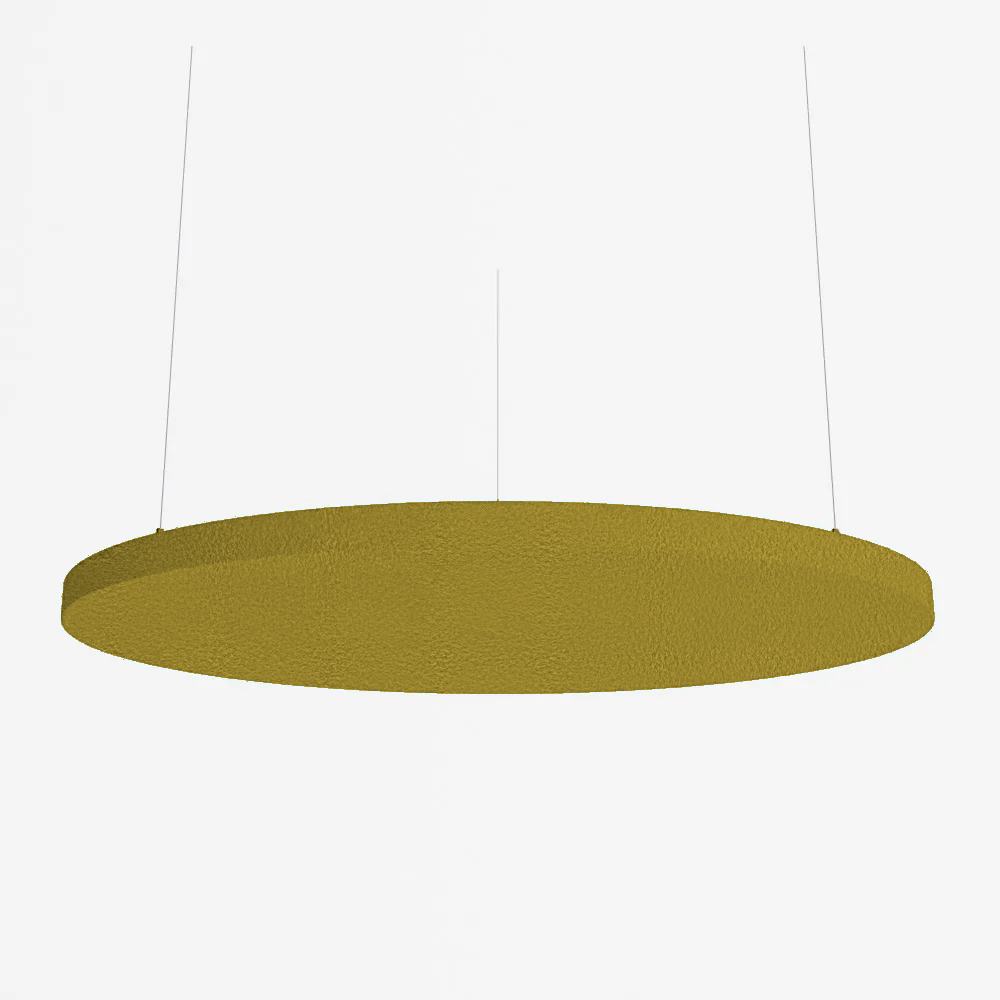
Distributed circular rafts in clusters work well here. Breaking the treatment into smaller units spread across the ceiling gives more even absorption than the same area concentrated in one place, and it lets you create visual zoning between desk groups without putting up screens. SilentSpace circle rafts come in 48 Camira colourways, so zoning by colour is straightforward.
Exposed concrete soffits and high ceilings
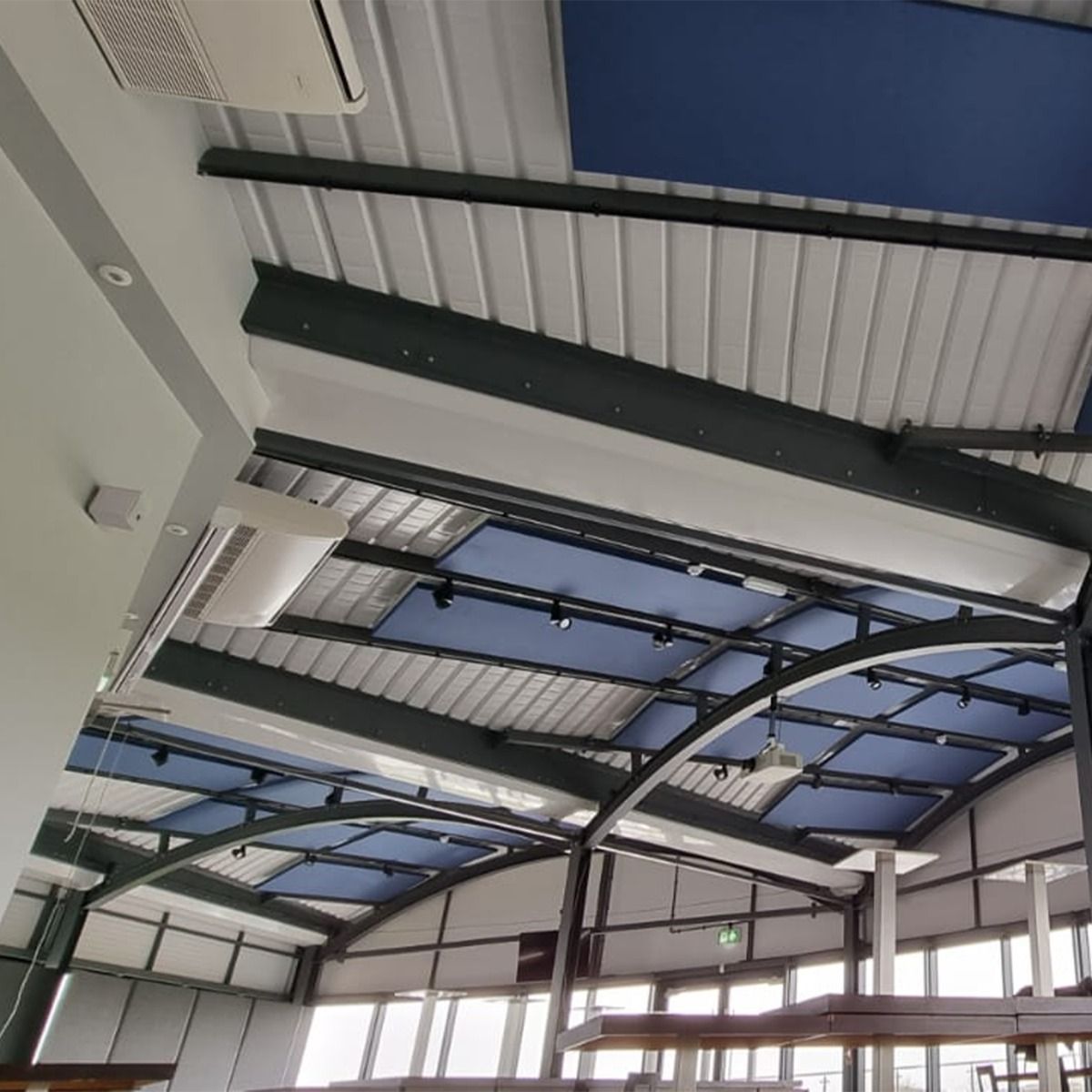
A bare concrete soffit reflects mid and high frequencies straight back into the room, which is exactly the range that carries speech. Large-format rectangular rafts give you more absorbing area per fixing point and per hour of installation time. Our custom-size SilentSpace rafts go up to 2400 × 1200mm, which helps when you are working around existing services and want the panels to sit within the structural grid rather than fight it.
Meeting rooms
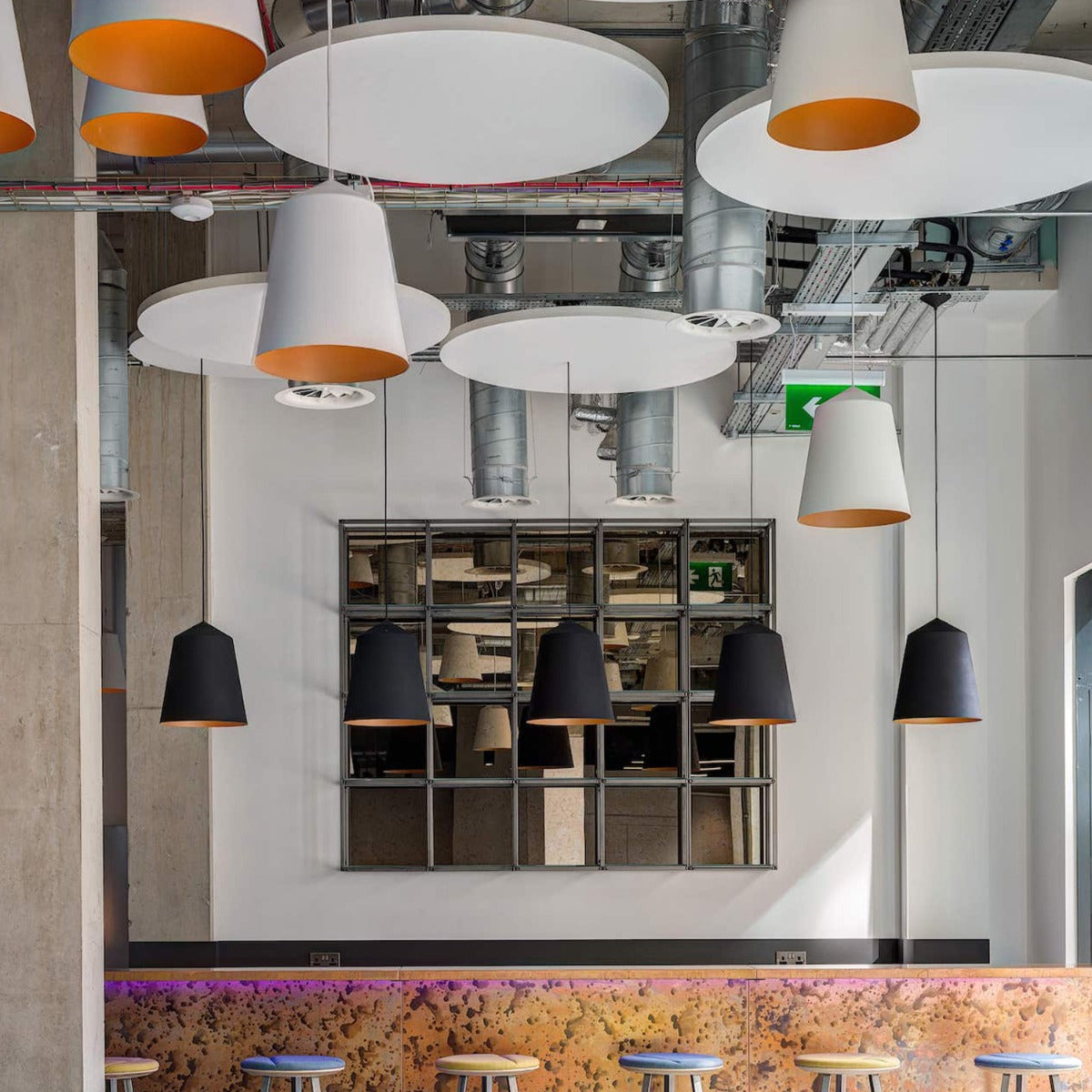
Meeting rooms are about intelligibility rather than volume. The reflection you most want to catch is the one bouncing off the ceiling directly above the table, which arrives at the listener just behind the direct sound and smears consonants. A raft centred over the table addresses it directly, and the improvement on video calls is usually the thing people notice first. The Ecophon Solo Circle is supplied in packs of four, which typically covers a room of this size.
Design-led spaces
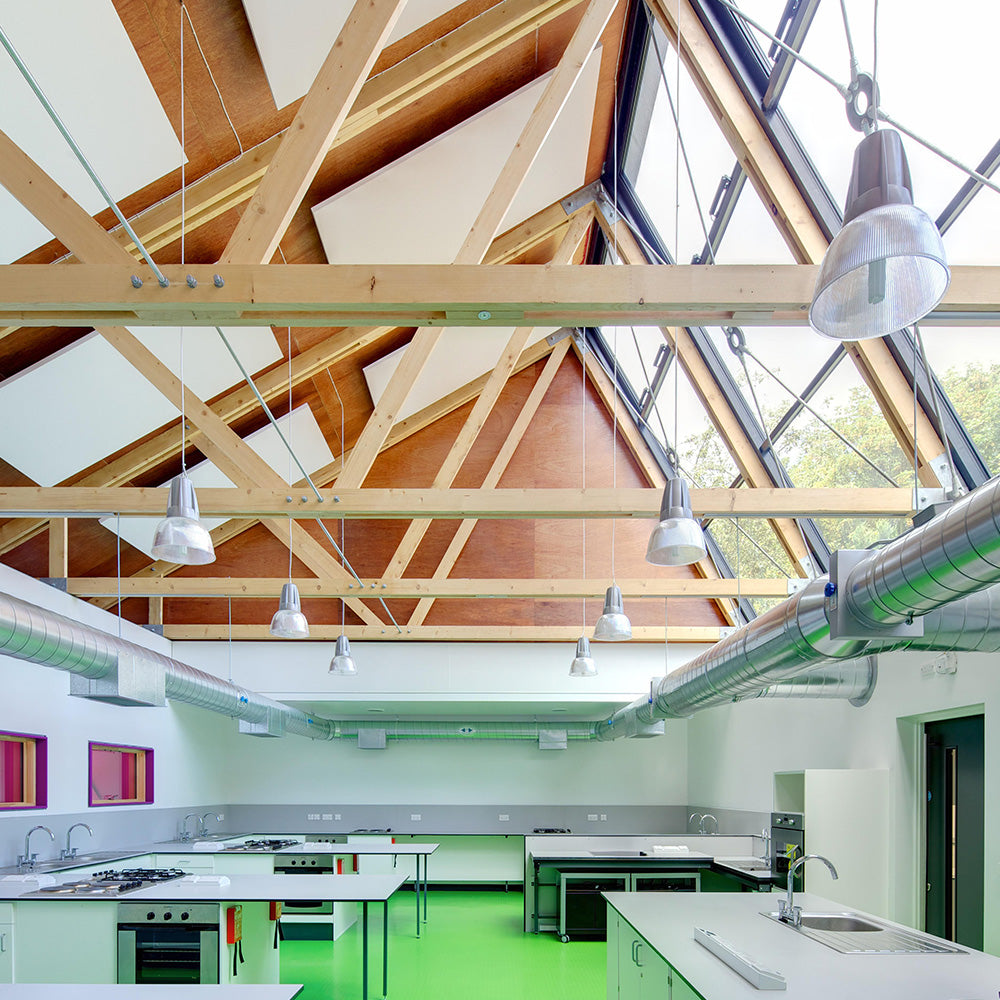
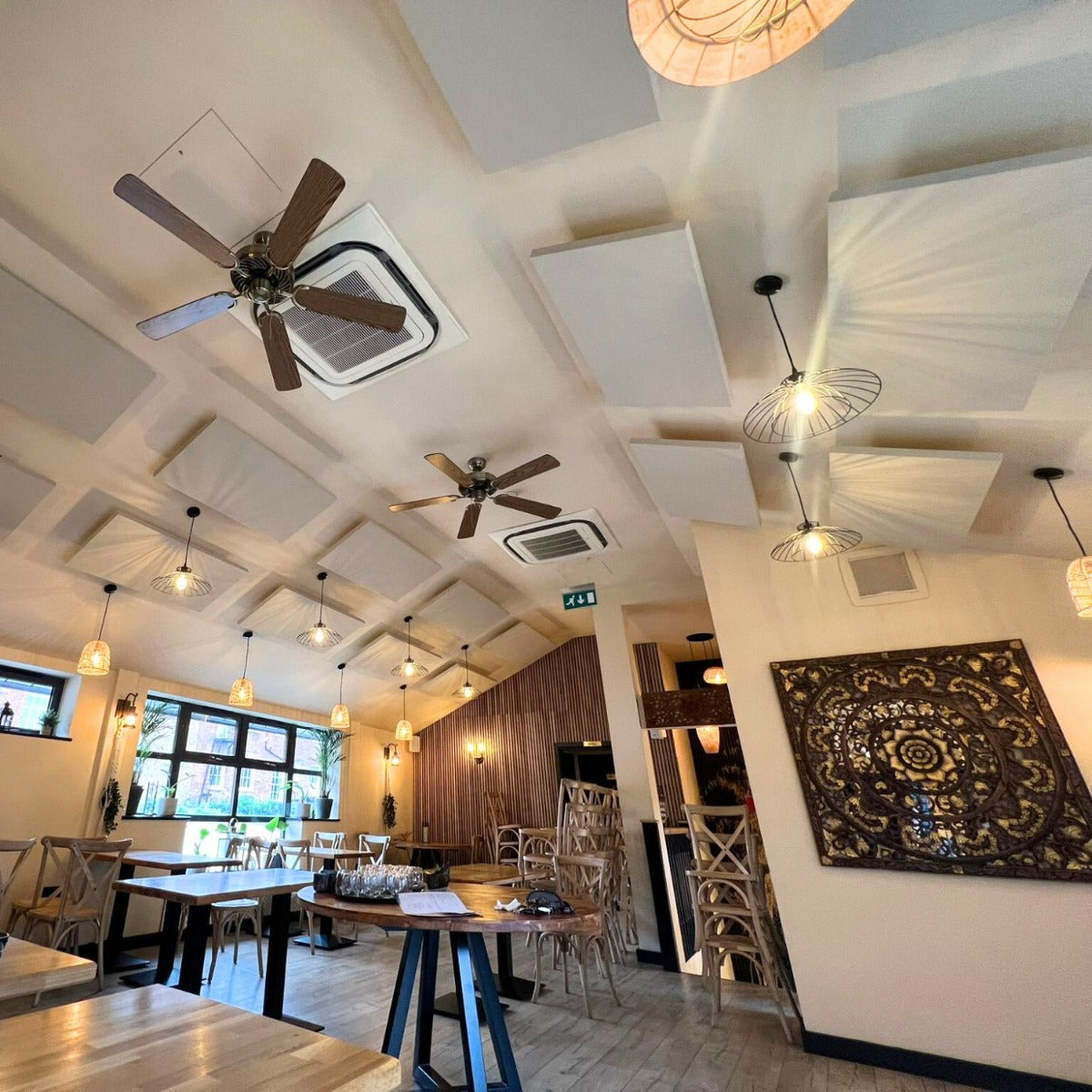
Where the ceiling is part of the design intent, square rafts in a repeated grid keep the visual rhythm clean while still delivering Class A absorption. The Ecophon Solo Square comes in sixteen Akutex FT colours, and our custom SilentSpace rafts can be made to any size within the range if you need the panels to align to a specific grid or lighting layout.
How many rafts do you need?
The honest answer is that it depends on room volume, ceiling height, and what the existing surfaces are made of. As a working starting point for a typical office:
- Aim for 20–40% ceiling coverage with Class A rafts. Lower end for rooms with carpet and soft furnishings, higher end for hard floors, glazing and exposed concrete.
- Prioritise the ceiling area directly above desks and meeting tables over circulation space.
- Spread the coverage rather than clustering it — distributed panels outperform a single concentrated block of the same area.
- If reverberation is still high after ceiling treatment, add wall panels rather than more rafts.
For a number specific to your room, our acoustic calculator takes about two minutes and gives you a panel quantity and a working budget before you speak to anyone.
Practical points before you order
- Drop height. Rafts perform better with an air gap behind them, but check the drop against sprinkler coverage, lighting and any fire strategy for the space. Coordination is usually what delays a raft scheme, not the panels.
- Fixings. Our SilentSpace rafts include hangers and spirals. Ecophon suspension kits are selected separately at checkout — worth checking before you place the order.
- Samples. Fabric colour reads differently under office lighting than on screen. Order a sample card before committing to a large order.
- Installation. Prices are supply only. We offer a fitting service — arrange it before purchase rather than after.
Rafts or baffles?
Rafts hang horizontally, flat to the ceiling. Baffles hang vertically, edge-on, exposing more edge area and less face area to sound arriving from below.
- Rafts suit offices with normal ceiling heights, where you want a clean horizontal plane and coordination with lighting and services.
- Baffles suit tall volumes — atria, sports halls, warehouse conversions — where sound is arriving from many directions and vertical fins intercept more of it.
For most commercial offices, rafts are the more practical choice. We stock both if you want to compare.
When you need more than panels
If you are treating a large or acoustically complicated space, working to a specified RT60 target, or dealing with sound transferring between rooms, a measured survey will save you money over guessing at panel quantities. Our sister company Resonics handles survey, design and installation for commercial projects across the UK.
For everything else — a meeting room, a floor plate, a studio — buying the panels directly and fitting them yourself is usually the sensible route, and it is what Sonio exists to make straightforward.
Frequently asked questions
What are acoustic rafts and how do they work?
Acoustic rafts are panels suspended below the ceiling that absorb sound on both faces. They reduce reverberation time and improve speech clarity by intercepting reflections before they spread across the room.
Are acoustic rafts better than wall panels?
They absorb more sound per square metre of panel because both faces are exposed. In offices with glazed walls and limited usable wall space, they are often the more efficient option, though a combination of both usually gives the best result.
How many acoustic rafts do I need for an office?
Between 20% and 40% ceiling coverage is a reasonable starting point, depending on ceiling height and how reflective the existing floors and walls are. Our acoustic calculator will give you a figure for your specific room.
Do acoustic rafts block noise between rooms?
No. Rafts absorb sound within a room. Stopping sound transmitting between rooms requires mass and airtight sealing, which is a construction problem rather than a panel problem.
What absorption rating should acoustic rafts have?
Class A under BS EN ISO 11654, meaning a weighted absorption coefficient of 0.90 or above. Lower classes work, but you will need considerably more ceiling coverage to achieve the same reduction in reverberation.
Can acoustic rafts be fitted in an occupied office?
Yes. Rafts suspend from the existing soffit or structure with hangers and require no alteration to the ceiling, which makes them well suited to retrofits and out-of-hours installation.
What fire rating do acoustic rafts need?
Most commercial offices will require a Euroclass rating under BS EN 13501-1. Ecophon Solo rafts are classified A2-s1,d0 and SilentSpace ceiling rafts are B-s1,d0. Where a fire strategy specifies limited combustibility, you will need the A2 rating. Certification is available on request.


