










Blog
Blog

10 Acoustic Panels for Gyms: Improve Your Workout Space or Business in 2026
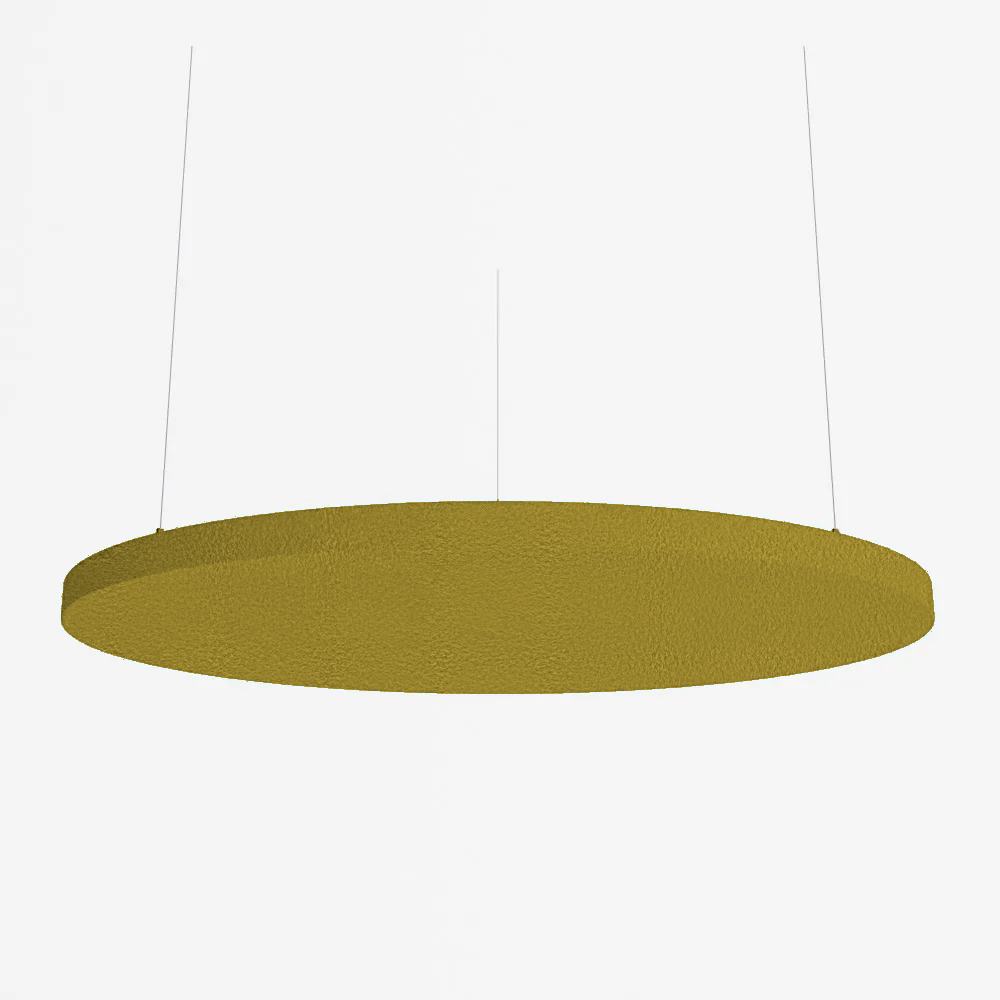
Updated: June 2026 If you've ever strained to hear an instructor over the noise of a busy class, you already understand the problem acoustic panels for gyms are built to solve. Gyms are among the most acoustically punishing spaces you can put people in: hard floors, mirrored walls, glass, exposed ceilings and relentless equipment noise combine to create long reverberation times that blur speech, muddy music, and leave both members and instructors more worn out than the workout alone would explain. Key Takeaways Question Quick Answer Do gyms really need acoustic panels? Yes. Hard surfaces everywhere mean reverberation times well above 2 seconds. Acoustic panels bring that down toward the recommended target of ≤1.5 seconds (RT60 at 500-2000 Hz). Where should panels go in a gym? Treat the ceiling first. Ceiling rafts and baffles usually give the biggest improvement per pound spent. Follow with upper wall sections. Do gym panels need to be impact-resistant? For wall placement below 2.5m, yes. Products like the Ecophon Akusto Wall A are specifically engineered for heavy-use sports environments. How many panels does a gym need? Acoustic practitioners generally recommend covering 15-25% of total surface area as a starting point for noticeable echo reduction and improved speech intelligibility. What NRC rating should gym panels have? Look for NRC 0.80 or above. A panel rated NRC 0.85 absorbs 85% of the sound that hits it, which is meaningful in a space where every dB of reduction counts. Are gym acoustic panels the same as soundproofing? No. These panels handle absorption and reverberation control inside the room. Soundproofing is a structural issue. Both matter, but they solve different problems. Browse the full range Sports hall and gym acoustic panels at Sonio, including impact-resistant options. Why Gym Acoustics Are So Bad (and Why That's the Most Fixable Problem You Have) It helps to be clear about what's actually happening, because it isn't a volume problem — it's a room problem. Sound reflects off all those hard surfaces and keeps bouncing long after it was made, so each new sound layers on top of the last. The result is the feedback loop every gym member knows: the room gets loud, so instructors raise their voices to compete, which makes the room louder still. Reverberation times in untreated gyms regularly sit between 2 and 4 seconds, climbing higher again in large sports halls — well above the ≤1.5 second target widely used for these spaces. The good news is that a noisy gym is one of the most fixable problems in any fitness business. The right panels in the right positions bring reverberation time (RT60) down to a range where speech is intelligible, music sounds clear rather than smeared, and people stop leaving exhausted by the sheer effort of processing sound. This guide walks through ten panels we'd recommend across ceiling and wall applications, and the simple ceiling-first logic for deciding what to treat in what order. Understanding Acoustic Panels for Gyms Before You Buy Not all acoustic panels are built for a gym environment. This is worth understanding before you spend a penny. A standard office panel might be rated NRC 0.90 and look great, but place it at 1.5m height on a sports hall wall and it will be destroyed within weeks by stray balls, equipment contact and general traffic. Gym-specific acoustic panels for sports halls carry impact resistance ratings, harder surface facings, and often a Class A fire classification suited to large, high-occupancy spaces. There are two key measurements to hold in your head when comparing options: NRC (Noise Reduction Coefficient): A scale from 0 to 1. A panel rated NRC 0.85 absorbs 85% of the sound that hits it. This is why the internal structure of a panel matters so much, because the core material (glass wool, polyester fibre, mineral wool) does the heavy lifting, not the surface finish. RT60 (Reverberation Time): How long in seconds it takes for sound to decay by 60dB after the source stops. Your target for a gym or sports hall is ≤1.5 seconds at mid-frequencies (500-2000 Hz). These two numbers together tell you whether a panel will actually shift your room's acoustic performance, not just add a decorative element to a wall. Did You Know? ISO 3382 guidance sets a target reverberation time (RT60) of ≤1.5 seconds at 500–2000 Hz for gymnasium environments. Most untreated sports halls sit between 2 and 4 seconds. Source: AcousPlan / ISO 3382 10 Acoustic Panels for Gyms: Our Recommended Options to Improve Your Workout Space or Business Below are ten products we recommend across ceiling and wall applications, chosen for performance, durability and suitability for gym and sports hall environments. They run in priority order: treat the ceiling first, then upper walls, then lower walls with impact-rated panels where budget allows. 1. SilentSpace Circle Acoustic Raft (Class A, Made to Size) Best for: Ceiling-first treatment in studios, PT rooms, spin and yoga spaces — and the natural starting point for almost any gym, since the ceiling is usually the priority surface. The SilentSpace Circle is one of Sonio's best-selling acoustic rafts and the natural starting point for the ceiling-first approach. Each 40mm raft is a genuine Class A absorber, suspended on adjustable wire hangers (Gripple hangers and spirals included), so it intercepts sound before it can reflect off a hard ceiling and return to the floor amplified. Made to order and wrapped in your choice of Camira fabric, multiple rafts across the ceiling grid deliver the most immediate, measurable drop in reverberation time. View the SilentSpace Circle Acoustic Raft 2. SilentSpace Rectangle & Square Acoustic Rafts Best for: Grid-pattern ceiling treatment where modular, repeatable coverage is important. Where a gym has exposed structural bays or a regular ceiling grid, the rectilinear SilentSpace rafts align cleanly and make coverage easy to calculate. They share the same 40mm Class A construction and Camira fabric options as the Circle, so you can mix formats across a single ceiling for an installation that looks intentional rather than retrofitted. Pair squares and rectangles with circles to break up a large ceiling plane while keeping the acoustic performance consistent. View the SilentSpace Rectangle Acoustic Raft 3. SilentSpace Hexagon Acoustic Raft Best for: Design-led boutique studios and premium fit-outs where the ceiling is part of the brand statement. The Hexagon raft offers the same Class A absorption in a more architectural format. Arranged in a honeycomb pattern or scattered across a ceiling, it doubles as a visual feature in spaces where the interior design carries part of the brand proposition. Made to size and wrapped in Camira fabric, it lets you specify colour and layout to suit the room rather than working around fixed panel dimensions. View the SilentSpace Hexagon Acoustic Raft 4. Ecophon Solo Circle / Square (Suspended Acoustic Raft) Best for: Buyers who specifically want a mineral-wool ceiling raft, where the look can lean technical rather than design-led. The Ecophon Solo range is a Class A suspended raft built around a mineral-wool core in a White Frost finish that suits most commercial gym interiors. It works on the same principle as the SilentSpace rafts — intercepting sound before it reflects back into the room — and is a credible alternative for specifiers who prefer a mineral-wool product. Available in both circular and square formats for mixed ceiling layouts. Browse acoustic ceiling rafts 5. Ecophon Akusto Wall A (Impact-Resistant, Pack of 4) Best for: Lower wall zones in sports halls and gym floors where impact risk is high. This is the panel to start from when wall treatment drops below 2.5m in any active zone. Built around a glass-wool core with a surface engineered to take knocks, scuffs and ball strikes without losing absorption performance, the Akusto Wall A delivers serious sound absorption and genuine physical toughness in the same panel. Fabric-wrapped panels won't survive at these heights, which is exactly why an impact-rated product is the honest choice here. View the Ecophon Akusto Wall A 6. Ecophon Akusto Wall C (Impact-Resistant, 2700 × 600) Best for: Larger impact-rated coverage runs in sports halls, changing rooms and high-activity corridors. The Akusto Wall C shares the impact-resistance credentials of the Wall A in a taller 2700 × 600mm format. The larger panel size means you cover more wall area with fewer fixings — useful when you're treating 30 to 50 square metres of wall — and fewer joints means a cleaner installation with fewer weak points over time. View the Ecophon Akusto Wall C 7. SilentSpace Square Fabric Wrapped Wall Panel Best for: Upper wall sections above impact height, where softer high-absorption panels do their best work. Above roughly 2.5m, ball strikes and equipment contact are no longer the risk, so a softer fabric-wrapped panel with high absorption becomes the better choice. SilentSpace Square wall panels are Class A absorbers, made to size and wrapped in Camira fabric, with fixings and adhesive included. They're ideal for treating the upper-wall band that behaves much like the ceiling in absorption terms, and they let you carry a consistent fabric and colour through the space. View the SilentSpace wall panel range 8. SilentSpace Rectangular Wall Panel (Used in Series) Best for: Studio, reception and wellness zones where a continuous run of panels gives even mid-frequency absorption. Don't underestimate smaller panels used in series. A run of SilentSpace Rectangular wall panels across an upper-wall section delivers meaningful mid-frequency absorption — precisely the range where speech intelligibility problems concentrate — in smaller rooms. Modular, made to size and supplied with fixings and adhesive, they're a clean way to treat studios and reception areas without committing to a single large panel. View the SilentSpace Rectangular wall panel 9. SilentSpace Printed Acoustic Panel Best for: Branded colour, zoning schemes, or a feature wall that earns its place visually as well as acoustically. The SilentSpace Printed panel is a Class A absorber that takes your own print-ready artwork, so the acoustic treatment can carry brand graphics, wayfinding or a studio mural rather than reading as a utilitarian board. It's a strong fit for functional-fitness zones, reception walls and class studios where the interior is part of the offer — sound absorption and brand presence from the same surface. View the SilentSpace Printed Acoustic Panel 10. Autex Cube Acoustic Panel (2440 × 1220mm) Best for: Budget-conscious installs and spaces where a wide colour choice matters alongside performance. Made from recycled PET fibre in 17 colours, the large-format Autex Cube covers substantial surface area per unit, which makes it efficient for tighter budgets. PET absorbers perform well across the mid and high frequencies — exactly where gym noise and speech-intelligibility problems sit — and the colour range lets you match brand or zoning schemes. Best used on upper wall sections above impact zones, or as ceiling baffles in studios and spin rooms. View the Autex Cube Not sure how many panels your space needs? Use our free acoustic calculator to estimate your current RT60 from your room dimensions and surface types, then work through the ceiling-first order above. You can also browse the full acoustic ceiling rafts and wall panel ranges to compare options across both categories. Did You Know? Adding a band of absorptive panelling to a gymnasium can reduce mid-band average reverberation time by 0.6 to 1.0 seconds, a measurable and immediate improvement in acoustic comfort. Source: Canadian Acoustics Journal How to Choose Acoustic Panels for Your Gym or Workout Space The product selection above covers ten strong options, but the right choice for your specific gym depends on a few clear questions. What is your current RT60? If you do not know, use our free acoustic calculator to estimate it from your room dimensions and surface types. We have developed it to assist you with calculating the current reverb time within your space, and the impact acoustic panels can have. That number tells you how much absorption you need to add before you decide what products to buy. Where is the panel going? This is the most important practical question. Wall panels below 2.5m in active zones must be impact-resistant. Ceiling panels and high-wall installations can use softer materials with higher NRC ratings. Treat the ceiling first in any large-volume space. What coverage percentage are you targeting? Acoustic practitioners commonly recommend 15-25% of total surface area as a starting point for noticeable echo reduction. Ten panels of 2440 x 1220mm cover approximately 29.9 square metres. In a 300 square metre gym, that is roughly 10% of one surface plane. You may need more, and the calculator will tell you precisely. What is the fire classification requirement? Any panel used in a commercial gym or sports hall in the UK should carry a UK/EU fire classification. Check product specifications before purchasing, and if in doubt, ask. Every product in our sports hall acoustic panels collection is specified with fire classification data. Ceiling vs Wall: Where Acoustic Panels for Gyms Deliver the Most Improvement The ceiling versus wall decision is not a matter of preference. It is a matter of physics. In a typical gym with a 6 to 8 metre ceiling height, the ceiling plane has the largest unobstructed surface area in the room. Sound travels upward, reflects off a hard ceiling, and returns to the room amplified and blended with other reflections. This single surface is responsible for the majority of the long, harsh reverb tail that makes gyms so acoustically fatiguing. Treating it first (with rafts, baffles, or ceiling panels) delivers the biggest reduction in RT60 for the surface area covered. Wall treatment matters, but its priority changes by height. Upper wall sections (above 2m) behave similarly to ceiling treatment in terms of absorption efficiency. Lower wall sections require impact resistance, but their contribution to overall RT reduction is proportionally smaller unless the room is relatively low-ceilinged. The practical rule for gym spaces: rafts and baffles on the ceiling first, then upper walls, then lower walls with impact-rated panels if budget allows. Browse our full range of acoustic ceiling panels and rafts and acoustic wall panels to compare options across both categories. Acoustic Panels for Gym Spaces in 2026: What Has Changed In 2026, the conversation around gym acoustics has moved well beyond "reduce echo." Gym owners and facility managers are increasingly treating acoustic design as a direct contributor to member wellbeing, instructor longevity, and class quality scores. The connection between reverberation and fatigue is now better understood among fitness operators. High RT environments force the brain to work harder at processing speech, which compounds the physical fatigue of a workout. Members leave feeling more drained than they should. Instructors experience vocal strain at a higher rate in reverberant rooms. Both of these outcomes have a direct commercial impact that acoustic treatment can measurably address. There is no longer a trade-off between performance and appearance, which means the one remaining barrier for most gym owners is knowing where to start. Start with the ceiling. Use the calculator. Pick panels rated NRC 0.80 or above. That is the short version, and it is enough to get the process moving. Conclusion: Acoustic Panels for Gyms Are an Investment, Not a Cost The 10 acoustic panels for gyms listed in this article cover every scenario, from impact-resistant wall treatment in a busy sports hall to architectural ceiling rafts in a boutique studio. Improving your workout space or business with acoustic treatment is not about silencing the room. It is about absorption and clarity: bringing RT60 down to a range where speech is intelligible, music sounds intentional rather than muddled, and the people using your space leave feeling good rather than worn out by noise. Use our acoustic calculator to get a baseline RT60 estimate for your space, then work through the ceiling-first priority order. The improvement is immediate and measurable, and in most gym environments it is one of the most cost-effective changes you can make to the space in 2026. Frequently Asked Questions Are acoustic panels for gyms worth it in 2026? Yes. With reverberation times in untreated gyms regularly between 2 and 4 seconds, targeted acoustic treatment using panels rated NRC 0.80 or above can bring RT60 down toward Resonics recommended target of ≤1.5 seconds. That is a measurable, immediate improvement in speech intelligibility, member comfort and instructor welfare. What is the best acoustic panel for a sports hall or gym? For wall zones below 2.5m in active gym areas, the Ecophon Akusto Wall A or Akusto Wall C (both impact-resistant) are the most appropriate choices. For ceiling treatment, which should always come first, the SilentSpace suspended rafts deliver Class A absorption and the largest RT improvement per pound. How many acoustic panels does a gym need? Acoustic practitioners use a rule of thumb of treating 15-25% of total surface area to achieve noticeable echo reduction and improved speech intelligibility. Use a reverberation calculator with your room dimensions to get a precise absorption target before ordering panels. What is the difference between soundproofing and acoustic panels for gyms? Acoustic panels control reverberation and echo inside the room by absorbing sound energy. Soundproofing prevents sound from passing through walls, floors, or ceilings to adjacent spaces. Acoustic panels for gyms do not stop noise leaving the building; they reduce the harshness and echo within it. Both are valid goals, but they require completely different solutions. Can I use standard office acoustic panels in a gym? Not on lower walls or in impact zones. Standard office panels use soft face fabrics and lightweight cores that will not survive the physical contact common in gym environments. For any wall area below 2.5m in an active space, you need impact-resistant panels specifically rated for sports hall use. How do I calculate how many acoustic panels my gym needs? The most reliable method is to use an RT60 calculator: enter your room's length, width and height, then estimate the absorption coefficient of existing surfaces (concrete, glass, floor type). The gap between your current RT60 and the target (≤1.5 seconds) tells you how much additional absorption area you need, which translates directly into a panel count. Our acoustic calculator at Sonio is built for exactly this purpose. Do gym acoustic panels need a fire rating? Yes. Panels in a commercial gym need a Euroclass rating under BS EN 13501-1. The regulatory minimum depends on location: C-s3,d2 for most rooms over 30m², and B-s3,d2 for corridors and circulation spaces. Most commercial projects specify B-s1,d0 or better. There is no "Class A" fire rating in the UK; Class A is a sound absorption class under EN ISO 11654
Read more
How Do Acoustic Panels Work? A Simple Guide
Last update: 20th August 2026 If a room sounds echoey, harsh, or is simply hard to hold a conversation in, the problem is reflected sound. Hard surfaces — concrete floors, plasterboard walls, glass — send sound bouncing around the room until it builds into a wall of noise. Acoustic panels absorb that energy before it can reflect back. Understanding how helps you choose the right panels, put them in the right places, and get a result you can actually hear. This guide covers the physics of absorption, the panel types and materials, how thickness changes performance, how to read the ratings, and where panels make the biggest difference. The problem acoustic panels solve Sound travels outward from a source in all directions. When those waves hit a hard, dense surface, most of the energy reflects straight back into the room. The process repeats — wall to ceiling to floor and back — creating overlapping reflections known as reverberation. High reverberation makes speech harder to follow, music muddier, and background noise louder. In a workplace it causes fatigue and kills concentration. In a recording space it prints room sound onto the take. In a restaurant or classroom it turns ordinary conversation into work. Acoustic panels interrupt the cycle. Instead of reflecting sound back into the room, they absorb it, converting the energy of the wave into a very small amount of heat inside the material. The science behind sound absorption When a sound wave enters a porous or fibrous material, the air molecules carrying it are forced through a dense network of fibres or open cells. Friction between the moving air and the material converts acoustic energy into heat. The wave loses energy rather than bouncing back. This is why the internal structure matters more than the surface. A smooth, dense face reflects. A soft, open-celled or fibrous core absorbs. The more tortuous the path through the material, the more energy is lost — which is why thicker panels absorb further down the frequency range. How absorption is measured Absorption is measured in a laboratory to BS EN ISO 354 and reported as a sound absorption coefficient at each frequency band, from 0 (fully reflective) to 1 (fully absorptive). Those figures are then condensed into a single weighted value, αw, and an absorption class from A to E under BS EN ISO 11654. Class αw What it means in practice A 0.90 – 1.00 Highest performance. The standard for ceiling products and for wall panels doing the main work. B 0.80 – 0.85 Strong performance. Works well where coverage is generous. C 0.60 – 0.75 Useful as part of a scheme. Common for thinner PET panels. D 0.30 – 0.55 Limited. Supplementary or largely decorative. E 0.15 – 0.25 Minimal absorption. Do not expect an audible change. Two things to watch. First, the fixing methods: the same panel tested flat against a wall and tested with an air gap behind it gives different results, so always compare like for like. Second, you will sometimes see the Noise Reduction Coefficient (NRC) quoted, which is the American equivalent under ASTM C423. It is an average of four frequency bands rounded to the nearest 0.05, so it is a rougher measure than αw and not directly interchangeable with it. UK and European products publish absorption class — use that. Three types of acoustic panel Not all panels absorb the same way. There are three mechanisms, each suited to a different part of the frequency spectrum. Porous absorbers The most widely used type, and what most people picture. Porous absorbers use open-celled or fibrous materials — mineral wool, glass wool, polyester fibre, foam — that let sound pass into the panel and lose energy through friction. They are most effective above roughly 500 Hz, which covers the bulk of the speech range. The Autex Cube is a good example: a structured PET fibre panel giving broadband absorption with a distinctive surface texture. Membrane absorbers A membrane absorber is a thin, flexible panel mounted over a sealed air cavity. Low-frequency sound sets the membrane vibrating, and that vibration dissipates energy. They work in the bass region that porous absorbers struggle with, roughly 60–250 Hz, but only across a narrow band centred on the frequency they are tuned to. Resonance absorbers Also called Helmholtz or perforated panel absorbers. A perforated face, an air gap and a backing material combine to target a specific frequency band. Adjusting the size and spacing of the perforations and the depth of the cavity tunes where the panel absorbs hardest. These are specified where a room has a defined problem, such as a standing wave at a particular frequency. Materials Glass wool — Used in a large proportion of commercial panels for its high absorption coefficients, consistent performance and fire resistance. Ecophon products use a glass wool core achieving Class A. Mineral wool (stone wool) — Comparable acoustically, with added thermal insulation. Often high in recycled content. PET fibre — Made from recycled bottles. Increasingly common for its environmental credentials and the fact it can be cut, grooved and shaped. Polyurethane and melamine foam — Light and easy to cut, best at higher frequencies. Suited to small rooms and DIY treatment. Fabric-wrapped panels — A fibrous absorptive core wrapped in acoustically transparent fabric, so sound passes through to the core while the panel reads as a finished surface. Whatever the material, check the Euroclass fire rating under BS EN 13501-1 before specifying for a commercial building. Our guide to Euroclass and BS EN 13501-1 covers what is required where. How thickness changes what gets absorbed Thickness is the most underestimated factor in panel selection. The relationship is simple: thicker panels absorb lower frequencies. Low-frequency sound waves are physically longer. To absorb one, the panel needs enough depth for the wave to enter and lose energy before it reflects. A thin panel gives a long wavelength nowhere to go. Thickness Effective from around Use it for 25mm 500 Hz and above Brightness, sibilance and hard high-frequency reflections in mildly reverberant rooms. 40–50mm 250 Hz and above General room treatment. The most versatile option for offices, classrooms and listening rooms. 100mm Below 250 Hz Bass control. Corner traps and thick wall panels in studios. An air gap behind the panel achieves some of the same effect without extra material. Mounting a 25mm panel on a 25mm batten pushes its useful range lower, which is why mounting condition appears on every proper test certificate. If the room has a general echo problem with no specific frequency issue, 40–50mm panels across walls and ceiling will usually deliver a clear improvement. If it is boomy and resonant, you need thicker panels or purpose-built membrane absorbers. Wall panels or ceiling panels? Wall panels The most straightforward treatment for most rooms. They fix directly to the wall with adhesive, impaling clips or Z-bars, and can be placed precisely at first reflection points — where sound bounces off a wall before reaching the listener. Where ceilings are low or ceiling access is limited, walls carry most of the load. The range of sizes and finishes available means they need not look utilitarian. Ceiling panels Hard ceilings are the biggest single contributor to reverberation in open-plan spaces. Sound bounces freely between floor and ceiling, and the larger the room, the worse it gets. Ceiling panels — suspended as rafts, hung as baffles, or fixed flush — absorb on both faces and their exposed edges simultaneously, so they remove more energy per square metre of product than the same panel flat on a wall. For open-plan offices, restaurants, sports halls and classrooms, ceiling panels do the heaviest lifting. The Ecophon Solo range illustrates it well: the Solo Square and Solo Circle both use a glass wool core that absorbs across the speech range on both exposed faces. Where a raft is not practical, vertical baffles expose even more surface area to the room and suit tall, warehouse-style spaces. Where panels make the biggest difference Offices and meeting rooms The objective is not neutrality but a lower background level and clearer speech. Open-plan floors suffer from long reverberation times that amplify ambient noise and make concentration harder. Ceiling rafts distributed over the occupied areas, with wall panels at the worst reflection points, is the standard approach. In meeting rooms, treat the side walls at first reflection points and the ceiling above the table. See our guide to acoustic panels for offices, or the Autex Quietspace Wrapped range in custom sizes. Classrooms and educational spaces Poor classroom acoustics directly affect learning. Pupils who cannot hear clearly disengage, and teachers end up projecting all day. In England, Building Bulletin 93 sets maximum reverberation times for school spaces, varying by room type and use, with tighter limits for SEN provision. Rooms with hard ceilings and floors routinely exceed them. A combination of ceiling rafts and wall panels usually brings them back within range. Browse classroom acoustic panels. Restaurants, cafés and hospitality Noise is one of the most common complaints in customer feedback. Tiles, concrete and glass create a reverberant space that becomes tiring within minutes. Ceiling treatment works best here because it covers the full plan area rather than just the perimeter. See restaurant and bar acoustic panels. Recording studios and home studios Studios need the most thorough treatment, because the goal is a neutral room that adds nothing to the capture. That usually means porous absorbers on walls and ceiling for mid and high frequencies, thick panels or traps in the corners for the low end, and sometimes diffusion to keep the room from going completely dead. Coverage is far higher than in a commercial interior. See studio acoustic panels. What difference do panels actually make? With the right panels in the right places, the change is immediate and measurable. Reverberation time is the headline figure: a room with a long, obvious decay can usually be brought down to a level where speech is comfortable, and that is what people notice first. Absorption also lowers the background noise level. A reduction of around 10 dB is perceived as roughly half as loud, though in practice a well-designed scheme in an office typically achieves less than that from absorption alone — the gain is real but more modest than some suppliers imply. Speech intelligibility improves alongside it, which is usually the outcome people actually wanted. The variable that decides all of it is coverage. Treating a small fraction of the surface area produces a small result. Rather than working to a rule of thumb, calculate what your specific room needs — our acoustic calculator gives you a target absorption area and an indicative budget from your room dimensions in two minutes. Where to place panels First reflection points matter most in rooms with a fixed listening position — studios, home theatres, meeting rooms. These are the points where sound from the source bounces off a wall before reaching the listener. Find them by sitting in the listening position while someone slides a mirror along the side wall: wherever you can see the source in the mirror is a first reflection point. Ceiling coverage is the priority in open-plan spaces, where there is no single listening position to optimise for. Distribute rafts or baffles evenly across the ceiling above the occupied areas rather than clustering them. Corners are where low-frequency energy concentrates. Thick or floor-to-ceiling panels in corners address this far more effectively than flat wall panels alone. Fixing methods — adhesive, impaling clips and Z-bar systems — are covered in our guide to installing acoustic wall panels. Choosing the right panels Room size and ceiling height Larger, taller rooms produce longer reverberation and need more coverage. Suspended rafts become more effective as ceiling height increases, because the air gap between raft and structural ceiling extends absorption further down the frequency range. The frequencies causing the problem Listen to what is actually wrong. General harshness or brightness? 25–40mm panels will handle it. Boomy and resonant? You need thickness, corner treatment or membrane absorbers. Dialogue unclear in an otherwise reasonable room? Mid-frequency absorption on side walls and ceiling. Absorption class Class A for anything doing the main work. Lower classes are fine as supplementary or decorative elements but will not carry a scheme alone. Check the mounting condition the figure was tested in. Appearance Panels no longer need to look industrial. Options range from the textured PET of the Autex Groove range to fabric-wrapped panels for corporate interiors and decorative pieces. Budget Balance coverage against per-panel cost. A larger area of mid-range panels will almost always outperform a small area of premium ones. Entry-level panels suit home use and small rooms; commercial-grade products from Ecophon, Abstracta and Offecct carry higher prices reflecting their Class A performance, fire certification and finish quality. Conclusion Acoustic panels work by converting sound energy into heat through friction as the wave passes into an absorptive material. Type, material, thickness and placement together determine which frequencies get absorbed and how well. Used properly, they reduce reverberation, improve speech clarity and make a room noticeably easier to work, record or spend time in. The right answer depends on your space — its size, its surfaces, the frequencies causing trouble, and how it is used. Start with the acoustic calculator to find out how much absorption you need.
Read more