









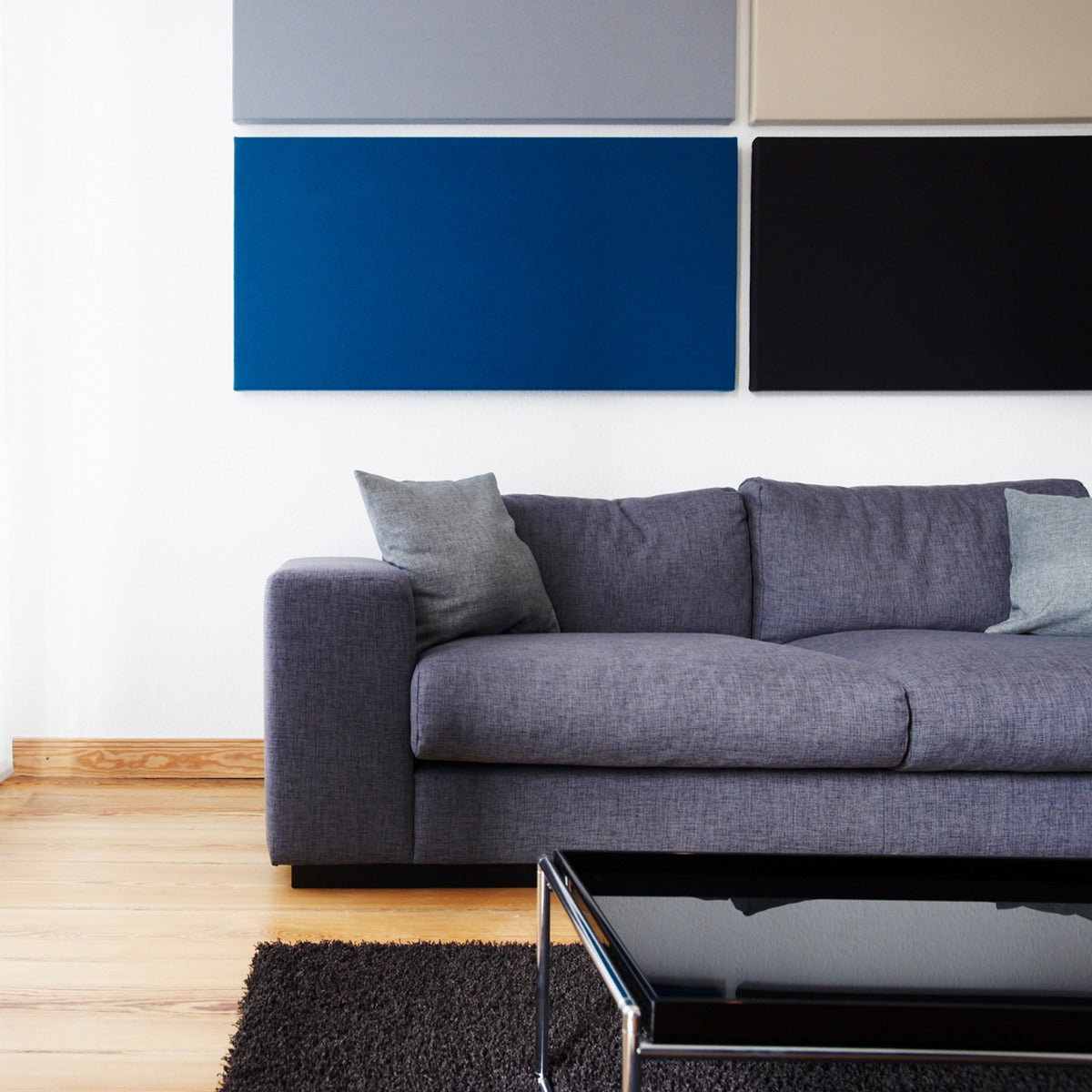


Made-to-measure acoustic treatment for offices, studios and commercial interiors. Bespoke dimensions, Class A absorption, and a finish that works with your design rather than around it.
Request a Custom QuoteWhy Standard Sizes Rarely Fit
Off-the-shelf panels are made to a grid. Buildings aren't. Pillar returns, window reveals, service runs and irregular wall sections all mean a standard panel leaves gaps — and gaps are untreated surface doing nothing for your reverberation time.
Made-to-measure panels solve two problems at once. Acoustically, you cover more of the wall with active absorbing material. Visually, the panelling reads as part of the interior rather than something applied to it afterwards.
Custom sizing maximises the active area of a wall, removing the dead zones that standard-size grids leave behind. More absorption per square metre of wall, and a cleaner finish.
Bespoke Fabric-Wrapped Panels
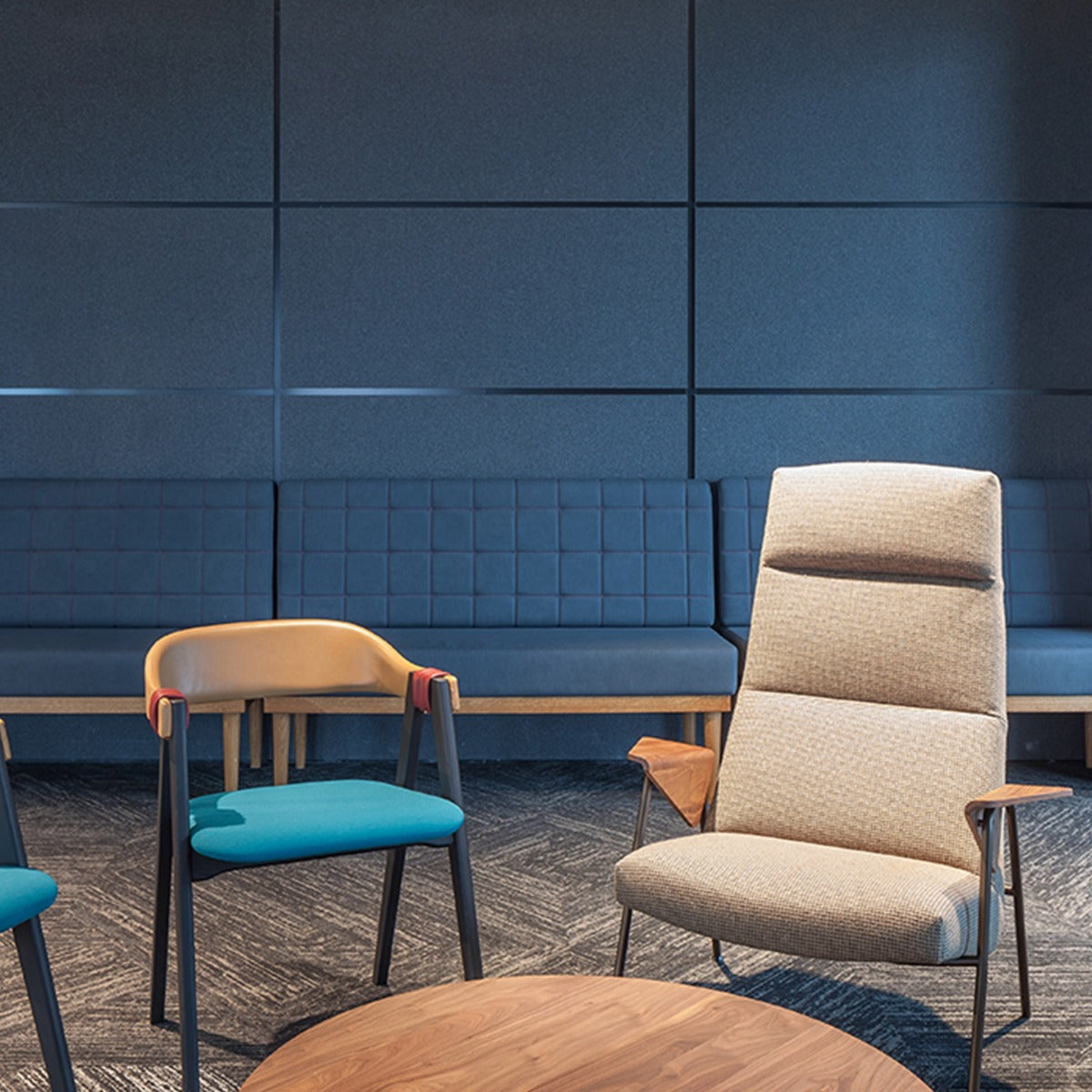
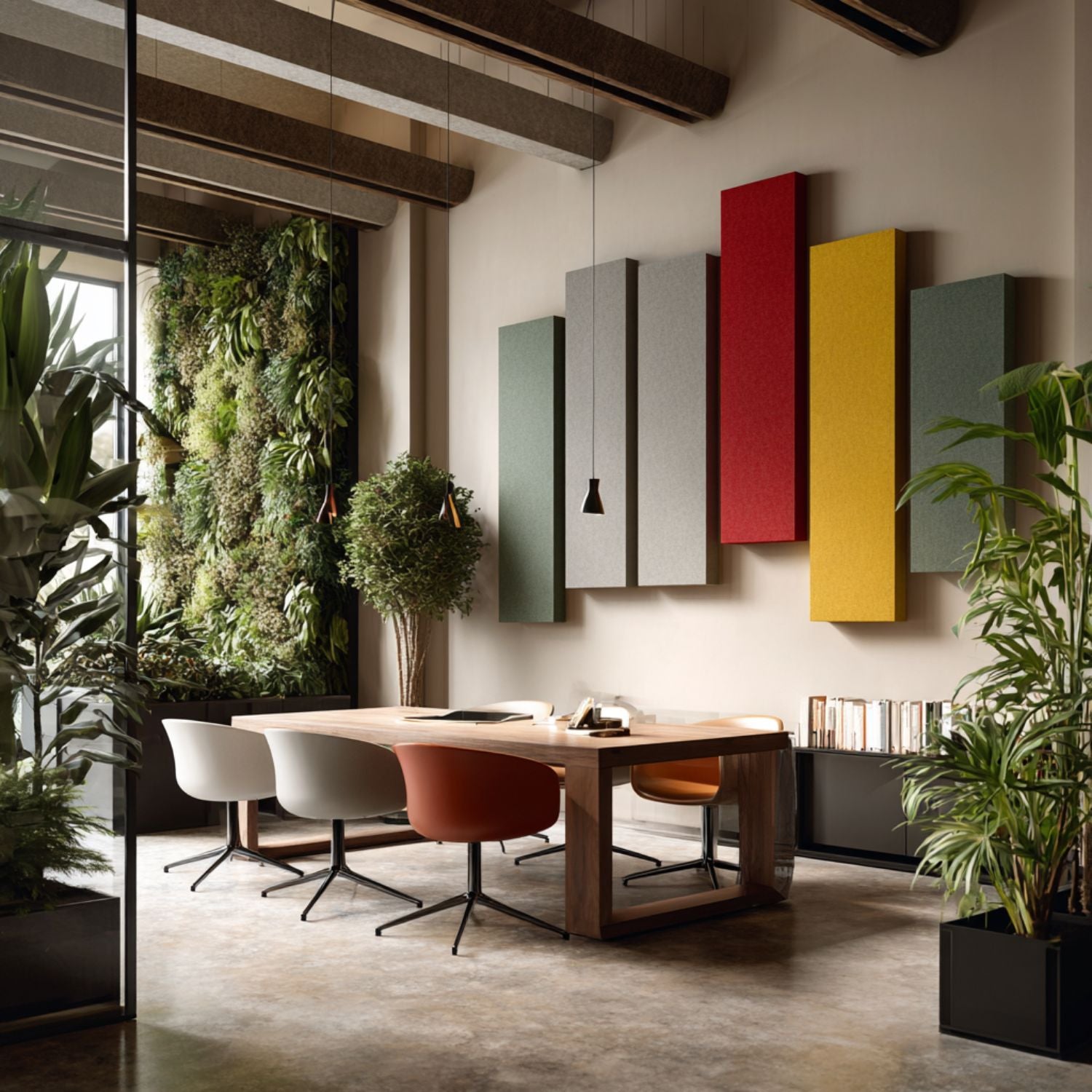
Where appearance matters as much as performance, our fabric-wrapped acoustic wall panels are built to your exact dimensions. A mineral or glass wool core does the acoustic work; the fabric is tensioned over the frame and finished at the edges.
Fabric choice
Hundreds of textures and colourways from Camira, Maharam, Kvadrat and Gabriel. Because each panel is made to order, tension and edge finishing are set for your specific dimensions.
Class A absorption
At 40mm and above, our fabric-wrapped panels reach Class A under EN ISO 11654 — the highest sound absorption class available.
Fabric-wrapped panels cannot be cut on site. The fabric is tensioned and finished over the edges during manufacture, so trimming destroys the panel. This is exactly why the made-to-measure service matters when you're fitting around existing switches, trim or fixtures — the measuring happens before production, not after delivery.
Performance by Material
Sound absorption is graded from Class A to E under EN ISO 11654, based on the weighted absorption coefficient (αw). Class A means αw of 0.90 or above. You'll also see NRC quoted on internationally sourced products — that's the US equivalent and the two aren't directly interchangeable.
| Material | Thickness | Absorption | Best for |
|---|---|---|---|
| Autex Cube (PET) | 12–24mm | Class C–D | General office echo, large wall coverings, high-traffic areas |
| SilentSpace fabric-wrapped | 25-40mm | Class A-C | Meeting rooms, restaurants, classrooms, studios |
| Ecophon Solo & Akusto | 20–40mm | Class A-C | Ceiling rafts, baffles, professional wall systems |
What thickness actually buys you
- 12–15mm — High frequencies. Tackles flutter echo and sibilance. Effective as decorative wall treatment, limited as a primary acoustic fix.
- 25–40mm — The commercial standard. Covers the 500–2000Hz speech band where intelligibility problems concentrate.
- 50mm, or 40mm on a stand-off — Extends absorption into the lower mids, roughly down to 250Hz.
No panel at these thicknesses does meaningful work below about 200Hz. Low-frequency absorption is governed by depth and air gap, not material type — genuine bass control needs 100mm or more, or a purpose-built absorber. If you're treating a cinema room or a music production space, talk to us rather than ordering from a table.
Custom Options Across the Range
Lightweight PET panels
The Autex Cube is made from polyester fibre with a minimum 60% recycled content. It can be CNC cut into bespoke shapes, grooved for texture, or printed with custom artwork — and unlike fabric-wrapped panels, it can be cut on site. Lightweight, durable, and efficient across large wall areas.
Acoustic rafts and baffles
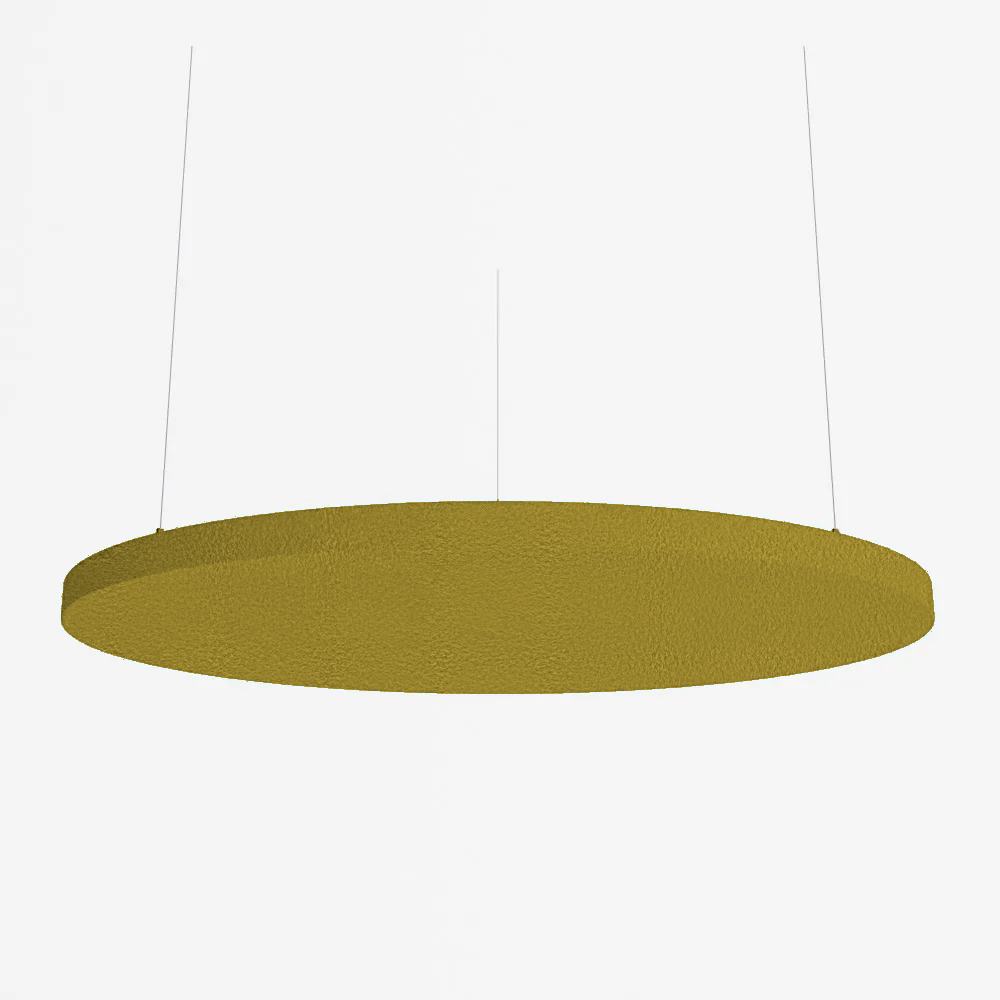
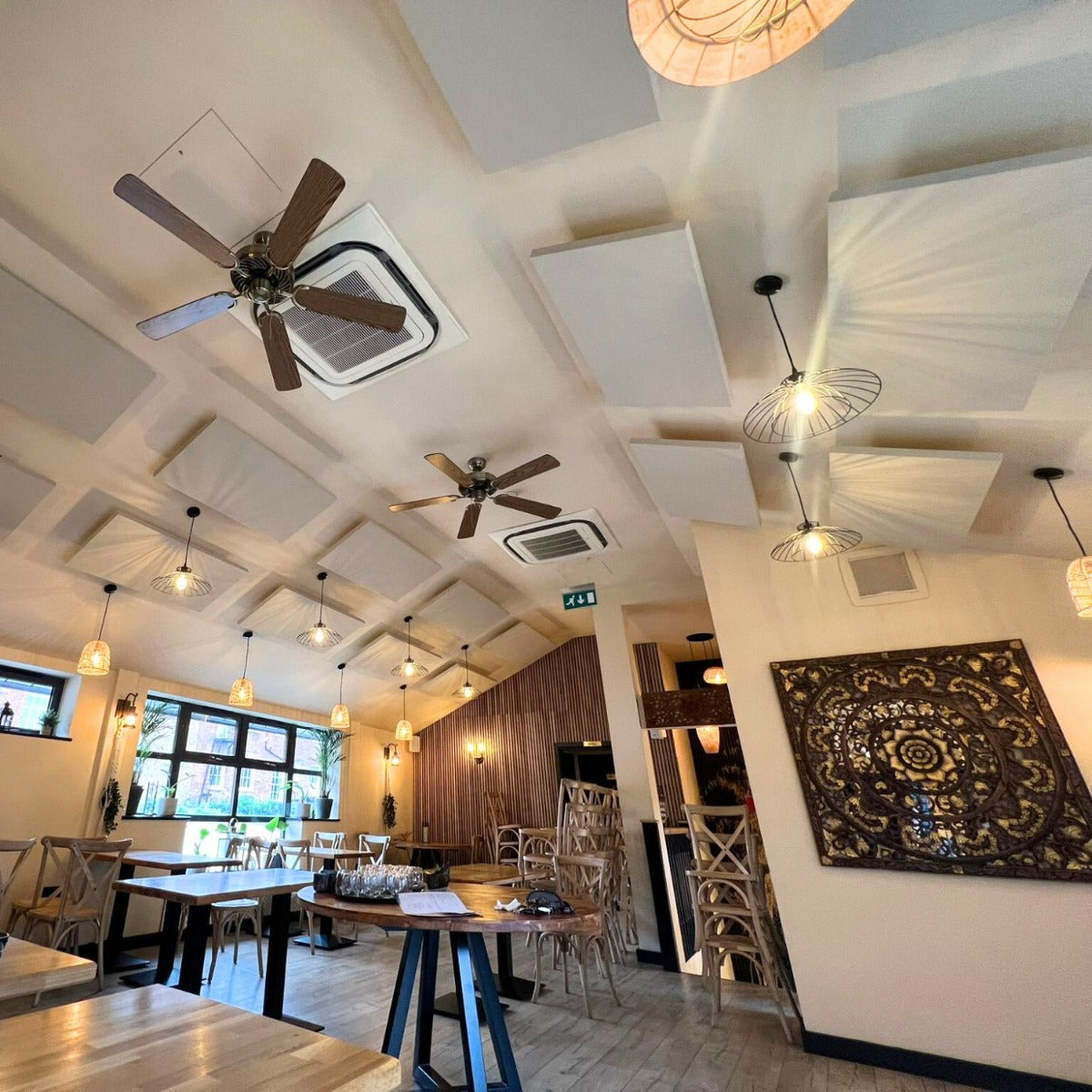
Where wall space is limited, treat the ceiling. From SilentSpace Circle rafts to Ecophon Solo baffles, suspended elements intercept sound on its way up and absorb across both faces at once. In high-ceiling spaces this delivers the largest reduction in reverberation time per square metre installed.
3D and textured panels
For schemes where the treatment is part of the design, the Offecct Soundwave series and BAUX 3D Pixel tiles are modular systems whose layout can be configured to any wall dimension. Popular in boutique hospitality and reception spaces.
How to Size Your Panels
Work out coverage
20–40% of total surface area is the usual starting point for noticeable improvement in speech clarity. Critical listening environments and high-noise spaces such as canteens may need 40% or more.
Find the first reflection points
Treat where sound arrives first. In a meeting room that's usually seated head height on the wall opposite the main speaker or screen.
Measure twice
Bespoke fabric panels can't be adjusted after manufacture. Allow 2–3mm tolerance on tight wall-to-wall runs so panels can be manoeuvred into position.
Our acoustic calculator estimates your current reverberation time from room dimensions and surface types, and tells you how much absorption you need. Two minutes, and it gives you a working budget before you commit to a spec.
Fixings and Installation
- Spiral fixings and wire hangers — For ceiling rafts and baffles, including Ecophon Solo connectors. Adjustable drop height.
- Impaling clips and adhesive — Standard for permanent wall installation of PET and fabric-wrapped panels.
- Rotofast fixings — For removable panels, or where a deliberate stand-off from the wall is wanted. The air gap behind the panel extends absorption further into the low-mid frequencies.
Our fitting guidance covers the practical detail. For larger commercial projects needing a full acoustic survey, measurement and installation, our parent company Resonics has completed over 7,000 projects since 2013 and can take the whole job end to end.
Frequently Asked Questions
Does panel size affect performance?
Yes — absorption is proportional to surface area. A small panel may look right but won't contain enough absorbing material to shift the reverberation time in a large room. Custom sizing lets you cover more of the available surface efficiently, which is where the acoustic gain comes from.
Can I cut acoustic panels to size myself?
It depends on the material. PET panels such as the Autex Cube can be cut on site with a heavy-duty blade or CNC machine. Fabric-wrapped panels cannot — the fabric is tensioned and finished over the edges during manufacture, so cutting one destroys it. Those must be ordered to size.
What's the largest single panel available?
Large-format PET sheets are typically 2400 × 1200mm. For fabric-wrapped panels the maximum is usually governed by the width of the fabric roll, often 1200mm to 1500mm. Larger areas are covered by joining panels, which can be detailed to read as a continuous surface.
Are custom acoustic panels fire rated?
Our commercial ranges are classified under BS EN 13501-1, the UK and European reaction-to-fire standard. Most fabric-wrapped and PET panels achieve Euroclass B-s1,d0, with A2-s1,d0 available on mineral cores where a project demands it. Be aware that the old British Class 0 and Class 1 ratings were withdrawn from Approved Document B for reaction to fire in March 2025 and are not equivalent to Euroclass B-s1,d0. Requirements also vary by room — corridors and escape routes are stricter than the rooms they serve. See our guide to fire rated acoustic panels for the full picture.
How long do bespoke panels take to make?
Lead times vary by product, fabric availability and order size. Get in touch with your dimensions and we'll confirm a delivery date before you commit.
Ready to Specify Your Space?
From bespoke fabric finishes to custom-cut PET, we'll help you calculate coverage and get the dimensions right first time.


