














Hard surfaces — concrete, plasterboard, glass — bounce sound around a room until it builds into noise. Fabric wrapped panels fix that: a dense absorbent core (mineral fibre or foam) wrapped in acoustically transparent fabric, absorbing sound before it reflects back. Less reverb, clearer speech, quieter rooms.
Here's how to choose the right ones.
1. Check the NRC rating
NRC (Noise Reduction Coefficient) measures how much sound a panel absorbs, from 0 (none) to 1.0 (total).
- 0.80+ — solid baseline for most rooms
- 0.90+ (Class A, ISO 11654) — the benchmark for meeting rooms, classrooms, open-plan offices
Don't just compare headline numbers. Check the test method (ASTM C423 is standard), the thickness tested, and the mounting condition — all three swing the result.
Our SilentSpace range is built to Class A across the board.
2. Get the thickness right
Thickness drives low-mid frequency absorption — the range human speech sits in.
- 25mm — good at higher frequencies
- 40mm — meaningfully better lower down, where reverberation actually hurts clarity
SilentSpace uses 40mm throughout, wall panels and ceiling rafts alike. For tough rooms — exposed concrete, high ceilings, big floor areas — combine both.
3. Pick a format: wall or ceiling
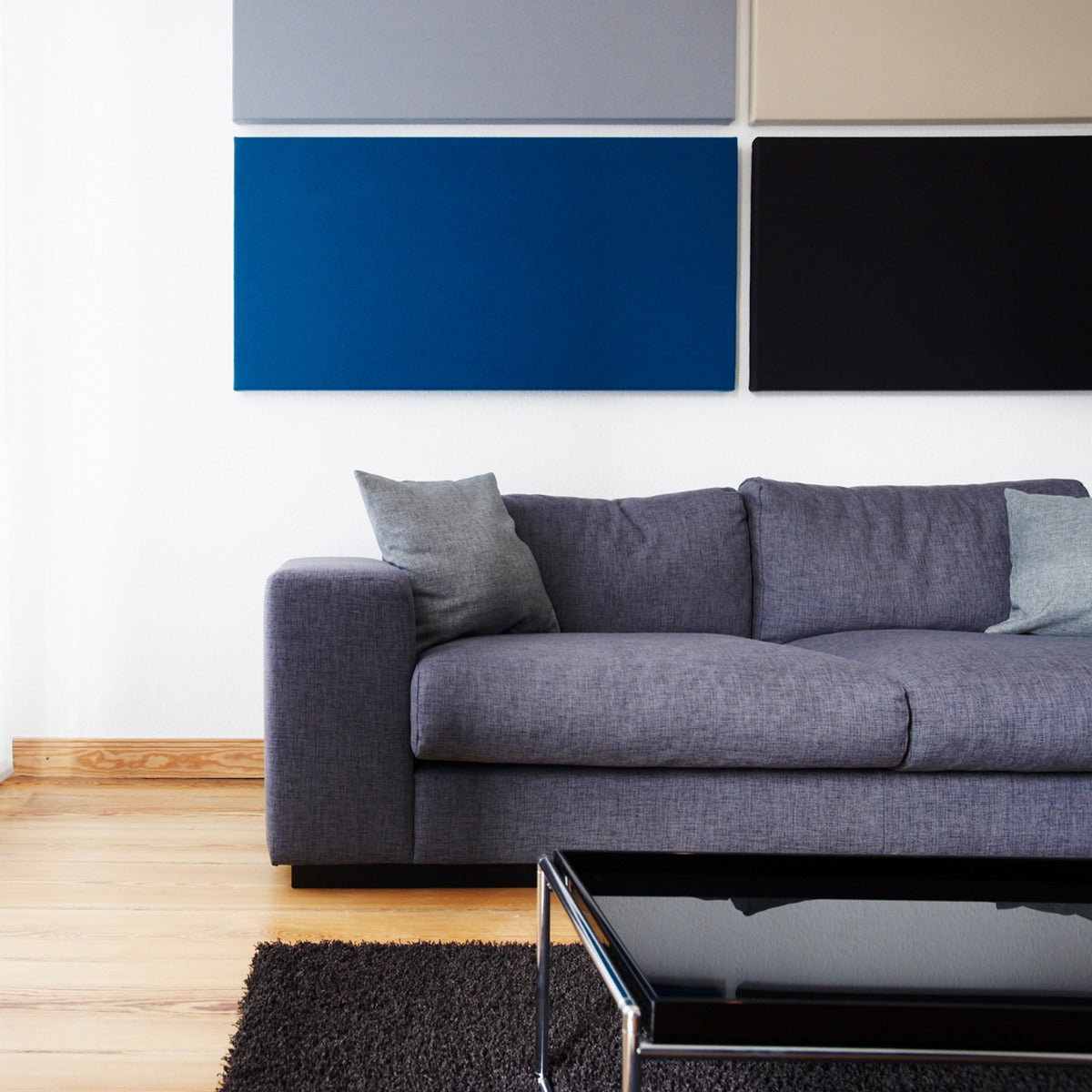
- Wall panels — best for lateral reflections bouncing between parallel walls. Easiest to install, widest size range.
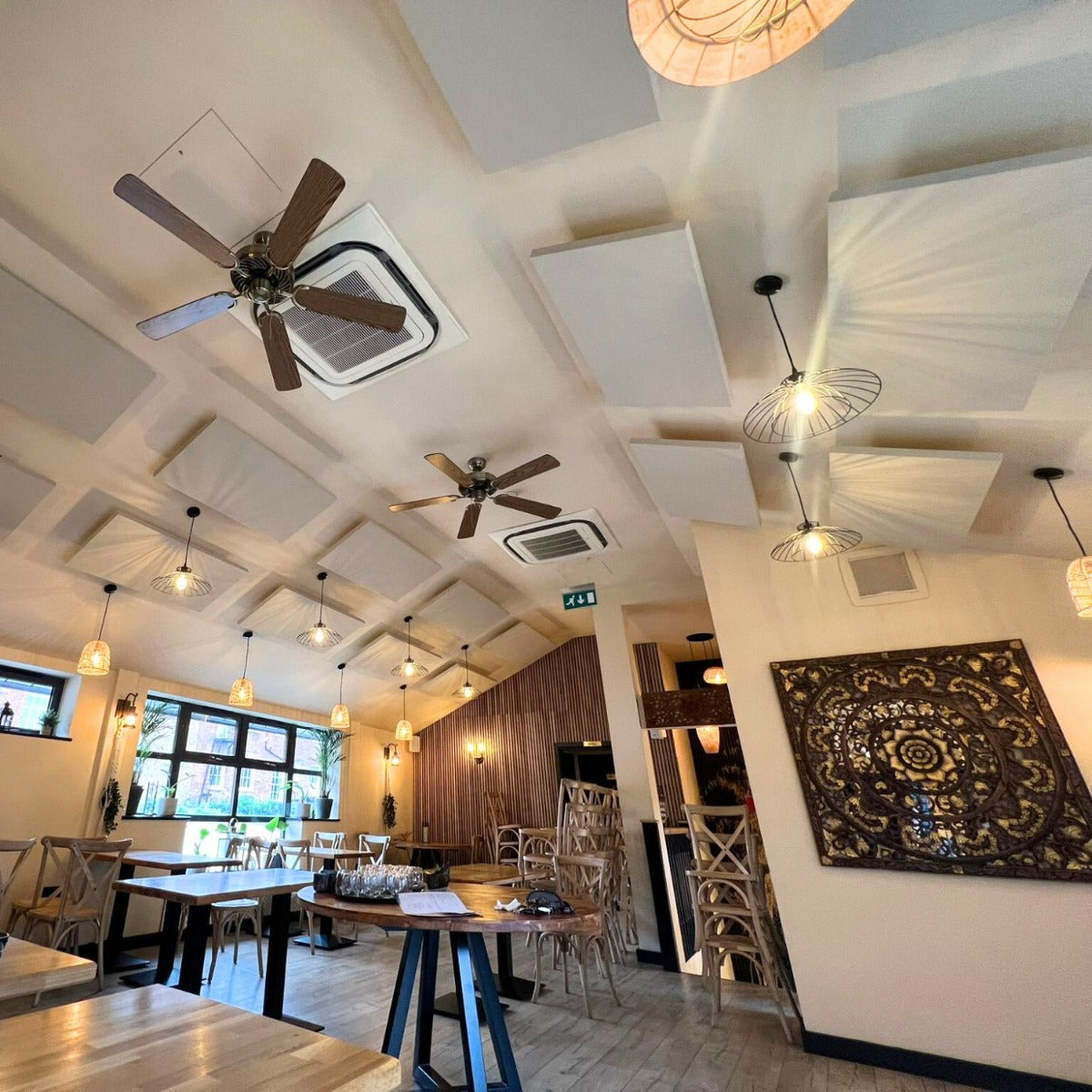
- Ceiling rafts — best for floor-to-ceiling bounce, especially with hard flooring or high ceilings. Often the better call in open-plan offices and restaurants where wall space is tight.

Hard walls and hard ceiling? Do both — the combined effect beats either alone.
4. Cover enough surface area
One or two panels on a hard wall won't move the needle. Aim for 20–40% of total wall area.
Spread coverage across opposing walls rather than clustering it on one. Even distribution beats concentrated treatment every time.

The same principle applies to ceilings. If you've gone with rafts, treat 20–40% of the ceiling area too, spread across the room rather than bunched centrally — a scattered layout intercepts reflections from more angles than one large cluster. In rooms with both hard walls and a hard ceiling, splitting coverage across both surfaces gets you a faster reduction in reverberation than maxing out one surface alone.
Use our panel calculator if you want a number based on your actual room.
5. Don't ignore mounting
Flush-mounted panels have no air gap behind them, which reduces their effectiveness. Ceiling panels are more effective with even 50mm of airspace; low-frequency absorption improves — the gap adds effective acoustic depth without changing the panel itself.

6. Colour is aesthetic, not acoustic
Fabric colour has no effect on NRC — but the fabric must be acoustically transparent, or you lose the performance you're paying for. Always confirm the spec.
Practical notes:
- Light fabrics show marks faster in high-traffic areas
- Darker tones are more forgiving
- Mid-tones work best across varied lighting
SilentSpace comes in 47 colours, so this shouldn't be a compromise.

7. Check the fire rating
Fire performance matters as much as acoustic performance, especially for commercial spaces — offices, schools, hospitality — where building regulations and insurers will ask for it.
Look for panels tested to EN 13501-1, the European standard for reaction-to-fire classification. Ratings run from A1 (non-combustible) down to F (untested/unclassified), with most commercial acoustic panels falling in the B or C range depending on core material and fabric.
A few things worth checking with any supplier:
- Is the rating for the full assembly (core + fabric + backing) or just the core material on its own? A panel is only as fire-safe as its weakest component.
- Does the certificate cover the specific product you're buying, or a similar one in the same range?
- For public buildings, schools, and high-occupancy commercial spaces, check what your local building regulations actually require — the minimum acceptable class varies by use and wall/ceiling application.
SilentSpace panels are tested under EN 13501-1 — ask us for the certificate if you need it for a spec or building control submission.
Choosing by space
| Space | What matters |
|---|---|
| Open-plan office | Speech privacy — distribute panels across walls and ceiling zones, not one spot |
| Meeting/conference room | Mid-frequency clarity (500Hz–2kHz) — Class A, 40mm, on primary reflective surfaces |
| Restaurant/hospitality | Ceiling rafts usually win — treat reflections without closing off the space visually |
| Home office/studio | Even 4–6 panels make an audible difference given the smaller room volume |
| Classroom | Even distribution at mid-height — don't cluster at the front |
The SilentSpace range
| Panel | Format | From | Best for |
|---|---|---|---|
| Fabric Wrapped Wall Panel | Wall, made-to-measure | £99.95 | Offices, meeting rooms, classrooms |
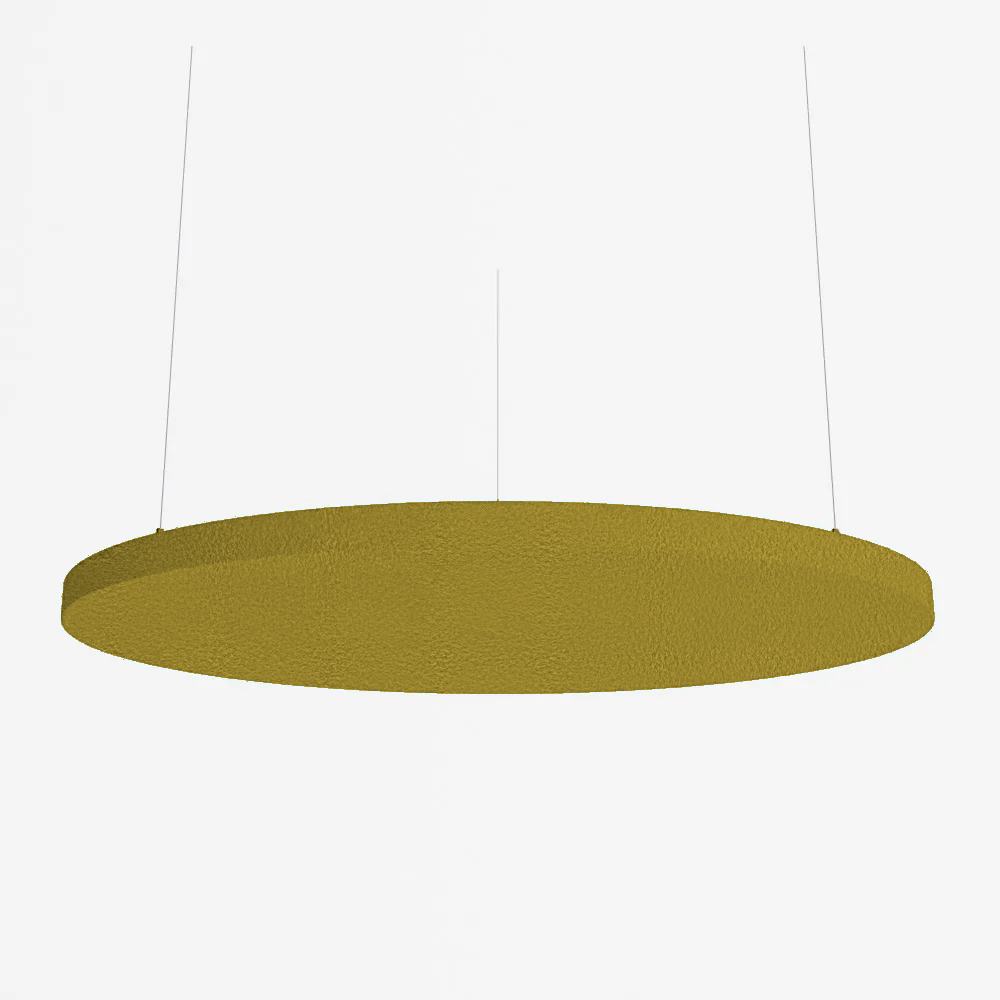
| Circle Ceiling Raft | Suspended, 40mm | £139.00 | Open-plan offices, restaurants |
| Rectangle Acoustic Raft | Suspended, multiple sizes | £145.00 | Flexible ceiling zones |
| Square Acoustic Panels | Wall or ceiling | £45.68 | Feature walls, design-led spaces |
All Class A, all 40mm, all made-to-measure, 47 colours.
FAQ
What NRC should I look for?
0.80 minimum, 0.90+ (Class A) for meeting rooms, offices, and classrooms.
How many panels do I need?
Cover 20–40% of wall area — six to eight panels for a typical 20–25m² room. If you're using ceiling rafts, apply the same 20–40% target to the ceiling too. Use a calculator for precision.
Does thickness really matter?
Yes — 40mm outperforms 25mm at the mid and low frequencies where speech clarity lives.
Can printed/custom panels still perform?
Yes, provided the print doesn't block sound transmission through the fabric face.
Should I treat the ceiling too?
Often it's the higher-impact move — ceiling rafts tackle floor-to-ceiling bounce, which drives a lot of reverberation in open-plan spaces.
Is custom sizing worth it over standard?
Usually — standard sizes can leave coverage gaps or force awkward spacing. Made-to-measure fits your wall properly.
Does mounting method matter?
Yes — an air gap behind the panel improves low-frequency absorption versus flush mounting.
Browse the full range or use the free panel calculator to get a coverage figure for your room.


