













When people search for a solution to a noise problem, the terms acoustic panels vs soundproofing are often used interchangeably — but they describe two completely different things, and choosing the wrong one can mean wasting time, budget, and a great deal of frustration. Noise annoys us. It stresses us out. In fact, 70% of employees identify noise in open-plan environments as their number one workplace distraction, which tells you just how significant an untreated acoustic problem can be. Source: Mohawk Group
Key Takeaways
|
Question |
Answer |
|---|---|
|
Are acoustic panels the same as soundproofing? |
No. Acoustic panels absorb sound to reduce echo and reverberation within a space. Soundproofing blocks sound from travelling between spaces. |
|
What do acoustic panels actually do? |
They absorb sound energy to reduce reverberation, echo, and ambient noise levels inside a room, making speech clearer and the environment more comfortable. |
|
Will acoustic panels stop noise from coming through a wall? |
No. To stop noise passing through walls, floors, or ceilings, you need true soundproofing — mass, decoupling, or specialist construction materials. |
|
Which is better for offices: acoustic panels or soundproofing? |
For most offices, acoustic wall panels and ceiling treatments are the primary fix. Soundproofing is relevant where you need to isolate specific rooms like board rooms or phone booths. |
|
Can you use acoustic panels and soundproofing together? |
Absolutely. In many professional environments, the best results come from combining structural soundproofing with internal acoustic treatment panels. |
|
Are acoustic panels suitable for home use? |
Yes. Acoustic panels work very well in home offices, living rooms, and music studios to reduce echo and improve sound quality without structural works. |
|
Where can I find acoustic panels in the UK? |
Sonio offer a carefully selected range of panels across wall, ceiling, and baffle formats. Browse our full acoustics collection to find the right fit for your space. |
What Is the Difference Between Acoustic Panels and Soundproofing?
This is the most important question to answer before buying anything. Acoustic panels vs soundproofing is not a choice between two products that do the same job differently — it is a choice between two solutions that address two entirely separate problems.
Acoustic panels are sound-absorbing materials installed inside a space. Their job is to reduce the amount of sound energy bouncing around that room. They tackle echo, reverberation, and general noise buildup. They do not create a barrier to sound.
Soundproofing, by contrast, is about blocking sound from passing from one area to another. This is achieved through mass (heavy construction materials), decoupling (isolating surfaces so vibration cannot transfer), and sealing gaps. It is primarily a structural intervention.
Think of it this way. If you are in a large restaurant and the noise from conversations makes it impossible to hear the person across the table, that is a reverberation problem. Acoustic panels fix it. If you are in a bedroom above a nightclub and the bass is shaking your floor, that is a sound transmission problem. Soundproofing addresses it.
Both are legitimate, important solutions. But they are not interchangeable, and knowing which one applies to your situation will save you significant cost.
How Acoustic Panels Work: Sound Absorption Explained
When sound waves travel through a room, they bounce off hard surfaces — walls, ceilings, floors, glass. Every time they bounce, they add to the ambient noise level and create echo. This is called reverberation.
Acoustic panels are made from porous, sound-absorbing materials. When sound waves hit their surface, the energy is converted into a tiny amount of heat through friction within the material's fibres, rather than bouncing back into the room.
The performance of an acoustic panel is measured by its absorption coefficient, rated from 0 to 1. A rating of 1 means all sound energy is absorbed. Panels with a Class A rating (the highest classification) have an absorption coefficient of 0.90 or above across most frequencies.
Common materials used in acoustic panels include:
-
PET felt — made from recycled polyester fibres, highly effective and environmentally responsible
-
Glass wool — a dense, high-performance absorber used in products like the Ecophon range
-
Fabric-wrapped panels — a porous internal core wrapped in an acoustic fabric, often used for design-led spaces
-
Wood wool — a rigid, natural material from brands like BAUX that offers both absorption and a striking visual texture
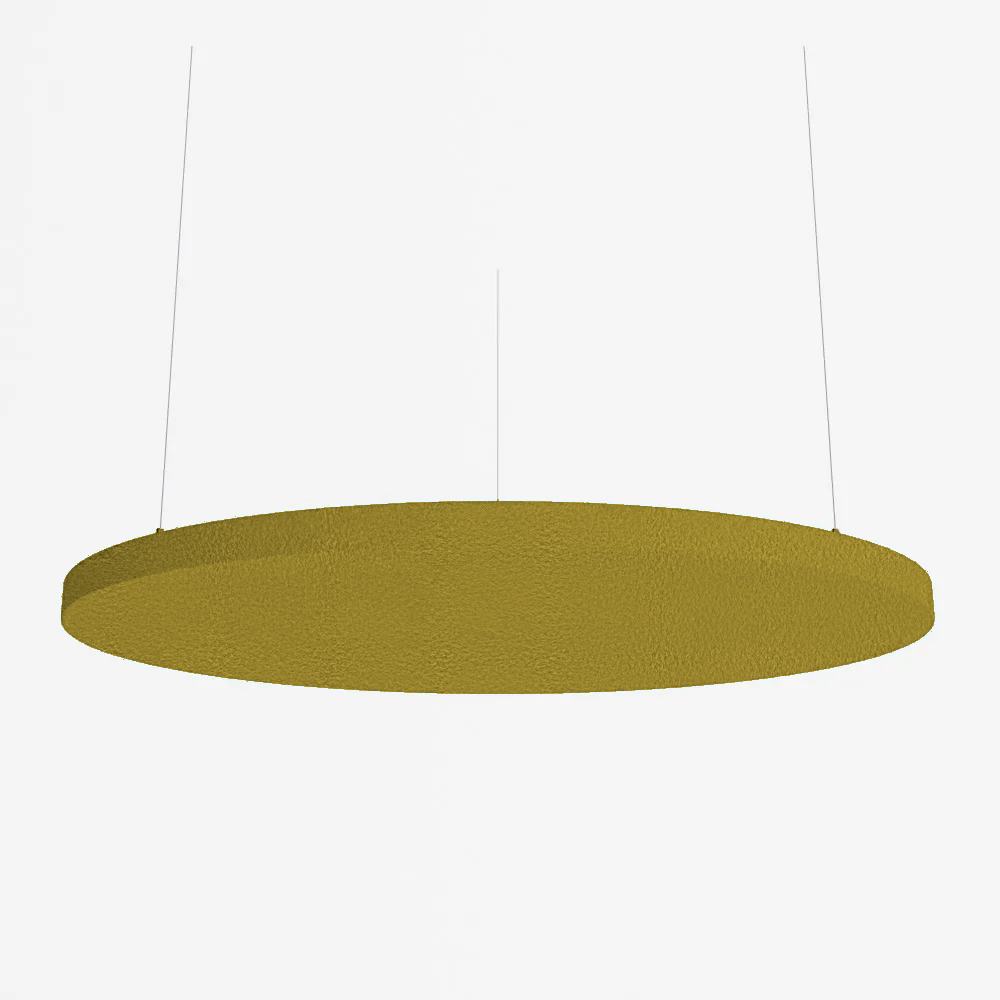
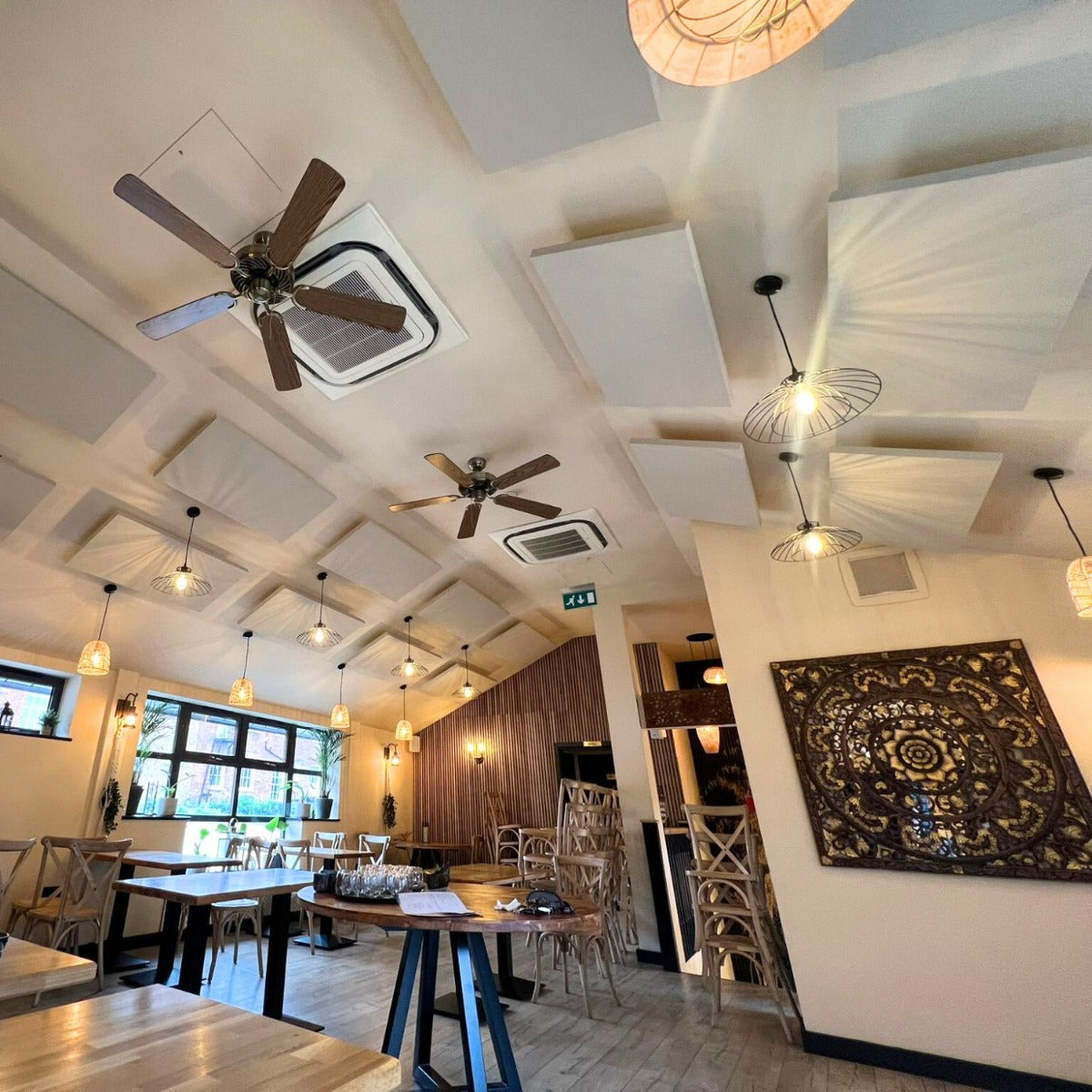
Where you place them also matters. Acoustic ceiling panels — also known as ceiling rafts — suspend above a space and absorb sound on multiple sides simultaneously, making them particularly effective in high-ceiling areas like offices, sports halls, and village halls.
How Soundproofing Works: Blocking Sound Transmission
Soundproofing is a structural challenge. Sound travels through the air (airborne sound) and through solid structures like walls and floors (impact or structure-borne sound). Addressing either requires physical changes to the building fabric.
There are four core principles behind effective soundproofing:
- Mass — heavier materials are harder for sound waves to move through. Dense plasterboard, concrete, and specialist acoustic boards all add mass.
- Decoupling — separating surfaces so that vibration cannot travel through contact points. Independent wall structures and resilient bars are common examples.
- Absorption — filling cavities with acoustic insulation to prevent sound bouncing through the construction.
- Sealing — closing every gap, because even a small gap around a door or pipe penetration can dramatically reduce performance.
True soundproofing is almost always a construction project. It typically involves skilled tradespeople, significant disruption, and a meaningful budget. It is the right solution when the problem is sound transmission, but it is not something you can achieve by putting a few panels on the wall.
Soundproofing and sound absorption are both legitimate acoustic solutions — but they solve different problems. Getting clear on which problem you have is the first step to solving it properly.
One important note: many people invest in soundproofing a room and then find it still sounds bad inside because internal reverberation was never addressed. Soundproofing keeps sound out (or in). Acoustic panels make the internal environment comfortable. In many projects, both are needed.
Acoustic Panels vs Soundproofing: A Direct Comparison
The table below gives a clear side-by-side view. This is probably the most useful reference point when deciding which solution applies to your situation.
|
Factor |
Acoustic Panels |
Soundproofing |
|---|---|---|
|
Primary function |
Absorb sound within a room |
Block sound between rooms |
|
Fixes echo/reverberation |
Yes |
No |
|
Stops noise through walls |
No |
Yes |
|
Installation complexity |
Low — typically wall-mounted or suspended |
High — structural construction required |
|
Disruption to space |
Minimal |
Significant |
|
Typical cost |
Accessible — panels from a few hundred pounds |
Can run into thousands depending on scope |
|
Aesthetic options |
Extensive — wide range of colours, shapes, materials |
Usually hidden within the building structure |
|
Reversible |
Yes, in most cases |
No — changes are permanent |
Did You Know?
70% of employees identify noise in open-plan environments as their number one workplace distraction.
Source: Mohawk Group
Acoustic Panels vs Soundproofing: Which One Solves Your Noise Problem?
The quickest way to identify which solution you need is to diagnose the nature of your noise problem. Ask yourself one question: Is the noise coming from inside the room, or from outside it?
If the problem is inside the room — conversations overlapping, echo on calls, poor speech clarity, a room that feels "live" and harsh — you need acoustic treatment. Acoustic panels are the right tool.
If the problem is noise coming through walls, floors, or ceilings — a neighbour's music, traffic, machinery in an adjacent space — you need soundproofing measures. Panels placed on a wall will not stop that noise from penetrating the structure.
The honest reality is that the vast majority of noise complaints in offices, restaurants, classrooms, and community spaces are caused by excessive reverberation — not by sound leaking through walls. This means acoustic panels solve the problem for most people, most of the time.
Noise costs European companies up to £30 billion annually in lost productivity. Whether you manage an office, a classroom, a restaurant, or a village hall, untreated acoustics have a measurable impact on performance, comfort, and wellbeing.
When to Use Acoustic Panels (The Right Situations)
Acoustic panels are the correct solution in a wide range of everyday scenarios. Here is where we consistently see them make the biggest difference:
- Open-plan offices — too much ambient noise, poor speech privacy, distracting conversations
- Meeting and conference rooms — echo makes calls difficult to follow, speech intelligibility is poor
- Classrooms and schools — reverberation makes it harder for pupils to hear clearly, impacting learning outcomes
- Restaurants and bars — high ceilings and hard surfaces create overwhelming noise levels at busy service times
- Music studios and home theatres — unwanted reflections colour the sound and compromise audio quality
- Sports halls and swimming pools — notoriously live acoustic environments with very long reverberation times
- Worship spaces and village halls — large volumes and hard surfaces that cause significant echo on speech and music
- Home offices — reducing background echo to improve video call quality and concentration
In each of these situations, adding sound-absorbing material to walls and ceilings reduces the reverberation time and brings the acoustic environment back under control. No structural work is required. No planning permission. No building downtime beyond the installation period itself.
When Soundproofing Is the Right Choice
There are situations where acoustic panels simply cannot solve the problem, and soundproofing is genuinely necessary. Being clear about this saves both your budget and your expectations.
Consider soundproofing when:
- You can hear a neighbour's conversation or music through a shared wall at reasonable volume
- You need a recording studio to be completely isolated from external noise
- Plant machinery or mechanical equipment is transmitting vibration and noise into an adjacent space
- You need to build a private meeting room inside a busy open-plan floor
- You are converting a space into a cinema room or home studio where external noise intrusion must be essentially zero
In these cases, structural measures including resilient bars, dense insulation batts, acoustic-grade plasterboard, and robust sealing are required. This is a different scope of work to fitting panels, and it comes with a different budget.
One thing worth noting: even after soundproofing works are complete, the internal acoustic environment still needs to be addressed. A perfectly soundproofed room with bare walls and a concrete floor will still have terrible acoustics. This is why soundproofing and acoustic panel treatment often go hand in hand in professional builds.
Types of Acoustic Panels: What We Offer at Sonio
As the UK's first interior acoustic specialists with over a decade of experience in the field, we have assembled a carefully selected range of products from the world's leading acoustic brands. Every product we stock has been chosen because it genuinely performs.
Our range covers the full spectrum of acoustic panel types:
Acoustic Wall Panels
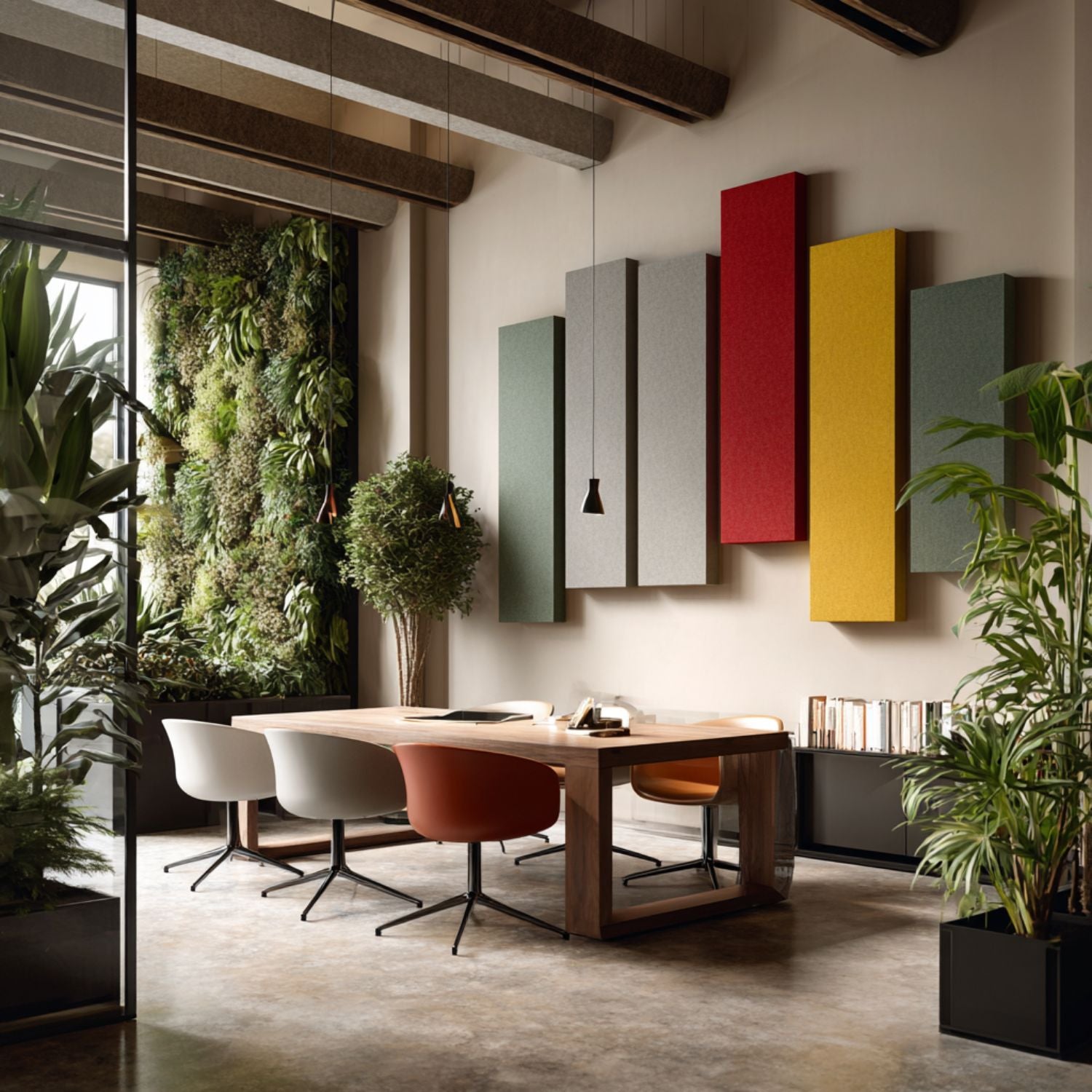
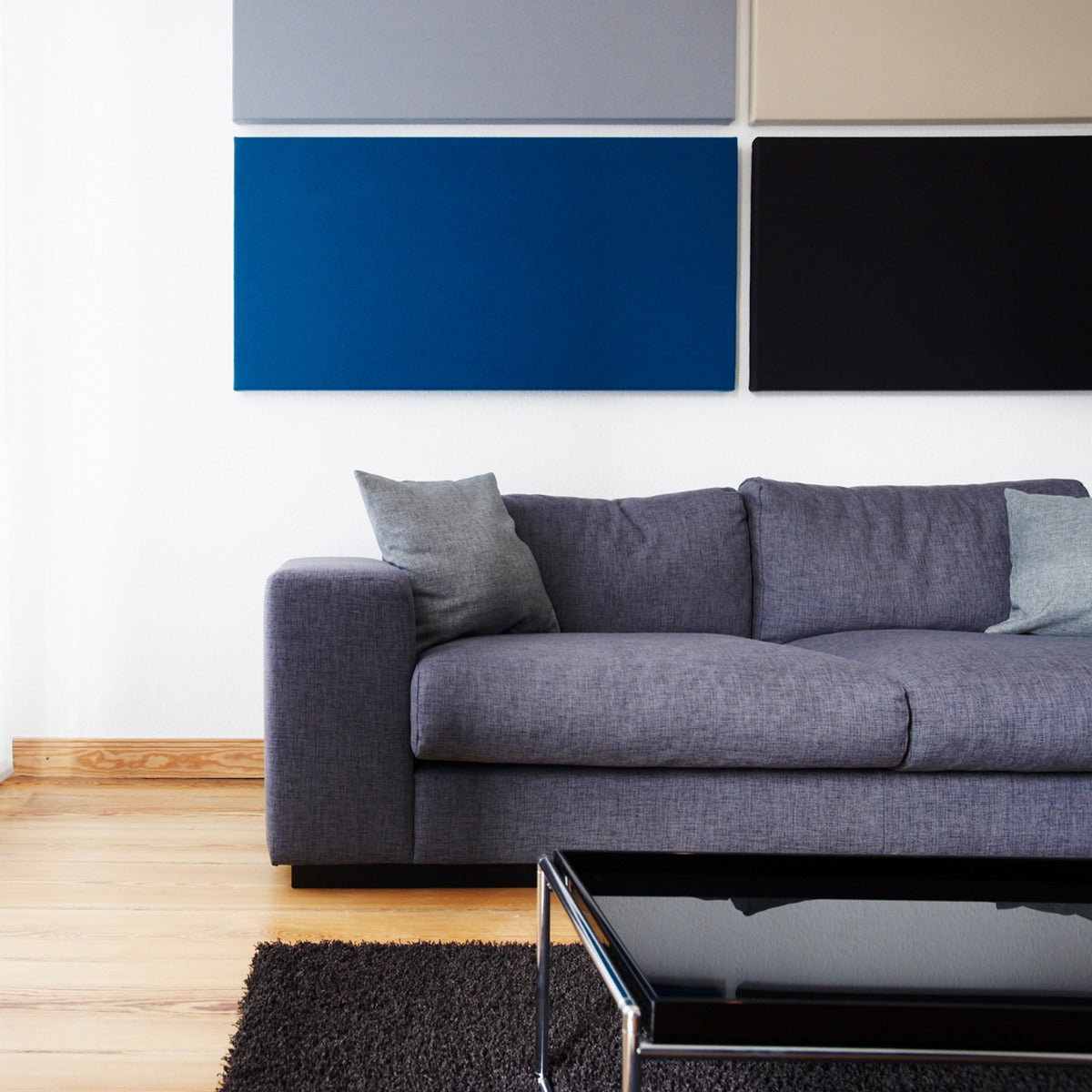
Acoustic wall panels are the most flexible starting point for most spaces. They mount directly onto walls and are available in PET felt, fabric-wrapped, timber slat, and printed art formats. Brands in our range include Autex, SilentSpace, BAUX, De Vorm, and Abstracta.
Acoustic Ceiling Panels and Rafts
Ceiling rafts are suspended horizontally from the ceiling, absorbing sound on their upper and lower surfaces simultaneously. They are one of the most effective solutions for open-plan areas, high-ceiling spaces, and rooms where wall space is limited.
Our ceiling panel range includes the Ecophon Solo series — a Class A glass-wool product available in circle, square, and rectangle formats. The Ecophon Solo Circle (from £780.00 per pack) and Ecophon Solo Square (1200 x 1200mm, from £780.00) are two of the most specified products in commercial acoustic design in 2026.
Acoustic Ceiling Baffles
Acoustic ceiling baffles are vertical panels suspended from the ceiling. Because they hang vertically, they present absorption surfaces to sound arriving from multiple directions, which makes them particularly effective in sports halls, pools, and open industrial or commercial spaces where coverage needs to be maximised.
The Ecophon Solo Baffle (from £780.00 per pack) is one of our most specified options for large open volumes. Its adjustable suspension allows baffles to be angled for both visual impact and optimised acoustic coverage.
Acoustic Screens
For open-plan offices, acoustic screens provide a flexible hybrid solution. They add absorption to the space while also creating physical divisions that improve speech privacy between workstations. Our range includes desk screens, free-standing screens, and hanging screens from Autex, Abstracta, De Vorm, and 14six8.
Screens are particularly useful in 2026's hybrid working environments where desking layouts change regularly. They move with you.
How Much Coverage Do You Need? Acoustic Panels vs Soundproofing Coverage Principles
A common question we hear is: "How many panels do I need?" The answer depends on the volume of the space and the target reverberation time (RT60 — the time it takes for sound to decay by 60dB).
As a general starting point:
- Offices — aim for an RT60 of 0.4 to 0.6 seconds. This requires significant ceiling and wall coverage, typically 20-30% of total surface area.
- Classrooms — the UK Building Bulletin BB93 recommends an RT60 of 0.4 to 0.6 seconds, with acoustic ceiling tiles or cloud rafts being one of the most reliable ways to achieve it.
- Restaurants — 0.6 to 0.8 seconds is typically comfortable. Ceiling baffles and wall panels in combination work well.
- Music studios — target RT60 varies significantly depending on the type of music and recording requirement.
We always recommend requesting samples before committing to a large installation. Our sample service lets you see and feel the materials in your own space before you order.
Did You Know?
70% of employees identify noise in open-plan environments as their number one workplace distraction — making acoustic treatment one of the highest-impact investments in any office fit-out.
The Aesthetic Factor: Why Acoustic Panels Win on Design
One significant practical advantage of acoustic panels over structural soundproofing is their visual potential. Acoustic treatment does not have to look like a fix. Done well, it becomes a feature of the space.
Our approach at Sonio has always centred on a dual focus: spaces should perform acoustically and look considered. This is why we work with brands like BAUX, Abstracta, De Vorm, Offecct, and Impact Acoustic — all of whom design acoustic products that are genuinely beautiful.
PET felt panels come in broad colour palettes. Fabric-wrapped panels can be covered in almost any acoustic fabric from our Camira range. Printed art panels can carry bespoke photographic or graphic imagery. Timber slat panels bring warmth and texture.
With acoustic panels, performance and aesthetics are not opposing forces. They work together. Soundproofing, by contrast, is almost entirely hidden inside construction — effective, but invisible.
Conclusion: Choosing Between Acoustic Panels vs Soundproofing
The acoustic panels vs soundproofing debate comes down to one fundamental question: are you trying to improve the sound inside a space, or stop sound from travelling between spaces? Acoustic panels handle the first scenario with precision, at a fraction of the cost and disruption of construction. Soundproofing handles the second, but requires meaningful structural investment.
For the majority of commercial and residential spaces in 2026 — offices, classrooms, restaurants, studios, and community halls — acoustic panels are the right answer. They are accessible, aesthetically powerful, reversible, and highly effective at solving the reverberation and echo problems that most people actually face.
We have been solving acoustic problems for over a decade as the UK's first interior acoustic specialists. Our Design, Supply, and Install approach means we handle the full project lifecycle — from the initial acoustic assessment right through to the finished installation. If you are unsure which approach is right for your space, get in touch. We are here to help you find the right solution, not just sell you the most expensive one.
Browse our complete acoustic panel range or request samples to get started.
Frequently Asked Questions
Do acoustic panels actually work for soundproofing?
Acoustic panels do not soundproof a space in the traditional sense. They absorb sound energy to reduce reverberation and echo within a room, but they do not stop sound from passing through walls, floors, or ceilings. If your problem is noise transmission between rooms, you need structural soundproofing, not acoustic panels.
What is the difference between acoustic panels and soundproofing panels?
Acoustic panels are designed to absorb sound within a room, reducing echo and reverberation. The term "soundproofing panels" is often used loosely in marketing, but true soundproofing requires mass, decoupling, and sealing — not just a panel on the wall. When comparing acoustic panels vs soundproofing, always check what specific problem the product is designed to solve.
Will acoustic panels reduce noise from neighbours?
No — acoustic panels will not meaningfully reduce noise coming through a party wall from a neighbour. That type of problem requires structural soundproofing. Acoustic panels will, however, improve the quality of sound inside your room by reducing reflections and reverberation, which can make the overall listening environment more comfortable.
Are acoustic panels worth it in 2026?
Absolutely. With 70% of office workers citing noise as their biggest distraction, and noise costing European businesses up to £30 billion per year in lost productivity, investing in acoustic treatment delivers measurable returns. In 2026, acoustic panels are better designed, more affordable, and more readily available than at any point previously.
Can I use acoustic panels and soundproofing together?
Yes, and in professional projects this combination is common. Soundproofing addresses the structural issue of sound transmission between spaces, while acoustic panels address the internal reverberation environment within those spaces. Music studios, broadcast rooms, and high-specification meeting rooms often require both approaches working together.
How many acoustic panels do I need for a room?
The quantity depends on the room's volume, the target reverberation time, and the absorption coefficient of the panels chosen. As a rough starting point, treating 20-30% of the total surface area with Class A acoustic panels will produce a noticeable improvement in most commercial spaces. We recommend requesting a sample first and speaking to our team for project-specific guidance.
What type of acoustic panels are best for an open-plan office?
For open-plan offices, a combination of ceiling rafts (to address the large overhead surface area), acoustic wall panels (to treat reflective walls), and acoustic desk screens (to create localised privacy) tends to produce the best results. Ceiling-based solutions like the Ecophon Solo range are particularly effective because they intercept sound at its point of first reflection above the workspace.


