










Last update: 20th August 2026
If a room sounds echoey, harsh, or is simply hard to hold a conversation in, the problem is reflected sound. Hard surfaces — concrete floors, plasterboard walls, glass — send sound bouncing around the room until it builds into a wall of noise. Acoustic panels absorb that energy before it can reflect back. Understanding how helps you choose the right panels, put them in the right places, and get a result you can actually hear.

This guide covers the physics of absorption, the panel types and materials, how thickness changes performance, how to read the ratings, and where panels make the biggest difference.
The problem acoustic panels solve
Sound travels outward from a source in all directions. When those waves hit a hard, dense surface, most of the energy reflects straight back into the room. The process repeats — wall to ceiling to floor and back — creating overlapping reflections known as reverberation.
High reverberation makes speech harder to follow, music muddier, and background noise louder. In a workplace it causes fatigue and kills concentration. In a recording space it prints room sound onto the take. In a restaurant or classroom it turns ordinary conversation into work.
Acoustic panels interrupt the cycle. Instead of reflecting sound back into the room, they absorb it, converting the energy of the wave into a very small amount of heat inside the material.
The science behind sound absorption
When a sound wave enters a porous or fibrous material, the air molecules carrying it are forced through a dense network of fibres or open cells. Friction between the moving air and the material converts acoustic energy into heat. The wave loses energy rather than bouncing back.
This is why the internal structure matters more than the surface. A smooth, dense face reflects. A soft, open-celled or fibrous core absorbs. The more tortuous the path through the material, the more energy is lost — which is why thicker panels absorb further down the frequency range.
How absorption is measured
Absorption is measured in a laboratory to BS EN ISO 354 and reported as a sound absorption coefficient at each frequency band, from 0 (fully reflective) to 1 (fully absorptive). Those figures are then condensed into a single weighted value, αw, and an absorption class from A to E under BS EN ISO 11654.
| Class | αw | What it means in practice |
|---|---|---|
| A | 0.90 – 1.00 | Highest performance. The standard for ceiling products and for wall panels doing the main work. |
| B | 0.80 – 0.85 | Strong performance. Works well where coverage is generous. |
| C | 0.60 – 0.75 | Useful as part of a scheme. Common for thinner PET panels. |
| D | 0.30 – 0.55 | Limited. Supplementary or largely decorative. |
| E | 0.15 – 0.25 | Minimal absorption. Do not expect an audible change. |
Two things to watch. First, the fixing methods: the same panel tested flat against a wall and tested with an air gap behind it gives different results, so always compare like for like. Second, you will sometimes see the Noise Reduction Coefficient (NRC) quoted, which is the American equivalent under ASTM C423. It is an average of four frequency bands rounded to the nearest 0.05, so it is a rougher measure than αw and not directly interchangeable with it. UK and European products publish absorption class — use that.
Three types of acoustic panel
Not all panels absorb the same way. There are three mechanisms, each suited to a different part of the frequency spectrum.
Porous absorbers
The most widely used type, and what most people picture. Porous absorbers use open-celled or fibrous materials — mineral wool, glass wool, polyester fibre, foam — that let sound pass into the panel and lose energy through friction. They are most effective above roughly 500 Hz, which covers the bulk of the speech range.
The Autex Cube is a good example: a structured PET fibre panel giving broadband absorption with a distinctive surface texture.
Membrane absorbers
A membrane absorber is a thin, flexible panel mounted over a sealed air cavity. Low-frequency sound sets the membrane vibrating, and that vibration dissipates energy. They work in the bass region that porous absorbers struggle with, roughly 60–250 Hz, but only across a narrow band centred on the frequency they are tuned to.
Resonance absorbers
Also called Helmholtz or perforated panel absorbers. A perforated face, an air gap and a backing material combine to target a specific frequency band. Adjusting the size and spacing of the perforations and the depth of the cavity tunes where the panel absorbs hardest. These are specified where a room has a defined problem, such as a standing wave at a particular frequency.
Materials
- Glass wool — Used in a large proportion of commercial panels for its high absorption coefficients, consistent performance and fire resistance. Ecophon products use a glass wool core achieving Class A.
- Mineral wool (stone wool) — Comparable acoustically, with added thermal insulation. Often high in recycled content.
- PET fibre — Made from recycled bottles. Increasingly common for its environmental credentials and the fact it can be cut, grooved and shaped.
- Polyurethane and melamine foam — Light and easy to cut, best at higher frequencies. Suited to small rooms and DIY treatment.
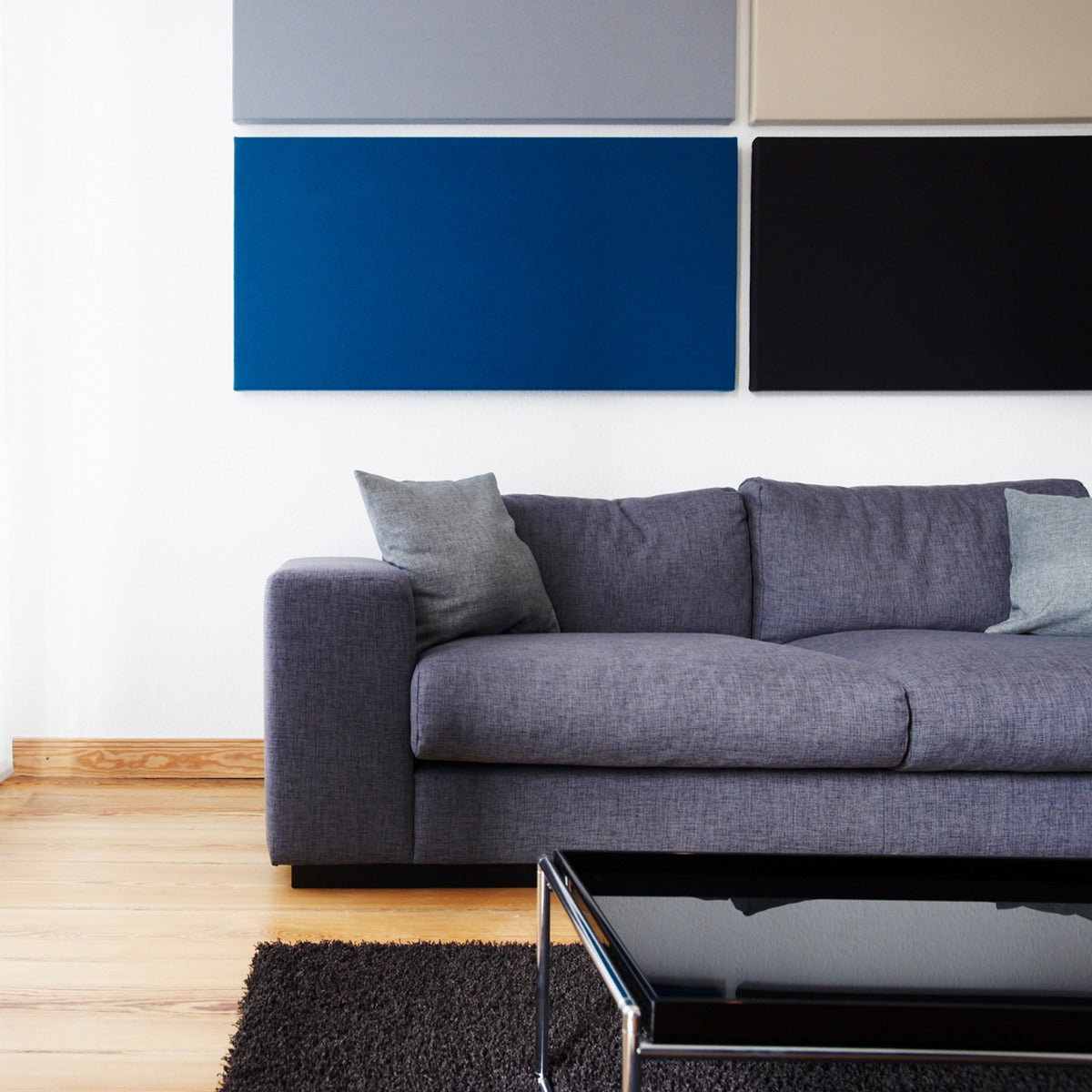
- Fabric-wrapped panels — A fibrous absorptive core wrapped in acoustically transparent fabric, so sound passes through to the core while the panel reads as a finished surface.
Whatever the material, check the Euroclass fire rating under BS EN 13501-1 before specifying for a commercial building. Our guide to Euroclass and BS EN 13501-1 covers what is required where.
How thickness changes what gets absorbed
Thickness is the most underestimated factor in panel selection. The relationship is simple: thicker panels absorb lower frequencies.
Low-frequency sound waves are physically longer. To absorb one, the panel needs enough depth for the wave to enter and lose energy before it reflects. A thin panel gives a long wavelength nowhere to go.
| Thickness | Effective from around | Use it for |
|---|---|---|
| 25mm | 500 Hz and above | Brightness, sibilance and hard high-frequency reflections in mildly reverberant rooms. |
| 40–50mm | 250 Hz and above | General room treatment. The most versatile option for offices, classrooms and listening rooms. |
| 100mm | Below 250 Hz | Bass control. Corner traps and thick wall panels in studios. |
An air gap behind the panel achieves some of the same effect without extra material. Mounting a 25mm panel on a 25mm batten pushes its useful range lower, which is why mounting condition appears on every proper test certificate.
If the room has a general echo problem with no specific frequency issue, 40–50mm panels across walls and ceiling will usually deliver a clear improvement. If it is boomy and resonant, you need thicker panels or purpose-built membrane absorbers.
Wall panels or ceiling panels?
Wall panels
The most straightforward treatment for most rooms. They fix directly to the wall with adhesive, impaling clips or Z-bars, and can be placed precisely at first reflection points — where sound bounces off a wall before reaching the listener.

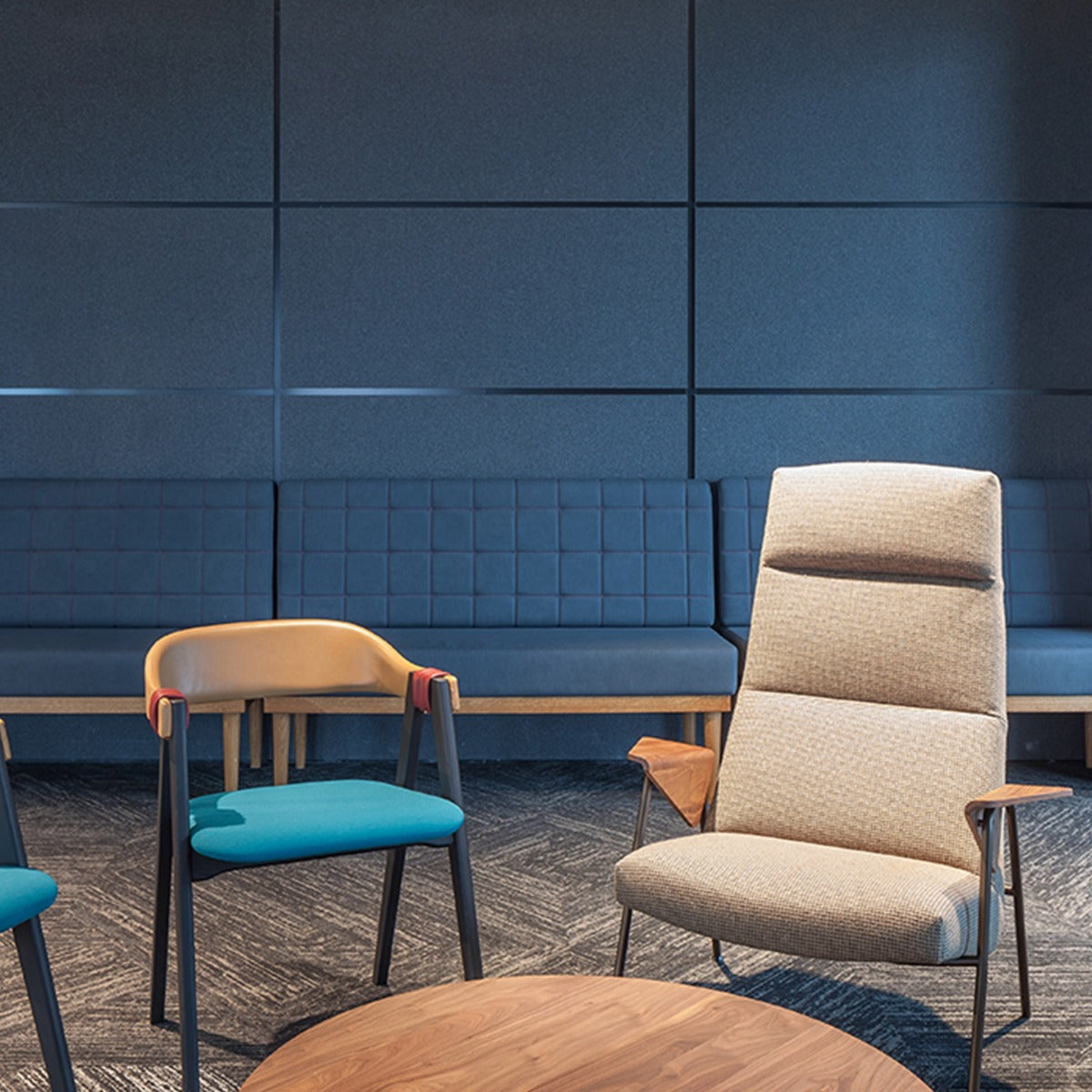
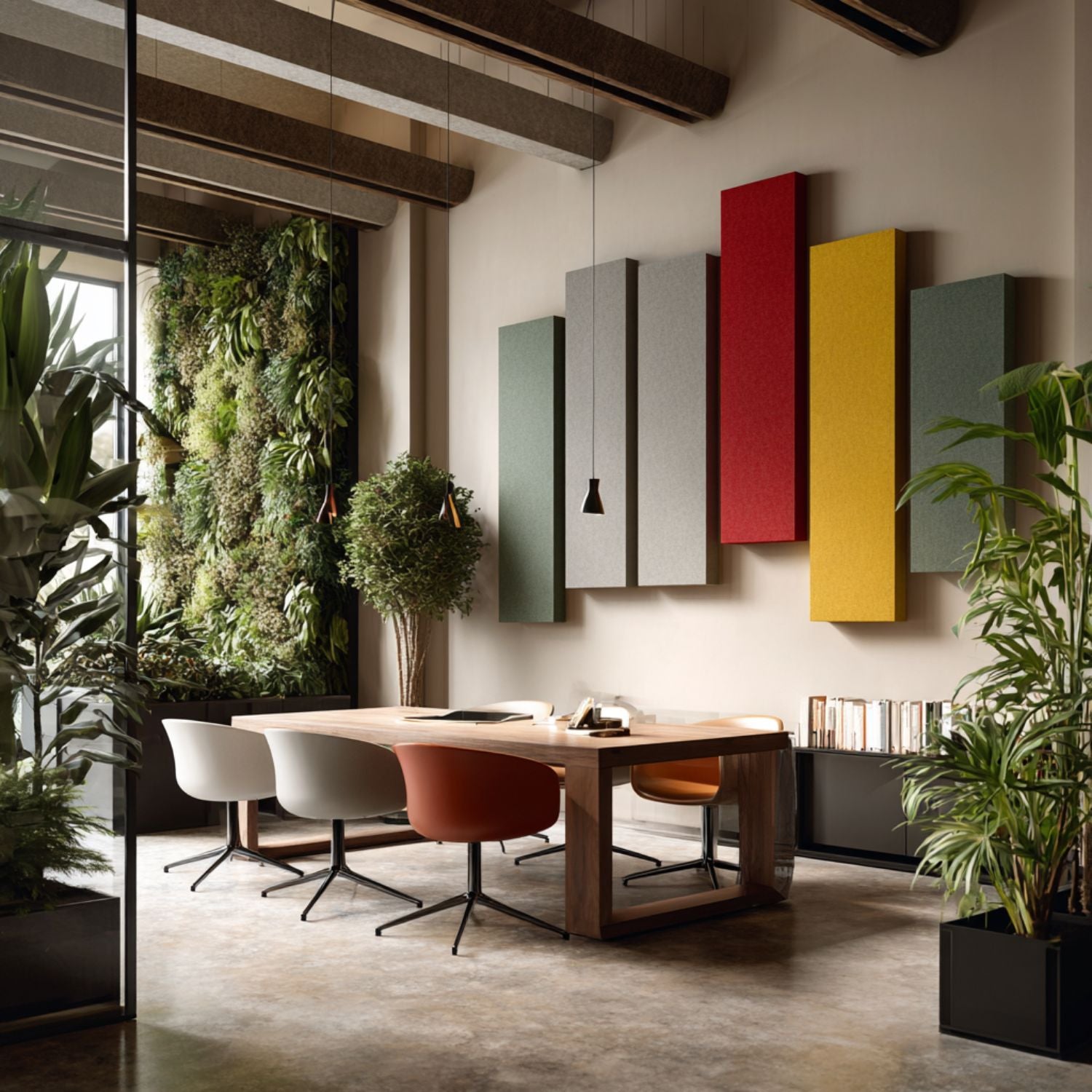
Where ceilings are low or ceiling access is limited, walls carry most of the load. The range of sizes and finishes available means they need not look utilitarian.
Ceiling panels
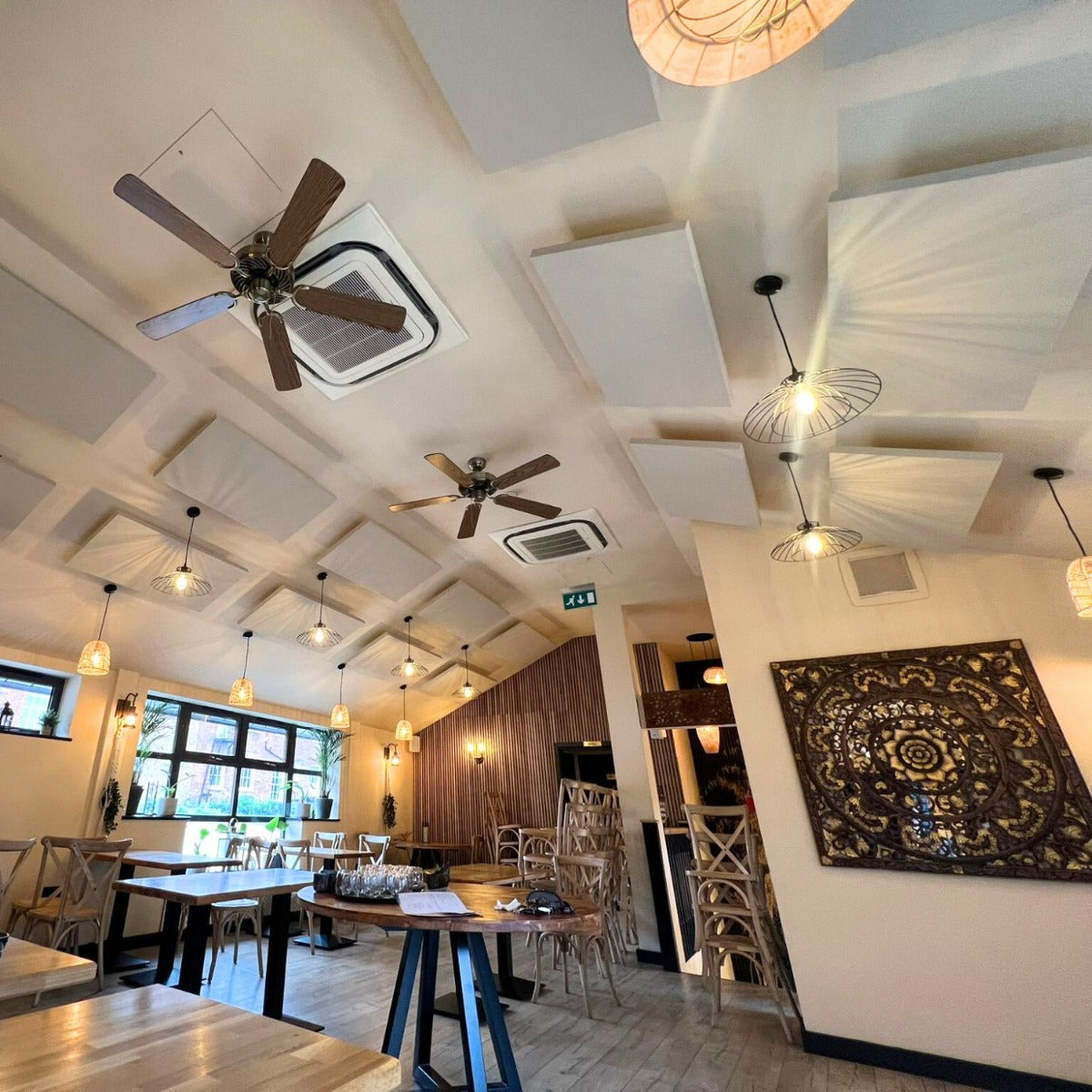
Hard ceilings are the biggest single contributor to reverberation in open-plan spaces. Sound bounces freely between floor and ceiling, and the larger the room, the worse it gets. Ceiling panels — suspended as rafts, hung as baffles, or fixed flush — absorb on both faces and their exposed edges simultaneously, so they remove more energy per square metre of product than the same panel flat on a wall.

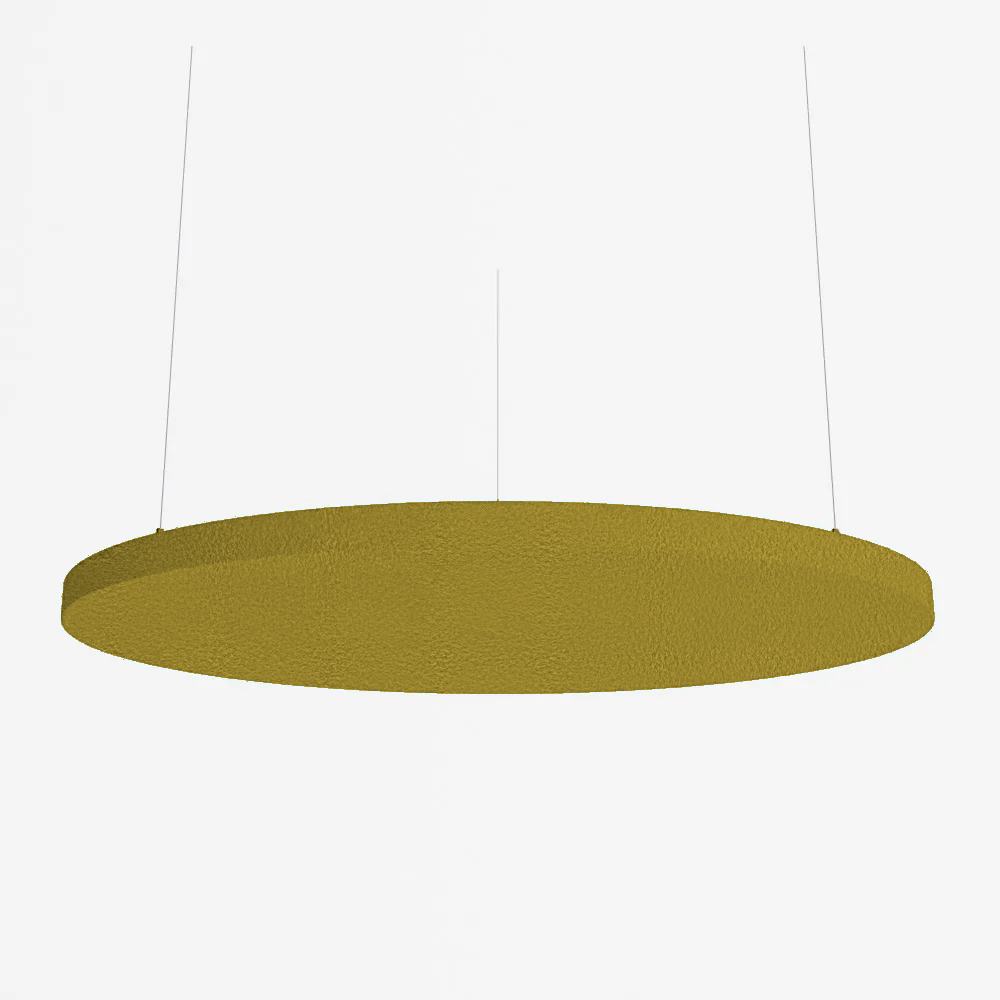
For open-plan offices, restaurants, sports halls and classrooms, ceiling panels do the heaviest lifting. The Ecophon Solo range illustrates it well: the Solo Square and Solo Circle both use a glass wool core that absorbs across the speech range on both exposed faces.
Where a raft is not practical, vertical baffles expose even more surface area to the room and suit tall, warehouse-style spaces.
Where panels make the biggest difference
Offices and meeting rooms
The objective is not neutrality but a lower background level and clearer speech. Open-plan floors suffer from long reverberation times that amplify ambient noise and make concentration harder. Ceiling rafts distributed over the occupied areas, with wall panels at the worst reflection points, is the standard approach. In meeting rooms, treat the side walls at first reflection points and the ceiling above the table. See our guide to acoustic panels for offices, or the Autex Quietspace Wrapped range in custom sizes.
Classrooms and educational spaces
Poor classroom acoustics directly affect learning. Pupils who cannot hear clearly disengage, and teachers end up projecting all day. In England, Building Bulletin 93 sets maximum reverberation times for school spaces, varying by room type and use, with tighter limits for SEN provision. Rooms with hard ceilings and floors routinely exceed them. A combination of ceiling rafts and wall panels usually brings them back within range. Browse classroom acoustic panels.
Restaurants, cafés and hospitality
Noise is one of the most common complaints in customer feedback. Tiles, concrete and glass create a reverberant space that becomes tiring within minutes. Ceiling treatment works best here because it covers the full plan area rather than just the perimeter. See restaurant and bar acoustic panels.
Recording studios and home studios
Studios need the most thorough treatment, because the goal is a neutral room that adds nothing to the capture. That usually means porous absorbers on walls and ceiling for mid and high frequencies, thick panels or traps in the corners for the low end, and sometimes diffusion to keep the room from going completely dead. Coverage is far higher than in a commercial interior. See studio acoustic panels.
What difference do panels actually make?
With the right panels in the right places, the change is immediate and measurable. Reverberation time is the headline figure: a room with a long, obvious decay can usually be brought down to a level where speech is comfortable, and that is what people notice first.
Absorption also lowers the background noise level. A reduction of around 10 dB is perceived as roughly half as loud, though in practice a well-designed scheme in an office typically achieves less than that from absorption alone — the gain is real but more modest than some suppliers imply. Speech intelligibility improves alongside it, which is usually the outcome people actually wanted.
The variable that decides all of it is coverage. Treating a small fraction of the surface area produces a small result. Rather than working to a rule of thumb, calculate what your specific room needs — our acoustic calculator gives you a target absorption area and an indicative budget from your room dimensions in two minutes.
Where to place panels
First reflection points matter most in rooms with a fixed listening position — studios, home theatres, meeting rooms. These are the points where sound from the source bounces off a wall before reaching the listener. Find them by sitting in the listening position while someone slides a mirror along the side wall: wherever you can see the source in the mirror is a first reflection point.
Ceiling coverage is the priority in open-plan spaces, where there is no single listening position to optimise for. Distribute rafts or baffles evenly across the ceiling above the occupied areas rather than clustering them.
Corners are where low-frequency energy concentrates. Thick or floor-to-ceiling panels in corners address this far more effectively than flat wall panels alone.
Fixing methods — adhesive, impaling clips and Z-bar systems — are covered in our guide to installing acoustic wall panels.
Choosing the right panels
Room size and ceiling height
Larger, taller rooms produce longer reverberation and need more coverage. Suspended rafts become more effective as ceiling height increases, because the air gap between raft and structural ceiling extends absorption further down the frequency range.
The frequencies causing the problem
Listen to what is actually wrong. General harshness or brightness? 25–40mm panels will handle it. Boomy and resonant? You need thickness, corner treatment or membrane absorbers. Dialogue unclear in an otherwise reasonable room? Mid-frequency absorption on side walls and ceiling.
Absorption class
Class A for anything doing the main work. Lower classes are fine as supplementary or decorative elements but will not carry a scheme alone. Check the mounting condition the figure was tested in.
Appearance
Panels no longer need to look industrial. Options range from the textured PET of the Autex Groove range to fabric-wrapped panels for corporate interiors and decorative pieces.
Budget
Balance coverage against per-panel cost. A larger area of mid-range panels will almost always outperform a small area of premium ones. Entry-level panels suit home use and small rooms; commercial-grade products from Ecophon, Abstracta and Offecct carry higher prices reflecting their Class A performance, fire certification and finish quality.
Conclusion
Acoustic panels work by converting sound energy into heat through friction as the wave passes into an absorptive material. Type, material, thickness and placement together determine which frequencies get absorbed and how well. Used properly, they reduce reverberation, improve speech clarity and make a room noticeably easier to work, record or spend time in.
The right answer depends on your space — its size, its surfaces, the frequencies causing trouble, and how it is used. Start with the acoustic calculator to find out how much absorption you need.


