









Blog
Blog

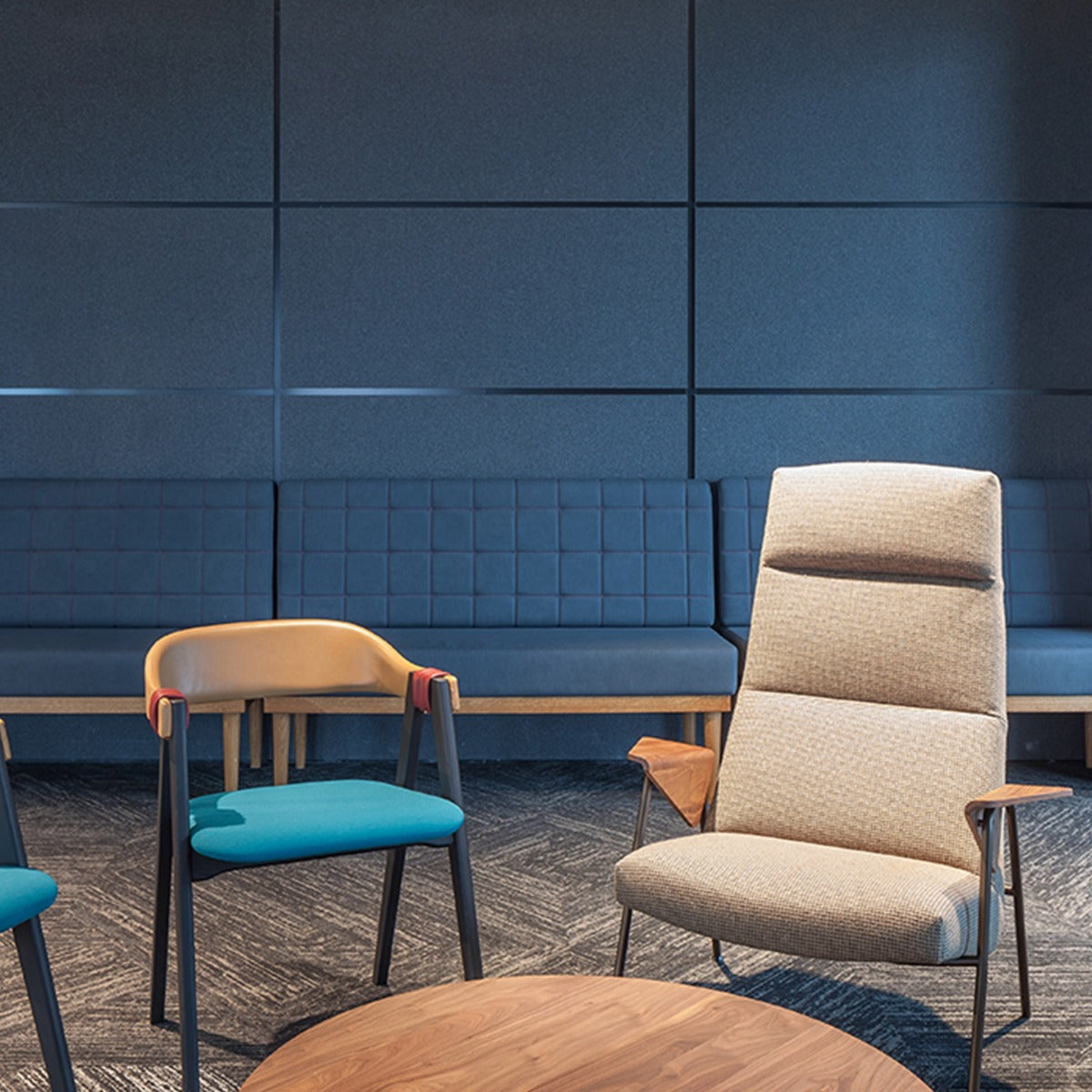
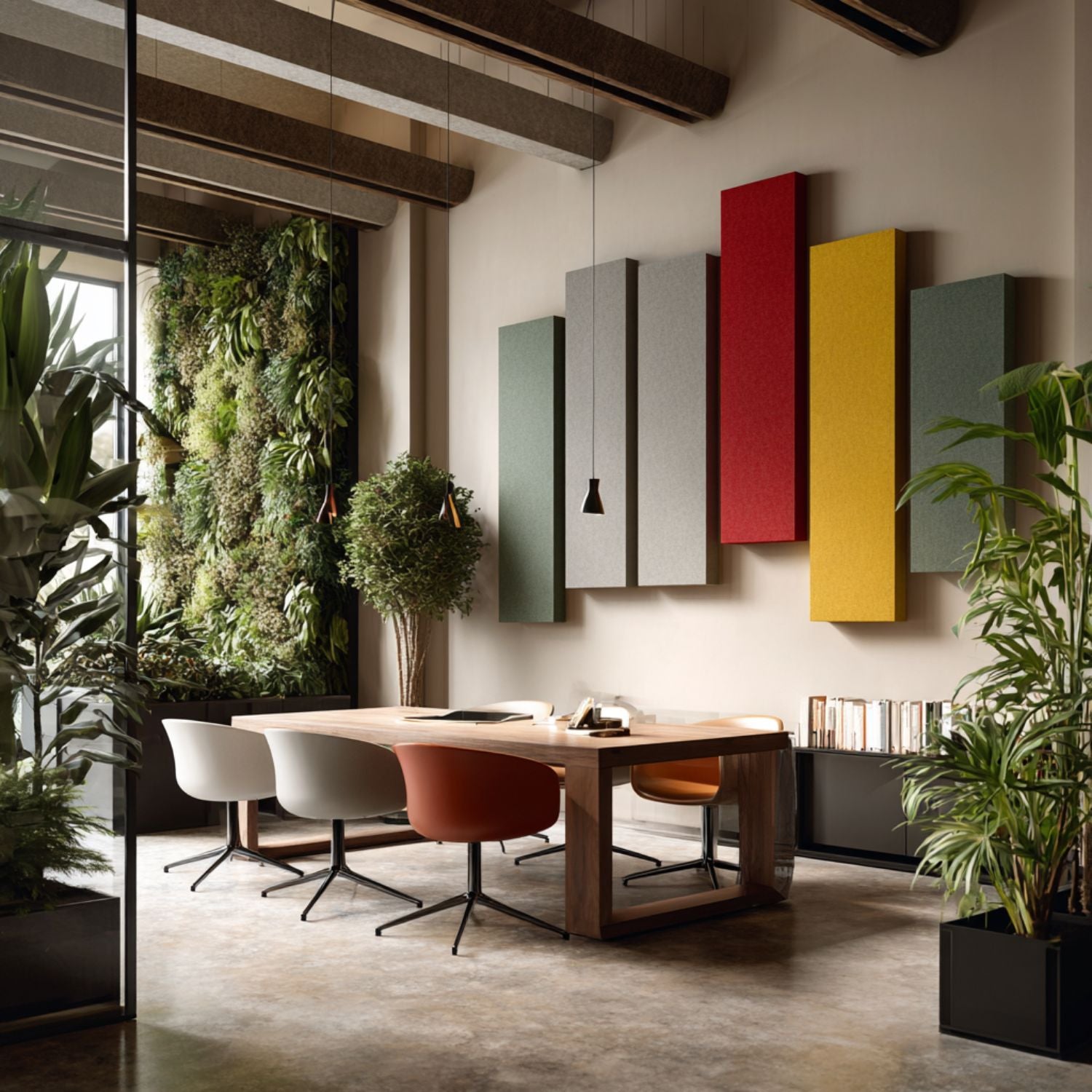
How to Choose Acoustic Panels for Your Office
Busy open plan offices can benefit greatly from acoustic wall panels, ensuring higher levels of comfort, productivity and reduced stress.
Read more
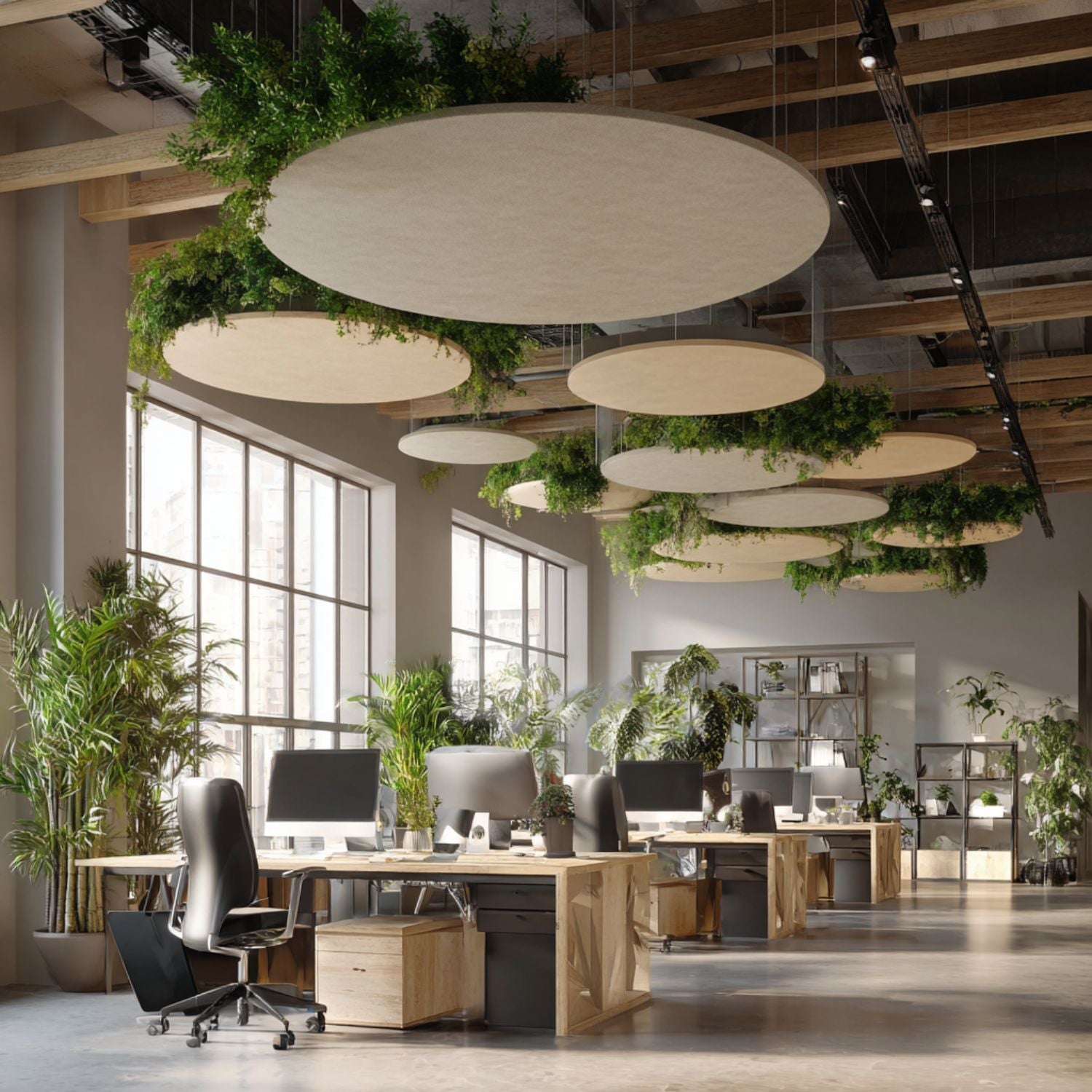
Open Plan Office Acoustics Guide: British Standard ISO 22955:2021
Open Plan Office Acoustics: A Complete Guide to Better Sound Environments at Work Open plan offices are the default layout for most modern workplaces, and for good reason. They encourage collaboration, reduce the need for cellular office space, and make better use of square footage. But they come with one persistent problem that no amount of good intentions can fix on its own: noise. Conversations bleed across desks, phone calls carry across the room, and the general hum of a busy floor makes it genuinely difficult to concentrate. This guide explains how open plan office acoustics work, what the relevant British standards require, and how to select and position acoustic treatments that actually make a difference. In 2021, new standards (BS ISO 22955:2021) were released providing technical guidance on achieving the best possible acoustic comfort in open plan offices. Why Open Plan Offices Struggle with Acoustics The very features that make open plan offices appealing are the same ones that create acoustic problems. Hard floors, exposed ceilings, large expanses of glass, and minimal soft furnishings all reflect sound rather than absorbing it. When sound reflects repeatedly between hard surfaces, reverberation builds up, and speech intelligibility drops. People respond by speaking louder, which raises the ambient noise level further and creates a cycle that becomes increasingly disruptive as the day progresses. The issue is not just about volume. Research consistently links high background noise in offices to reduced cognitive performance, elevated stress levels, and lower productivity. Employees working in acoustically poor environments report more difficulty concentrating, more frequent errors, and greater fatigue by the end of the working day. For facilities managers and interior designers specifying new or refurbished spaces, acoustic treatment is not an optional extra — it is a core part of making the workplace function properly. British Standards for Office Acoustics: What You Need to Know In the UK, office acoustic performance is guided primarily by BS 8233:2014, which sets recommendations for sound levels in workplaces, and BB93, which covers educational buildings but is frequently referenced in commercial contexts. For open plan offices specifically, the relevant target is typically a background noise level of between 40 and 45 dB(A), with reverberation times kept low enough to allow clear speech at normal conversational distances. Reverberation time (RT60) is the measure most commonly used to assess acoustic quality. It describes how long it takes for sound to decay by 60 decibels after a source stops. In a typical open plan office, a reverberation time below 0.6 seconds is generally recommended. Achieving this requires a sufficient area of sound-absorbing material relative to the volume of the space — which is where acoustic panel specification becomes critical. Panels are rated using the Noise Reduction Coefficient (NRC) or, under European standards, the weighted sound absorption coefficient (αw). Products rated Class A under EN ISO 11654 represent the highest level of absorption available, with an αw of 0.90 or above. Specifying Class A products wherever possible gives you the most efficient path to hitting the reverberation targets set out in British standards, using fewer panels and less wall or ceiling coverage. Understanding Sound Absorption vs. Soundproofing One of the most common points of confusion when specifying for offices is the difference between absorption and soundproofing. Acoustic panels — whether wall-mounted, ceiling-hung, or suspended as rafts — are absorption products. They reduce the amount of sound energy that bounces around within a room, lowering reverberation and making the space feel quieter and clearer. They do not prevent sound from passing between rooms or through walls and floors. Soundproofing, by contrast, involves mass, decoupling, and airtightness — typically addressed through the construction of walls, floors, and ceiling systems rather than through decorative panels. If your goal is to reduce noise transmission between separate offices or meeting rooms, that is a structural issue. If your goal is to reduce echo, lower the ambient noise level, and make conversation more comfortable within an open plan floor, acoustic panels are the right solution. You can explore the full range of acoustic products suited to commercial spaces to find what fits your brief. Where to Treat First: Ceilings, Walls, or Both? The ceiling is almost always the first surface to treat in an open plan office. It presents the largest unobstructed area in any room, it reflects sound from every direction, and ceiling-mounted products have minimal impact on usable floor space or desk layout. Suspended ceiling rafts and baffles work by intercepting sound before it reaches the hard ceiling surface and absorbs it, preventing it from bouncing back down into the space below. As the most important area, the British standard recommends approximately 50-60% coverage of the ceiling with Class A absorbing panels to be installed. Suspended panels allow you to retain the existing air circulation and services within the building, and also tend to be the most effective solution. Wall panels become important once the ceiling has been addressed, particularly on longer walls where sound can travel significant distances across a floor. They are also effective near noisy sources — around collaboration zones, phone booths, reception areas, and anywhere that generates concentrated sound. A combination of ceiling and wall treatment is almost always more effective than either approach alone, because it addresses multiple reflection paths simultaneously. Acoustic Ceiling Panels and Rafts for Open Plan Offices Suspended ceiling rafts are among the most widely specified products for open plan offices, and with good reason. They hang below the structural ceiling on wires or rods, absorbing sound on both their upper and lower faces. This means they are significantly more efficient per square metre than a flat panel fixed directly to a ceiling surface, because they can absorb sound coming from below and also sound that has already reflected upward. The Ecophon 'Solo' Rectangle suspended ceiling raft is a well-established product in commercial acoustic specification. Available in 1800 x 1200mm and larger formats, it carries Class A absorption and is supplied in White Frost as standard. The Solo range is designed for open plan environments where a clean, minimal appearance is needed alongside reliable acoustic performance. The Ecophon Solo in the narrower 2400 x 600mm format offers a more linear, architectural look that suits contemporary interiors with a grid-based ceiling design. For projects that need more design flexibility, the SilentSpace fabric-wrapped raft range offers custom sizing and a wide choice of fabric colours. The SilentSpace Fabric Wrapped Acoustic Ceiling Raft can be made to specific dimensions, which is particularly useful in irregularly shaped offices or where a specific coverage target needs to be met without wasting material. Acoustic Ceiling Baffles: The Right Solution for High-Ceiling Offices In offices with high or exposed ceilings — converted warehouse spaces, double-height receptions, or buildings with services left exposed for aesthetic reasons — horizontal rafts are often impractical or insufficient on their own. Vertical ceiling baffles provide a complementary or alternative approach. Hung vertically from the ceiling structure, baffles present two absorbing faces to sound arriving from the sides, making them exceptionally efficient in high-volume spaces. The Abstracta Basic Baffle is available in multiple sizes and can be arranged in regular rows or more organic configurations depending on the design brief. The 14six8 Harmony suspended panel system offers a similar approach with a more refined aesthetic, making it suitable for client-facing or prestige office environments. You can browse the full acoustic ceiling panel and baffle range to compare formats and coverage options. Acoustic Wall Panels for Open Plan Offices Wall panels play a secondary but still significant role in an open plan acoustic strategy. Once ceiling coverage reaches diminishing returns, adding wall absorption reduces late reflections — the echoes that arrive slightly after the direct sound and smear speech intelligibility. Positioning wall panels at the first reflection points on the longer walls of a floor is an efficient way to extend the effectiveness of ceiling treatment. The Ecophon Akusto One range is one of the strongest options for high-performance wall absorption in commercial settings. Available in square, rectangle, and circle formats, these panels deliver Class A absorption and are finished in a wide selection of colours including Sage, Acai, Oyster, Sea Salt, and Thyme. Circle panels from this range are priced from £599.00 per pack and include the fixings needed for straightforward wall installation. They work well in open plan environments where the panels need to be visible but not distracting. For projects where large wall areas need to be covered efficiently, the Abstracta Soneo Wall is a modular system designed specifically for that purpose. Panels start from £245.70 and are available in multiple sizes and upholstery options, allowing designers to build up a coherent wall covering across significant surface areas. The Soneo system has a discreet, architectural profile that sits naturally alongside contemporary workplace interiors. Design-Led Acoustic Products: Combining Performance with Aesthetics One of the more significant shifts in workplace acoustic specification over the last decade has been the move away from purely functional, clinical-looking treatment toward products that contribute positively to interior design. Facilities teams and fit-out designers no longer need to choose between acoustic performance and a space that looks good. The Offecct Soundwave Bella is a good example of this approach. At £121.80 per panel, the Bella is a 585 x 585mm moulded polyester fibre panel with a sculpted surface texture that provides both sound absorption and visual interest. It is part of the broader Soundwave family, which includes formats such as the Flo, Swell, Sky, and Scrunch — each with a distinct profile, all designed to be combined in modular arrangements across a wall surface. These panels suit offices where the acoustic treatment is intended to double as a design feature rather than sit invisibly in the background. PET felt panels from brands like Autex and BAUX offer another route to design-led acoustic treatment. The Autex Cube and the Autex Groove are both large-format wall panels made from recycled polyester felt, available in a wide colour palette. The Groove's linear channelled surface adds visual texture to a wall while performing well acoustically, making it a popular choice for creative and tech offices. The BAUX Wood Wool ceiling panels bring a natural material quality to ceiling treatments, with the textured wood wool surface providing effective absorption alongside a distinctly warm, tactile finish. How to Calculate How Much Acoustic Treatment You Need Specifying the right amount of acoustic treatment requires calculating the total absorption needed to reach your target reverberation time. The standard formula for this is the Sabine equation, which relates reverberation time to the total volume of the space and the total absorption area (in Sabins or square metres). In practice, this means measuring the room volume, estimating the absorption already present from flooring, furniture, and occupants, and then calculating the additional absorption required to hit the target RT60. For most open plan offices of standard ceiling height (2.7 to 3.5 metres), a rule of thumb is to aim for acoustic treatment covering approximately 15 to 25 percent of the total ceiling area with Class A products. This provides a useful starting point, but every space is different, and a proper acoustic assessment will give a more accurate figure. SONIO offers an acoustic calculator tool that can help you estimate treatment requirements based on your room dimensions and target reverberation time — a useful first step before committing to a specification. Installation Options and Practical Considerations One of the practical advantages of modern acoustic panel products is the variety of installation methods available. Wall panels can be fixed using adhesive, clip systems, or concealed brackets, depending on the wall substrate and whether the panels need to be removable. Ceiling rafts are typically hung on wire suspension systems that allow the drop height to be adjusted — useful in spaces where services or structure create constraints on hanging positions. For refurbishment projects where disruption needs to be minimised, many products in the acoustic wall panel range can be installed during a single weekend or evening shift. Products like the Autex Quietspace Wrapped panels and the SilentSpace custom fabric panels are supplied ready to hang, with all fixings included. For more complex installations involving bespoke sizing or large-scale coverage, SONIO offers a fitting service to support projects where a professional installation is preferred. Meeting Rooms and Acoustic Zones Within an Open Plan Office Open plan offices rarely consist of a single homogenous area. Most floors include a mix of focus zones, collaboration areas, phone booths, and informal meeting spaces. Each of these zones has different acoustic requirements, and treating them accordingly leads to a much better overall result than applying a uniform approach across the whole floor. Meeting rooms that open directly onto an open plan floor, or that are partially glazed, need particular attention. Hard-surfaced meeting rooms become highly reverberant on their own, and if they are not acoustically treated internally, conversations within them spill out and contribute to ambient noise on the floor. The acoustic panel range for meeting and conference rooms includes products specifically suited to these smaller, more focused spaces, where absorption needs to be high but the area available for treatment is limited. Bespoke Acoustic Solutions for Complex Briefs Not every office project fits neatly into standard panel sizes or off-the-shelf product ranges. Spaces with unusual geometries, specific branding requirements, or demanding acoustic targets may need a more tailored approach. Custom-printed acoustic panels, for example, can incorporate photography, artwork, or brand graphics while still delivering meaningful sound absorption — making them particularly effective in reception areas and client-facing spaces where visual identity matters as much as performance. For projects that require a more hands-on specification process, SONIO's bespoke acoustic service provides support from product selection through to final installation. This is particularly useful for large or complex commercial fit-outs where acoustic performance needs to be demonstrated against specific targets, or where multiple product types need to be coordinated across a single floor. Conclusion: Getting Open Plan Office Acoustics Right Acoustic quality in open plan offices is not a luxury consideration — it directly affects how well people can work. The good news is that the products and knowledge needed to address it effectively are readily available, and even modest amounts of well-placed absorption can produce a noticeable improvement in comfort and intelligibility. The most reliable approach is to start with the ceiling, prioritise Class A products where possible, and supplement wall coverage in areas with specific noise sources or long reflection paths. Use British standard guidance (particularly ISO 22955:2021) as your performance benchmark, and take advantage of calculation tools to size the treatment correctly before ordering. Whether you are specifying a large commercial fit-out or addressing a noise problem in an existing office, the full office acoustic panel range at SONIO covers everything from high-performance suspended ceiling rafts to design-led wall panels from brands including Ecophon, Abstracta, Offecct, BAUX, Autex, De Vorm, and SilentSpace. If you are not sure where to start, the FAQ section covers common specification questions, or you can get in touch directly via the contact page for project-specific advice.
Read more
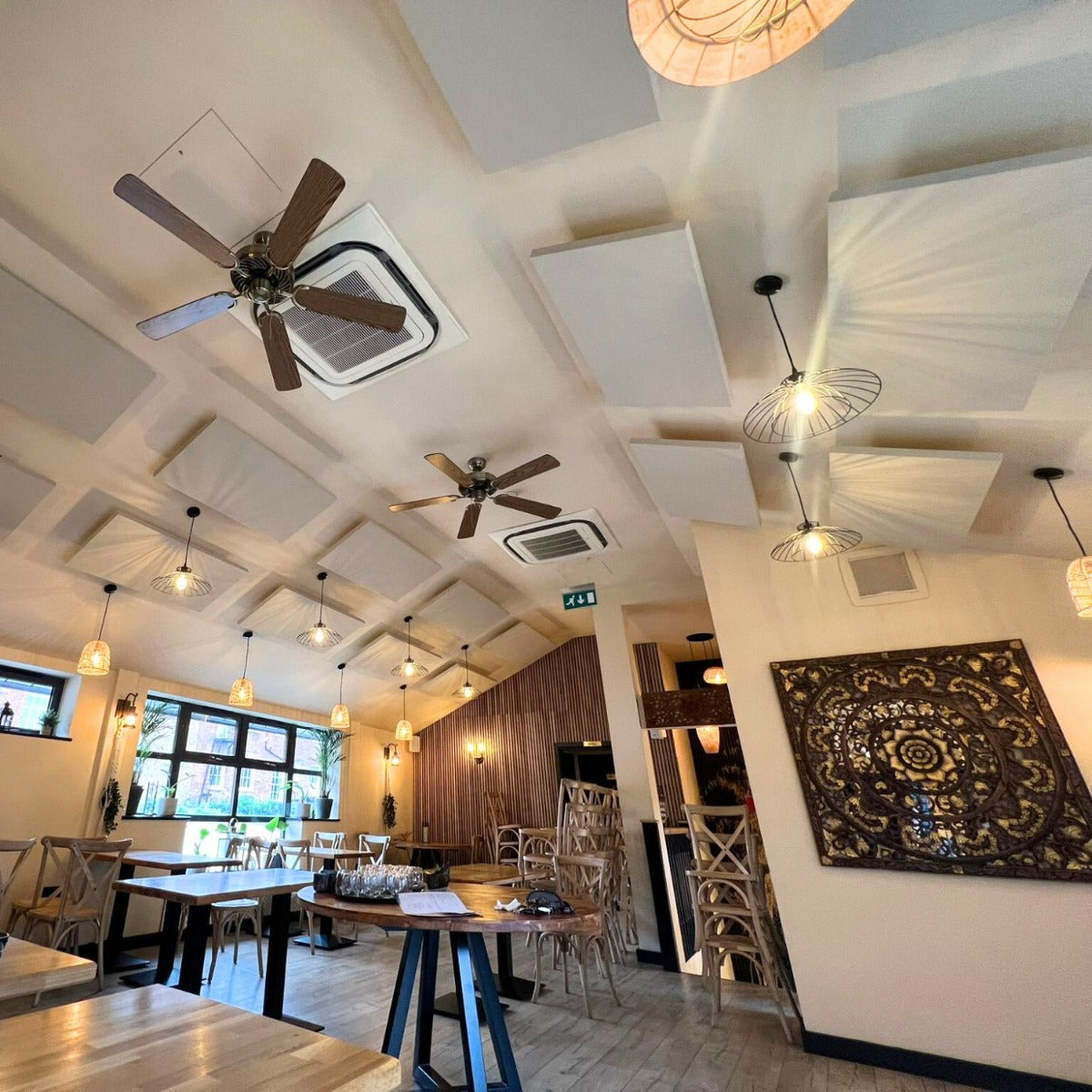
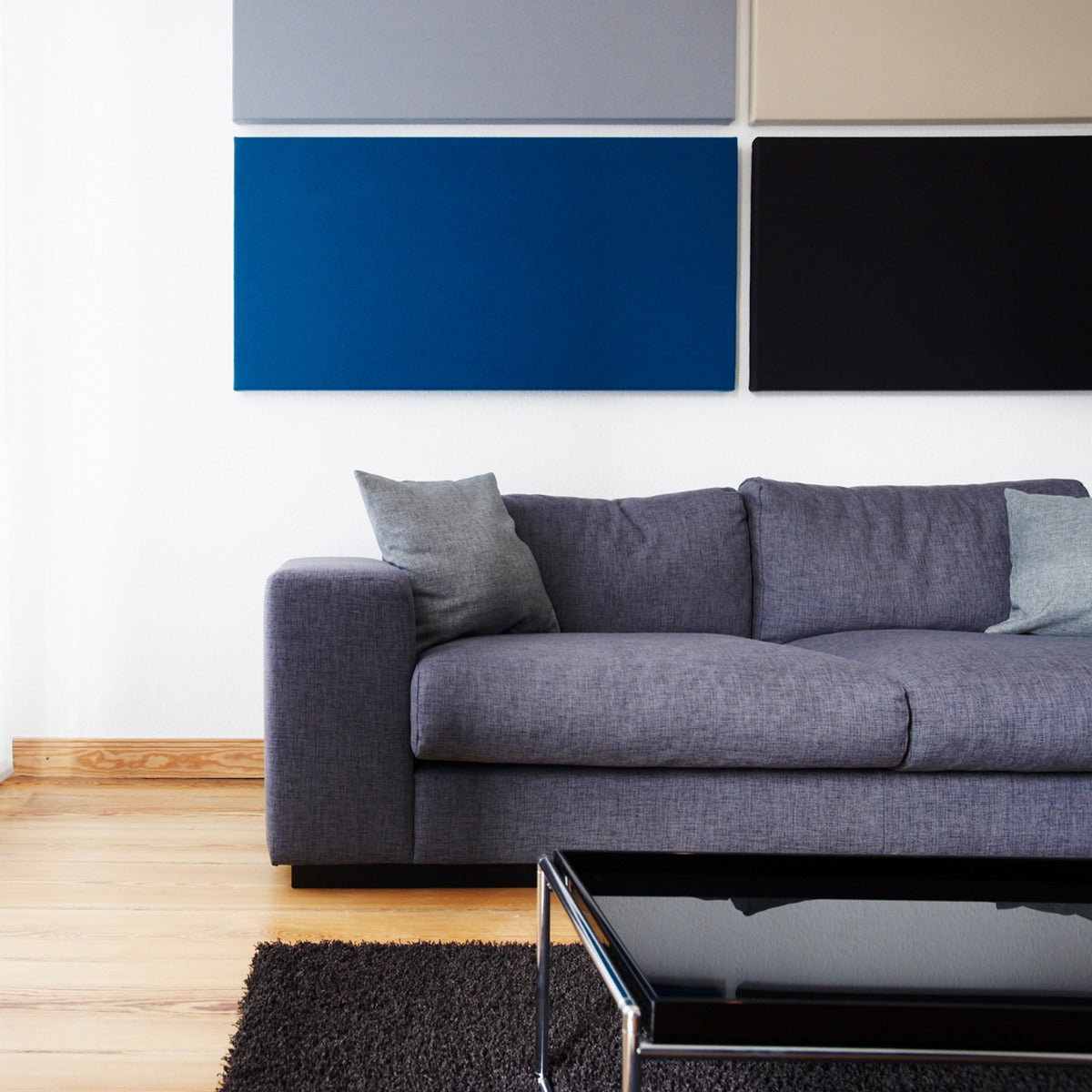
How to Improve Your Home Office Acoustics: A Complete Guide
How to Improve Your Home Office Acoustics: A Complete Guide Working from home has become a permanent arrangement for millions of people, and for most, the room they work in was never designed with acoustics in mind. Spare bedrooms, converted loft spaces, and garden offices share one common problem: sound bounces around freely, making it harder to concentrate, harder to communicate clearly on calls, and harder to feel settled in your work. This guide covers everything you need to know about treating your home office acoustically, from understanding how sound behaves in small rooms to choosing the right panels, rafts, and baffles for your setup. Why Poor Acoustics Affect Your Work More Than You Realise Most people associate bad acoustics with large, echoey spaces like sports halls or empty restaurants. But small rooms with hard, reflective surfaces have their own acoustic problems, and a home office is a prime example. A room with painted plaster walls, a wooden floor, glass windows, and a desk against a hard wall will reflect sound back and forth rapidly, creating a buildup of noise that can feel fatiguing even when the room is quiet. The effects are practical as well as psychological. Speech intelligibility drops when reverberation is high, meaning your voice sounds muddy on video calls. Background noise from other parts of the house becomes more noticeable when there's nothing absorbing it. And sustained exposure to a reverberant environment increases cognitive load, even when you're not actively aware of it. Improving acoustics addresses all of these problems at once. If you're setting up a workspace elsewhere in your home, the same principles apply. You can explore acoustic solutions for homes and apartments more broadly, or look at purpose-specific treatments for living room workspaces if your setup isn't a dedicated room. How Sound Behaves in a Typical Home Office When sound is generated in a room, it travels outward in all directions. Hard surfaces like walls, ceilings, floors, and glass reflect it back with very little energy lost. In a room with no soft furnishings, sound can bounce many times before it dies away, producing what's measured as reverberation time. The longer the reverberation time, the more muddled the acoustic environment becomes. Home offices are often stripped-back spaces compared to living rooms, which tend to have soft furniture, curtains, and carpets that absorb some of this energy naturally. A dedicated office with hard floors, bare walls, and a desk facing a window can have reverberation times significantly higher than what's comfortable for focused work or clear communication. The solution isn't to cover every surface, but to add enough absorption in the right places to bring reverberation time down to a comfortable level. This is where acoustic panels, ceiling rafts, and baffles come in. You can browse the full range of available treatments in the complete acoustics collection to get a sense of what's available across different product types. Acoustic Wall Panels: The Most Accessible Starting Point Wall panels are usually the first thing people consider, and for good reason. They're straightforward to install, they come in a wide variety of sizes and fabrics, and they can be positioned strategically to target the most reflective surfaces in a room. Placing panels on the wall opposite your desk, on side walls, or around the area where you typically take calls will have a noticeable impact. Fabric-wrapped panels are a popular choice because they combine effective sound absorption with a clean, finished appearance. The SilentSpace range of fabric-wrapped panels comes in rectangle, square, and circle formats in multiple sizes, making it easy to work with whatever wall space you have available. The fabric surface can be colour-matched to your décor, so the panels don't have to look like an afterthought. For something with more texture and visual character, the Autex 'Mirage' and 'Cube' PET panels offer absorption alongside a more tactile, design-led surface finish. PET felt panels are made from recycled materials and are a good choice if sustainability is a consideration in your purchasing decisions. Installation is generally simple. Most panels can be fixed with adhesive strips or light wall fixings, meaning you don't need specialist tools or skills. If you're renting and can't fix anything to the walls permanently, freestanding options and leaning panels are also worth considering. Browse the full selection of acoustic wall panels to compare formats, sizes, and finishes. Acoustic Ceiling Panels and Suspended Rafts The ceiling is one of the most acoustically significant surfaces in a room because it's large, hard, and directly above the source of most sound. Yet it's also the most commonly overlooked surface when people start treating a home office. Adding absorption overhead, whether through ceiling-mounted panels or suspended rafts, can produce a dramatic improvement in clarity and comfort. Suspended rafts hang from the ceiling on discreet wires and absorb sound from both sides, making them considerably more efficient per unit area than flat ceiling tiles. They work particularly well in rooms with higher ceilings where there's space to drop them without affecting headroom. The SilentSpace range includes fabric-wrapped rafts in both rectangle and circle formats at multiple sizes. These are a practical and cost-effective way to add overhead absorption without a complex installation. The circle format in particular works well visually in a smaller room where a large rectangular raft might feel overwhelming. For a more refined finish, the BAUX 'Wood Wool' ceiling panels are worth considering. Made from wood wool bound with cement, they offer both absorption and a warm, textured surface that suits contemporary interiors. They're available in 1200 x 600mm ceiling tile format, making them compatible with standard grid ceiling systems if your home office has a suspended ceiling. You can find the complete range of suspended and fixed options in the acoustic ceiling panels collection. Ecophon Solo Rafts: A Premium Ceiling Solution The Ecophon Solo series represents one of the most trusted names in suspended acoustic ceiling products. The Solo range is used across professional offices, healthcare environments, and education settings, but it's equally well suited to a home office where you want a clean, high-performance solution that doesn't compromise on appearance. The Ecophon Solo Square is a 1200 x 1200mm frameless raft with an Akutex FT surface finish. It's available in multiple colours, suspends on discreet wires, and comes with all the fixation hardware included. The frameless design gives it a minimal look that fits naturally into a modern home office without looking industrial. Priced at £175 per panel, it's a considered investment that delivers measurable acoustic improvement. The Ecophon Solo Circle is available in Ø800mm and Ø1200mm diameters and comes in packs of four panels with fixation hardware included. The circular format softens the geometry of a room and works well as a focal point above a desk or seating area. Both Solo formats offer an effective and cost-conscious acoustic solution, with the Circle variant being a particularly good option for smaller home offices where a large rectangular raft would dominate the ceiling. Acoustic Ceiling Baffles for Home Offices Baffles are a different approach to ceiling acoustics. Rather than horizontal panels sitting parallel to the ceiling, baffles hang vertically in rows, absorbing sound as it passes through the gaps between them. This gives them a high effective surface area relative to the ceiling space they occupy, making them efficient in rooms where you can't or don't want to cover large areas of the ceiling. The Ecophon Solo Baffle is a Class A absorber with the same Akutex FT surface used across the Solo range. It suspends vertically from the ceiling and can be configured in adjustable arrangements depending on the space. Priced at £499 per pack, this is a serious acoustic product for home offices where performance is the priority. Fixings are included. The SilentSpace fabric-wrapped ceiling baffles offer a similar vertical format at a more accessible price point and in a wider range of fabric colours, making them a practical choice for home offices where aesthetics matter as much as acoustic performance. The full selection of suspended baffle products is available in the acoustic ceiling baffles collection, including both fabric-wrapped and PET felt variants across multiple sizes. Acoustic Screens and Desk Dividers If your home office is part of a larger open-plan space, or if you share a room with other people, freestanding acoustic screens offer a targeted solution. They work by absorbing sound close to the source, reducing how much travels across the room in the first place. Screens are also useful in front of windows, where hard glass surfaces cause significant sound reflection. Positioning an acoustic screen perpendicular to a window can help break up the reflection path without covering the glass entirely. Browse the acoustic screens collection for freestanding and desk-mounted options suited to home working environments. Acoustic Panels That Work as Wall Art One of the most practical developments in acoustic design is the printed panel. Rather than a plain fabric surface, these panels carry photographic or artistic prints directly on the acoustic material, effectively functioning as both wall art and acoustic treatment. For a home office where you've put thought into how the room looks, this is a neat way to add absorption without making the space feel clinical. The SilentSpace Printed Art Acoustic Panels are available in multiple sizes and can be produced with custom imagery, making it possible to have panels that reflect your own aesthetic rather than a generic manufacturer's palette. They retain the same core acoustic performance as the standard SilentSpace fabric range. For something more architectural, the Abstracta 'Sahara' panels and acoustic slat wall panels in the Eco Sound range add visual depth to a wall while absorbing mid to high frequency sound. The Eco Sound acoustic slat wall panels, measuring 3000 x 600mm, work particularly well across an entire feature wall, creating the kind of warm, textured interior surface that a home office benefits from both acoustically and visually. Acoustic Lighting: Combining Function with Acoustics Several products in the range integrate acoustic absorption directly into lighting fixtures, which is an efficient way to treat a space without dedicating additional wall or ceiling area to panels alone. These products absorb sound through the body of the fitting itself, making productive use of the ceiling space that a pendant light would occupy anyway. The Impact Acoustic 'Spark' acoustic lighting and the Abstracta 'Vika' acoustic lamp absorber are both designed with this dual purpose in mind. The De Vorm 'Pivot' adjustable acoustic lamp adds flexibility to the concept, allowing you to direct both light and acoustic absorption where they're needed most. For a home office where adding panels might feel too conspicuous, acoustic lighting can provide a more integrated solution. How to Plan Your Home Office Acoustic Treatment There's no single formula for treating a home office because every room is different. That said, a few practical principles apply across most situations. Start with the most reflective surfaces. Bare plaster walls, ceilings, and floors are the primary culprits. Address at least two of these before considering anything else. Target the first reflection points. Sound from your speakers or your voice will reflect off the wall directly to the side of you and the ceiling directly above. Placing panels at these points has a disproportionate effect on clarity. Aim for balanced coverage. Covering one wall entirely while leaving all others bare will produce an uneven acoustic environment. Spread absorption across different surfaces and positions in the room. Combine panel types. Using a mix of wall panels, ceiling rafts, and possibly baffles addresses sound coming from different angles and gives a more complete treatment than relying on one product type alone. Don't over-treat. A completely dead room is uncomfortable in its own way. The goal is to reduce excess reverberation, not eliminate all reflections. If your needs extend beyond a single home office, the same principles apply in larger professional settings. The commercial office acoustic panels collection covers a broader range of solutions for open-plan and multi-desk environments, including larger format panels and more extensive baffle systems. Materials: What to Look for When Choosing Acoustic Panels Not all acoustic panels are made from the same materials, and the differences matter both in terms of performance and practicality. Fabric-wrapped panels use a rigid core, typically glass wool, rock wool, or polyester fibre, wrapped in an acoustic-transparent fabric. The fabric has no effect on sound absorption but allows sound waves to pass through to the core where they're absorbed. These are among the most effective products for broadband sound absorption and can be made to look exactly as you want them to. PET felt panels are made from recycled plastic bottles and offer good mid to high frequency absorption. They're lighter than fabric-wrapped panels, easier to cut to custom sizes, and visually distinctive. Products like the Autex range and the BAUX X-FELT panels fall into this category. Glass wool products such as the Ecophon range provide very high levels of absorption, particularly at low frequencies. The Ecophon Solo rafts and baffles use a glass wool core with a durable Akutex FT surface that's both cleanable and suitable for humid environments. Wood wool panels such as the BAUX 'Wood Wool' ceiling tiles offer a different acoustic character and a natural, warm aesthetic. They're particularly effective at diffusing as well as absorbing sound, making them useful in rooms where you want to retain some liveness rather than damping everything down. For home studios where more precise acoustic control is needed, separate guidance applies. The music studio acoustic panels collection covers specialist products suited to recording and listening environments. Easy Installation: Getting Panels Up Without Disruption Most acoustic wall panels can be installed without professional help. Fabric-wrapped panels at smaller sizes can be fixed with heavy-duty adhesive strips, meaning no drilling or wall damage. Larger panels and ceiling products typically require fixings into the wall or ceiling, but the hardware is usually included and the process is straightforward. Suspended rafts like the Ecophon Solo range use discreet stainless steel wires with ceiling anchors. The anchors require drilling, but the installation process is well documented and the components are designed for straightforward self-installation. All fixation hardware is supplied with the product. Where walls can't be drilled, freestanding products and leaning panels provide an alternative. Acoustic screens are self-supporting and can be repositioned as needed, which is particularly useful in rented spaces. The ceiling baffles collection includes products designed for quick, reversible installation suitable for home environments. Conclusion Getting the acoustics right in a home office is one of the most effective improvements you can make to your working environment, and it doesn't require a complete renovation. A combination of wall panels, ceiling rafts, and appropriate furnishings can reduce reverberation, improve speech clarity on calls, and make long hours at the desk considerably more comfortable. The range of products available means there's a practical solution for every type of home office, from a small spare room to a purpose-built garden studio. Whether you start with a few fabric-wrapped wall panels or opt for a suspended raft system like the Ecophon Solo series, the results are measurable and immediate. Browse the full home office acoustic panels collection to find products suited to your specific room, budget, and aesthetic preferences, or explore the complete acoustics range if you want to see everything available across all product types and formats.
Read more
Top 7 Acoustic Panels for Sports Halls in 2026: Expert Picks for Gyms, Schools and Leisure Centres
If you're looking for the top 7 acoustic panels for sports halls, you've come to the right place. Noise levels in sports classes and gym environments can exceed 100 dBA, which can cause permanent hearing damage in as little as 15 minutes without proper acoustic treatment — and beyond the health risk, uncontrolled reverberation makes it nearly impossible for coaches to communicate, athletes to concentrate, or spectators to enjoy the space. Key Takeaways Question Quick Answer What type of acoustic panel is best for sports halls? Impact-resistant wall panels and suspended ceiling rafts with Class A sound absorption are the most effective options for large, high-traffic spaces like sports halls. Do sports hall acoustic panels need to be impact resistant? Yes. Standard fabric panels can be damaged by balls and equipment. Look for panels specifically rated for sports environments, such as those meeting DIN 18032-3 or equivalent standards. Where should acoustic panels be installed in a sports hall? Typically high on walls (above equipment reach) and suspended from ceilings as rafts or baffles, targeting the most reflective surfaces in the space. Are sports hall acoustic panels fire-rated? All acoustic panels specified for UK schools and leisure facilities should be fire-rated to current UK safety standards. Check product specifications carefully before purchasing. Can I order custom-size acoustic panels for a sports hall? Yes. Several products in our sports hall acoustic panels collection are available in custom sizes up to 3000 x 1200mm to suit non-standard wall dimensions. How many acoustic panels does a sports hall need? This depends on the hall's volume, surface materials, and target reverberation time. Try out our acoustic calculator to determine how many panels you might need. Which brands make the best acoustic panels for sports halls? SilentSpace and Ecophon are among the leading brands for sports hall environments, offering both wall panels and suspended ceiling rafts with strong acoustic and durability credentials. Why Sports Halls Are Acoustically Challenging Sports halls are among the hardest spaces to treat acoustically. They combine large volumes, hard reflective surfaces (concrete floors, brick walls, metal roofing) and intense, broadband noise from activities, whistles, music, and crowd reactions. The result is a very high reverberation time — often well above 2 seconds, when the recommended level for a sports environment is closer to 1 second or less. This level of echo doesn't just cause discomfort; it actively degrades safety, communication and performance. Acoustic panels for sports halls work by absorbing sound waves as they travel through the space and bounce off hard surfaces. The more surface area you cover with high-performance absorbers, the shorter the reverberation time and the clearer the sonic environment becomes. What to Look for in Acoustic Panels for Sports Halls Not every acoustic panel is suitable for a sports hall environment. Before you commit to a product, there are several key criteria worth checking. Class A Sound Absorption: This is the highest absorption rating available under ISO 11654. Class A panels absorb the most sound across the widest frequency range, making them the right starting point for echoey sports halls. Impact Resistance: Wall panels in sports halls are exposed to accidental ball strikes, equipment contact and general physical wear. Standard acoustic panels are not built for this — look for products with a reinforced, impact-resistant face. Fire Rating: UK building regulations require materials used in public buildings and schools to meet specific fire classification standards. Always check that panels are rated for your specific application. Installation Height and Method: Panels installed on walls should typically sit above the activity zone (often 2.5m and above). Ceiling rafts and baffles are the most effective solution for high-volume spaces where wall space is limited. Durability and Finish: Sports environments are tough on materials. A wipe-clean, hard-wearing finish is preferable to delicate decorative fabrics in high-traffic areas. Bespoke Sizing: Many sports halls have non-standard dimensions. The ability to order acoustic panels in custom sizes ensures you can achieve full coverage without compromise. With over 10 years of experience in interior acoustics, we've carefully selected a range of products from market-leading brands that genuinely perform in real sports hall conditions. Here's our curated list of the top 7 acoustic panels for sports halls, covering both wall and ceiling applications. Top 7 Acoustic Panels for Sports Halls: Our Picks 1. SilentSpace High Impact Square Acoustic Panels Best for: Wall coverage in active sports areas where ball impact is likely. These are specifically engineered for high-traffic environments, making them one of the most practical acoustic panels for sports halls on the market in 2026. The reinforced face withstands direct ball strikes without losing acoustic performance or showing surface damage. They deliver Class A sound absorption, meaning they tackle the worst of the echo problem head-on. Available in multiple sizes and a wide range of fabric colours, they're easy to integrate without making the space feel clinical. Class A sound absorption Reinforced impact-resistant face for sports environments Available in multiple sizes Made in the UK Wall spikes and adhesive included Fire-rated to UK safety standards View the SilentSpace High Impact Square Panels 2. SilentSpace Impact Resistant Acoustic Panels (Custom Sizes) Best for: Sports halls with non-standard wall dimensions requiring a tailored solution. This is the custom-size version of our impact-resistant range, making it ideal for schools and leisure centres where the available wall sections don't match standard panel dimensions. Custom sizes are available up to 3000 x 1200mm, providing excellent flexibility for complex layouts. The bespoke customisation options also extend to fabric colour, so you can match existing colour schemes or reinforce school branding without sacrificing acoustic performance. This is exactly the kind of form meets function approach we think every sports hall deserves. Custom sizes up to 3000 x 1200mm Class A sound absorption Impact-resistant outer layer Broad fabric colour selection Suitable for schools, leisure centres and community sports halls View the SilentSpace Custom Impact Resistant Panels Did You Know? Top-tier impact-resistant panels (DIN 18032-3 certified) are designed to withstand ball impacts at various speeds without any loss of acoustic integrity or marking. Source: TVS Sports Surfaces 3. SilentSpace Rectangle Acoustic Panels (Multiple Sizes) Best for: General wall coverage in lower-risk sports hall zones, changing areas or lobbies adjacent to the main hall. The SilentSpace Rectangle Acoustic Panels are fabric-wrapped panels available in a range of preset sizes, making them a cost-effective and straightforward option for broader wall coverage. While not the most heavily reinforced option in the range, they deliver strong Class A absorption and are entirely suitable for wall locations above the main play zone. The clean, minimal aesthetic works well in multipurpose halls that also serve as assembly spaces, performance venues or community meeting rooms. They're also available with adhesive or wall spike fixings, so installation is straightforward. Fabric-wrapped construction in multiple preset sizes Class A sound absorption Broad colour palette Adhesive and wall spike fixings available Works well as part of a combined wall and ceiling treatment View the SilentSpace Rectangle Acoustic Panels 4. SilentSpace Circle Acoustic Panels (Multiple Sizes) Best for: Sports halls where visual interest and design variety are important alongside acoustic performance. Sometimes the best acoustic solution is also the most visually striking. The SilentSpace Circle Acoustic Panels bring a softer, more contemporary aesthetic to wall treatments, which works particularly well in newer sports facilities and school halls where design quality matters. Available in multiple diameters with the same fabric-wrapped construction as the rest of the SilentSpace range, these panels can be used alongside rectangular panels for mixed arrangements, or grouped together for a bold feature wall with genuine acoustic benefit. They're suited for walls in both low and higher-risk areas depending on placement height. Available in multiple diameters Fabric-wrapped construction with broad colour choice Can be mixed with other SilentSpace shapes for creative layouts Flexible mounting options for wall or ceiling Suitable for schools, community halls and fitness studios View the SilentSpace Circle Acoustic Panels 5. SilentSpace Rectangle Acoustic Raft (Multiple Sizes) Best for: Ceiling-mounted absorption in sports halls where wall space is limited or already in use. When the walls of a sports hall are busy with equipment, storage or glazing, the ceiling becomes the primary surface for acoustic treatment. The SilentSpace Rectangle Acoustic Raft is a suspended ceiling panel that delivers high sound absorption from above, targeting the reflective ceiling plane that causes so much of the reverberation problem in large sports spaces. Suspended horizontally, these rafts absorb sound on both their top and underside surfaces, making them notably more efficient per panel than wall-mounted alternatives. They're available in multiple sizes and can be arranged in grids or clusters to achieve the required coverage. Suspended ceiling raft for overhead sound absorption Available in multiple sizes Absorbs sound on both surfaces for greater efficiency Minimal intrusion into lighting and ventilation systems Fabric-wrapped in a broad range of colours View the SilentSpace Rectangle Acoustic Rafts 6. Ecophon Solo Circle Suspended Acoustic Ceiling Raft Best for: High-volume sports halls requiring premium, Class A ceiling absorption with a clean, architectural look. Ecophon is one of the most respected names in acoustic specification globally, and the Solo Circle ceiling raft is a standout product for large, open sports environments. Suspended from the ceiling and available in pack configurations, these circular rafts provide targeted sound absorption from above without interfering with lighting rigs, HVAC or structural elements. The clean White Frost finish suits modern sports facilities and multi-use community halls where aesthetics matter as much as performance. The circular form breaks up the visual monotony of large ceiling planes and adds a contemporary design quality that is increasingly expected in 2026 sports hall refurbishments. Class A sound absorption from a globally trusted brand Available in multiple sizes, sold in packs White Frost finish for clean, architectural integration Easy to integrate with existing lighting and ventilation Suitable for high-ceiling sports halls and multi-use spaces View the Ecophon Solo Circle Ceiling Raft 7. Ecophon Akusto with Super G Best for: High-impact, acoustic wall panel | 2700 × 1200 × 40 mm - Pack of 4 Ecophon Akusto™ Wall A with the Super G surface is a heavy-duty acoustic wall absorber built for spaces where panels take a beating. Combining a high-density glass wool core with Ecophon's toughest impact-resistant glass fibre fabric, Super G achieves the highest classification for mechanical impact under EN 13964 — ideal for sports halls, gyms, school corridors, multi-use halls, and any high-traffic environment where ball strikes, knocks, and scuffs are part of daily life. 2700 x 1200mm per panel, sold in packs of 4 Class A sound absorption from Ecophon Durable Super G finish Supplied with mounting hardware Proven in schools, leisure centres and professional sports venues View the Ecophon Akusto Wall A Comparing Our Top 7 Acoustic Panels for Sports Halls Not sure which option suits your space? This quick comparison table covers the key differences across our seven recommended acoustic panels for sports halls. Product Type Absorption Impact Resistant Custom Sizes Best For SilentSpace High Impact Square Wall Panel Class A Yes Multiple preset sizes Active ball-play zones SilentSpace Impact Resistant Custom Wall Panel Class A Yes Up to 3000 x 1200mm Non-standard wall dimensions SilentSpace Rectangle Wall Panel Wall Panel Class A No Multiple preset sizes Upper wall zones, lobbies SilentSpace Circle Wall Panel Wall Panel Class A No Multiple diameters Design-led spaces, upper walls SilentSpace Rectangle Raft Ceiling Raft Class A No Multiple sizes Ceiling treatment, limited wall space Ecophon Solo Circle Raft Ceiling Raft Class A No Multiple sizes Premium finish, high-ceiling halls Ecophon Akusto A Wall Class A Yes Fixed size, packs of 4 Large-volume halls, maximum coverage How to Install Acoustic Panels in a Sports Hall Installation approach matters as much as product choice when it comes to acoustic panels for sports halls. Getting the placement right is the difference between a noticeable improvement and a genuinely comfortable, functional space. For wall panels, the general guidance is to install them above the main activity zone, typically starting at 2.5m and above. This keeps panels out of reach of direct ball strikes at floor level while still targeting the mid and upper wall surfaces where sound bounces most aggressively. Impact-resistant panels can be mounted lower if needed. For ceiling rafts, the aim is to maximise the absorptive surface area across the ceiling plane. A grid or cluster arrangement works well, leaving adequate spacing between rafts to allow sound to pass through and be absorbed on both surfaces. Work around existing light fittings and HVAC ducts rather than covering them. As the sister company of the UK's first dedicated acoustic installation company, we offer a complete design, supply, and installation service for sports hall projects. If you'd like us to take the complexity out of the process, just get in touch and we'll give you a hand from the assessment stage through to final installation. Wall Panels vs Ceiling Rafts: Which Do Sports Halls Need? The honest answer is: most sports halls need both. Wall panels and ceiling rafts address different surfaces and different stages of the sound-bounce problem, and combining the two almost always delivers better results than using either one alone. That said, if budget or access requires a phased approach, start with ceiling rafts. The ceiling is typically the largest single reflective surface in a sports hall, and ceiling rafts absorb sound from both sides (top and bottom), giving you more acoustic benefit per pound spent than wall panels alone. Once ceiling treatment is in place, layer in impact-resistant wall panels to address the remaining reverberation and protect the treatment from physical damage at the same time. If the hall doubles as a community venue, school hall or performance space, a combined approach from day one is recommended. We can help you plan exactly the right mix — just browse our full acoustic ceiling panels collection and acoustic wall panels collection to get started. Did You Know? High-performance Class A absorbers like the Ecophon Akusto series can absorb more than 90% of sound that strikes the panel at frequencies above 1000Hz. Source: Acoustima Getting the Right Coverage for Your Sports Hall One of the most common mistakes when specifying acoustic panels for sports halls is underestimating how much material is actually needed. A few panels scattered on a wall will have minimal impact in a large, reverberant space. As a rule of thumb, aim to treat at least 25-35% of the total surface area of the hall's walls and ceiling with Class A absorbers. For very large or very hard-surfaced spaces, you may need to go higher. The target reverberation time for a sports hall is typically around 1.0 to 1.5 seconds, depending on the primary use. If you're not sure how much coverage you need, we offer a free delivery service on orders over £1,500 and can provide a design consultation to work out the right product mix and quantity for your specific hall dimensions. We can also supply samples so you can assess materials and colours in situ before committing to a full order. And if you're new to acoustic treatment, subscribing to our newsletter gets you a 10% discount on your first order — a useful saving on larger sports hall projects. Not sure where to start? Our full SilentSpace range is a great first stop, covering everything from impact-resistant wall panels to ceiling rafts in one coordinated product family. Conclusion Finding the right top 7 acoustic panels for sports halls comes down to matching the product to the specific conditions of your space. Impact-resistant wall panels like the SilentSpace High Impact and Custom Size ranges tackle the reverberation and durability challenge at wall level, while suspended ceiling rafts from the SilentSpace and Ecophon Solo ranges address the vast ceiling plane that drives so much of the echo problem in large, open halls. The best results come from treating both walls and ceilings together with genuinely high-performing, Class A products. All seven options in this list are drawn from our carefully selected range of market-leading acoustic solutions, and all are available with professional design, supply and installation support if you need it. Ready to make your sports hall quieter, safer and more functional? Browse our full sports hall acoustic panels collection or get in touch with our team and we'll help you find exactly the right solution for your space. Frequently Asked Questions What are the best acoustic panels for sports halls in 2026? The best acoustic panels for sports halls in 2026 combine Class A sound absorption with impact resistance for wall zones and high-performance ceiling rafts for overhead treatment. Top picks include the SilentSpace High Impact Square Panels for walls and the Ecophon Solo Rectangle Suspended Rafts for ceilings. Using both together gives you the most effective overall reduction in reverberation time. Do acoustic panels for sports halls need to be impact resistant? Yes, wall-mounted acoustic panels in sports halls should be impact resistant, particularly in zones at or below ball-play height. Standard fabric-wrapped panels can be dented, torn or delaminated by direct ball strikes, losing both their appearance and acoustic integrity. Impact-resistant panels maintain full performance even after repeated contact. How do I reduce echo in a sports hall? The most effective way to reduce echo in a sports hall is to install Class A acoustic panels across a significant portion of the ceiling and upper wall surfaces. Suspended ceiling rafts are particularly effective because they absorb sound on both sides. Combining ceiling rafts with impact-resistant wall panels typically reduces reverberation time to within the recommended range of 1.0 to 1.5 seconds. Are sports hall acoustic panels fire-rated in the UK? All acoustic panels specified for UK schools, leisure centres and public sports halls should meet current UK fire regulations. Products in our sports hall range are fire-rated for use in public buildings. Always check the specific fire classification for the product you're specifying and confirm it meets Building Regulations for your project type. How many acoustic panels does a sports hall need to reduce reverberation? Most sports halls require acoustic treatment across at least 25 to 35% of the total wall and ceiling surface area to achieve a meaningful reduction in reverberation time. The exact quantity depends on the room volume, the surface materials present, and the target reverberation time. A design consultation or acoustic assessment is the most reliable way to calculate the right coverage for your specific hall. Can acoustic panels be installed in a sports hall without professional help? Smaller wall panel installations using adhesive or spike fixings can often be carried out by a competent facilities team. However, suspended ceiling rafts in large sports halls typically require professional installation due to height, load requirements and integration with existing ceiling services. We offer a complete design and installation service through our team of trained acoustic installers, so the whole process can be managed end to end. Is it worth investing in acoustic treatment for a school sports hall? Absolutely. Uncontrolled reverberation in a school sports hall is a genuine safety and wellbeing issue. Teachers struggle to give instructions clearly, students are exposed to damaging noise levels during regular activity, and the space becomes stressful rather than energising. Properly specified acoustic panels for sports halls improve communication, reduce noise fatigue and extend the usable life of the space by making it suitable for a broader range of activities.
Read more
Acoustic Solutions for Educational Environments: Enhancing Learning
Published by Sonio — specialists in sound absorption for education, productivity and well-being. Why Acoustics Matter in Schools and Universities In modern education environments, acoustics play a critical role in learning, comprehension and student well-being. Classrooms, lecture halls, libraries and breakout areas all rely on clear speech and controlled reverberation to function effectively. However, many educational buildings (especially older or refurbished spaces) suffer from: Hard reflective surfaces High ceilings and long reverberation times Noise transfer between rooms Echo that reduces speech clarity Effective acoustic treatment for schools can transform these spaces—improving attention, behaviour, and overall learning outcomes. The Impact of Poor Acoustics on Learning Performance Research shows that poor acoustics can reduce speech intelligibility by up to 30%, directly impacting: Reading and comprehension Listening accuracy Student focus Teacher vocal health SEND student support Young learners and neurodiverse students are especially affected by excessive noise and echo. How Acoustic Panels Improve Educational Spaces Acoustic panels absorb sound reflections, reduce reverberation and improve speech clarity—making classrooms calmer, clearer and more productive. At Sonio, our education-focused acoustic solutions include: Fabric acoustic panels Wooden slat acoustic panels Printed educational acoustic panels Ceiling baffles and rafts Acoustic desk screens for study zones Explore the full collection:👉 Acoustic Panels Best Acoustic Solutions for Educational Environments 1. Fabric-Wrapped Acoustic Panels for Classrooms & Libraries Fabric panels offer excellent sound absorption, colour flexibility and design versatility—ideal for classrooms and learning spaces. Explore:👉 Fabric Acoustic Panels 2. Wooden Slat Panels for Lecture Theatres & Corridors Wooden slat panels deliver strong acoustic performance while providing a premium architectural finish. Perfect for large, highly reflective spaces. Explore:👉 Wooden Slat Acoustic Panels 3. Ceiling Baffles & Rafts for Sports Halls, Dining Rooms & Large Spaces High-volume spaces such as sports halls and assembly rooms need overhead absorption. Ceiling baffles and acoustic rafts provide maximum surface area and performance. Explore:👉 Acoustic Baffles👉 Acoustic Rafts 4. Printed Acoustic Panels for Educational Branding & Creative Learning Printed acoustic panels support visual learning, wayfinding, and school identity while delivering excellent reverberation control. Explore:👉 Printed Acoustic Panels 5. Acoustic Desk Screens for Study Areas & Exams Acoustic desk screens create focused workstations for: Libraries Sixth-form hubs Exam rooms IT suites Explore:👉 Acoustic Desk Screens How to Plan Acoustic Treatment for Schools 1. Assess the problem areas Look for echo, noise transfer and high reverberation. 2. Choose the correct treatment type Classrooms need wall absorption, halls need ceiling solutions, study areas need desk dividers. 3. Integrate aesthetic design Sonio panels come in custom colours, slat finishes and printed formats. 4. Ensure correct placement Panels should be positioned at speaking/listening height or across large reflective surfaces. Why Schools Choose Sonio Acoustic Solutions Education-safe, fire-rated materials High durability for heavy daily use Easy to wipe clean Stylish, design-led options Proven improvements in reverberation and speech clarity Expertise across UK schools, colleges and universities Conclusion: Better Acoustics = Better Learning Outcomes Improving acoustics in educational environments boosts: Concentration Behaviour Academic performance Teacher well-being Overall experience for all learners 👉 Explore all Acoustic Solutions for Education👉 Contact us for a customised acoustic design plan for your school
Read more
Enhancing Wellness Spaces with Acoustic Treatment and Design
Creating a peaceful atmosphere is essential in wellness spaces like yoga studios, meditation rooms, and spas. While decor and lighting often take center stage, acoustics play a crucial role in enhancing relaxation and focus in wellness spaces. Unwanted noise and echoes can disrupt the serenity these spaces aim to provide. Acoustic wall panels offer an effective solution to manage sound, contributing to a more tranquil environment. 🧘 Why Acoustics Matter in Wellness Spaces Wellness environments are designed to promote relaxation and mental clarity. However, poor acoustics can introduce distractions that hinder these goals. Common acoustic challenges include: External noise intrusion: Traffic, conversations, or mechanical sounds can penetrate the space. Internal echoes: Hard surfaces reflect sound, causing reverberation. Inconsistent sound quality: Uneven distribution of music or instructor's voice. Addressing these issues is vital to maintain the integrity of wellness practices. 🎯 Benefits of Acoustic Panels in Wellness Settings Acoustic panels are designed to absorb sound, reducing noise levels and controlling reverberation. Their implementation in wellness spaces offers several advantages: Enhanced focus: Minimizing distractions helps participants concentrate on their practice. Improved relaxation: A quieter environment promotes a sense of calm and well-being. Better communication: Clearer sound transmission ensures instructions are easily heard. Aesthetic appeal: Modern acoustic panels come in various designs, complementing the decor.(My Acoustic Panels) According to a study by the Journal of Environmental Psychology, improved acoustics can lead to a 15% increase in cognitive performance.(Wikipedia) 🛠️ Types of Acoustic Panels Suitable for Wellness Spaces Selecting the right acoustic panels depends on the specific needs and design of the space. Popular options include: Fabric-wrapped panels: Soft textures that blend seamlessly with interiors. Wooden slat panels: Combine natural aesthetics with sound absorption. Ceiling baffles: Ideal for large rooms, they hang from the ceiling to absorb sound. Eco-friendly panels: Made from recycled materials, aligning with sustainable practices.(Architectural Digest, Wikipedia) Sonio offers a range of products tailored for wellness environments. 🖼️ Visual Inspiration To illustrate the impact of acoustic panels, consider the following examples: Yoga Studio with Ceiling Baffles: Spa Room with Wooden Slat Panels: Meditation Area with Ceiling Baffles: These images showcase how acoustic treatments can enhance both function and form in wellness spaces. 📏 Tips for Implementing Acoustic Panels To maximize the benefits of acoustic panels: Assess the space: Identify sources of noise and areas with excessive echo. Choose appropriate materials: Select panels that match the room's aesthetics and acoustic needs. Strategic placement: Install panels on walls and ceilings where sound reflection is most prominent. Consult professionals: Engage acoustic experts for tailored solutions.(Resonics, The Times) Regular maintenance ensures panels remain effective and visually appealing. ✅ Conclusion Incorporating acoustic panels into wellness spaces is a strategic move to enhance the overall experience. By addressing sound-related challenges, these panels contribute to a more serene and focused environment, essential for practices like yoga, meditation, and relaxation therapies. Ready to transform your wellness space? Explore a variety of acoustic panel options at Sonio and discover how sound solutions can elevate your practice.
Read more
Biophilic Acoustics: Integrating Nature into Acoustic Design
What is Biophilic Design? Biophilic design is a concept rooted in the inherent human connection to nature, aiming to recreate the tranquility and restorative qualities of natural environments within interior spaces. This approach extends beyond mere decorative elements, employing organic patterns, textures, colors, and materials to evoke the sensory experiences of nature. Biophilic design is rapidly becoming a mainstay in modern architecture and interior design. Beyond merely aesthetic appeal, biophilic elements support emotional wellness, reduce stress, and enhance overall productivity. Studies, such as those highlighted by Terrapin Bright Green, demonstrate that biophilic environments improve human health and cognitive function. They can lower stress levels, elevate mood, and boost productivity by fostering a deeper psychological connection with the natural world. The emphasis of biophilic design is not only visual but multisensory, including acoustics—recognizing that sound significantly impacts human comfort and mental clarity. The Intersection of Biophilia and Acoustics Sound profoundly influences the way occupants experience a space. Poor acoustics can undermine even the most aesthetically pleasing design, negatively impacting concentration, communication, and overall well-being. Effective acoustic treatments are therefore vital for creating truly restorative environments. Biophilic acoustics seamlessly blends the principles of biophilic design with acoustic performance. The goal is to achieve a harmonious balance—visually, acoustically, and psychologically—using natural or sustainably sourced materials designed to absorb sound and reduce unwanted noise. This intersection delivers holistic environments that support health, comfort, and productivity. Incorporating biophilic acoustic solutions is especially beneficial in bustling modern spaces, such as open-plan offices, healthcare facilities, schools, and commercial environments, where noise control and occupant comfort are critical. Materials and Innovations in Biophilic Acoustic Panels Modern acoustic panels have evolved significantly, embracing both environmental sustainability and design innovation. Here are several key materials and innovations within biophilic acoustics: Natural Fiber Panels Natural fibers such as wool, felt, cotton, and hemp offer superb acoustic absorption, thermal insulation, and aesthetic warmth. Wool, in particular, is naturally flame-resistant, moisture-regulating, and biodegradable, making it an environmentally friendly choice. BAUX 3D Feature Walls Companies like BAUX have excelled in producing acoustic wood wool panels made from natural materials, offering customizable shapes, textures, and colors. Similarly, manufacturers such as Bla Station leverage hemp and cotton to create acoustic solutions that align with sustainability goals and offer effective sound absorption. Wood-Based Panels Timber and cork are popular in biophilic acoustic designs due to their inherent warmth, texture, and sustainability credentials. Responsibly sourced wood panels, such as those from Naturewall, are visually appealing and acoustically efficient, often enhancing the aesthetic and acoustic comfort simultaneously. Cork acoustic panels, such as those produced by Muratto, combine acoustic effectiveness with environmental sustainability due to cork’s renewable harvesting methods. Recycled and Eco-Friendly Materials Acoustic panels manufactured from recycled materials are another innovative approach within biophilic design. Recycled PET bottles transformed into acoustic felt panels, as seen from Autex Acoustics, offer sustainable solutions with excellent sound-absorbing qualities. These panels reduce environmental impact by repurposing waste and contribute significantly to acoustic comfort. Innovative Biophilic Patterns and Textures Biophilic acoustic panels often incorporate patterns inspired by nature, such as leaves, waves, and tree bark. Three-dimensional designs mimicking natural textures not only enhance visual appeal but also improve sound diffusion and absorption. Companies like Abstracta provide decorative acoustic products featuring leaf-like patterns, adding both aesthetic value and acoustic functionality to indoor environments. Practical Applications and Case Studies The integration of biophilic acoustic panels has become increasingly prevalent across various environments due to their combined aesthetic and functional benefits. Below are some examples of practical applications and notable case studies: Offices and Workspaces Open-plan offices frequently suffer from noise distractions, impacting productivity and well-being. Google's global offices famously incorporate biophilic acoustic solutions, using natural materials and nature-inspired designs to create calm, focused environments. Panels from manufacturers like Ecophon provide a visually appealing and acoustically comfortable workspace, significantly enhancing employee satisfaction and productivity. Educational Facilities In educational settings, poor acoustics can hinder learning and concentration. Schools and universities have increasingly turned to biophilic acoustic solutions. Ecophon’s biophilic acoustic panels, featuring natural textures and patterns, have successfully improved speech intelligibility, reduced distractions, and fostered calmer classroom environments conducive to learning. Healthcare and Wellness Spaces Healthcare facilities such as hospitals and wellness centers benefit immensely from biophilic acoustics. Quiet, restful spaces are critical for patient recovery and staff efficiency. Organizations like Quiet Mark advocate biophilic acoustic designs in healthcare settings, emphasizing their impact on reducing stress, enhancing comfort, and ultimately improving patient outcomes. Hospitality and Retail Restaurants, hotels, and retail environments also leverage biophilic acoustics to enhance customer experiences. Acoustic comfort contributes to longer stays and improved satisfaction, making establishments more inviting. Brands like Kirei supply panels that merge sound absorption with nature-inspired aesthetics, transforming spaces into relaxing, pleasant environments. Benefits and Considerations for Incorporating Biophilic Acoustics Biophilic acoustic solutions bring numerous benefits: Enhanced Emotional and Cognitive Performance Nature-inspired acoustic environments can reduce stress levels, promote relaxation, and enhance cognitive clarity. Occupants in biophilic spaces frequently report increased focus, improved mood, and greater overall satisfaction. Improved Acoustic Comfort Biophilic acoustic panels significantly reduce reverberation, enhancing speech intelligibility and overall comfort. Effective acoustic management positively impacts occupant productivity and well-being. Better Indoor Environmental Quality Integrating sustainable materials improves indoor environmental quality, promoting healthier air and sound conditions. Eco-friendly materials lower the environmental footprint while enhancing the comfort and sustainability of indoor environments. When implementing biophilic acoustics, consider these key points: Sustainability: Opt for products certified as sustainably sourced or made from recycled materials. Acoustic Performance: Always review the Noise Reduction Coefficient (NRC) ratings to ensure suitability for your space. Maintenance and Durability: Select materials that are easy to maintain and durable to ensure long-term functionality and aesthetic appeal. Conclusion Biophilic acoustics represents a harmonious integration of natural aesthetics, acoustic performance, and occupant wellness. By embracing biophilic design principles, architects and interior designers create spaces that resonate deeply with occupants, improving both psychological and physical comfort. Interested in exploring biophilic acoustic solutions for your environment? Visit Sonio to learn more, or subscribe to our blog for the latest in acoustic innovation and sustainable design.
Read more
12 Best Classroom Acoustic Panels for Schools: The Complete 2026 Guide
Updated: June 2026 Finding the best classroom acoustic panels for schools is more urgent than most people realise — studies show that children need a signal-to-noise ratio of around +15 dB to reach their full speech understanding potential, yet most untreated classrooms fall well short of that target. The result is a room where following a lesson takes effort, and fatigue sets in quickly — for students and teachers alike. Key Takeaways Question Quick Answer What is the BB93 standard for classroom acoustics? BB93 is the UK government's acoustic guidance for school buildings, setting limits on reverberation time and background noise to support learning. What type of panel works best in a school classroom? Ceiling rafts and suspended baffles deliver the highest absorption per panel and are ideal for classrooms with hard floors and plasterboard walls. Which brands make the best classroom acoustic panels? Ecophon and Autex Quietspace are two of the most trusted names for school environments — both offer Class A absorption and BB93-compliant options. Do classroom acoustic panels need to be impact-resistant? In high-traffic areas and corridors, yes. Impact-resistant panels are a sensible investment anywhere students move around frequently. Where should acoustic panels go in a classroom? Start with the ceiling — it offers the largest single surface area and the biggest acoustic return. Add wall panels to the back and sides once ceiling coverage is in place. How do I browse school-specific acoustic panel options? You can explore the full range on our school and classroom acoustic panels collection — all options are curated for educational environments. Is acoustic treatment worth it for primary schools? Absolutely. Younger children are more sensitive to noise and reverberation. Acoustic panels directly support concentration, speech clarity and wellbeing. Why Classroom Acoustics Matter More Than You Think Noise annoys us. It stresses us out. And in a classroom, it does something worse — it makes learning genuinely harder. When a teacher speaks in an untreated room, their voice bounces off hard walls, floors and windows. That reflected sound arrives at students' ears a fraction of a second after the direct sound — blurring consonants, muddying vowels, and making speech difficult to follow, especially for children with hearing difficulties, those learning English as an additional language, or students in the back rows. The problem isn't volume. It's reverberation. And acoustic panels solve this by absorbing those sound waves before they can bounce back. Teachers feel it too. In a reverberant room, teachers instinctively raise their voices to compete with the echo — which causes vocal strain over time and adds to a general sense of stress and fatigue throughout the school day. Good acoustic environments can measurably improve student wellbeing and learning outcomes across all educational levels. The right panels aren't a luxury. They're infrastructure. Did You Know? ANSI/ASA S12.60 recommends a maximum reverberation time (RT60) of 0.6 seconds for core learning spaces — many untreated classrooms exceed this by a significant margin. Source: AcousPlan Standards — ANSI/ASA S12.60 Guide What to Look for in the Best Classroom Acoustic Panels for Schools Not every acoustic panel is built for a school environment. The best classroom acoustic panels for schools need to tick a specific set of boxes — performance, durability, safety and compliance. Here's what to look for before you buy: Class A absorption rating — This is the highest standard. Class A panels absorb the widest frequency range most effectively, which is exactly what you need in a reverberant classroom. BB93 compliance — In the UK, BB93 is the acoustic standard all new school buildings must meet. Panels designed specifically for schools will state this clearly. Don't settle for anything that doesn't. Impact resistance — Classrooms are not offices. Panels in corridors, lower walls or high-traffic areas need to withstand accidental knocks without crumbling or denting. Fire safety ratings — School environments require materials rated for fire performance. Always check the fire classification before specifying any product. Ease of installation — Suspended ceiling rafts and simple wall-mount systems mean minimum disruption to the school day. Aesthetic finish — Panels that look good get left alone. Clean, neutral designs work better long-term in school settings than anything that feels temporary. Understanding the mechanics behind that process helps you choose the right panels, put them in the right places, and get real results. BB93 Compliance — What UK Schools Need to Know BB93 is the UK's Building Bulletin 93 — the government guidance document that sets acoustic standards for school buildings. If you're specifying panels for a UK school, this is the benchmark everything gets measured against. BB93 covers two key things: background noise levels and reverberation time. It sets limits that vary depending on the type of teaching space — a standard classroom, a music room, a hall and a sports hall all have different targets. For most core learning spaces, the goal is a reverberation time short enough that speech remains intelligible from the front to the back of the room. Hard surfaces — concrete floors, plasterboard ceilings, glass windows — all work against you here. Acoustic panels are the practical fix. The products in our school and classroom acoustic panels range are designed with BB93 compliance in mind. That means you're not guessing — you're specifying with confidence. Discover how the right acoustic panels in classrooms improve comfort and learning. Best Classroom Acoustic Panels for Schools: Ceiling Options Start with the ceiling. It's the single most effective surface you can treat in a classroom — it covers the largest area, it's out of reach of students, and a well-specified ceiling panel will do more acoustic work than any number of wall panels placed below it. Here are the ceiling panel formats that work best in school environments: 1. Ecophon Solo Rectangle — Best for Large Classrooms The Ecophon Solo Rectangle is a free-hanging suspended ceiling raft available in 1800 x 1200mm — a generous size that means fewer panels to cover a standard classroom ceiling. It delivers high-performance sound absorption across a broad frequency range, making it ideal for reducing the reverb that makes speech difficult to follow in hard-floored rooms. The White Frost finish suits most educational environments cleanly and without fuss. Installation is straightforward — the Solo Rectangle suspends from the structural ceiling on wires, with no complex framework required. That keeps installation time down and disruption to the school day to a minimum. Best for: Primary and secondary classrooms, libraries, learning resource centres. 2. SilentSpace Rafts — Best for Flexible Layouts The SilentSpace range gives you the same high-absorption performance as Ecophon Solo format, but we can make these to any size or shape you need. — useful when you need to work around ceiling features like lights, sprinklers or ventilation grilles. If the ceiling layout of your classroom is irregular, the SilentSpace rafts give you more flexibility to cover the space well. Best for: Classrooms with mixed ceiling features, spaces where visual symmetry matters. 3. SilentSpace Baffles — Best for High-Ceiling Spaces Baffles are a different approach. Instead of lying flat above the room, the SilentBaffle hangs vertically — which means it absorbs sound from both faces simultaneously. That makes baffles particularly effective in rooms with high ceilings, sports halls, drama studios or dining areas where a flat raft might not reach down far enough into the sound field. They also work well alongside existing ceiling systems, dropping into the space between structural beams or below air handling units. Best for: Sports halls, drama studios, dining halls, any classroom with a ceiling above 3.5m. Best Classroom Acoustic Panels for Schools: Wall Options Once ceiling coverage is in place, walls are the next priority. The back wall behind students and the side walls between windows are typically the most problematic surfaces — they generate the longest reflection paths and contribute most to late-arriving echo. 4. Autex Quietspace Wall and Ceiling Panels — Best All-Round Wall Panel Autex Quietspace panels are a consistently strong choice for school walls. Available in standard and custom sizes — including the standard Quietspace range and a custom-sized version for non-standard spaces — these fabric-wrapped panels offer a premium finish alongside serious acoustic performance. The fabric surface gives them a clean, professional look that holds up well in school environments. They're available in a wide range of colours, which means you can match them to the school's brand or use them to distinguish different zones within a large teaching space. For BB93-compliant walls in educational spaces, Quietspace panels are one of the most specified products in the UK school market. They absorb sound energy efficiently at mid and high frequencies — which is exactly where speech intelligibility is most affected. Best for: Classroom walls, corridor feature walls, music rooms, libraries. 5. Autex Quietspace Wrapped — Best for a Premium Finish If you want a slightly more upmarket aesthetic — perhaps for a school reception, a meeting room or a sixth-form common area — the Autex Quietspace Wrapped panel takes the same acoustic core and adds a fully wrapped fabric edge for a cleaner, frame-free finish. Custom sizing means these panels can be cut to fit any wall configuration, which is particularly useful in older school buildings where walls rarely conform to standard dimensions. Best for: Sixth form areas, reception spaces, headteacher offices, staff rooms. 6. SilentSpace Impact Resistant — Best for high traffic areas Corridors, dining halls, sports-hall walls and any classroom where panels are within arm's reach take knocks that standard fabric panels are not built for. The SilentSpace Impact Resistant panel pairs the same Class A absorption as the standard SilentSpace range with an independently tested impact-resistant core — built specifically for the parts of a school where the panels are going to be leant on, kicked, scuffed and occasionally hit with a ball. The hardwearing, pinnable Camira fabric facing is the other useful detail for school environments: it stands up to daily wear and also doubles as a notice surface, so a classroom or corridor wall can carry pupil work, learning resources or signage without the need for separate display boards. Available in multiple standard sizes, with custom dimensions for non-standard wall layouts. Best for: Corridors, dining halls, sports-hall walls, primary classrooms, any wall within pupil reach. 7. Autex Cube PET Acoustic Panels — Best for Fast Projects Autex Cube is a lightweight PET felt panel that gives schools a straightforward, no-fuss way to add wall absorption without the cost or lead time of a fabric-wrapped product. Supplied in large 2440 x 1220mm sheets, it can be cut, shaped or grooved on site to fit awkward walls and create simple geometric features. Class C absorption from a slim, rigid panel makes it well suited to general classroom walls where the priority is broad coverage rather than headline acoustic performance. The polyester construction includes a minimum of 60% recycled content, it is low-VOC, and it installs directly to the wall with no framing or finishing required — useful when school holidays are short and the installation window is tight. Best for: General teaching walls, corridor treatment, school halls, projects with a tight budget. 8. BAUX Acoustic Tiles — Best for Sustainability-Led Schools For schools where sustainability is part of the brief — increasingly common in academy trusts and new-build briefs — BAUX tiles offer acoustic performance from naturally derived, sustainably manufactured materials. They come in multiple shapes, sizes and colours, and read as a deliberate design feature rather than retrofitted treatment. In classroom contexts they work especially well on a feature wall, in a library or reading corner, or in spaces where the school wants visible evidence of its environmental values. The tactile, dimensional finish also adds visual interest for younger learners. Best for: Eco-conscious schools, library feature walls, reading corners, learning resource centres. 9. Ecophon Super G — Best for Sports Halls and PE Spaces Sports halls are an acoustic challenge of their own: large volume, hard floors, plus the inevitability of footballs and basketballs hitting the ceiling. Ecophon Super G is engineered for exactly that — a high-impact-rated suspended ceiling system tested to withstand repeated ball impacts while delivering full Class A absorption. Specified across UK school sports halls and PE blocks, it allows the same room to be acoustically comfortable for assemblies, exams and after-school events without compromising on durability during PE lessons. BB93 compliance for sports and assembly spaces is built into the system rather than retrofitted around it. Best for: Sports halls, PE blocks, multi-use assembly spaces, dining halls used for PE. 10. 14six8 Hide — Best for SEND, 1:1 Tuition and Quiet Zones A growing number of schools are adding acoustic pods or booths to give pupils a calmer space within an otherwise busy environment. The 14six8 Hide is a desk-mounted acoustic booth that creates a self-contained focus zone on a standard classroom or library desk, without the floor space or cost of a full meeting pod. They are particularly useful for SEND provision, 1:1 tuition, focused exam-style work, or simply as a quiet retreat for pupils who need to step away from sensory load. Unlike permanent treatment, pods are self-contained — they can be moved as classroom layouts change, and they create a genuinely separate acoustic space inside a larger room. Sizes range from single-person focus booths to small-group meeting pods, with ventilation and lighting built in. Best for: SEND provision, 1:1 tuition, learning support rooms, sixth-form study areas. 11. Abstracta Aircone Acoustic Screens — Best for Open-Plan and Multi-Use Spaces Many newer schools, and a growing number of refurbished ones, use open-plan or zoned teaching spaces. The Abstracta Aircone is a modular hanging acoustic screen system designed for exactly these environments — large enough to make a meaningful difference to how sound travels across an open room, and modular enough to be arranged in the configuration each space actually needs. Aircone screens absorb sound where it is loudest in a tall open space — at mid-air, between source and receiver — and create defined, calmer zones for group work, reading or small-group teaching, then move out of the way when the space reverts to whole-class use. They are also a useful tool in dining halls and breakout spaces where one section is markedly noisier than the rest. Best for: Open-plan teaching areas, breakout spaces, libraries, large dining halls. 12. BuzziSpace Acoustic Lighting — Best for Visible, Design-Led Treatment Acoustic lighting does two jobs at once: it lights the room and absorbs sound. BuzziSpace produces some of the most-specified acoustic pendants in the UK education market — pieces like BuzziShade and BuzziProp combine a felt acoustic core with statement pendant lighting, which means a single fitting earns its place both visually and acoustically. For schools that want acoustic treatment to read as part of the interior design rather than an obvious afterthought — sixth-form centres, school receptions, modern atriums and breakout spaces — it is an efficient way to add absorption without dedicating more ceiling or wall area to dedicated "acoustic" hardware. Pendant formats work particularly well over collaborative work tables, in reception areas and above breakout zones. Best for: Sixth-form centres, school receptions, breakout areas, atriums, collaborative learning zones. How Many Panels Does Your Classroom Need? This is the question most schools get wrong — usually by under-specifying, treating too little of the room, and then wondering why the results aren't as dramatic as expected. The answer depends on three things: room volume, existing surface materials, and the target reverberation time you're trying to achieve. A rough guide for a standard UK secondary school classroom (approximately 60m³ to 80m³): Minimum effective treatment: Ceiling rafts covering 30–40% of the ceiling area, plus panels on the back wall. Recommended treatment: 50%+ ceiling coverage plus side wall treatment, particularly if the room has hard flooring throughout. Full BB93-compliant treatment: Calculated against specific room dimensions and existing absorption — this is where a proper acoustic specification is worth having. We've been specialists in acoustic panels for over a decade, and we're here to make the process simple. If you're not sure how many panels your classroom needs, get in touch with us — we offer free acoustic advice based on your room dimensions and current acoustic conditions. Where to Position Classroom Acoustic Panels for Maximum Effect Placement matters almost as much as the panels themselves. Putting too many panels in one area and leaving other surfaces untreated produces uneven results — and can still leave students at the back of the room struggling to hear clearly. Follow this order of priority: Ceiling first — Always. Suspended rafts or baffles over the central teaching zone and above student seating areas deliver the biggest acoustic return per panel. Back wall second — The wall directly behind the last row of students sends reflections straight back towards the teacher. Treating it reduces the longest echo paths. Side walls third — Particularly the wall opposite windows. If you have large glazed surfaces on one side, the opposite wall will benefit from significant absorption. Front wall last — The wall behind the teacher is least critical acoustically, but if the room still has excess reverb after treating the other surfaces, panels here can help. When we talk about reducing classroom noise, we usually mean two things: cutting the echo that makes chatter sound louder, and reducing the transfer of noise between working zones — particularly in open-plan school environments or classrooms that share thin partition walls. Classroom Acoustic Panels for Specific School Spaces Not every room in a school has the same acoustic demands. Here's a quick breakdown of what works best by space type: Space Type Key Challenge Best Panel Type Primary classroom High activity noise, hard surfaces Ceiling rafts + back wall panels Secondary classroom Reverberation, speech clarity Ecophon Solo Rectangle rafts Music room Broadband sound build-up Thick wall panels + ceiling baffles Sports hall Very long reverberation tails Baffles at height — Ecophon Solo Baffle School dining hall Noise builds up into a wall of noise Ceiling rafts + high-level wall panels Library / resource room Quiet space disrupted by spillover Autex Quietspace wall panels Our aim has always been to help create spaces that are both beautiful but also perform well acoustically. That applies equally to a primary school in Manchester and a sixth-form library in London. A Note on Teacher Vocal Health This one often gets overlooked in conversations about classroom acoustics, but it matters. In a reverberant classroom, teachers don't just strain their voices to be heard — they unconsciously raise their volume to compete with the echo. Over a full school day, across five days a week, that adds up to real vocal fatigue. Research confirms that adding acoustic absorption can directly reduce teachers' vocal exertion in reverberant conditions. That means the best classroom acoustic panels for schools aren't only about student performance. They're also a practical investment in staff wellbeing and long-term health. Fewer sick days. Less strain. A calmer teaching environment. Those outcomes are real, and they compound over time. In a Hurry? The Quick Version Start with the ceiling — suspended rafts like the Ecophon Solo Rectangle deliver the best acoustic return. Add wall panels to the back wall and side walls — Autex Quietspace panels are a trusted choice for classrooms. Specify Class A absorption wherever possible. Make sure everything you specify is BB93 compliant for UK schools. Don't under-specify — cover at least 30–50% of the ceiling area for meaningful results. Get free acoustic advice if you're unsure — panel count and placement matter as much as panel quality. Conclusion Poor acoustics in classrooms are one of the most common and most overlooked problems in school buildings — and they have real consequences for how well students learn and how long teachers last in the profession. The best classroom acoustic panels for schools combine Class A absorption, BB93-compliant performance, durable construction and a finish that holds up in a real educational environment. As the world of acoustics has grown, so has the demand for fast, affordable and attractive solutions to common acoustic issues. The products above — from Ecophon's suspended ceiling rafts to Autex's fabric-wrapped wall panels — represent the most effective options available in 2026 for schools across the UK. Browse the full school and classroom acoustic panels collection to see everything in one place, or explore our acoustic ceiling panels range and acoustic wall panels collection if you want to specify ceiling and wall treatments separately. If you need guidance on how many panels your classroom needs or where to position them, get in touch with us directly. We've been specialists in acoustic panels for over a decade, and we're here to make the process simple. Frequently Asked Questions What are the best classroom acoustic panels for schools in the UK in 2026? The best classroom acoustic panels for schools in 2026 combine Class A absorption with BB93 compliance — Ecophon Solo ceiling rafts and Autex Quietspace wall panels are consistently the top-performing options for UK educational settings. Both deliver measurable improvements to reverberation time and speech clarity without requiring extensive installation works. How do I know if my classroom meets BB93 acoustic standards? BB93 sets limits on reverberation time and background noise levels for school spaces — an untreated classroom with hard flooring and plasterboard walls will almost certainly fall outside those limits. A simple acoustic measurement using a decibel meter and impulse response tool will tell you your current RT60; if it's above 0.6 seconds for a core learning space, you need treatment. How many acoustic panels does a classroom need? As a starting point, suspended ceiling rafts should cover at least 30–40% of the ceiling area in a standard classroom, plus panels on the back wall. For full BB93 compliance or rooms with hard floors and large windows, 50%+ ceiling coverage alongside side-wall treatment is typically required. Are acoustic ceiling panels or wall panels better for classrooms? Ceiling panels — particularly suspended rafts — deliver the highest acoustic return in classrooms because the ceiling is the largest uninterrupted surface and sits in the direct path of sound travelling between teacher and student. Wall panels are an important complement, but the ceiling should always be treated first. Do classroom acoustic panels help with teacher vocal strain? Yes — research shows that teachers in reverberant rooms unconsciously raise their voices to compete with echo, which causes vocal fatigue over time. Reducing reverberation with acoustic panels brings speech back to normal conversational levels, which measurably reduces teachers' vocal effort throughout the school day. Are Ecophon acoustic panels suitable for primary school classrooms? Ecophon Solo panels are well suited to primary school classrooms — they are suspended out of reach of students, offer Class A sound absorption, and come in neutral finishes that work in any teaching space. Their performance specifications also align with BB93 requirements for UK primary school buildings. What is the difference between an acoustic ceiling raft and a baffle in a classroom? A ceiling raft lies horizontally and absorbs sound from one face — it works best in rooms with standard ceiling heights up to around 3.5m. A baffle hangs vertically and absorbs from both faces simultaneously, making it more effective in high-ceiling spaces like sports halls, drama studios or dining areas where a flat raft doesn't reach down into the sound field.
Read more
Best Acoustic Panels for Churches: A 2026 Buyer's Guide
In a hurry? The quick version Most wall projects: SilentSpace Square or Rectangle fabric-wrapped panels — Class A, made to order, from around £99.95. Tall naves and high ceilings: suspended rafts — Ecophon Solo or SilentSpace ceiling rafts — do more per panel. Church halls and high-traffic areas: SilentSpace Impact Resistant panels withstand knocks. Design-led or eco-conscious projects: BAUX tiles for a sculptural feature, or Autex Cube for recycled-content value. Aim for 30–50% coverage of key reflective surfaces, check the fire rating, and plan for listed-building consent if your church is listed. Not sure how much you need? Our acoustic calculator gives a tailored recommendation in minutes. Updated: May 2026 Few buildings are as acoustically demanding as a church. Stone walls, vaulted ceilings, tiled or timber floors and tall glazing all reflect sound rather than absorb it, and the result is the long, washy reverberation that makes choral music soar — and sermons almost impossible to follow. When the same space hosts spoken services, modern worship bands, weddings, funerals and community events, that single acoustic can no longer do every job well. The fix is rarely to “deaden” the building. It is to treat the surfaces causing the worst speech-frequency reflections while leaving the lower frequencies — the warmth of organ pedals and choral bass — largely intact. Done properly, acoustic treatment makes the spoken word clear without robbing the music of its life. This guide walks through seven acoustic products from our range that suit church and chapel projects, covering wall panels, suspended ceiling solutions and heritage-friendly options. Factors to Consider When Choosing Acoustic Panels for Churches When picking acoustic panels for your church, keep these important things in mind to make sure you choose the best ones for your specific needs: Sound Absorption Rating Look for panels with high NRC ratings for better sound control Aesthetic Appeal Choose panels that match your church's style and decor Fire Safety Ensure panels meet UK fire safety standards for public spaces Durability Pick panels that can withstand regular use and cleaning Why church acoustics are different Most untreated churches have a reverberation time (RT60) of four to six seconds. Comfortable, intelligible speech generally needs that brought down to roughly 1.5–2 seconds — still resonant enough for music, but controlled enough for the words to land. The challenge is achieving that without altering the character of a building that may be centuries old and, very often, listed. A few principles shape every church project: Treat the right surfaces. The rear wall usually causes the most problematic reflections back toward the congregation. Large flat side walls and, in very tall spaces, the ceiling above the nave are the next priorities. Aim for 30–50% coverage of the reflective surfaces you choose to treat. Our acoustic calculator gives a tailored figure based on your building's dimensions. Check fire classification. As a place of public assembly, a church needs panels with an appropriate UK/EU fire rating — typically Euroclass B-s1,d0 or higher under BS EN 13501-1. Plan for heritage consent. Listed buildings usually require listed-building consent, and conservation officers will expect a reversible installation that can be removed without damaging the substrate. Phase the project if needed. Many churches treat acoustics as a phased capital improvement, starting with the rear wall and adding more as funds allow. As a rough budget guide, a small parish church of 50–100 capacity typically spends £2,000–£4,000 on materials, with medium parish churches running to £5,000–£15,000+ and cathedral-scale spaces quoted bespoke. For bespoke services and full design and survey, contact our sister company Resonics. The 7 best acoustic panels for churches 1. SilentSpace Square Fabric Wrapped Acoustic Panels Our go-to recommendation for most church wall projects. These fabric-wrapped panels are made to order in the UK at any size, so they can be specified to fit between windows, columns and architectural features rather than fighting them. The 40mm version delivers Class A absorption — the highest rating available — while a lighter 25mm Class C option suits more modest treatment. Class A (40mm) or Class C (25mm) sound absorption Made to order at custom sizes to suit awkward church layouts Wide range of Camira Lucia and Sonus fabric colours to blend with heritage interiors Lightweight and simple to install — wall spikes and adhesive included Pinnable, impact-resistant versions available where panels are within reach Prices start from around £99.95, which makes them one of the most cost-effective high-performance options available. View SilentSpace Square Acoustic Panels. 2. SilentSpace Rectangle Fabric Wrapped Acoustic Panels The same UK-made, made-to-order fabric-wrapped construction in a rectangular format, which is often the more natural fit for the tall, narrow wall sections found between church windows or along an aisle. Available in Class A (40mm) or Class C (25mm), with over 50 standard colours and the option to wrap in fabrics from Camira, Maharam, Kvadrat or Gabriel on request. Class A or Class C absorption depending on thickness Rectangular format ideal for piers, returns and between-window panels 50+ standard fabric colours, with bespoke fabric options available Contact-adhesive installation; fixings and adhesive supplied Prices start from around £99.95. View SilentSpace Rectangle Acoustic Panels. 3. Ecophon Solo Suspended Acoustic Ceiling Rafts Widely regarded as one of the best high- to mid-frequency sound absorbers available, Ecophon Solo is a frameless, free-hanging raft that suspends from the ceiling on simple wire hangers. For a church, that makes it a natural choice where the nave ceiling is the surface causing trouble but a wall-to-wall ceiling is neither possible nor desirable — the rafts float well below a vaulted ceiling and leave the historic structure untouched. The breathable Akutex™ FT surface gives a clean, contemporary finish, and the range comes in rectangle, square and circle formats so layouts can be tailored to the space. Class A sound absorber in a slim 40mm frameless panel Free-hanging design preserves room volume and ceiling height Akutex™ FT painted finish in a wide range of colours Available in rectangle, square and circle formats for flexible layouts Multiple suspension options; wire hanger fixing kits available View the Ecophon Solo Rectangle Ceiling Raft, or browse the full Ecophon range. 4. SilentSpace Impact Resistant Rectangle Acoustic Panels Church halls, the lower reaches of community-use naves and any wall within arm's reach take knocks that standard panels are not built for. This specification-grade panel pairs Class A absorption with an independently tested impact-resistant core and a hardwearing, pinnable Camira fabric facing — the kind of panel facilities managers and procurement teams ask for by name. Class A sound absorption with tested impact resistance Built for high-traffic, multi-use church and hall environments Hardwearing, pinnable fabric facing doubles as a notice surface Multiple standard sizes, with custom dimensions available View SilentSpace Impact Resistant Rectangle Panels. 5. SilentSpace Fabric Wrapped Acoustic Ceiling Rafts A fabric-wrapped alternative to the Ecophon Solo, suited to churches that want the warmth and colour range of a Camira-wrapped finish on their ceiling treatment. Suspended rafts capture sound on both faces and can be hung at a sensible working height, well below a vaulted ceiling, without touching the historic fabric above. These 40mm Class A rafts are custom-built to any size and integrate neatly around lighting layouts. Class A absorption from a 40mm suspended panel Absorbs sound on both faces — more absorption per panel Custom-built to any size; integrates with lighting and architectural features Suspended on included Gripple hangers and spirals, leaving the ceiling untouched View SilentSpace Acoustic Ceiling Rafts. 6. Autex Cube PET Acoustic Panels A lightweight 100% polyester (PET) panel made with a minimum of 60% recycled content — a good fit for churches with an eco-conscious congregation. Cube needs no edging or backing, can be trimmed on site, and can be cut, pressed and grooved into bespoke shapes. It is a versatile, design-led option for modern church interiors, community rooms and meeting spaces, with Class C absorption suiting lighter treatment requirements. Class C absorption from a slim, rigid PET panel 100% polyester with minimum 60% recycled content; low VOC and non-toxic No framing or finishing needed — trimmed and installed directly on site Wide palette of solid colours; suits walls, partitions and screens Available in large 2440 x 1220mm and 2740 x 1220mm sheets. View Autex Cube PET Acoustic Panels. 7. BAUX Acoustic Tiles Where a church wants a more sculptural, decorative finish — perhaps in a narthex, side chapel or modern extension — BAUX tiles offer acoustic performance with genuine visual character. Made from sustainable, naturally derived materials and available in a broad colour range and multiple shapes, they let you create a feature wall that reads as deliberate design rather than retrofitted treatment. Sustainably manufactured from naturally derived materials Sculptural, decorative finish for feature walls and accent areas Available in multiple shapes, sizes and colours Well suited to side chapels, entrances and contemporary church spaces Explore the BAUX acoustic range. How to choose the right panels for your church With seven options on the table, a simple way to narrow things down: For most spoken-word clarity problems on accessible walls, start with SilentSpace Square or Rectangle panels in the Class A 40mm specification. For very tall naves where walls cannot deliver enough coverage, suspended ceiling rafts — Ecophon Solo or the SilentSpace fabric-wrapped raft — will usually do more per panel. For multi-use spaces and church halls where panels will be knocked, specify the Impact Resistant range. For a sculptural or design-led feature, BAUX tiles let the treatment become part of the interior. For eco-conscious projects on a tighter budget, Autex Cube offers solid performance and high recycled content. Whatever you choose, get the coverage calculation right before you buy. Our acoustic calculator turns your room dimensions into a panel recommendation in a couple of minutes, and ordering a sample first lets you check the colour against your interior in daylight. Installation and heritage considerations Most lightweight wall panels can be fitted by a competent volunteer team using adhesive or simple mechanical fixings. Suspended rafts and any work at height in a larger church usually need access equipment and are better handled by professional installers. If your building is listed, factor in listed-building consent and design the installation to be reversible from the outset — conservation officers will want to see that panels can be removed without damaging the substrate. This is an area where it pays to take advice early. Sonio is the sister company of Resonics, the UK's first dedicated interior acoustics specialist, with over a decade of experience including projects in Grade I and Grade II listed churches. The team can carry out a survey, liaise with conservation officers and design a fully reversible installation where heritage constraints apply. Final thoughts Good church acoustics are not about silencing a building — they are about balance. The right panels, in the right places, make every word of a sermon intelligible while preserving the resonance that makes music in a church so moving. Whether you treat a single rear wall or plan a phased project across the whole nave, the seven products above give you options for every budget and every kind of building. Not sure where to start? Try our acoustic calculator, browse the full church acoustic panels collection, or contact our team for free acoustic advice tailored to your church.
Read more
Acoustic Panels Explained: Your Top 10 Questions Answered
Updated: July 2026 Whether you're battling echo in a home office, trying to quiet down a busy open-plan workplace, or setting up a room where music actually sounds good, acoustic panels are usually the answer. But with so many materials, shapes, and price points out there, it's easy to feel unsure about where to start. This guide answers the questions people ask most often about acoustic wall panels and related products, covering what they do, how many you need, and what they cost. What Do Acoustic Panels Actually Do? Acoustic panels absorb sound waves rather than letting them bounce around a room. Instead of ricocheting off hard walls and ceilings, sound energy gets pulled into the panel material and dissipated as a tiny amount of heat. The result is less echo, less reverberation, and a room that simply sounds calmer. Every panel has a Noise Reduction Coefficient (NRC) rating, which tells you how much sound it absorbs across different frequencies. A panel rated closer to 1.0 absorbs nearly all the sound that hits it, while lower ratings mean more sound gets reflected back. This rating is one of the easiest ways to compare products when you're shopping. What Types of Acoustic Panels Are Available? There's no single "acoustic panel" design. The category covers a wide range of products built for different jobs: Wall-mounted panels for direct sound absorption at reflection points Suspended ceiling panels and baffles that hang below the ceiling for open, high-volume spaces Freestanding or movable acoustic screens for flexible room dividers Fabric-wrapped panels available in a huge range of colours Wooden slatted panels for a warmer, natural look PET felt panels, often made from recycled plastic bottles Diffuser panels, which scatter sound rather than absorb it Bass traps, built specifically for low-frequency control in corners Fabric-wrapped panels like the SilentSpace range give you the most flexibility on colour and shape, while something like the Autex Cube PET panel can be cut, moulded, and grooved into custom acoustic features. Where Should You Place Acoustic Panels for Best Results? Placement matters just as much as the panels themselves. A few general rules apply in most rooms: Aim to cover roughly 20-30% of the total wall or ceiling surface area Target "first reflection points" first, the spots where sound bounces directly between speakers, walls, and your ears In smaller rooms, wall-mounted panels usually do the job on their own In larger or taller spaces, suspended ceiling panels hung at varying heights work better Treat corners with bass traps, since low frequencies tend to build up there Keep placement symmetrical where possible for even absorption For spaces where needs change regularly, such as shared offices or multipurpose rooms, movable acoustic screens let you reconfigure the layout without any fixed installation. How Many Acoustic Panels Do I Actually Need? This depends heavily on room size, shape, and how much of a noise problem you're solving. As a rough starting point: Small rooms (up to 150 sq ft): around 10-20 panels Medium rooms (150-300 sq ft): around 20-30 panels Large rooms (over 300 sq ft): around 30-60 panels Ceiling height, existing furniture, and room shape all shift these numbers up or down. It's usually smarter to start with a modest number of panels and add more once you can hear how the room responds, rather than over-ordering upfront. If you want a more precise figure for your space, Sonio's acoustic calculator is a quick way to get a tailored estimate before you buy. What Materials Are Acoustic Panels Made From? The material inside a panel affects not just how well it absorbs sound, but also its weight, fire rating, and environmental footprint. Common options include: Foam and fabric composites PET Eco Felt, typically made from recycled plastic bottles Wood wool (compressed wood fibre) Fiberglass Cotton fibres Natural materials like cork or moss Mineral wool Polyester fibre Ceiling baffles tend to use lighter materials since they need to hang without straining the mounting hardware, while wall panels can afford to be denser for better bass absorption. What Are the Real Benefits of Treating a Room Acoustically? Good acoustic treatment goes beyond just "less echo." It changes how a space feels and functions: Clearer speech and better understanding in conversations or presentations Reduced background noise and reverberation Better focus and productivity in workspaces Improved sound quality for music, film, and home theatre setups More privacy in open-plan offices Lower stress levels through better noise control A more finished, considered look for the room Sharper concentration in classrooms and study spaces More comfort in busy restaurants and public venues Cleaner audio for video calls and recordings Home offices benefit especially from acoustic treatment, particularly if video calls are a regular part of the day. A treated room simply sounds more professional on the other end of the call, without anyone needing to know why. How Do I Choose the Right Panels for My Space? Picking the right product comes down to weighing a few factors together: Room size and its main purpose Existing acoustic problems (echo, background noise, poor speech clarity) The NRC rating you need for adequate absorption How the panels will look alongside your existing decor Budget Fire safety requirements for the space Environmental considerations, such as recycled content Ongoing maintenance and cleaning needs For offices specifically, browsing a dedicated range like office acoustic panels or meeting and conference room panels narrows things down quickly, since these collections are already filtered for commercial use. If you're unsure where to start, Sonio's FAQ page covers common questions in more detail. Can Acoustic Panels Be Customised to Match My Interior? Yes, and this is one of the more overlooked aspects of acoustic treatment. Panels don't have to look purely functional. Options include: Custom sizes and shapes cut to fit awkward walls A wide range of colours and patterns Printed designs or artwork built into the panel surface Panels with integrated lighting Textured surfaces for visual interest Mixed materials for a layered look This is particularly popular with podcasters and streamers, who need a background that looks good on camera while also controlling room echo. Custom fabric colours and printed panels let creators build a set that works for both audio and video at the same time. How Are Acoustic Panels Installed? Installation varies depending on the panel type and the surface you're working with: Wall-mounted panels typically use adhesive or screws Suspended ceiling panels may need professional fitting, especially for larger or heavier rafts Freestanding panels usually come with their own base or stand Fabric-wrapped panels can be fitted using clips or track systems for a cleaner finish Wooden slat panels often need sturdier mounting given their extra weight Most manufacturers include installation guidance with their products, and professional fitting is available for more complex jobs, particularly ceiling installations. If you're in a rented property, it's worth looking at removable mounting options so you're not left with permanent damage when you move out. Ecophon, Autex, and Other Brands: What's the Difference? Sonio stocks a wide range of manufacturers, each with their own approach to acoustic design. The Ecophon Solo Circle is a suspended ceiling raft that hangs from simple hangers, offering strong absorption for open-plan spaces without a complicated install. It's sold in packs of four and priced from £780.00. Autex, on the other hand, is known for its PET felt panels, including the Autex Cube, a lightweight panel that can be cut, moulded, or grooved into bespoke shapes, priced from £285.00 for a 2440 x 1220mm sheet. Both brands sit alongside SilentSpace, BAUX, De Vorm, and others across Sonio's wall panel and ceiling panel collections, giving you room to compare styles and price points before committing. How Much Do Acoustic Panels Cost? Pricing depends on the brand, material, size, and how much customisation you want. A few examples give a sense of the range: SilentSpace Fabric Wrapped Acoustic Panel: from £99.95 Ecophon Akusto One SQ Acoustic Wall Panels: from £499.00 Autex Cube PET Acoustic Panel: £269.00 Ecophon Solo Circle Raft (pack of 4): £780.00 Cheaper panels exist, but better-quality options generally absorb more sound and hold up longer, which matters if you're treating a room you'll use daily. Think of it as a long-term investment in comfort rather than a one-off purchase, particularly for spaces like music studios or classrooms where good acoustics directly affect the outcome. Conclusion Acoustic panels solve a genuinely common problem, whether that's an echoey living room, a distracting open-plan office, or a home studio that needs cleaner recordings. Understanding the different types, how many you need, and where to place them puts you in a much better position to get results the first time around, rather than buying more panels later to fix a setup that didn't quite work. Many panel types are straightforward enough to install yourself, but for larger rooms or ceiling installations, getting advice from an acoustic specialist tends to save time and money in the long run. Browse Sonio's full range of acoustic wall panels, ceiling panels, and living room solutions to find the right fit for your space, or use the acoustic calculator to work out exactly how many panels your room needs before you order.
Read more
Acoustic Panel Testing: Understanding Performance Ratings
Updated: June 2026 When you're choosing acoustic panels for a room, the numbers on a product specification sheet carry a lot of weight. But without knowing what those numbers represent or how they were obtained, it's easy to misread them, compare unlike products, or simply buy something that doesn't do what you need it to. This guide walks through the full picture: how acoustic panels are tested, what the resulting ratings mean, and how to use that information to make better decisions for your space. Why Acoustic Panel Testing Exists Sound behaves differently in every room. Hard surfaces like plaster walls, glass, and concrete reflect sound energy back into the space, which causes echo and reverberation. Acoustic panels are designed to absorb that energy rather than reflect it, but not all panels perform equally well. Without standardised testing, manufacturers could describe a panel's performance in any way they chose, making it impossible to compare products fairly. Testing protocols create a common language: a set of conditions and measurements that allow you to evaluate one panel against another on equal footing. When you see a rated product on our acoustic wall panels collection, that rating comes from exactly this kind of controlled process. How Sound Absorption Testing Is Conducted The most widely used testing method follows ISO 354, which measures sound absorption in a reverberation room. A reverberation room is a specially constructed space with highly reflective surfaces, designed to keep sound bouncing around for as long as possible before dying out. Testers first measure how long it takes for sound to decay in the empty room. This is called the reverberation time. They then introduce a sample of the panel material, typically around 10 to 12 square metres, and measure the reverberation time again. The difference between the two readings reveals how much sound energy the material absorbed. This process is repeated across a range of frequencies, usually from 125 Hz up to 4000 Hz, because acoustic materials behave very differently depending on the pitch of the sound. A panel that performs well at high frequencies may absorb much less at low frequencies, and the full-frequency data tells that story clearly. Understanding the Sound Absorption Coefficient The core output of ISO 354 testing is the sound absorption coefficient, written as α (alpha). This figure represents the proportion of incident sound energy that the panel absorbs at a given frequency. The scale runs from 0 to 1. A coefficient of 0 means the surface absorbs nothing and reflects all sound back into the room. A coefficient of 1 means the surface absorbs all incident sound energy. In practice, some materials test slightly above 1.0 due to diffraction effects around panel edges, which is a recognised limitation of the test method rather than an error in the data. Because α varies across the frequency spectrum, a single frequency-specific figure doesn't give a complete picture on its own. That's why the weighted sound absorption coefficient (αw) was introduced. It condenses performance across the tested frequency range into a single representative number, making it far easier to compare products at a glance. Acoustic Absorption Classes: A Through E Once a panel has been tested and assigned an αw value under ISO 11654, it is placed into one of five absorption classes. These classes provide a quick, practical way to judge overall performance without needing to read through full octave-band data every time. The classes are defined as follows: Class A: αw of 0.90 to 1.00. The highest level of absorption, suitable for spaces where controlling reverberation is critical. Class B: αw of 0.80 to 0.89. High performance, appropriate for offices, meeting rooms, and classrooms. Class C: αw of 0.60 to 0.79. Good absorption, effective for spaces that need moderate acoustic treatment. Class D: αw of 0.30 to 0.59. Limited absorption, often used as supplementary treatment alongside other materials. Class E: αw of 0.15 to 0.29. Low absorption, providing minimal acoustic benefit on its own. For most commercial and residential spaces where acoustic comfort is the goal, Class A or Class B panels represent the most effective choice. You can browse panels across both ratings in our acoustic ceiling panels range and our wall panel collections. If you need help deciding how many panels you need, check out our acoustic calculator. Class A vs Class C: What the Difference Means in Practice The gap between Class A and Class C performance is significant in real-world use. A Class A panel absorbs around 90% or more of incident sound energy across the weighted frequency range. A Class C panel absorbs between 60% and 79%. In a noisy environment, that difference translates directly into how much echo and reverb you hear. For example, the SilentSpace Rectangle Acoustic Panels are available in both a 40mm Class A version and a 25mm Class C version. The thicker panel achieves the higher rating because greater depth allows the absorptive core material to trap a wider range of sound wavelengths, including lower frequencies that thinner panels often miss. If you're treating a loud open-plan office or a restaurant with hard floors and high ceilings, Class A is almost always the better investment. For a smaller room that already has some soft furnishings and just needs a modest acoustic improvement, Class C may be sufficient. Our acoustic calculator can help you estimate how much panel coverage you actually need based on your room dimensions and target reverberation time. How to Read Frequency-Specific Performance Data The αw figure is a useful summary, but the full frequency data is where the detail lives. When you look at a panel's specification sheet, you'll often see absorption coefficients listed for each octave band: 125 Hz, 250 Hz, 500 Hz, 1000 Hz, 2000 Hz, and 4000 Hz. Low frequencies (125 Hz and 250 Hz) are the hardest to absorb because they have long wavelengths. Most standard foam or fabric-wrapped panels perform poorly in this range. Mid frequencies (500 Hz to 2000 Hz) correspond closely to the human voice range, which is where most panels are specifically engineered to perform well. High frequencies (2000 Hz to 4000 Hz) are generally the easiest to absorb and where even basic materials show reasonable results. If your main problem is excessive bass rumble or booming sound, you'll need panels with particularly strong low-frequency absorption, or dedicated bass traps placed in room corners. If speech clarity is the priority, as it often is in offices, classrooms, and meeting rooms, panels with strong mid-frequency performance are what matter most. The SilentSpace Fabric Wrapped Acoustic Panel, for instance, is designed with speech intelligibility in mind. Its Class A rating reflects strong absorption across the mid-frequency bands where voice communication is most affected by reverb. NRC Ratings: The North American Standard Alongside the European ISO system, you may also encounter the Noise Reduction Coefficient, or NRC. This is a North American standard that works similarly to αw but calculates a single average from the absorption coefficients measured at 250 Hz, 500 Hz, 1000 Hz, and 2000 Hz. NRC also runs from 0 to 1, with 1 representing complete absorption. An NRC of 0.85 means the panel absorbs an average of 85% of sound energy across those four frequencies. Because NRC focuses specifically on the mid-frequency range, it tends to produce higher headline figures than αw for many products, even when the underlying acoustic performance is similar. Neither system is inherently better. They are simply different tools for the same purpose. When comparing panels from different manufacturers or markets, check which standard was used so you're reading like-for-like figures. The products in our acoustic ceiling baffles collection are rated under European standards, which is standard practice for products sold in the UK market. The Role of Panel Thickness in Test Results Panel thickness has a direct and measurable effect on acoustic performance, particularly in the lower frequency ranges. This relationship exists because the depth of the absorptive core determines how effectively the material can dissipate the energy of longer sound wavelengths. A 25mm panel may achieve Class C, while the same product in a 40mm version achieves Class A. This is not because the material itself changed, but because the added depth allows low-frequency waves, which penetrate deeper into the panel before reflecting, to be absorbed rather than bounced back. The SilentSpace Rectangle panels referenced earlier illustrate this directly: the 25mm option is Class C, the 40mm option is Class A. For ceiling-mounted applications, thickness is also a practical consideration. Products like the SilentSpace Rectangle Acoustic Raft are suspended away from the ceiling surface, which adds an air gap that further improves low-frequency absorption beyond what the panel's physical thickness alone would suggest. How Air Gaps Affect Measured Performance The way a panel is installed changes its real-world performance, sometimes substantially. When a panel is mounted directly against a wall or ceiling, its absorption properties are constrained by that contact. When the same panel is installed with an air gap behind it, effectively standing it slightly off the surface, its low-frequency absorption improves considerably. This is because the air gap acts as an additional absorptive layer, allowing sound waves to reflect off the backing surface and pass through the panel twice. Testing labs can perform measurements with and without air gaps, and responsible manufacturers will specify the installation condition under which the test was conducted. If you're exploring installation options and want to understand the best approach for your space, our fitting guide covers practical mounting methods and the acoustic implications of different approaches. Our FAQ page also addresses common questions about panel placement and coverage. Free-Hanging Panels and Their Testing Conditions Free-hanging panels, also known as acoustic rafts or baffles, are tested differently from wall-mounted panels because sound reaches them from both sides. This bilateral exposure means the effective absorption area is greater than the panel's physical face area alone, which typically results in very high αw values, sometimes approaching or exceeding Class A performance even for relatively thin products. The Ecophon Solo Rectangle, available at £559.00 for the 1800 x 1200mm size, is a good example of a free-hanging panel designed to perform at high levels across mid-to-high frequency ranges. It is commonly specified for open-plan offices, schools, and restaurants where ceiling-level treatment is the most practical option. When comparing free-hanging panels to wall panels using their αw ratings, keep in mind that the test conditions differ. A free-hanging panel with an αw of 1.0 and a wall panel with an αw of 1.0 deliver comparable absorption per unit area, but the ceiling-mounted panel achieves this through two exposed faces rather than one. Shape and Panel Geometry in Testing Most acoustic panel performance data is generated using rectangular flat panels, which is the standard geometry for ISO 354 testing. Non-rectangular shapes, such as circles or irregular forms, are often assigned performance ratings based on the same core material and thickness tested in a rectangular format. The practical difference is that shaped panels sometimes benefit from additional edge diffraction, particularly when they have more perimeter relative to their surface area. Circular panels, for instance, have a high perimeter-to-area ratio, which can contribute positively to real-world absorption in a way that flat-panel test data doesn't fully capture. The SilentSpace Circle Acoustic Panels use the same high-density absorptive core and fabric finish as their rectangular counterparts, starting from £115.00. The fabric surface prevents sound from reflecting off a hard face and instead draws it into the absorptive core, which is what makes the soft finish so important to the panel's real performance. Applying Performance Ratings to Real Rooms Understanding test ratings is only useful if you can translate them into decisions about a real space. The key variable is reverberation time, written as RT60, which measures how long it takes for sound to decay by 60 decibels after a source stops. Most occupied spaces benefit from an RT60 somewhere between 0.4 and 0.8 seconds, depending on use. To reduce reverberation time, you add absorptive surface area. The αw rating tells you how efficiently each square metre of panel contributes to that absorption. A Class A panel absorbs around 50% more sound energy per square metre than a Class C panel, which means you need significantly fewer panels to achieve the same result in the same room. Coverage also matters. Concentrating all panels on one wall is less effective than spreading treatment across multiple surfaces. Placing panels at reflection points (the surfaces where sound bounces directly between the source and the listener) gives a greater return per panel than random placement. Our bespoke acoustic design service can help plan panel placement for specific rooms, and the acoustic calculator gives a starting point for coverage estimates based on room size. What to Look for in a Panel's Technical Data Sheet A well-documented panel should come with a data sheet that includes the full octave-band absorption coefficients at each standard frequency, the weighted sound absorption coefficient (αw), the absorption class, the test standard used (typically ISO 354 and ISO 11654), and the installation conditions under which the test was performed. If a product only lists a single headline number without showing the frequency breakdown or specifying the test standard, treat that data with caution. A single number can be selected from a frequency point where the panel performs well, without reflecting how it behaves across the full range. Reputable manufacturers publish complete data sheets, and at SONIO we stock products from brands that provide transparent, independently verified performance data. You can explore the full range of tested, specification-grade panels across our acoustic screens and ceiling baffle collections, or contact our team via the contact page if you need help interpreting a data sheet for a specific product or project. Conclusion Acoustic panel performance ratings are not arbitrary numbers. They come from a controlled, standardised process designed to let you compare products honestly and choose the right solution for your space. Understanding what αw and absorption classes mean, how frequency data is read, and how installation conditions affect real-world results puts you in a far stronger position when specifying panels. The short version: Class A panels with an αw of 0.90 or above offer the strongest absorption per square metre. Thickness matters, especially for low frequencies. Free-hanging ceiling panels benefit from dual-face exposure. And installation method affects performance almost as much as the panel specification itself. If you're ready to choose, start with our acoustic wall panels collection or use the acoustic calculator to get a clearer picture of what your room actually needs.
Read more
DIY vs. Professional Installation: Which is Right for Your Acoustic Project?
Acoustic panels can really improve how things sound in your home, office or studio. But should you put them up yourself or get someone else to do it? Let's look at the good and bad points of each choice to help you decide. Key Takeaways DIY Installation Professional Installation - Saves money (up to 50% less)- You can make it how you want- Takes a lot of time- You need to know how to use tools - They know what they're doing- Saves you time- You know it will work well- Costs more money DIY Acoustic Panel Installation Good Points: Saves money: Making your own panels can cost half as much as buying ready-made ones. Make it your way: You can choose the materials and design to fit your room perfectly. Feel proud: It feels great when you finish a project you did yourself. For simple jobs, it can be quicker than contracting a professional Bad Points: Takes a long time: Building and putting up panels yourself can take several days. You need to know how to use tools: You should be okay using things like drills and saws. You might make mistakes: If you don't put them up right, they might not work as well. If you're thinking about doing it yourself, here's a quick look at the costs. We found out that making 8 acoustic panels yourself costs about £270.66, or £33.83 for each panel. This includes all the stuff you need and tools. You can save a lot of money, especially if you're doing a big project. When you make your own acoustic panels, you need to think carefully about what you use. You usually need a wooden frame, stuff that soaks up sound (like mineral wool or fiberglass), and fabric to cover it. The fabric should let sound pass through to the sound-soaking stuff behind it. Picking the right materials is really important for your panels to work well. Cost Comparison: DIY vs Pre-made Acoustic Panels DIY Panel Pre-made Panel Professional Acoustic Panel Installation Good Points: They know what they're doing: Professionals know exactly where to put panels to make them work best. Saves time: A team of pros can finish the job much faster than you could on your own. You know it will work: When professionals do it, you can be sure the panels will do what they're supposed to. Bad Points: Costs more: Getting professionals to do it can be a lot more expensive than doing it yourself. You're not as involved: You won't get to experience making the panels yourself. Fitting it into your schedule: You'll need to work around when the installers can come. Getting professionals might be the best choice if your room is complicated or if you want to be sure the panels are in the perfect spots. Our team at Sonio knows a lot about making acoustic panels work their best. Professionals can look closely at how sound works in your room, find problem areas, and suggest the best places and types of panels to use. Things to Think About When deciding between doing it yourself or getting professionals, think about: How much money you have: Doing it yourself is cheaper, but professionals make sure it works well. How much time you have: Do you have several days to work on this project? What you're good at: Are you okay with basic woodworking and putting things on walls? Your room: Complicated rooms might need professional help. How tricky the sound is: Rooms where sound is really difficult might need a professional to look at it. Future plans: Think about if you might change the room later. Key Points: DIY Acoustic Panels Saves money: Make panels for half the price of ready-made ones Materials: Wood frames, insulation (like Owens Corning 703), and fabric Size: Usually 2 feet wide, 4 feet long, and 2-4 inches thick Where to put them: Focus on corners, behind speakers, and where sound bounces Thickness: 2-inch panels for most uses, 4-6 inch for better low sound absorption How to put them up: Can be hung on walls or from the ceiling How long it takes: A few days to do a whole room How to Do It Yourself If you want to do it yourself, here's a quick look at what you need to do: Get your stuff: Wood for frames, insulation, fabric, and things to hang them with. Make the frames and put insulation inside. Cover the panels with fabric. Hang the panels on walls or the ceiling. Check out our step-by-step guide for more details. Remember to be safe when working with insulation and tools. Also, make sure your panels are hung up securely so they don't fall. How Professionals Do It Here's what happens when professionals install your panels: They come to look at your room They make a plan just for your room They make the panels (if you need special ones) They put the panels up They check everything and make final adjustments Professionals often use special tools to measure how sound works in your room before and after they put the panels up. This helps them put the panels in the best spots. They can also fix specific sound problems that might be hard to solve on your own. Conclusion Both doing it yourself and getting professionals have good points. Doing it yourself can save money and make you feel proud, while professionals make sure it works perfectly and save you time. Think about what you need, how much money you have, and what you're good at when you decide. Whether you do it yourself or get professionals, acoustic panels will make the sound in your room much better. If you need help deciding or want to know more about getting professionals to do it, you can always contact us at Sonio. We're here to help you make your room sound great. Remember, making your room sound better is an investment. Whether you're setting up a home theater, a music studio, or just making your living room sound nicer, putting up acoustic panels the right way can make a big difference. Take your time to learn about it and plan what you're going to do, and you'll end up with a room that sounds much, much better.
Read more
Top 8 Sustainable Acoustic Wall Panels for Green Buildings
Green buildings are becoming more popular, and sustainable acoustic wall panels play a big role in making them eco-friendly and sound-proof. These panels improve the acoustic quality of spaces and contribute to the overall sustainability of buildings. Let's look at some of the best options available: Key Takeaways • Sustainable acoustic panels use eco-friendly materials like recycled cotton, cork, and wood • Prices range from affordable (£11.79) to premium (£279.00) options • Many panels offer both sound absorption and aesthetic appeal • Some options provide additional benefits like fire resistance and thermal insulation • Choosing sustainable panels contributes to greener building practices 1. BAUX Pulp Origame BAUX Pulp is a truly unique product, comprised of sustainably harvest Swedish trees, recycled water, Non-GMO wheat bran, potato starch, plant-derived wax and citrus fruit peels. The dried surface is nano-perforated using an advanced laser technique for enhanced sound absorption. These panels start at £152.50 per panel. They're perfect for improving the sound in any room without harming the environment. The panels are made from eco-friendly materials, ensuring a reduced carbon footprint while providing excellent sound absorption properties. 2. Lignosi Eco Sound Timber Acoustic Panels If you want your room to feel warm and cozy, Lignosi Eco Sound Timber Acoustic Panels are a great pick. They're made from wood that comes from sustainable forests, making them an environmentally responsible choice. These panels combine the natural beauty of wood with effective sound control. These panels start at £109.95. They look luxurious and help the environment at the same time. The timber used in these panels is carefully sourced to ensure minimal environmental impact, while still providing excellent acoustic properties. 3. Autex Cube Acoustic Panel Autex Cube Acoustic Panels are perfect if you want to cover your whole wall. They're made in a way that's good for the environment, using recycled materials wherever possible. These panels offer a seamless, modern look while providing superior sound absorption. Starting at £239.00, these panels are a bit pricier, but they're worth it for their quality and eco-friendliness. They're ideal for office spaces that need a combination of style and acoustic performance. 4. Autex Groove Patterned Acoustic Panels If you want panels with cool designs, check out Autex Groove Patterned Acoustic Panels. You can choose your own design, and they're made in a way that doesn't harm the environment. These panels allow for creative expression while maintaining excellent sound absorption properties. These panels start at £269.00. They're a great way to make your room look good and sound better. The customizable patterns allow for unique interior designs that complement any space. 5. SilentSpace Square Acoustic Panels SilentSpace Square Acoustic Panels are great for cutting down noise in any room. You can get them in different sizes to fit your needs. These versatile panels are perfect for creating custom acoustic solutions in various settings. These panels are very affordable, starting at just £39.95. They're a budget-friendly way to make your room quieter. The square design allows for easy installation and arrangement, making them suitable for DIY acoustic treatment projects. 6. Ecophon Akusto One Rectangle Acoustic Wall Panels If you need top-notch sound control, Ecophon Akusto One Rectangle Acoustic Wall Panels are a great choice. They're made with a special core that's really good at absorbing sound. These panels are designed for professional-grade acoustic performance in demanding environments. These panels start at £279.00. They're a bit more expensive, but they're worth it for their high-quality performance. The rectangular shape allows for creative installations and can be used to create visually appealing patterns on walls. 7. Acoufelt QuietForm Acoustic Wall Tiles Acoufelt QuietForm Acoustic Wall Tiles are inspired by famous buildings. They look cool and help make your room quieter. These tiles combine architectural aesthetics with practical sound absorption, making them ideal for design-conscious spaces. These tiles start at £195.00. They're made from recycled materials, which is great for the environment. The unique designs of these tiles can serve as a focal point in any room while providing effective sound absorption. 8. Muratto Peak Cork Wall Panel Muratto Peak Cork Wall Panels are made from cork, which is a natural and sustainable material. They have a unique triangle design that looks really cool. Cork is not only environmentally friendly but also has natural sound-absorbing properties. These panels are very affordable, starting at just £11.79 each. They're a great way to add style and sound control to your room. The triangular shape allows for creative patterns and installations, making them suitable for both residential and commercial spaces. Conclusion There are lots of great options for sustainable acoustic wall panels. Whether you want something that looks nice, works really well, or doesn't cost too much, there's a choice for you. By using these eco-friendly panels, you're not just making your room sound better - you're also helping the environment. Remember, sustainable acoustic products are a big part of making buildings more green. They help save energy and make indoor spaces healthier. So when you're choosing acoustic panels, think about how they look, how well they work, and how they affect the environment. Consider factors like the materials used, manufacturing processes, and end-of-life recyclability to make the most environmentally responsible choice. Sustainable Acoustic Material Properties Sustainable Acoustic Material Properties Recycled Cotton Wood Wool Cork Recycled Plastic Natural Fibers
Read more