












Updated: July 2026
Whether you're battling echo in a home office, trying to quiet down a busy open-plan workplace, or setting up a room where music actually sounds good, acoustic panels are usually the answer. But with so many materials, shapes, and price points out there, it's easy to feel unsure about where to start. This guide answers the questions people ask most often about acoustic wall panels and related products, covering what they do, how many you need, and what they cost.
What Do Acoustic Panels Actually Do?
Acoustic panels absorb sound waves rather than letting them bounce around a room. Instead of ricocheting off hard walls and ceilings, sound energy gets pulled into the panel material and dissipated as a tiny amount of heat. The result is less echo, less reverberation, and a room that simply sounds calmer.
Every panel has a Noise Reduction Coefficient (NRC) rating, which tells you how much sound it absorbs across different frequencies. A panel rated closer to 1.0 absorbs nearly all the sound that hits it, while lower ratings mean more sound gets reflected back. This rating is one of the easiest ways to compare products when you're shopping.
What Types of Acoustic Panels Are Available?
There's no single "acoustic panel" design. The category covers a wide range of products built for different jobs:
- Wall-mounted panels for direct sound absorption at reflection points
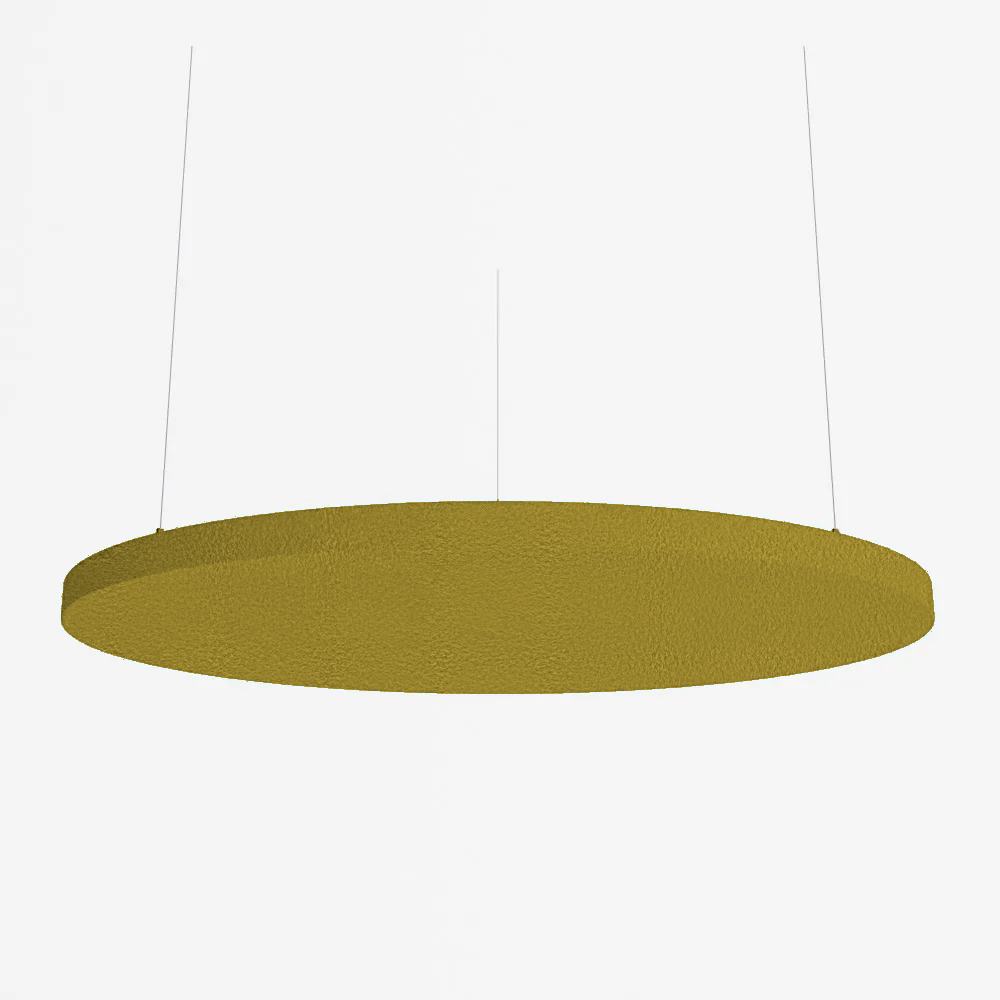
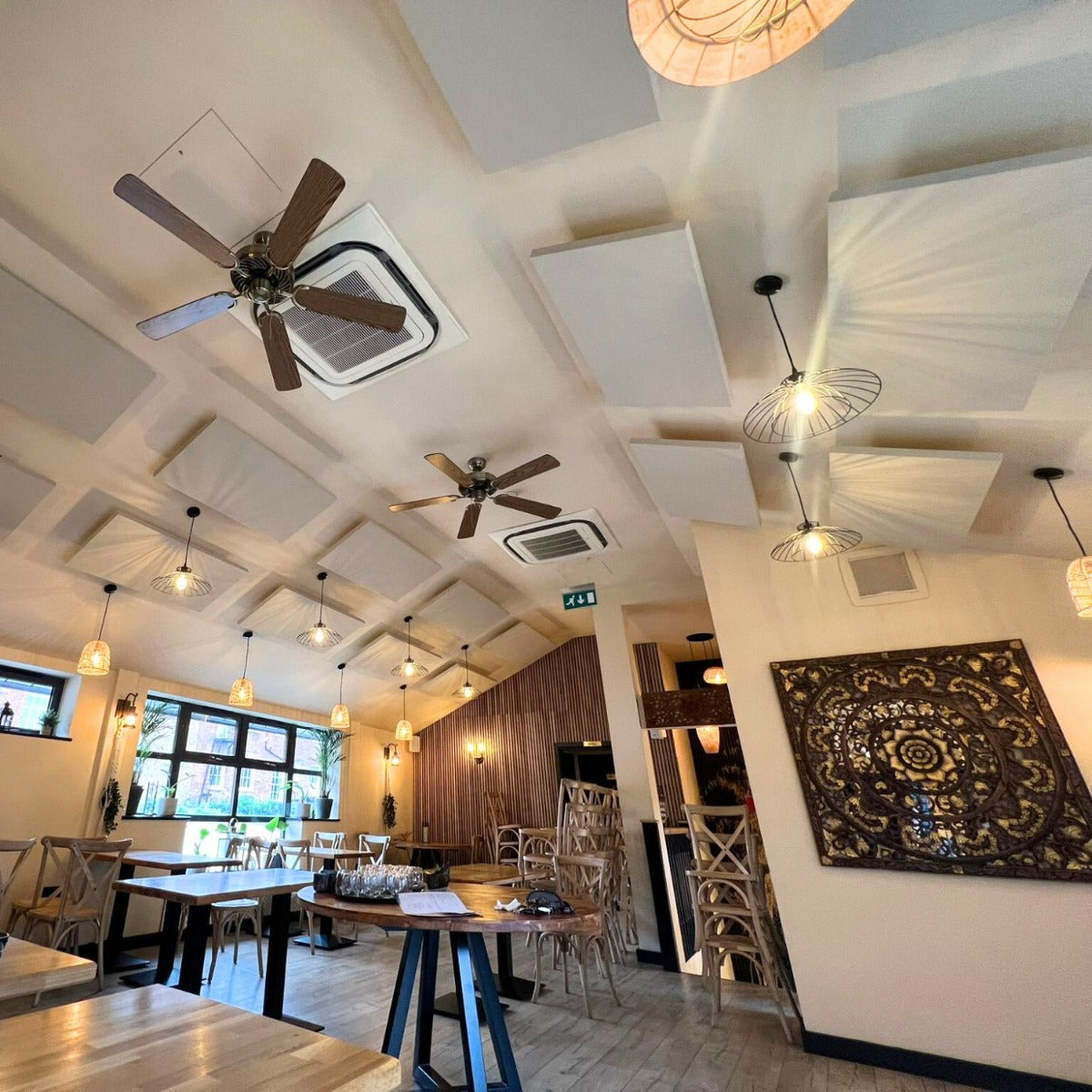
- Suspended ceiling panels and baffles that hang below the ceiling for open, high-volume spaces
- Freestanding or movable acoustic screens for flexible room dividers
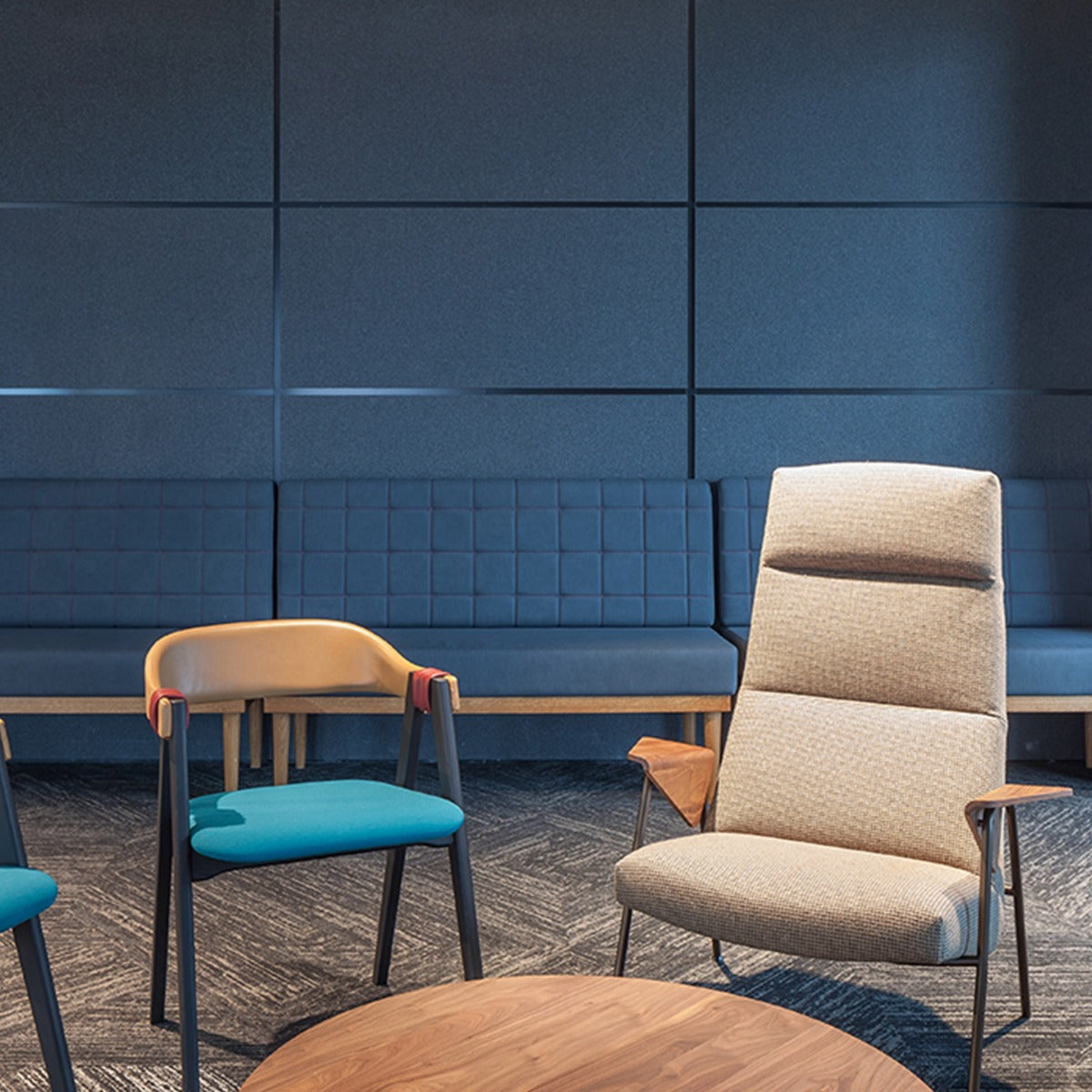
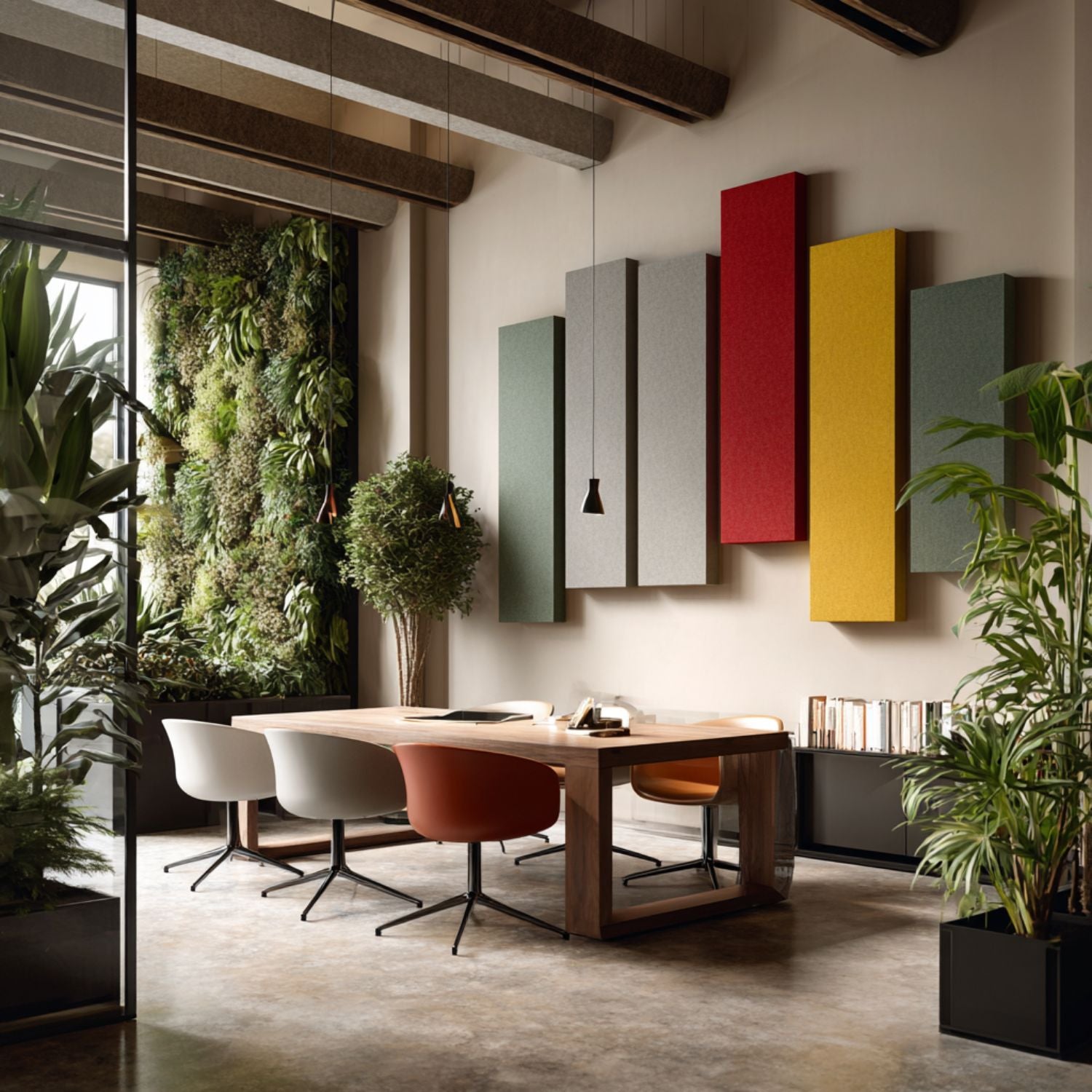
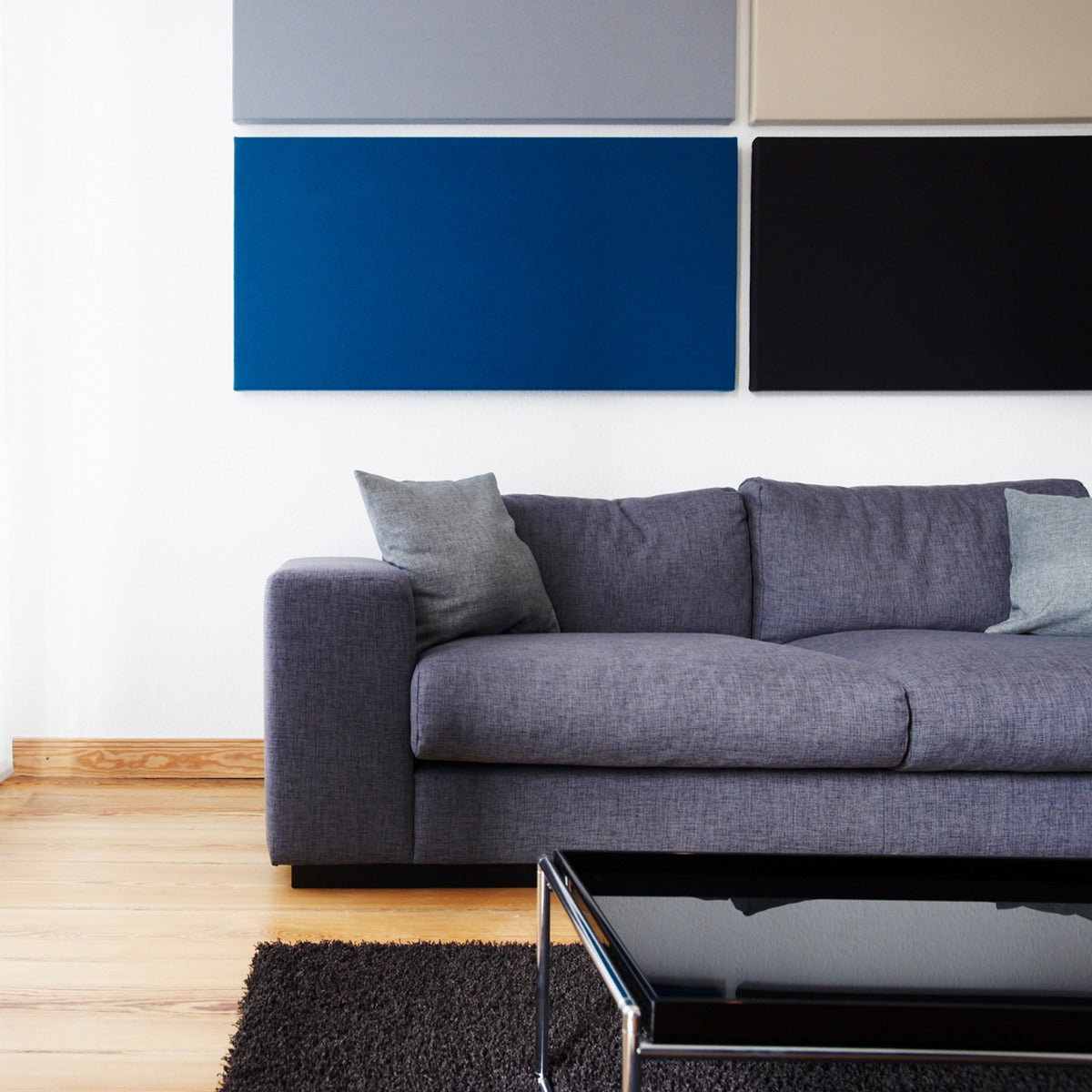
- Fabric-wrapped panels available in a huge range of colours
- Wooden slatted panels for a warmer, natural look
- PET felt panels, often made from recycled plastic bottles
- Diffuser panels, which scatter sound rather than absorb it
- Bass traps, built specifically for low-frequency control in corners
Fabric-wrapped panels like the SilentSpace range give you the most flexibility on colour and shape, while something like the Autex Cube PET panel can be cut, moulded, and grooved into custom acoustic features.
Where Should You Place Acoustic Panels for Best Results?
Placement matters just as much as the panels themselves. A few general rules apply in most rooms:
- Aim to cover roughly 20-30% of the total wall or ceiling surface area
- Target "first reflection points" first, the spots where sound bounces directly between speakers, walls, and your ears
- In smaller rooms, wall-mounted panels usually do the job on their own
- In larger or taller spaces, suspended ceiling panels hung at varying heights work better
- Treat corners with bass traps, since low frequencies tend to build up there
- Keep placement symmetrical where possible for even absorption
For spaces where needs change regularly, such as shared offices or multipurpose rooms, movable acoustic screens let you reconfigure the layout without any fixed installation.
How Many Acoustic Panels Do I Actually Need?
This depends heavily on room size, shape, and how much of a noise problem you're solving. As a rough starting point:
- Small rooms (up to 150 sq ft): around 10-20 panels
- Medium rooms (150-300 sq ft): around 20-30 panels
- Large rooms (over 300 sq ft): around 30-60 panels
Ceiling height, existing furniture, and room shape all shift these numbers up or down. It's usually smarter to start with a modest number of panels and add more once you can hear how the room responds, rather than over-ordering upfront. If you want a more precise figure for your space, Sonio's acoustic calculator is a quick way to get a tailored estimate before you buy.
What Materials Are Acoustic Panels Made From?
The material inside a panel affects not just how well it absorbs sound, but also its weight, fire rating, and environmental footprint. Common options include:
- Foam and fabric composites
- PET Eco Felt, typically made from recycled plastic bottles
- Wood wool (compressed wood fibre)
- Fiberglass
- Cotton fibres
- Natural materials like cork or moss
- Mineral wool
- Polyester fibre
Ceiling baffles tend to use lighter materials since they need to hang without straining the mounting hardware, while wall panels can afford to be denser for better bass absorption.
What Are the Real Benefits of Treating a Room Acoustically?
Good acoustic treatment goes beyond just "less echo." It changes how a space feels and functions:
- Clearer speech and better understanding in conversations or presentations
- Reduced background noise and reverberation
- Better focus and productivity in workspaces
- Improved sound quality for music, film, and home theatre setups
- More privacy in open-plan offices
- Lower stress levels through better noise control
- A more finished, considered look for the room
- Sharper concentration in classrooms and study spaces
- More comfort in busy restaurants and public venues
- Cleaner audio for video calls and recordings
Home offices benefit especially from acoustic treatment, particularly if video calls are a regular part of the day. A treated room simply sounds more professional on the other end of the call, without anyone needing to know why.
How Do I Choose the Right Panels for My Space?
Picking the right product comes down to weighing a few factors together:
- Room size and its main purpose
- Existing acoustic problems (echo, background noise, poor speech clarity)
- The NRC rating you need for adequate absorption
- How the panels will look alongside your existing decor
- Budget
- Fire safety requirements for the space
- Environmental considerations, such as recycled content
- Ongoing maintenance and cleaning needs
For offices specifically, browsing a dedicated range like office acoustic panels or meeting and conference room panels narrows things down quickly, since these collections are already filtered for commercial use. If you're unsure where to start, Sonio's FAQ page covers common questions in more detail.
Can Acoustic Panels Be Customised to Match My Interior?
Yes, and this is one of the more overlooked aspects of acoustic treatment. Panels don't have to look purely functional. Options include:
- Custom sizes and shapes cut to fit awkward walls
- A wide range of colours and patterns
- Printed designs or artwork built into the panel surface
- Panels with integrated lighting
- Textured surfaces for visual interest
- Mixed materials for a layered look
This is particularly popular with podcasters and streamers, who need a background that looks good on camera while also controlling room echo. Custom fabric colours and printed panels let creators build a set that works for both audio and video at the same time.
How Are Acoustic Panels Installed?
Installation varies depending on the panel type and the surface you're working with:
- Wall-mounted panels typically use adhesive or screws
- Suspended ceiling panels may need professional fitting, especially for larger or heavier rafts
- Freestanding panels usually come with their own base or stand
- Fabric-wrapped panels can be fitted using clips or track systems for a cleaner finish
- Wooden slat panels often need sturdier mounting given their extra weight
Most manufacturers include installation guidance with their products, and professional fitting is available for more complex jobs, particularly ceiling installations. If you're in a rented property, it's worth looking at removable mounting options so you're not left with permanent damage when you move out.
Ecophon, Autex, and Other Brands: What's the Difference?
Sonio stocks a wide range of manufacturers, each with their own approach to acoustic design. The Ecophon Solo Circle is a suspended ceiling raft that hangs from simple hangers, offering strong absorption for open-plan spaces without a complicated install. It's sold in packs of four and priced from £780.00.
Autex, on the other hand, is known for its PET felt panels, including the Autex Cube, a lightweight panel that can be cut, moulded, or grooved into bespoke shapes, priced from £285.00 for a 2440 x 1220mm sheet. Both brands sit alongside SilentSpace, BAUX, De Vorm, and others across Sonio's wall panel and ceiling panel collections, giving you room to compare styles and price points before committing.
How Much Do Acoustic Panels Cost?
Pricing depends on the brand, material, size, and how much customisation you want. A few examples give a sense of the range:
- SilentSpace Fabric Wrapped Acoustic Panel: from £99.95
- Ecophon Akusto One SQ Acoustic Wall Panels: from £499.00
- Autex Cube PET Acoustic Panel: £269.00
- Ecophon Solo Circle Raft (pack of 4): £780.00
Cheaper panels exist, but better-quality options generally absorb more sound and hold up longer, which matters if you're treating a room you'll use daily. Think of it as a long-term investment in comfort rather than a one-off purchase, particularly for spaces like music studios or classrooms where good acoustics directly affect the outcome.
Conclusion
Acoustic panels solve a genuinely common problem, whether that's an echoey living room, a distracting open-plan office, or a home studio that needs cleaner recordings. Understanding the different types, how many you need, and where to place them puts you in a much better position to get results the first time around, rather than buying more panels later to fix a setup that didn't quite work.
Many panel types are straightforward enough to install yourself, but for larger rooms or ceiling installations, getting advice from an acoustic specialist tends to save time and money in the long run. Browse Sonio's full range of acoustic wall panels, ceiling panels, and living room solutions to find the right fit for your space, or use the acoustic calculator to work out exactly how many panels your room needs before you order.


