











Updated: June 2026
Finding the best classroom acoustic panels for schools is more urgent than most people realise — studies show that children need a signal-to-noise ratio of around +15 dB to reach their full speech understanding potential, yet most untreated classrooms fall well short of that target. The result is a room where following a lesson takes effort, and fatigue sets in quickly — for students and teachers alike.
Key Takeaways
| Question | Quick Answer |
|---|---|
| What is the BB93 standard for classroom acoustics? | BB93 is the UK government's acoustic guidance for school buildings, setting limits on reverberation time and background noise to support learning. |
| What type of panel works best in a school classroom? | Ceiling rafts and suspended baffles deliver the highest absorption per panel and are ideal for classrooms with hard floors and plasterboard walls. |
| Which brands make the best classroom acoustic panels? | Ecophon and Autex Quietspace are two of the most trusted names for school environments — both offer Class A absorption and BB93-compliant options. |
| Do classroom acoustic panels need to be impact-resistant? | In high-traffic areas and corridors, yes. Impact-resistant panels are a sensible investment anywhere students move around frequently. |
| Where should acoustic panels go in a classroom? | Start with the ceiling — it offers the largest single surface area and the biggest acoustic return. Add wall panels to the back and sides once ceiling coverage is in place. |
| How do I browse school-specific acoustic panel options? | You can explore the full range on our school and classroom acoustic panels collection — all options are curated for educational environments. |
| Is acoustic treatment worth it for primary schools? | Absolutely. Younger children are more sensitive to noise and reverberation. Acoustic panels directly support concentration, speech clarity and wellbeing. |
Why Classroom Acoustics Matter More Than You Think
Noise annoys us. It stresses us out. And in a classroom, it does something worse — it makes learning genuinely harder.
When a teacher speaks in an untreated room, their voice bounces off hard walls, floors and windows. That reflected sound arrives at students' ears a fraction of a second after the direct sound — blurring consonants, muddying vowels, and making speech difficult to follow, especially for children with hearing difficulties, those learning English as an additional language, or students in the back rows.
The problem isn't volume. It's reverberation. And acoustic panels solve this by absorbing those sound waves before they can bounce back.
Teachers feel it too. In a reverberant room, teachers instinctively raise their voices to compete with the echo — which causes vocal strain over time and adds to a general sense of stress and fatigue throughout the school day.
Good acoustic environments can measurably improve student wellbeing and learning outcomes across all educational levels. The right panels aren't a luxury. They're infrastructure.
What to Look for in the Best Classroom Acoustic Panels for Schools
Not every acoustic panel is built for a school environment. The best classroom acoustic panels for schools need to tick a specific set of boxes — performance, durability, safety and compliance.
Here's what to look for before you buy:
- Class A absorption rating — This is the highest standard. Class A panels absorb the widest frequency range most effectively, which is exactly what you need in a reverberant classroom.
- BB93 compliance — In the UK, BB93 is the acoustic standard all new school buildings must meet. Panels designed specifically for schools will state this clearly. Don't settle for anything that doesn't.
- Impact resistance — Classrooms are not offices. Panels in corridors, lower walls or high-traffic areas need to withstand accidental knocks without crumbling or denting.
- Fire safety ratings — School environments require materials rated for fire performance. Always check the fire classification before specifying any product.
- Ease of installation — Suspended ceiling rafts and simple wall-mount systems mean minimum disruption to the school day.
- Aesthetic finish — Panels that look good get left alone. Clean, neutral designs work better long-term in school settings than anything that feels temporary.
Understanding the mechanics behind that process helps you choose the right panels, put them in the right places, and get real results.
BB93 Compliance — What UK Schools Need to Know
BB93 is the UK's Building Bulletin 93 — the government guidance document that sets acoustic standards for school buildings. If you're specifying panels for a UK school, this is the benchmark everything gets measured against.
BB93 covers two key things: background noise levels and reverberation time. It sets limits that vary depending on the type of teaching space — a standard classroom, a music room, a hall and a sports hall all have different targets.
For most core learning spaces, the goal is a reverberation time short enough that speech remains intelligible from the front to the back of the room. Hard surfaces — concrete floors, plasterboard ceilings, glass windows — all work against you here. Acoustic panels are the practical fix.
The products in our school and classroom acoustic panels range are designed with BB93 compliance in mind. That means you're not guessing — you're specifying with confidence.
Discover how the right acoustic panels in classrooms improve comfort and learning.
Best Classroom Acoustic Panels for Schools: Ceiling Options
Start with the ceiling. It's the single most effective surface you can treat in a classroom — it covers the largest area, it's out of reach of students, and a well-specified ceiling panel will do more acoustic work than any number of wall panels placed below it.
Here are the ceiling panel formats that work best in school environments:
1. Ecophon Solo Rectangle — Best for Large Classrooms
The Ecophon Solo Rectangle is a free-hanging suspended ceiling raft available in 1800 x 1200mm — a generous size that means fewer panels to cover a standard classroom ceiling.
It delivers high-performance sound absorption across a broad frequency range, making it ideal for reducing the reverb that makes speech difficult to follow in hard-floored rooms. The White Frost finish suits most educational environments cleanly and without fuss.
Installation is straightforward — the Solo Rectangle suspends from the structural ceiling on wires, with no complex framework required. That keeps installation time down and disruption to the school day to a minimum.
Best for: Primary and secondary classrooms, libraries, learning resource centres.
2. SilentSpace Rafts — Best for Flexible Layouts
The SilentSpace range gives you the same high-absorption performance as Ecophon Solo format, but we can make these to any size or shape you need. — useful when you need to work around ceiling features like lights, sprinklers or ventilation grilles.

If the ceiling layout of your classroom is irregular, the SilentSpace rafts give you more flexibility to cover the space well.
Best for: Classrooms with mixed ceiling features, spaces where visual symmetry matters.
3. SilentSpace Baffles — Best for High-Ceiling Spaces
Baffles are a different approach. Instead of lying flat above the room, the SilentBaffle hangs vertically — which means it absorbs sound from both faces simultaneously.

That makes baffles particularly effective in rooms with high ceilings, sports halls, drama studios or dining areas where a flat raft might not reach down far enough into the sound field. They also work well alongside existing ceiling systems, dropping into the space between structural beams or below air handling units.
Best for: Sports halls, drama studios, dining halls, any classroom with a ceiling above 3.5m.
Best Classroom Acoustic Panels for Schools: Wall Options
Once ceiling coverage is in place, walls are the next priority. The back wall behind students and the side walls between windows are typically the most problematic surfaces — they generate the longest reflection paths and contribute most to late-arriving echo.
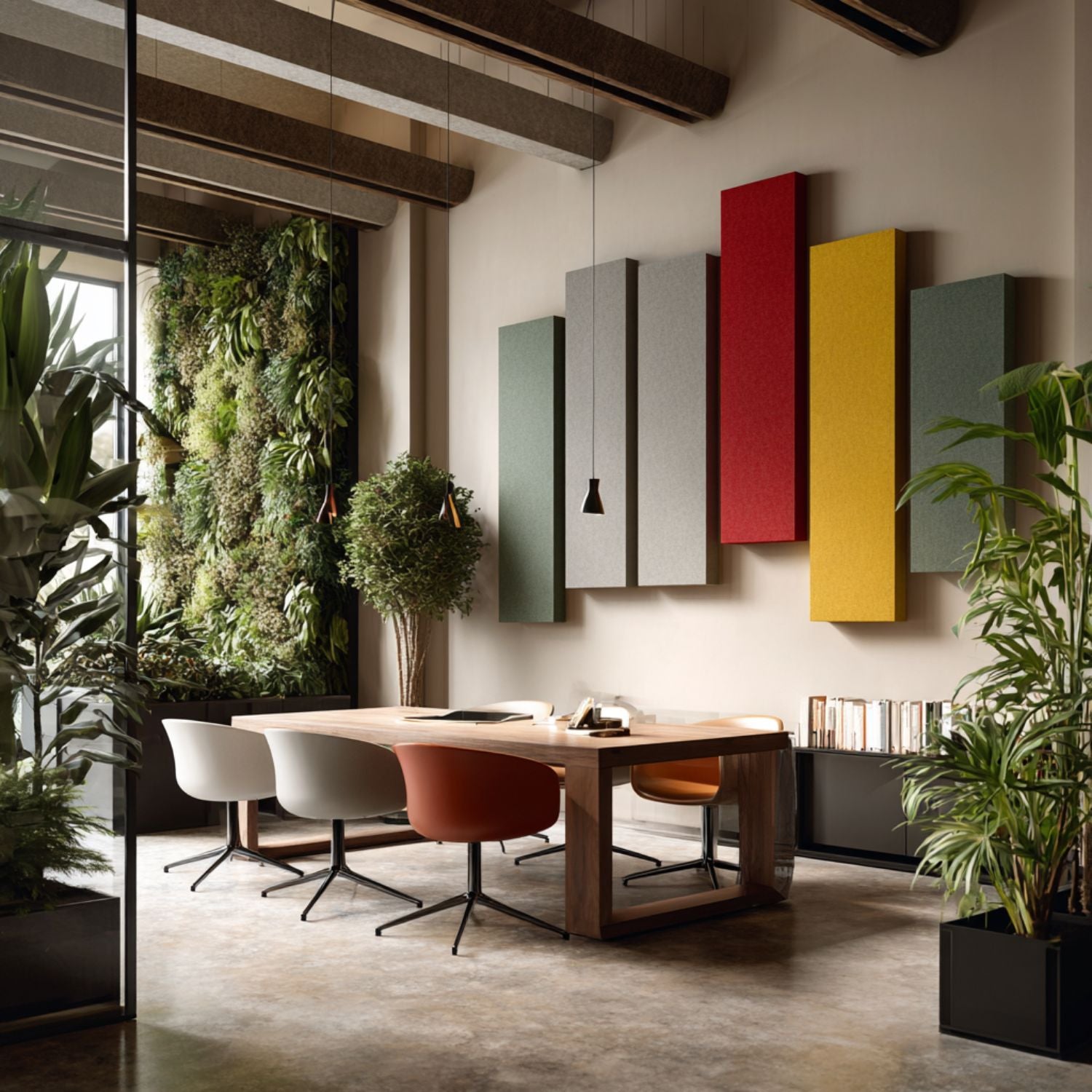
4. Autex Quietspace Wall and Ceiling Panels — Best All-Round Wall Panel
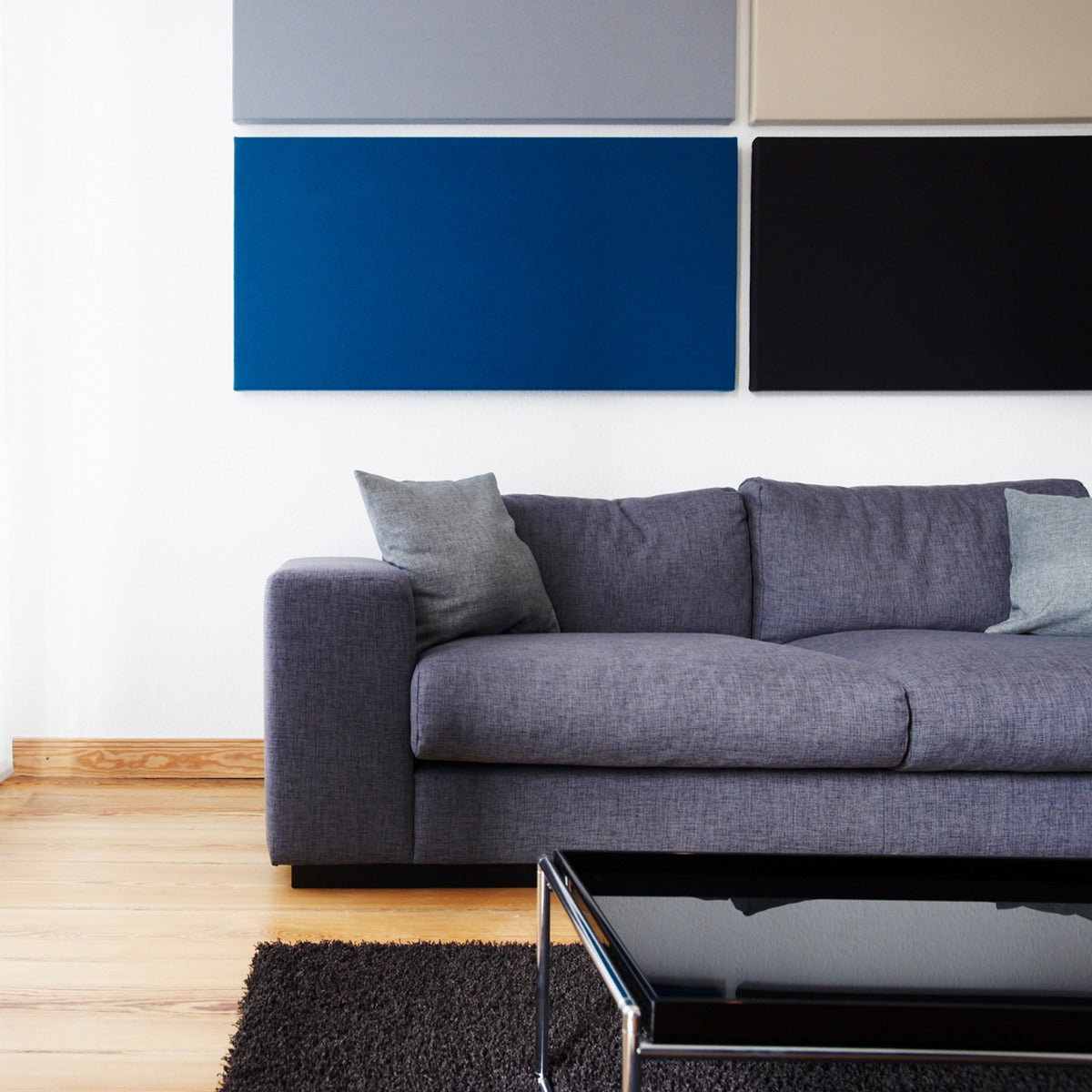
Autex Quietspace panels are a consistently strong choice for school walls. Available in standard and custom sizes — including the standard Quietspace range and a custom-sized version for non-standard spaces — these fabric-wrapped panels offer a premium finish alongside serious acoustic performance.
The fabric surface gives them a clean, professional look that holds up well in school environments. They're available in a wide range of colours, which means you can match them to the school's brand or use them to distinguish different zones within a large teaching space.

For BB93-compliant walls in educational spaces, Quietspace panels are one of the most specified products in the UK school market. They absorb sound energy efficiently at mid and high frequencies — which is exactly where speech intelligibility is most affected.
Best for: Classroom walls, corridor feature walls, music rooms, libraries.
5. Autex Quietspace Wrapped — Best for a Premium Finish
If you want a slightly more upmarket aesthetic — perhaps for a school reception, a meeting room or a sixth-form common area — the Autex Quietspace Wrapped panel takes the same acoustic core and adds a fully wrapped fabric edge for a cleaner, frame-free finish.
Custom sizing means these panels can be cut to fit any wall configuration, which is particularly useful in older school buildings where walls rarely conform to standard dimensions.
Best for: Sixth form areas, reception spaces, headteacher offices, staff rooms.
6. SilentSpace Impact Resistant — Best for high traffic areas
Corridors, dining halls, sports-hall walls and any classroom where panels are within arm's reach take knocks that standard fabric panels are not built for. The SilentSpace Impact Resistant panel pairs the same Class A absorption as the standard SilentSpace range with an independently tested impact-resistant core — built specifically for the parts of a school where the panels are going to be leant on, kicked, scuffed and occasionally hit with a ball.

The hardwearing, pinnable Camira fabric facing is the other useful detail for school environments: it stands up to daily wear and also doubles as a notice surface, so a classroom or corridor wall can carry pupil work, learning resources or signage without the need for separate display boards. Available in multiple standard sizes, with custom dimensions for non-standard wall layouts.
Best for: Corridors, dining halls, sports-hall walls, primary classrooms, any wall within pupil reach.
7. Autex Cube PET Acoustic Panels — Best for Fast Projects
Autex Cube is a lightweight PET felt panel that gives schools a straightforward, no-fuss way to add wall absorption without the cost or lead time of a fabric-wrapped product. Supplied in large 2440 x 1220mm sheets, it can be cut, shaped or grooved on site to fit awkward walls and create simple geometric features.
Class C absorption from a slim, rigid panel makes it well suited to general classroom walls where the priority is broad coverage rather than headline acoustic performance. The polyester construction includes a minimum of 60% recycled content, it is low-VOC, and it installs directly to the wall with no framing or finishing required — useful when school holidays are short and the installation window is tight.
Best for: General teaching walls, corridor treatment, school halls, projects with a tight budget.
8. BAUX Acoustic Tiles — Best for Sustainability-Led Schools
For schools where sustainability is part of the brief — increasingly common in academy trusts and new-build briefs — BAUX tiles offer acoustic performance from naturally derived, sustainably manufactured materials. They come in multiple shapes, sizes and colours, and read as a deliberate design feature rather than retrofitted treatment.

In classroom contexts they work especially well on a feature wall, in a library or reading corner, or in spaces where the school wants visible evidence of its environmental values. The tactile, dimensional finish also adds visual interest for younger learners.
Best for: Eco-conscious schools, library feature walls, reading corners, learning resource centres.
9. Ecophon Super G — Best for Sports Halls and PE Spaces
Sports halls are an acoustic challenge of their own: large volume, hard floors, plus the inevitability of footballs and basketballs hitting the ceiling. Ecophon Super G is engineered for exactly that — a high-impact-rated suspended ceiling system tested to withstand repeated ball impacts while delivering full Class A absorption.

Specified across UK school sports halls and PE blocks, it allows the same room to be acoustically comfortable for assemblies, exams and after-school events without compromising on durability during PE lessons. BB93 compliance for sports and assembly spaces is built into the system rather than retrofitted around it.
Best for: Sports halls, PE blocks, multi-use assembly spaces, dining halls used for PE.
10. 14six8 Hide — Best for SEND, 1:1 Tuition and Quiet Zones
A growing number of schools are adding acoustic pods or booths to give pupils a calmer space within an otherwise busy environment. The 14six8 Hide is a desk-mounted acoustic booth that creates a self-contained focus zone on a standard classroom or library desk, without the floor space or cost of a full meeting pod. They are particularly useful for SEND provision, 1:1 tuition, focused exam-style work, or simply as a quiet retreat for pupils who need to step away from sensory load.

Unlike permanent treatment, pods are self-contained — they can be moved as classroom layouts change, and they create a genuinely separate acoustic space inside a larger room. Sizes range from single-person focus booths to small-group meeting pods, with ventilation and lighting built in.
Best for: SEND provision, 1:1 tuition, learning support rooms, sixth-form study areas.
11. Abstracta Aircone Acoustic Screens — Best for Open-Plan and Multi-Use Spaces
Many newer schools, and a growing number of refurbished ones, use open-plan or zoned teaching spaces. The Abstracta Aircone is a modular hanging acoustic screen system designed for exactly these environments — large enough to make a meaningful difference to how sound travels across an open room, and modular enough to be arranged in the configuration each space actually needs.

Aircone screens absorb sound where it is loudest in a tall open space — at mid-air, between source and receiver — and create defined, calmer zones for group work, reading or small-group teaching, then move out of the way when the space reverts to whole-class use. They are also a useful tool in dining halls and breakout spaces where one section is markedly noisier than the rest.
Best for: Open-plan teaching areas, breakout spaces, libraries, large dining halls.
12. BuzziSpace Acoustic Lighting — Best for Visible, Design-Led Treatment
Acoustic lighting does two jobs at once: it lights the room and absorbs sound. BuzziSpace produces some of the most-specified acoustic pendants in the UK education market — pieces like BuzziShade and BuzziProp combine a felt acoustic core with statement pendant lighting, which means a single fitting earns its place both visually and acoustically.

For schools that want acoustic treatment to read as part of the interior design rather than an obvious afterthought — sixth-form centres, school receptions, modern atriums and breakout spaces — it is an efficient way to add absorption without dedicating more ceiling or wall area to dedicated "acoustic" hardware. Pendant formats work particularly well over collaborative work tables, in reception areas and above breakout zones.
Best for: Sixth-form centres, school receptions, breakout areas, atriums, collaborative learning zones.
How Many Panels Does Your Classroom Need?
This is the question most schools get wrong — usually by under-specifying, treating too little of the room, and then wondering why the results aren't as dramatic as expected.
The answer depends on three things: room volume, existing surface materials, and the target reverberation time you're trying to achieve.
A rough guide for a standard UK secondary school classroom (approximately 60m³ to 80m³):
- Minimum effective treatment: Ceiling rafts covering 30–40% of the ceiling area, plus panels on the back wall.
- Recommended treatment: 50%+ ceiling coverage plus side wall treatment, particularly if the room has hard flooring throughout.
- Full BB93-compliant treatment: Calculated against specific room dimensions and existing absorption — this is where a proper acoustic specification is worth having.
We've been specialists in acoustic panels for over a decade, and we're here to make the process simple. If you're not sure how many panels your classroom needs, get in touch with us — we offer free acoustic advice based on your room dimensions and current acoustic conditions.
Where to Position Classroom Acoustic Panels for Maximum Effect
Placement matters almost as much as the panels themselves. Putting too many panels in one area and leaving other surfaces untreated produces uneven results — and can still leave students at the back of the room struggling to hear clearly.
Follow this order of priority:
- Ceiling first — Always. Suspended rafts or baffles over the central teaching zone and above student seating areas deliver the biggest acoustic return per panel.
- Back wall second — The wall directly behind the last row of students sends reflections straight back towards the teacher. Treating it reduces the longest echo paths.
- Side walls third — Particularly the wall opposite windows. If you have large glazed surfaces on one side, the opposite wall will benefit from significant absorption.
- Front wall last — The wall behind the teacher is least critical acoustically, but if the room still has excess reverb after treating the other surfaces, panels here can help.
When we talk about reducing classroom noise, we usually mean two things: cutting the echo that makes chatter sound louder, and reducing the transfer of noise between working zones — particularly in open-plan school environments or classrooms that share thin partition walls.
Classroom Acoustic Panels for Specific School Spaces
Not every room in a school has the same acoustic demands. Here's a quick breakdown of what works best by space type:
| Space Type | Key Challenge | Best Panel Type |
|---|---|---|
| Primary classroom | High activity noise, hard surfaces | Ceiling rafts + back wall panels |
| Secondary classroom | Reverberation, speech clarity | Ecophon Solo Rectangle rafts |
| Music room | Broadband sound build-up | Thick wall panels + ceiling baffles |
| Sports hall | Very long reverberation tails | Baffles at height — Ecophon Solo Baffle |
| School dining hall | Noise builds up into a wall of noise | Ceiling rafts + high-level wall panels |
| Library / resource room | Quiet space disrupted by spillover | Autex Quietspace wall panels |
Our aim has always been to help create spaces that are both beautiful but also perform well acoustically. That applies equally to a primary school in Manchester and a sixth-form library in London.
A Note on Teacher Vocal Health
This one often gets overlooked in conversations about classroom acoustics, but it matters.
In a reverberant classroom, teachers don't just strain their voices to be heard — they unconsciously raise their volume to compete with the echo. Over a full school day, across five days a week, that adds up to real vocal fatigue. Research confirms that adding acoustic absorption can directly reduce teachers' vocal exertion in reverberant conditions.
That means the best classroom acoustic panels for schools aren't only about student performance. They're also a practical investment in staff wellbeing and long-term health.
Fewer sick days. Less strain. A calmer teaching environment. Those outcomes are real, and they compound over time.
In a Hurry? The Quick Version
- Start with the ceiling — suspended rafts like the Ecophon Solo Rectangle deliver the best acoustic return.
- Add wall panels to the back wall and side walls — Autex Quietspace panels are a trusted choice for classrooms.
- Specify Class A absorption wherever possible.
- Make sure everything you specify is BB93 compliant for UK schools.
- Don't under-specify — cover at least 30–50% of the ceiling area for meaningful results.
- Get free acoustic advice if you're unsure — panel count and placement matter as much as panel quality.
Conclusion
Poor acoustics in classrooms are one of the most common and most overlooked problems in school buildings — and they have real consequences for how well students learn and how long teachers last in the profession. The best classroom acoustic panels for schools combine Class A absorption, BB93-compliant performance, durable construction and a finish that holds up in a real educational environment.
As the world of acoustics has grown, so has the demand for fast, affordable and attractive solutions to common acoustic issues. The products above — from Ecophon's suspended ceiling rafts to Autex's fabric-wrapped wall panels — represent the most effective options available in 2026 for schools across the UK.
Browse the full school and classroom acoustic panels collection to see everything in one place, or explore our acoustic ceiling panels range and acoustic wall panels collection if you want to specify ceiling and wall treatments separately.
If you need guidance on how many panels your classroom needs or where to position them, get in touch with us directly. We've been specialists in acoustic panels for over a decade, and we're here to make the process simple.
Frequently Asked Questions
What are the best classroom acoustic panels for schools in the UK in 2026?
The best classroom acoustic panels for schools in 2026 combine Class A absorption with BB93 compliance — Ecophon Solo ceiling rafts and Autex Quietspace wall panels are consistently the top-performing options for UK educational settings. Both deliver measurable improvements to reverberation time and speech clarity without requiring extensive installation works.
How do I know if my classroom meets BB93 acoustic standards?
BB93 sets limits on reverberation time and background noise levels for school spaces — an untreated classroom with hard flooring and plasterboard walls will almost certainly fall outside those limits. A simple acoustic measurement using a decibel meter and impulse response tool will tell you your current RT60; if it's above 0.6 seconds for a core learning space, you need treatment.
How many acoustic panels does a classroom need?
As a starting point, suspended ceiling rafts should cover at least 30–40% of the ceiling area in a standard classroom, plus panels on the back wall. For full BB93 compliance or rooms with hard floors and large windows, 50%+ ceiling coverage alongside side-wall treatment is typically required.
Are acoustic ceiling panels or wall panels better for classrooms?
Ceiling panels — particularly suspended rafts — deliver the highest acoustic return in classrooms because the ceiling is the largest uninterrupted surface and sits in the direct path of sound travelling between teacher and student. Wall panels are an important complement, but the ceiling should always be treated first.
Do classroom acoustic panels help with teacher vocal strain?
Yes — research shows that teachers in reverberant rooms unconsciously raise their voices to compete with echo, which causes vocal fatigue over time. Reducing reverberation with acoustic panels brings speech back to normal conversational levels, which measurably reduces teachers' vocal effort throughout the school day.
Are Ecophon acoustic panels suitable for primary school classrooms?
Ecophon Solo panels are well suited to primary school classrooms — they are suspended out of reach of students, offer Class A sound absorption, and come in neutral finishes that work in any teaching space. Their performance specifications also align with BB93 requirements for UK primary school buildings.
What is the difference between an acoustic ceiling raft and a baffle in a classroom?
A ceiling raft lies horizontally and absorbs sound from one face — it works best in rooms with standard ceiling heights up to around 3.5m. A baffle hangs vertically and absorbs from both faces simultaneously, making it more effective in high-ceiling spaces like sports halls, drama studios or dining areas where a flat raft doesn't reach down into the sound field.


