










Updated: June 2026
Most home theatre rooms are built for appearance first and acoustics second. The result is a space where dialogue sounds muddy, bass frequencies blur together, and surround sound loses its sense of direction. Adding acoustic treatment to your room changes all of that without touching your equipment. This guide explains how acoustic panels work in a home theatre setting, which products from Sonio are worth considering, and how to approach placement for the best results.
Why Untreated Rooms Work Against Good Sound
Sound travels in all directions when it leaves a speaker. In an untreated room, those sound waves bounce off hard surfaces — walls, floors, ceilings, glass — and arrive at your ears a few milliseconds after the direct sound from the speaker. This overlap creates what most people describe as an echo or a general lack of clarity.
The problem is most noticeable in rooms with parallel walls, high ceilings, or minimal soft furnishings. Home theatres are often purpose-built rooms with painted plasterboard walls, hard flooring, and very little fabric to break up reflections. That combination produces a long reverb tail that smears the sound you actually want to hear.
Bass frequencies add another layer of complexity. Low-end sound builds up in the corners and along walls, creating an uneven response where some seats in the room boom and others sound thin. No amount of EQ adjustment on your receiver fully solves a problem that originates in the room itself.
What Acoustic Panels Actually Do
Acoustic panels work by absorbing sound energy rather than reflecting it. When a sound wave hits a panel, the energy passes into the material and converts to a small amount of heat through friction within the fibres. The reflected wave that reaches your ears is significantly reduced, which shortens the reverb time and improves the clarity of the direct sound from your speakers.
If you want a more detailed explanation of the physics involved, the Sonio blog covers how acoustic panels work in practical terms. Understanding the basics helps you make better decisions about coverage, panel thickness, and placement.
Panels are rated by their absorption coefficient at different frequencies. A Class A rating means a panel absorbs a very high proportion of sound energy across the mid and high frequency range. Class C panels offer moderate absorption and suit rooms that only need light treatment or where you want to retain some liveliness in the space.
The First Reflection Points: Where Panels Make the Biggest Difference
In a home theatre, the highest priority positions for acoustic panels are the first reflection points. These are the spots on the side walls, rear wall, and ceiling where sound from your front speakers bounces directly toward the listening position. Treating these points reduces the most audible echoes and gives your surround sound system a cleaner canvas to work with.
A simple way to locate a first reflection point on a side wall is to sit in your main listening seat and have someone hold a mirror flat against the wall while moving it along the surface. When you can see a speaker reflected in the mirror, you have found a first reflection point. Mark it and repeat for each speaker.
The ceiling directly above and slightly in front of the listening position is also a significant reflection source, particularly for dialogue from a centre speaker. Treating the ceiling with either a suspended raft or a mounted panel at that point has a noticeable effect on intelligibility.
SilentSpace Square Acoustic Panels
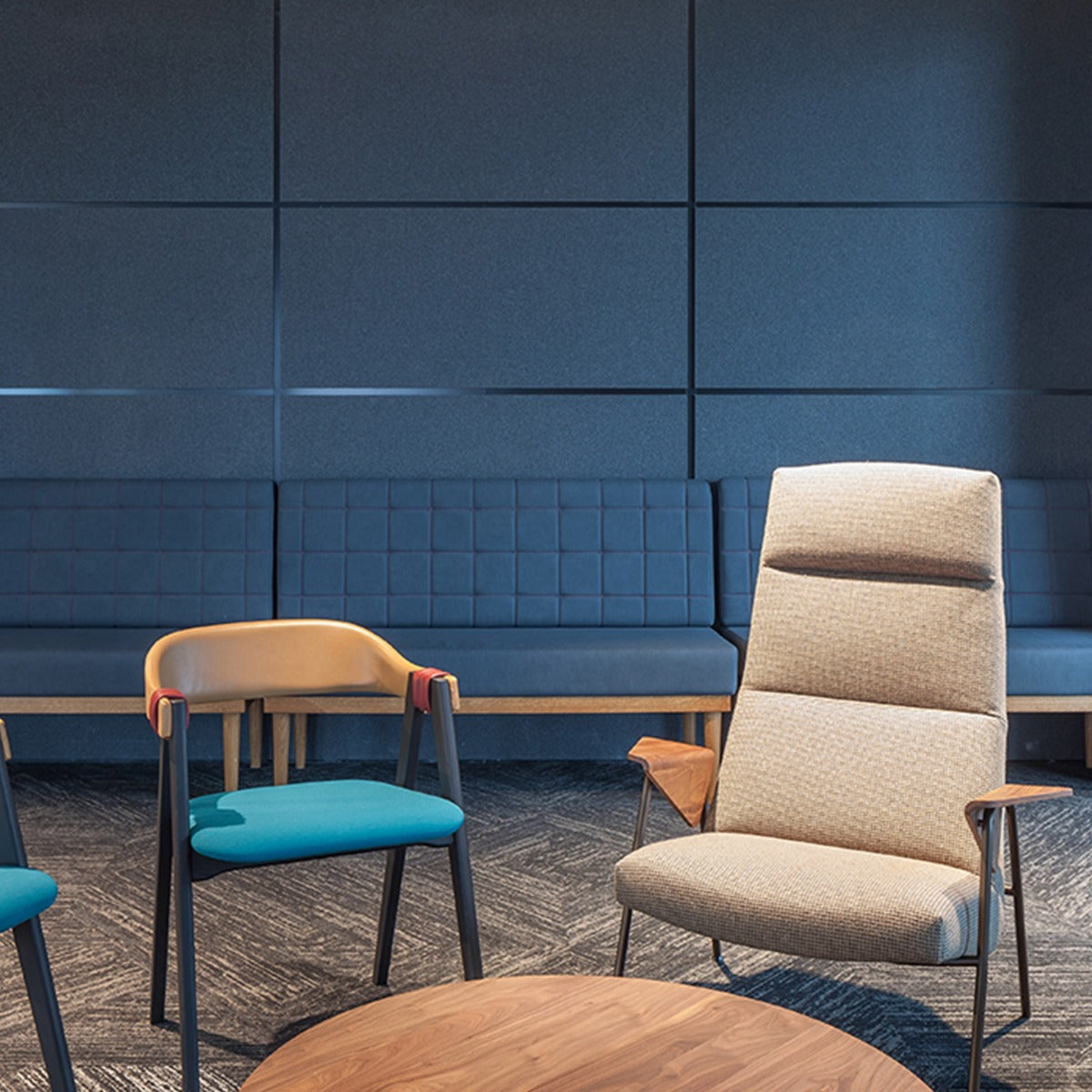
The SilentSpace Square acoustic panels from Sonio start from £45.68 and offer a compact, versatile option for treating specific reflection points without covering large wall areas. They come in both 40mm thickness (Class A absorption) and 25mm thickness (Class C), so you can match the treatment level to the acoustic needs of your room.
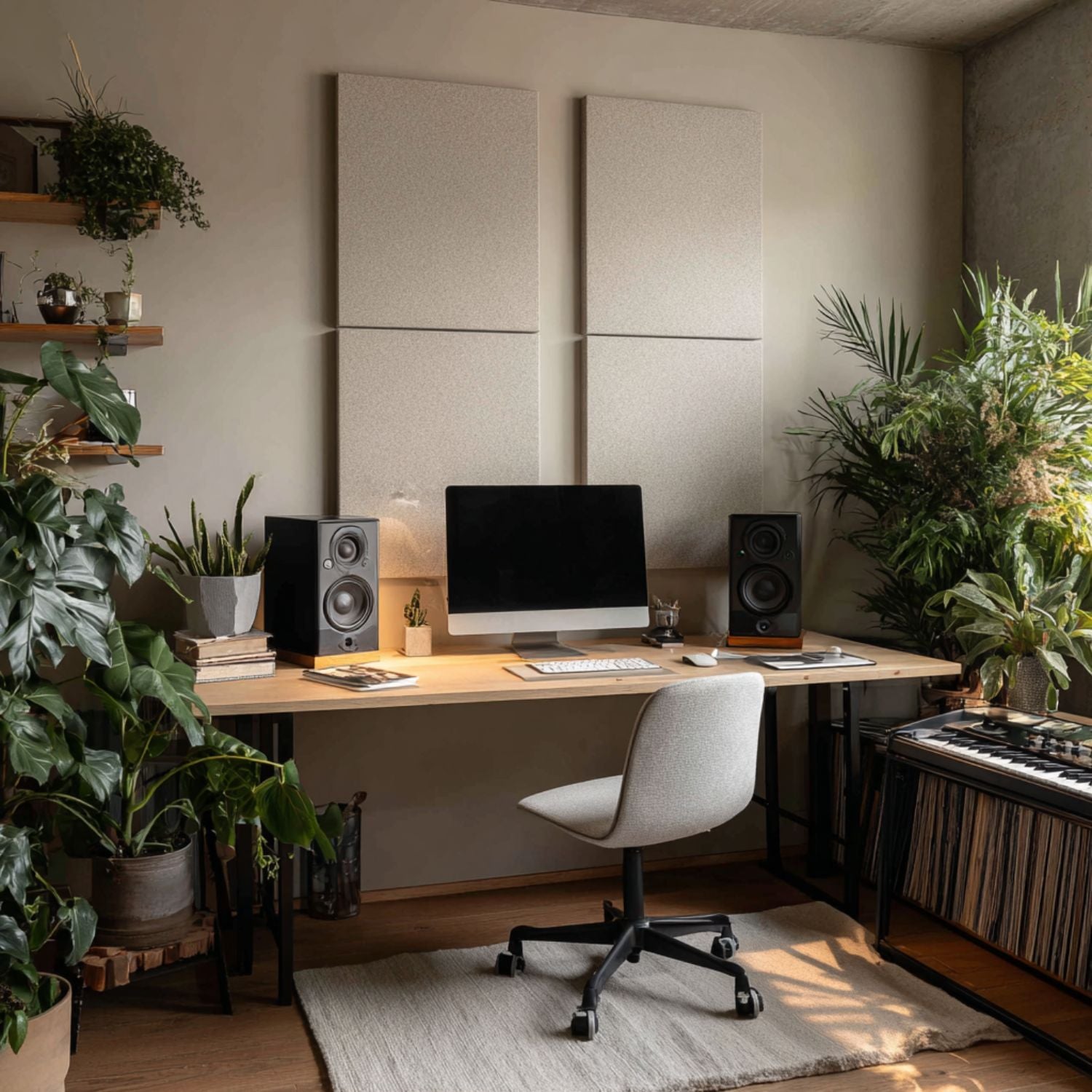
The fabric-wrapped construction keeps them lightweight, which matters when you are mounting panels at height or on a wall that cannot support heavy fixings. Installation uses contact adhesive spray, so there is no complicated hardware involved. A cluster of square panels at a first reflection point can be arranged in a grid or a scattered pattern depending on the look you want.
For a home theatre where you need targeted treatment at several key positions, the square format works well alongside larger panels on the rear wall. They are also a practical choice if you are treating a smaller room and want to avoid covering too much surface area.
SilentSpace Rectangle Acoustic Panels
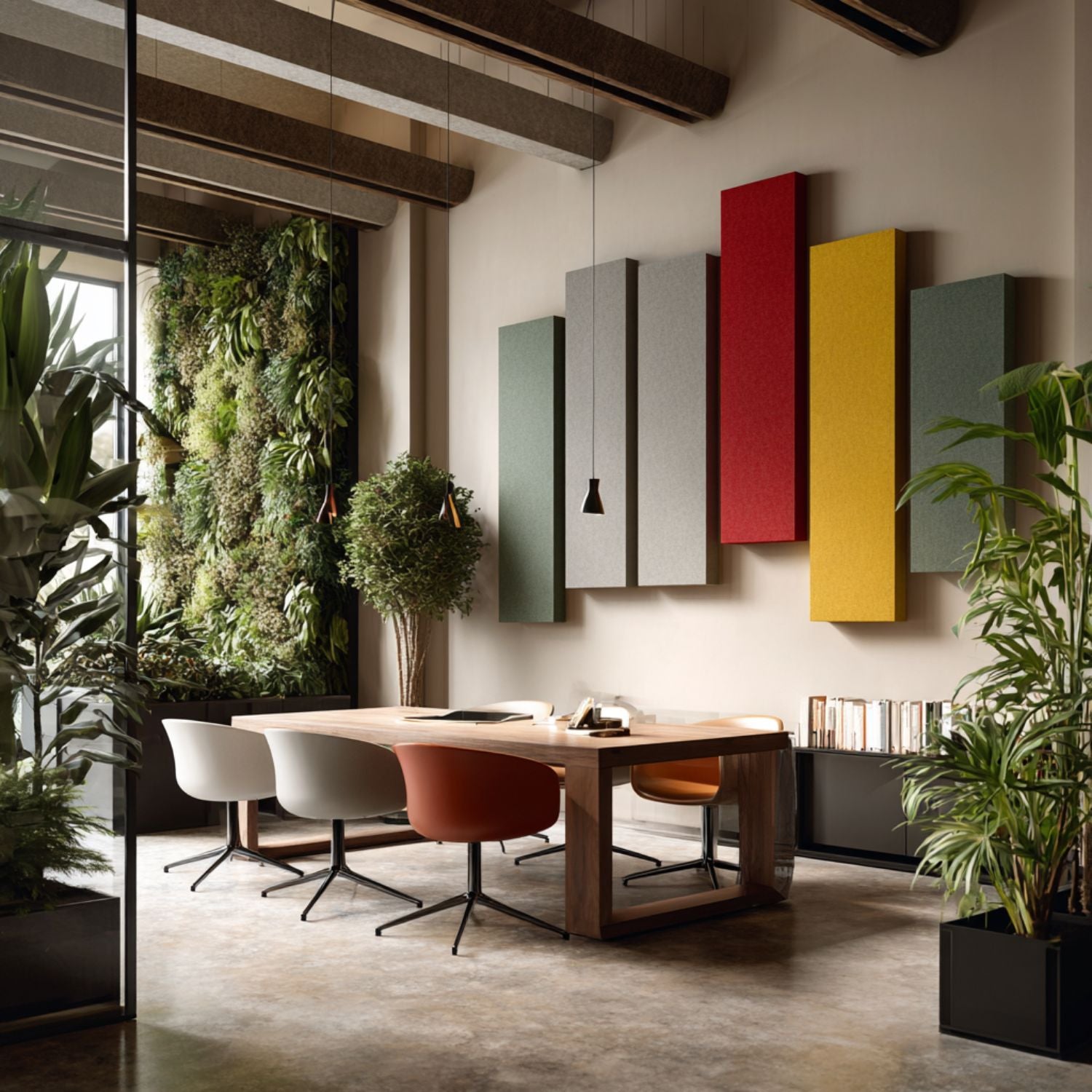
For more substantial wall coverage, the SilentSpace Rectangle acoustic panels are priced from £129.00 and cover a larger surface area in a single panel. The same choice of 40mm (Class A) or 25mm (Class C) thickness applies, giving you control over how aggressively you treat each surface.

Rectangle panels suit the rear wall of a home theatre particularly well. The rear wall is often the last surface that a direct sound wave hits before returning to the listening position, and leaving it untreated allows a strong reflection to travel back toward the front of the room. A row of rectangle panels across the rear wall significantly reduces this problem.
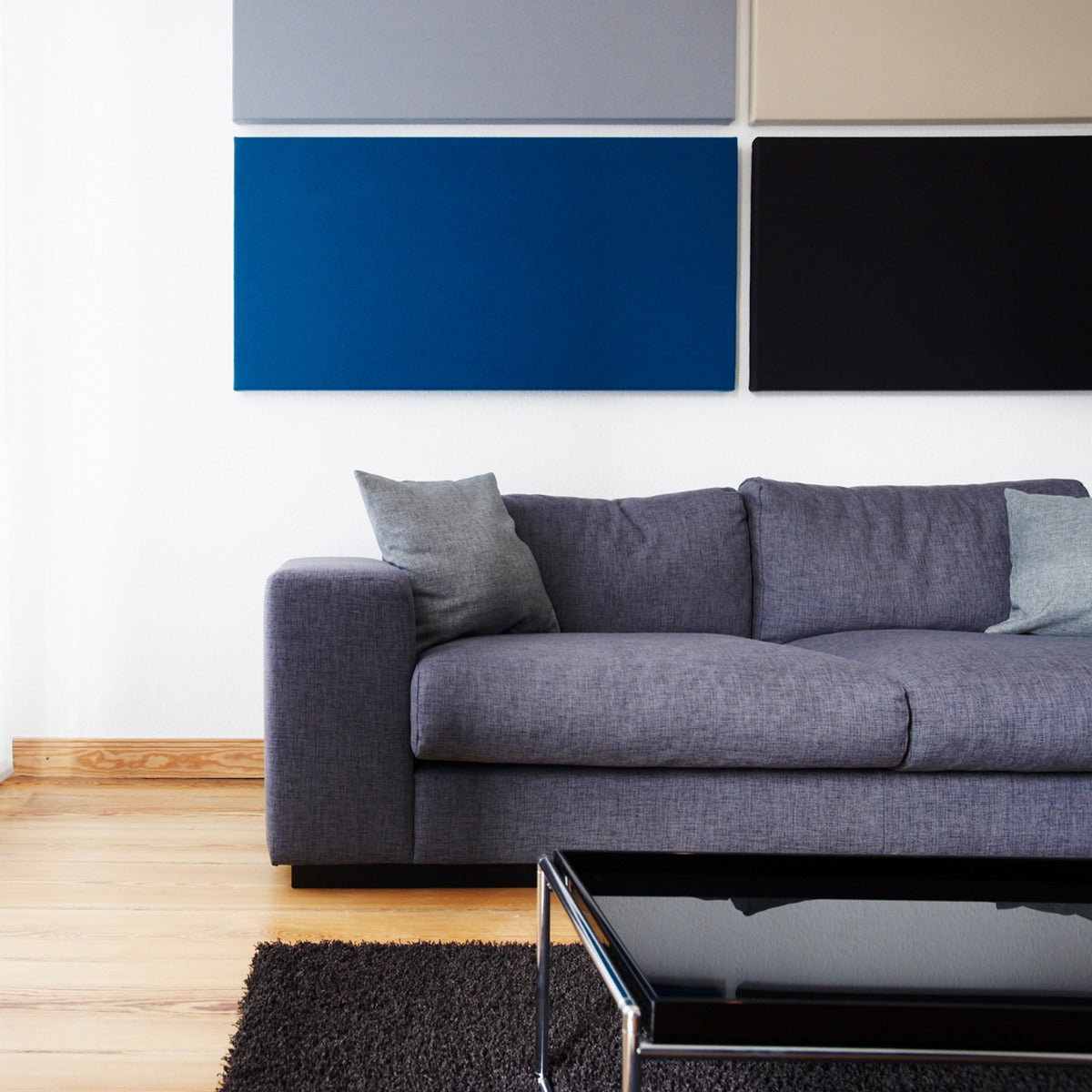
The fabric wrap is available in multiple colours, so the panels can fit a dark, cinema-style room or a lighter multi-purpose space. Because they are fabric-wrapped rather than foam, they hold their appearance over time and do not degrade in the way that cheaper foam acoustic tiles tend to.
SilentSpace Circle Acoustic Panels
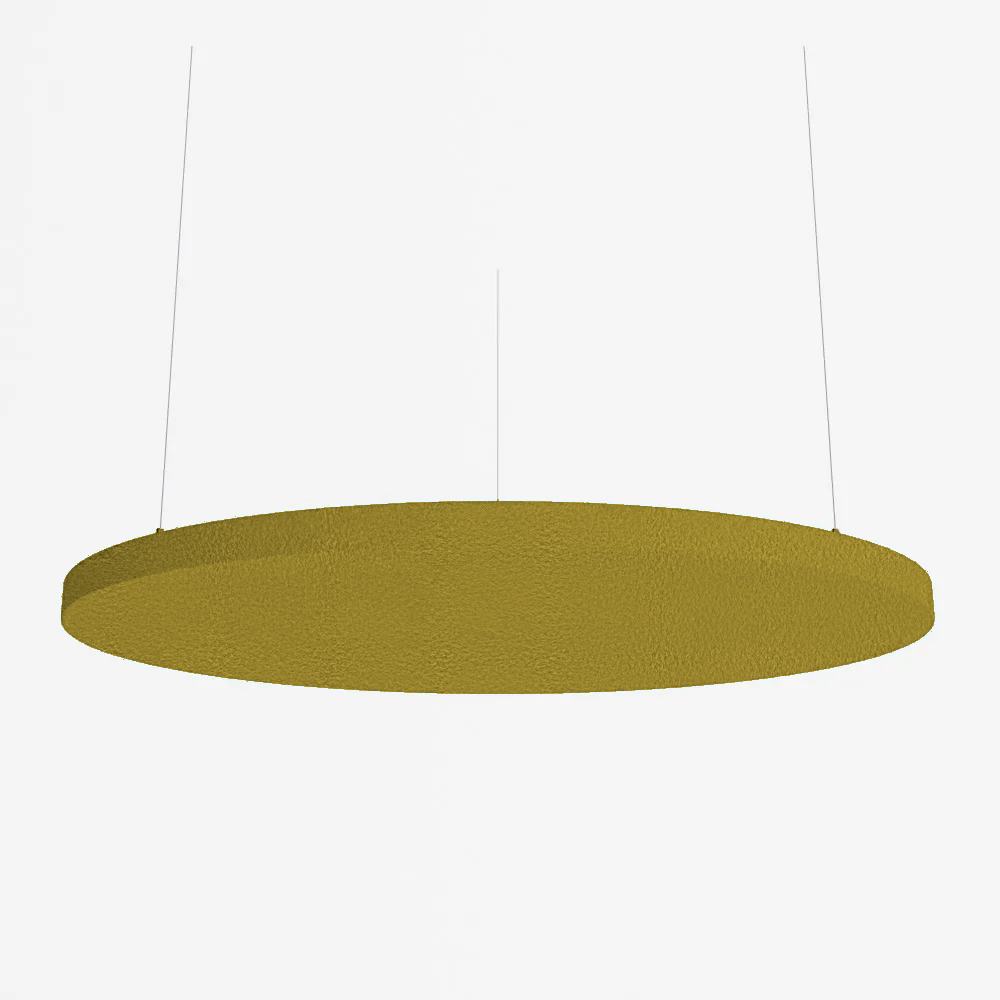
The SilentSpace Circle acoustic panels are priced from £115.00 and bring a different visual character to wall treatment. Acoustically, they perform the same function as the square and rectangle panels, but the circular format breaks up the visual rhythm of a room in a way that some people prefer, particularly in spaces that double as a living room or entertainment area.

Mixing shapes can actually be useful from an acoustic standpoint too. Irregular surfaces scatter sound more effectively than flat, evenly spaced panels, so combining circular and rectangular panels on the same wall creates a more diffuse acoustic environment. That said, for most home theatre applications, consistent coverage and appropriate panel depth will have a greater effect than panel shape alone.
Treating the Ceiling in a Home Theatre
Ceiling treatment is one of the most overlooked aspects of home theatre acoustics. The ceiling above the listening area acts as a large, flat reflective surface that sends sound straight back down. A centre speaker firing toward the screen sends a significant amount of energy upward and forward, and that energy returns to the listening position with enough delay to reduce dialogue clarity.
Sonio's SilentSpace Rectangle acoustic rafts are designed specifically for ceiling installation. They suspend horizontally above the listening area, absorbing downward reflections without requiring you to attach panels directly to the ceiling surface. This makes them a practical option for rooms where permanent ceiling fixing is not desirable, or where you want a clean, architectural look.
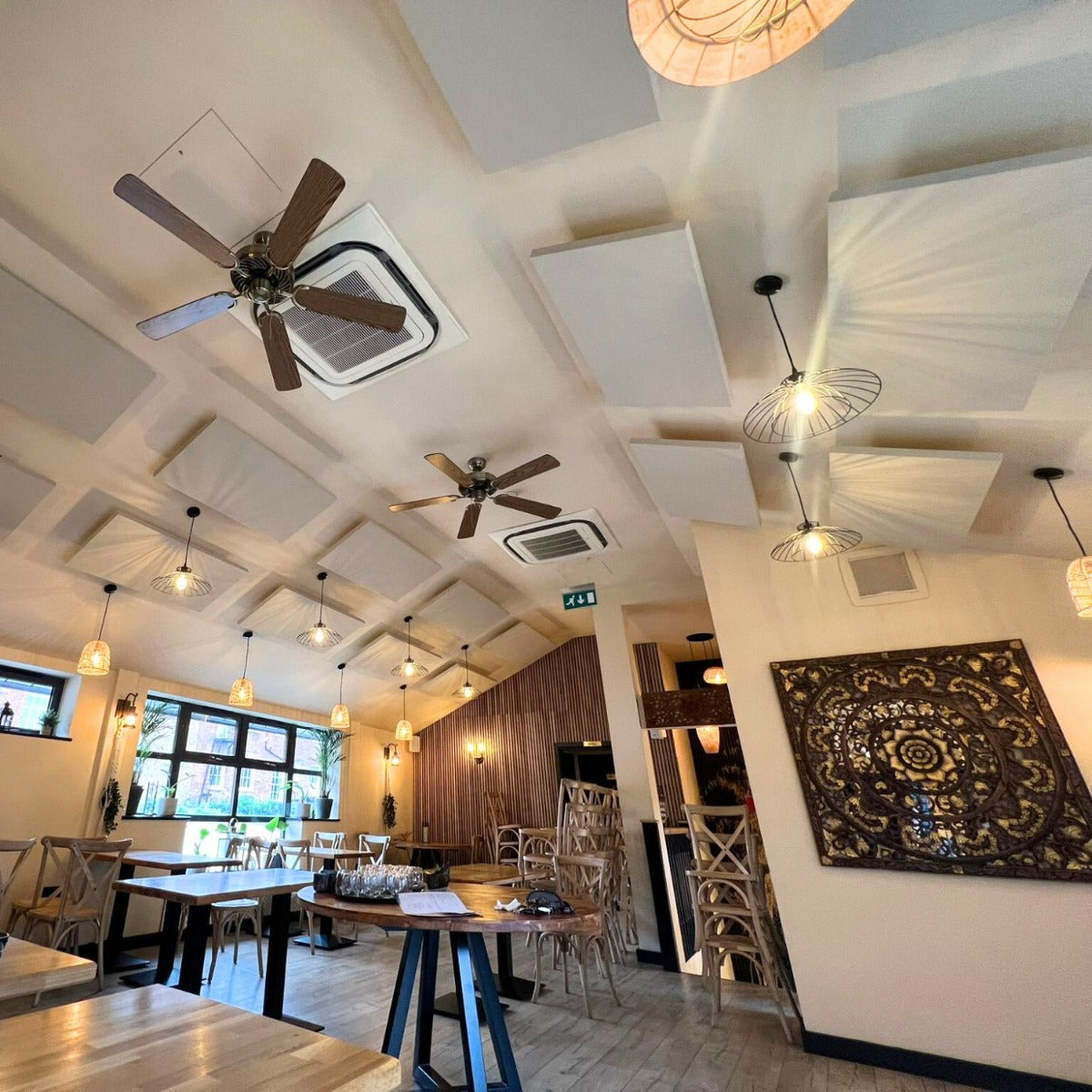
For rooms where a suspended raft is not suitable, the range of acoustic ceiling panels available at Sonio includes options that mount directly overhead. Even treating a relatively small area of the ceiling above the primary seating position produces a noticeable improvement in how clearly dialogue comes through.
Class A vs Class C: Choosing the Right Absorption Level
The difference between 40mm and 25mm panels comes down to how much absorption you need. The 40mm panels carry a Class A absorption rating, which means they absorb a very high percentage of mid and high frequency sound energy. These are the right choice for the primary reflection points in a home theatre, particularly the rear wall and side wall positions closest to the listening area.
The 25mm Class C panels offer moderate absorption and are better suited to positions where you want to reduce harshness without completely deadening the room. Using only Class A panels across every surface can result in a room that feels acoustically dry, which affects the enjoyment of music and can make some film soundtracks sound flat. A combination of both types gives you a balanced result.
If you are also treating adjacent rooms, the home office acoustic panels collection and the living room acoustic panels collection both follow the same principles, with product options suited to the specific acoustic challenges of those spaces.
How Much Coverage Do You Need?
There is no universal answer to this, but a practical starting point for a dedicated home theatre is to aim for acoustic treatment on the rear wall, both side walls at the first reflection points, and the ceiling above the listening position. That covers the four areas that contribute most to early reflections and listener fatigue.
Coverage of around 25 to 30 percent of total wall surface area is a commonly cited starting point for a room used primarily for film and television. Music listening rooms tend to benefit from more coverage, while rooms that are used for speech or gaming may need less. The music studio acoustic panels collection gives a sense of the denser treatment used in recording environments, which can serve as a reference point for understanding the upper end of what is possible.
It is also worth considering that soft furnishings already in your room, such as sofas, rugs, curtains, and bookshelves, contribute some absorption. A heavily furnished room needs fewer panels than a sparse one. Start with the high-priority positions and assess the result before adding more coverage.
Installation: What to Expect
The SilentSpace range is designed for straightforward installation. The panels are lightweight, and the recommended method is contact adhesive spray, which creates a strong bond to most wall surfaces without the need for drilling or specialist fixings. For rental properties or situations where you may want to reposition panels later, there are also removable mounting options to consider.
The full range of acoustic wall panels at Sonio includes installation guidance alongside each product. Before you begin, it is worth planning the layout on paper first, marking first reflection points and measuring the areas you intend to cover. A consistent spacing between panels often looks better than irregular gaps, and keeping panels at ear height on the side walls ensures they intercept the most acoustically significant reflections.
For ceiling rafts, the installation process involves suspension wires or a track system that allows the raft to hang at a set distance below the ceiling. The gap between the raft and the ceiling surface adds to the low frequency absorption range, so a raft suspended 100mm below the ceiling will perform differently from one mounted directly to it.
Other Products Worth Considering
Beyond the SilentSpace wall panels, Sonio offers several other products that can contribute to a well-treated home theatre. The SilentSpace fabric-wrapped acoustic ceiling baffles provide an alternative ceiling treatment approach, hanging vertically from the ceiling rather than horizontally. This format works well in rooms with limited ceiling height where a horizontal raft would feel too low.
If you want acoustic treatment that also functions as wall art, the SilentSpace printed art acoustic panels let you choose a printed image to cover the panel face. In a home theatre, this could mean a cinematic scene, an abstract print, or simply a dark-toned image that fits the room's aesthetic while still providing genuine absorption. The acoustic performance remains the same regardless of the print.
For a broader look at everything available, the full acoustics collection at Sonio brings together wall panels, ceiling products, rafts, and specialist solutions in one place.
The Practical Result: What Changes After Treatment
Once acoustic panels are in place, the change is usually apparent immediately. The most commonly noticed improvement is in dialogue clarity. Speech that previously sounded smeared or hard to follow becomes distinct and easy to understand at lower volume levels. This reduces listening fatigue during long viewing sessions.
Bass response also becomes more consistent across different seating positions, though wall panels alone do not fully address bass build-up. Low frequency treatment requires either a significant amount of thick absorptive material (typically 100mm or more) or dedicated bass traps in the corners of the room. For most home theatre users, the mid and high frequency improvements delivered by standard panel treatment are enough to produce a noticeably better experience.
Surround sound imaging improves as well. When side wall reflections are reduced, the perceived position of sounds in the room becomes clearer. A vehicle passing behind you in a film sounds like it is actually behind you rather than arriving from an indistinct point in the room.
Conclusion
Acoustic treatment is one of the most cost-effective ways to improve what you hear in a home theatre. Speakers and amplifiers can only perform as well as the room allows, and in an untreated space, much of that investment is undermined by reflections and resonance. Panels from Sonio's SilentSpace range give you a well-engineered, visually considered solution that addresses the real acoustic problems a home theatre room presents.
Starting with the rear wall, side wall reflection points, and ceiling coverage will produce the most significant improvements. From there, you can assess whether additional treatment is needed and build out your setup accordingly. Browse the acoustic wall panels collection to compare sizes, shapes, and absorption ratings, and use the product pages to work out the coverage that suits your room.


