












Noise is everywhere in offices. Telephones ringing, air conditioning humming, chatter from colleagues; they are just part of daily office life. The work environment matters, and noise levels at work have a drastic affect on office productivity, with the biggest distractions to work coming in the form of noise. Our brains find it incredibly difficult to zone out from colleague discussions, phone conversations and other sounds which poor office acoustics amplify.
This article explains what poor office acoustics actually do to productivity, health, and wellbeing, and what you can do to address the problem with the right acoustic treatment.
What Are Office Acoustics, and Why Do They Go Wrong?
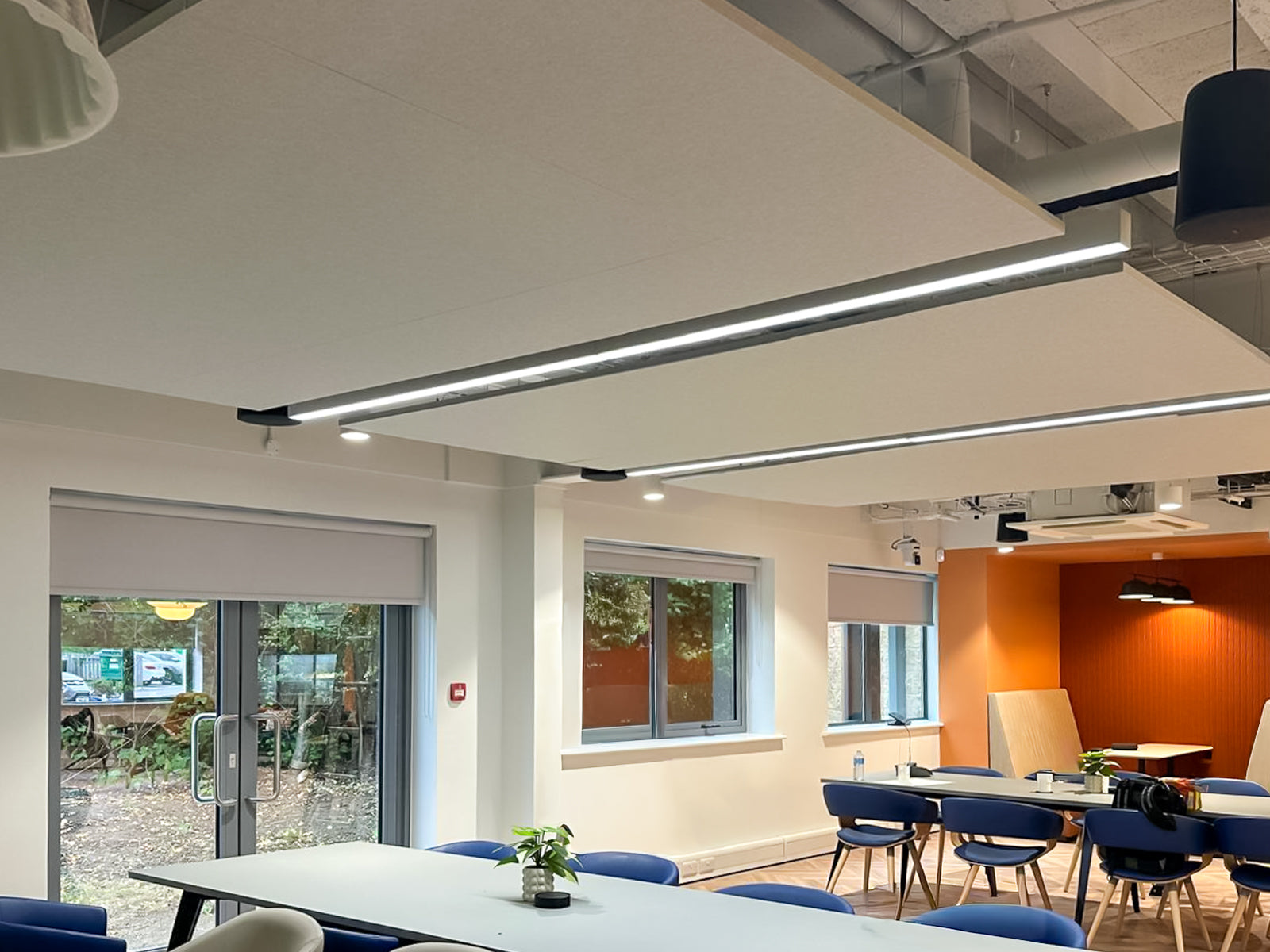
Office acoustics refers to how sound behaves within a workspace. When sound waves hit hard surfaces — concrete floors, glass partitions, painted plasterboard walls, exposed ceilings — they bounce back into the room rather than being absorbed. This creates reverberation: a build-up of reflected sound that makes the space feel louder and harder to work in.
Modern office design has made this problem significantly worse. The shift toward open-plan layouts, minimal soft furnishings, high ceilings, and hard industrial finishes has created spaces that look clean and contemporary but perform poorly acoustically. There is simply less material in these environments to absorb sound before it becomes noise.
The result is a reverberant, distracting acoustic environment that affects everyone in the room, whether they notice it consciously or not.
How noise impacts us in the workplace
Research consistently shows that noise and poor speech intelligibility are among the leading causes of lost productivity in office environments. When background noise and echo make it difficult to concentrate, employees take longer to complete tasks, make more errors, and experience greater cognitive fatigue by the end of the day.
The specific issue isn't just volume — it's irrelevant speech. Overhearing fragments of nearby conversations is one of the most disruptive forms of office noise because the brain automatically tries to process language. This process competes directly with reading, writing, and focused thinking, making it genuinely harder to do complex work.
Studies have estimated productivity losses of up to 66% on tasks requiring concentration in noisy open-plan offices. Even moderate improvements to the acoustic environment produce measurable gains in output quality and speed. Treating your office with acoustic panels is therefore not an aesthetic choice — it's a practical investment in how well your team can work.

How Noise at Work Affects Health and Wellbeing
The consequences of a poor acoustic environment go beyond productivity. Prolonged exposure to elevated noise levels is directly associated with increased stress. When the brain is constantly processing irrelevant background sound, cortisol levels rise — even when the person isn't consciously aware they're feeling stressed.
Over time, this leads to fatigue, reduced job satisfaction, and higher rates of absenteeism. Employees working in acoustically poor environments report lower overall wellbeing, greater difficulty switching off after work, and a stronger desire to leave the organisation. The link between workplace acoustics and staff retention is well established in occupational health research.
There is also a communication dimension. When reverberation is high, speech intelligibility falls. People speak more loudly to compensate, which raises the overall noise level further — a feedback loop that acousticians call the Lombard effect. This compounds both the physical noise problem and the stress it causes.
Open-Plan Offices: The Biggest Acoustic Challenge
Open-plan layouts present the most demanding acoustic conditions of any office type. With no physical barriers between workstations, sound travels freely across large areas. A conversation at one end of the floor can be clearly audible thirty metres away. Phone calls, video meetings, and informal discussions all blend into a continuous noise floor that makes focused work difficult.
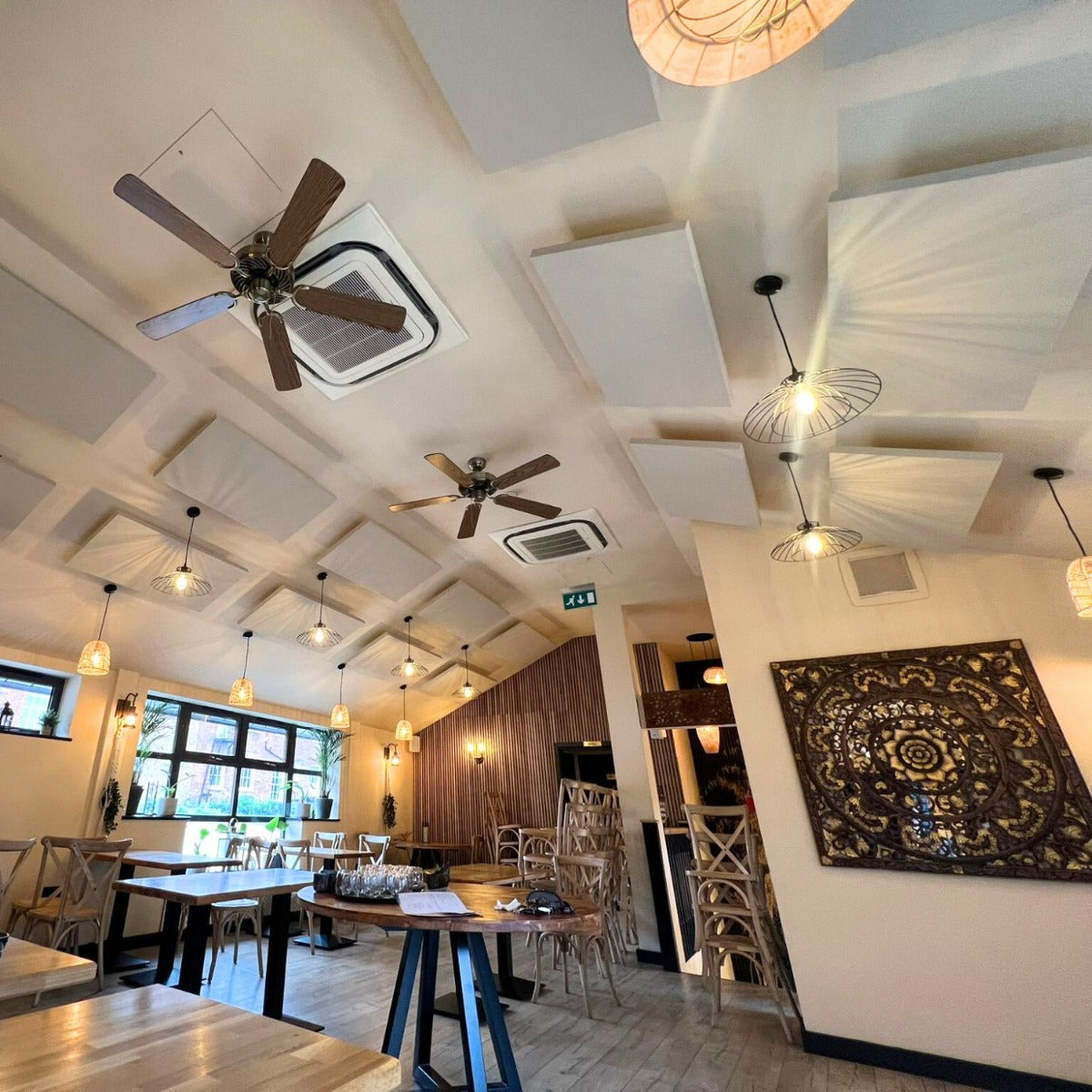
The solution in open-plan spaces requires a layered approach. Acoustic wall panels reduce reflections from the hardest surfaces in the room. Ceiling treatment — rafts, baffles, or flush-fixed panels — handles the overhead reflections that contribute most to reverberation in large, open volumes. Desk screens and partitions can reduce near-field sound transmission between adjacent workstations.
The good news is that you don't need to cover every surface. In most open-plan offices, treating 50% percent of the total hard surface area (according to BS ISO 22955:2021) delivers a significant and noticeable reduction in reverberation time. That's achievable with a well-planned combination of wall and ceiling panels.

Meeting Rooms and the Problem of Echo on Video Calls
Meeting rooms present a different but equally important acoustic problem. These are typically smaller, more enclosed spaces with hard walls, a glass screen or two, and a flat ceiling. Sound reflects rapidly between parallel surfaces, creating a flutter echo that makes speech sound harsh and reduces intelligibility for anyone in the room or joining remotely.
On video calls, poor room acoustics are immediately noticeable. Microphones pick up reflections and background noise, making speech harder to understand. Participants on the far end of a call often ask for repetition, meetings run longer, and the quality of communication suffers. This is a practical problem with a direct impact on how effectively teams work with clients, partners, and remote colleagues.
Installing meeting room acoustic panels on walls and the ceiling reduces reflections, shortens reverberation time, and significantly improves speech clarity for both in-room participants and remote callers. Panels positioned behind screens and around microphone placements are particularly effective. Materials used in meeting room panels are typically fire-safe and comply with commercial building standards, requiring minimal ongoing maintenance.

Home Offices Need Acoustic Treatment Too
The rise of hybrid and remote working has brought acoustic challenges into people's homes. A spare bedroom or kitchen table is rarely designed with sound absorption in mind. Hard floors, bare walls, and low ceilings create reflective environments that affect concentration, video call quality, and the ability to record clear audio.
For anyone working from home regularly, the acoustic environment matters just as much as it does in a commercial office. Echo makes video calls sound unprofessional and tiring. Background reflections increase cognitive load and reduce the quality of sustained focus over a working day.
Home office acoustic panels are designed to be lightweight, simple to install with adhesive strips or light fixings, and made from sustainable, non-toxic materials including recycled PET felt. They can be mounted behind a desk, along side walls, or on the ceiling to control reflections and noticeably improve how a room sounds for both calls and concentration work.
Acoustic Ceiling Panels: The Most Effective Single Treatment
Of all the surfaces in an office, the ceiling does the most acoustic damage when left untreated. Sound travels upward, reflects off a hard ceiling, and returns to the room amplified and blended with other reflections. Because the ceiling is a single large, unobstructed surface directly above every workstation and desk, treating it produces the greatest reduction in reverberation time for the square footage covered.
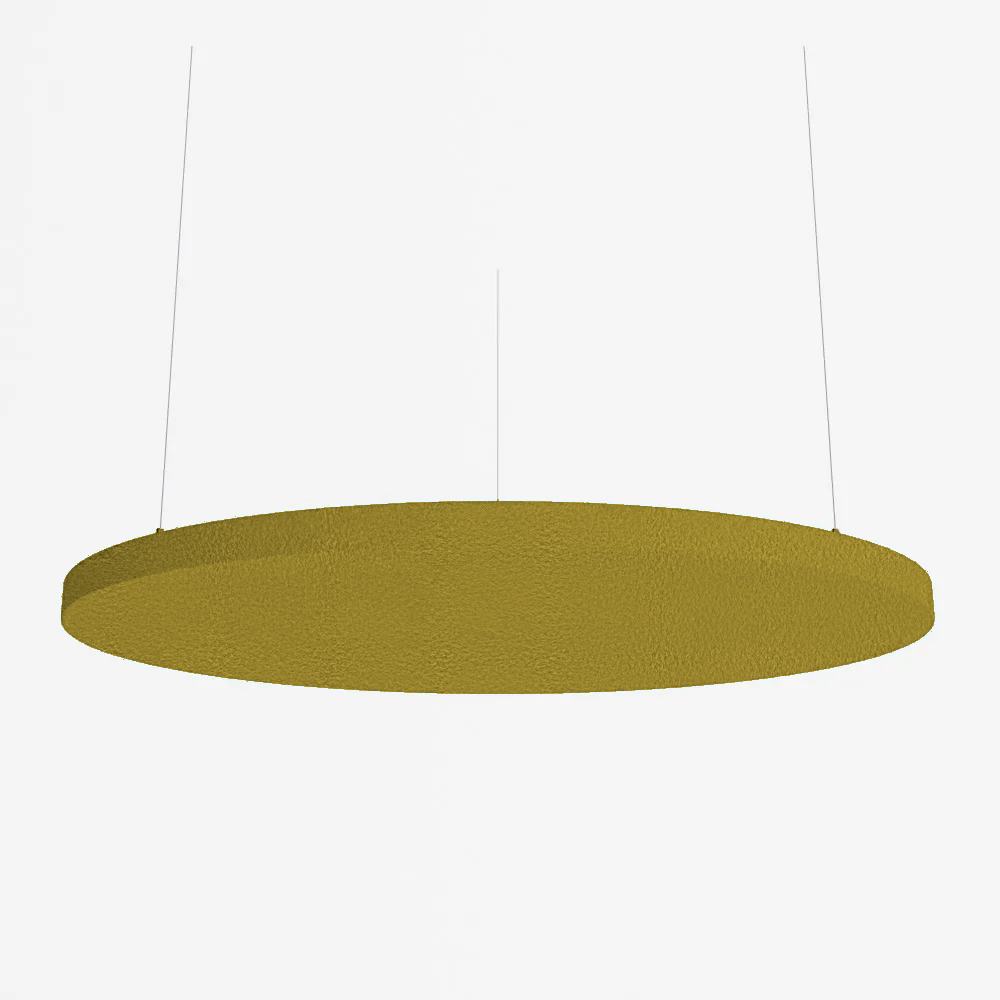
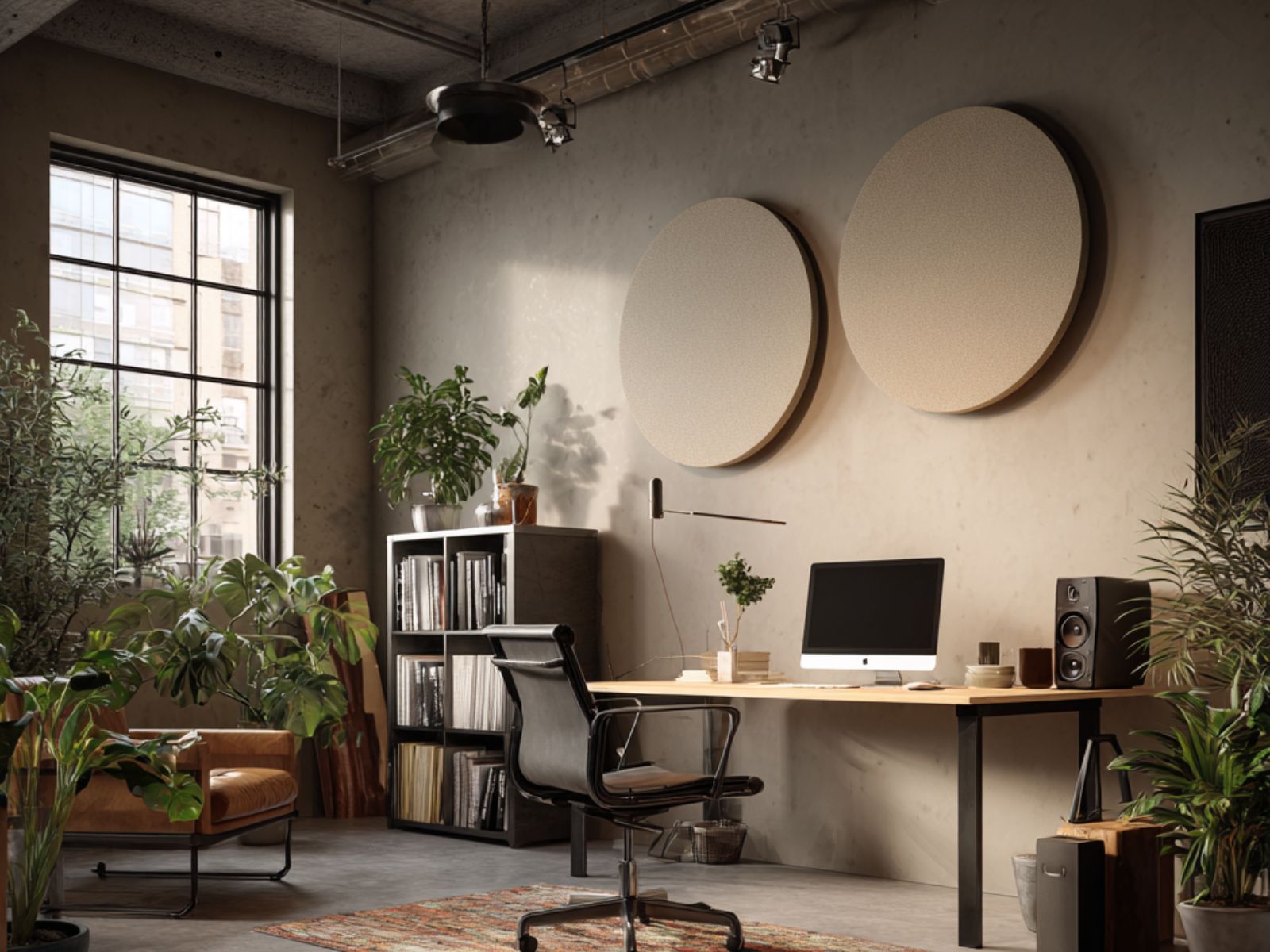
Acoustic ceiling panels are available in several formats to suit different building types. Suspended rafts hang below the structural ceiling on wire systems, making them ideal for spaces with high ceilings or exposed services. Flush-fixed panels can be adhered directly to a flat ceiling surface. Grid-drop tiles replace standard ceiling tiles in existing suspended ceiling grids.
Suspended ceiling rafts from the Ecophon Solo range are a particularly popular choice for commercial offices. The Ecophon Solo Circle, available in 800mm and 1200mm diameters at £780.00 per pack of four, provides high-performance Class A absorption on multiple faces. It works well in spaces where a full ceiling installation isn't possible, including buildings with Thermally Activated Building Systems. The Ecophon Solo Square and a range of rectangular options — including the 2400 x 1200mm rectangle and the slimmer 2400 x 600mm rectangle — offer different proportions to suit the layout of any workspace.
Acoustic Wall Panels: Flexible, Visible, Effective
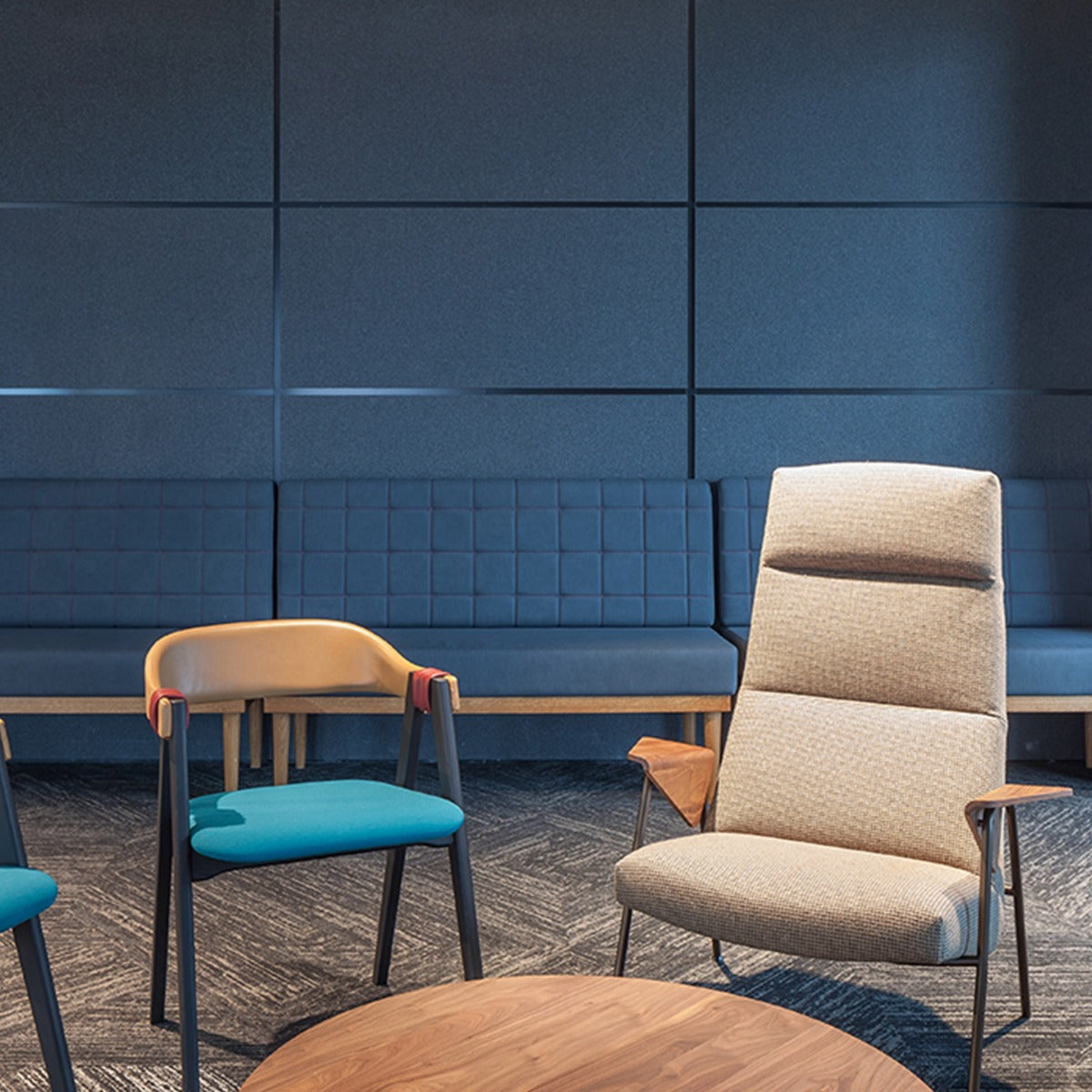
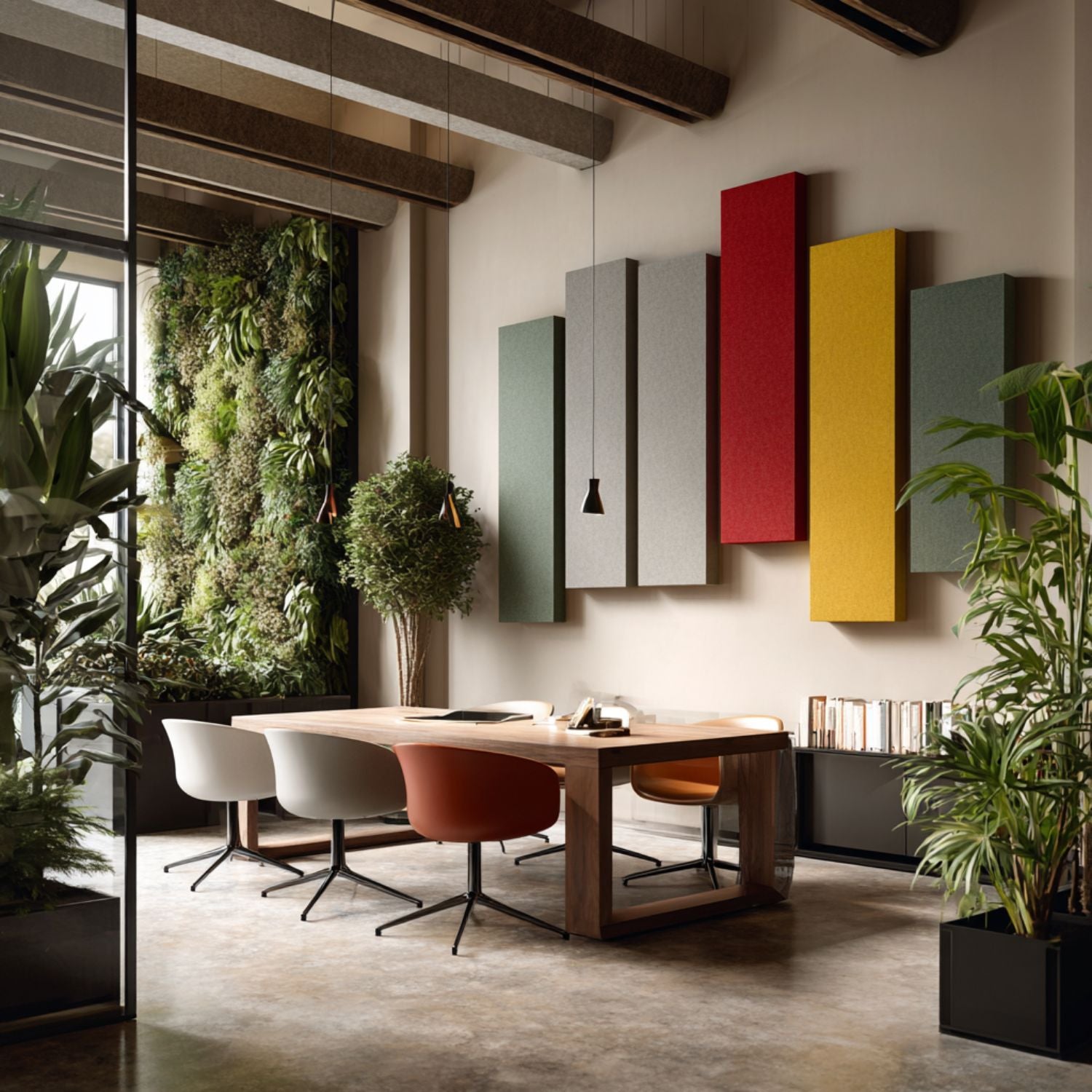
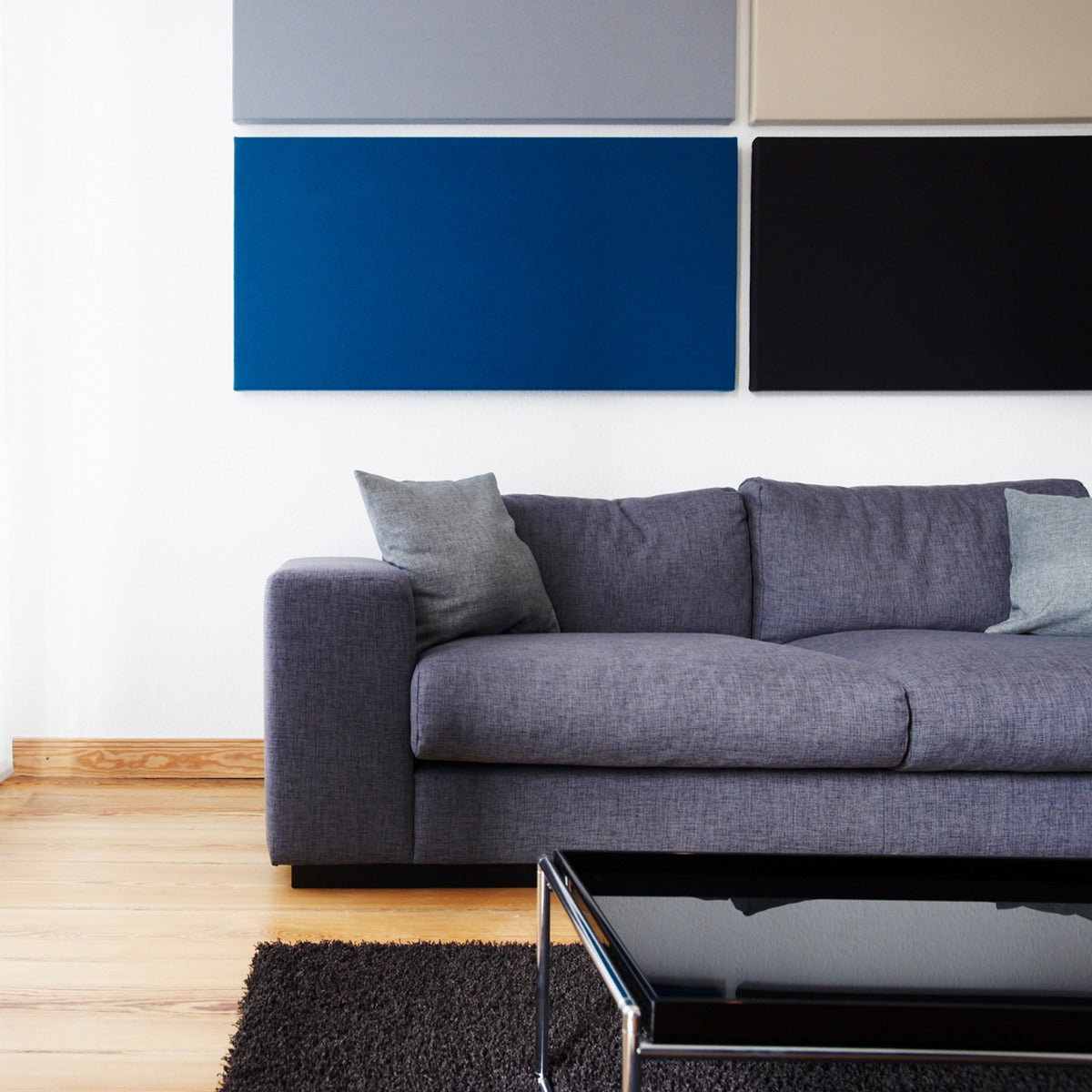
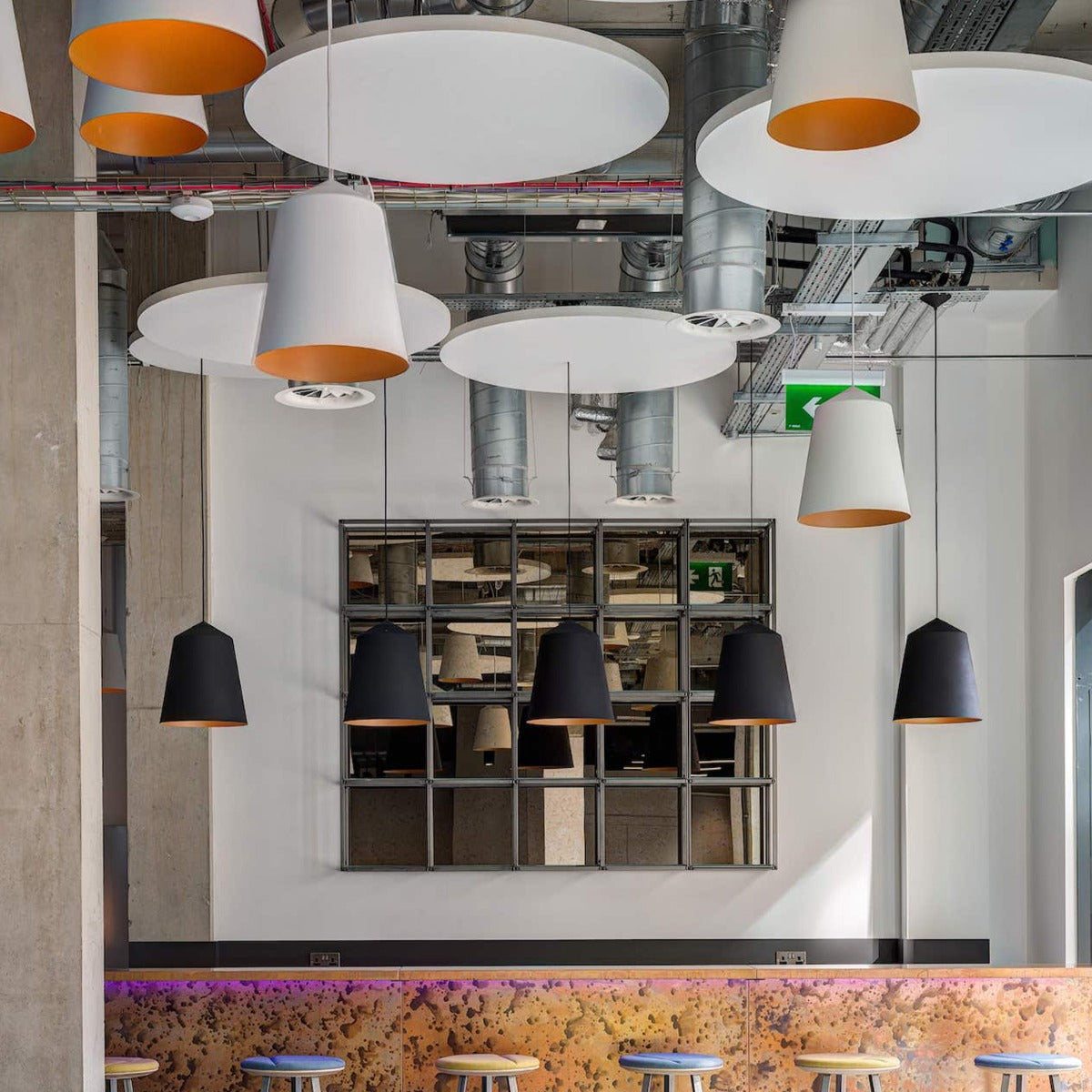
Wall panels are the most flexible element of any acoustic treatment scheme. They can be positioned in response to the specific noise problems in a room, installed around seating areas, behind screens, or along the walls that face the main working zones. Because they're visible, they also contribute to the look of the space.
The range of materials now available means there's no reason for acoustic treatment to look institutional or utilitarian. PET felt panels like the Autex Cube offer a clean, textured finish with strong sound absorption. The ReFelt Dots panels add visual interest through their cut-through patterning. For a more structured, architectural look, the Abstracta Soneo Wall panel and the Abstracta Sahara bring a premium Scandinavian aesthetic to commercial interiors.
Fabric-wrapped panels remain one of the most widely used formats in commercial offices, combining high absorption performance with a professional, neutral finish available in a wide range of colours. The Autex Quietspace panels in custom sizes are a practical option for larger installations where coverage needs to be tailored to the dimensions of a specific wall.
Design and Acoustics Don't Have to Conflict
One reason acoustic treatment gets overlooked is the assumption that functional panels will compromise the look of an office interior. This was once a reasonable concern, but it no longer applies. The products available today are designed to be part of the visual scheme, not an afterthought bolted onto it.
The Offecct Soundwave Sky panel is a good example — a designer wall panel that functions as a sound absorber while reading as a considered interior feature. The BAUX Wood Wool ceiling panels bring a warm, textured material into the ceiling plane that suits both contemporary and industrial-style offices. At the more playful end of the range, the Offecct Soundwave Botanic panel introduces organic shapes that work well in creative or hospitality-influenced work environments.
When acoustic panels are selected as part of the interior design process rather than added reactively, they contribute to a coherent, professional-looking space that also performs well acoustically.
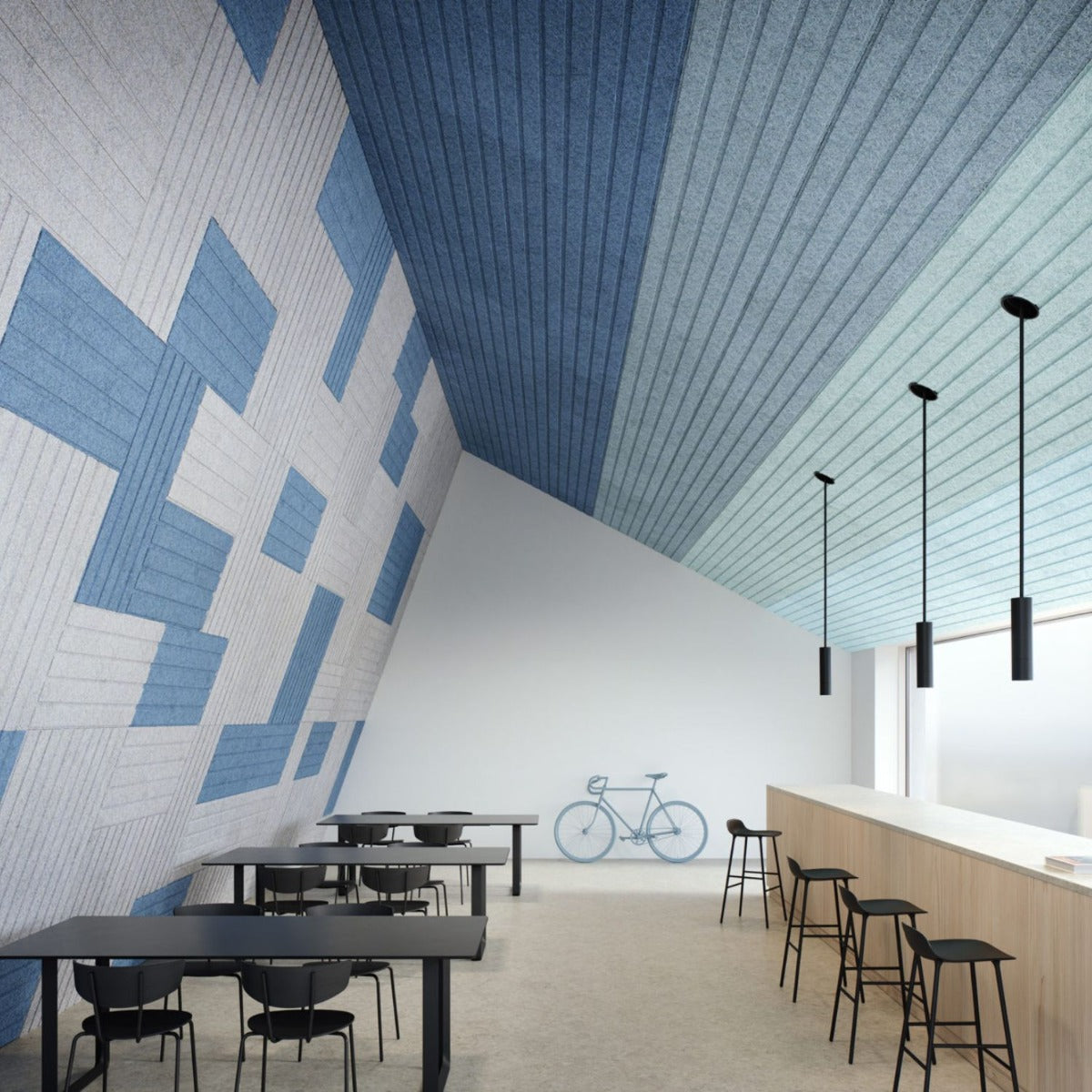
How Much Acoustic Treatment Does an Office Actually Need?
A common question is how much coverage is actually required to make a meaningful difference. The answer depends on the volume of the space, the reverberation target you're aiming for, and how much hard surface area is already present. Larger, higher-ceilinged spaces with more glass and concrete require greater coverage than smaller rooms with existing soft furnishings.
As a general guide, covering 20 to 40 percent of the total hard surface area — walls plus ceiling — in a typical open-plan office produces a significant reduction in reverberation time. In smaller meeting rooms, targeted treatment on two or three walls combined with ceiling panels is usually sufficient to reach the recommended reverberation time for speech intelligibility.
If you're unsure where to start, the SONIO acoustic calculator is a useful tool for estimating how much treatment your space requires based on its dimensions and current surface materials. It takes out the guesswork and gives you a practical starting point for planning an installation.
How Much Does Office Acoustic Treatment Cost?
Cost varies significantly with office size, ceiling height, and the level of finish you want, but the figures below give a realistic working budget for typical UK projects.
Small private offices and meeting rooms (up to 25m²) typically come in at £1,000–£2,500 for materials. This usually means treating the ceiling and one or two walls with mid-range PET felt or fabric-wrapped panels. Smaller meeting rooms can often be treated effectively for under £1,500 — and the difference on video calls is immediate.
Medium open-plan offices (50–150m²) typically range from £3,000–£7,000 for materials. The most cost-effective approach is suspended ceiling rafts, which deliver the highest absorption per panel because both faces are exposed to the room. Combining ceiling rafts with targeted wall panels in problem areas (behind banks of desks, around meeting zones, opposite glass walls) usually achieves the recommended reverberation time without treating every surface.
Large open-plan offices (200m²+) typically start around £8,000 and scale upwards. At this size, projects benefit from a proper acoustic survey before specification — partly because targeted treatment is more efficient than blanket coverage, partly because larger projects often need to demonstrate compliance with BS ISO 22955:2021 (the standard for open-plan office acoustics).
Premium and design-led projects sit at the higher end of each range. Bespoke printed panels, custom fabrics, lighting-integrated baffles, and architect-specified products from brands like BAUX or Offecct can add 30–50% to the figures above. The acoustic performance is the same as standard PET felt; what you're paying for is the visual design.
Installation is typically quoted separately and varies based on access requirements, ceiling type, and project complexity. For projects requiring scaffolding, working at height, or out-of-hours access, our sister company Resonics provides full survey, supply and install services — useful for offices that need certified compliance with BS ISO 22955:2021 or want a single point of contact for the whole project.
For your specific office, the acoustic calculator gives a tailored material list and price range based on your room dimensions and current surfaces. It takes about two minutes and gives you a realistic working budget before you talk to anyone.
Treating the Whole Office: A Joined-Up Approach
The most effective acoustic installations don't rely on a single product type. They combine ceiling treatment with wall panels, and sometimes screens or baffles, to address reflections from multiple surfaces simultaneously. Each element does a different job: ceiling rafts handle overhead reflections and reduce the overall reverberation time, wall panels absorb lateral reflections and reduce the flutter echo between parallel surfaces, and screens or partitions limit the direct transmission of sound between adjacent workstations.
For a complete overview of which treatment types work best in different office scenarios, the article on top acoustic treatments for modern offices covers the options in practical detail. You can also browse the full acoustics collection to see every product type in one place.

Frequently Asked Questions
How quickly will I notice the difference after installation?
Almost immediately — usually within hours. A typical untreated open-plan office has a reverberation time of 1.2–1.8 seconds, which feels noticeably noisy and tiring. Effective treatment brings that down to 0.5–0.8 seconds, the range recommended by BS ISO 22955:2021. The change is dramatic enough that most clients describe it as "the room sounds calmer" within the first day, even before they consciously identify why.
Will acoustic panels make my office completely soundproof?
No. Acoustic panels absorb sound within a room to reduce echo and reverberation. They don't block sound transmission between rooms or from outside. If your problem is noise leaking from one office to another, or traffic noise from outside, that's soundproofing — a different solution involving heavier construction. For a fuller explanation, see our guide to acoustic panels vs soundproofing.
Are acoustic panels safe and fire-rated for commercial offices?
Yes. Every panel we sell carries a UK/EU fire classification suitable for commercial use — typically Euroclass B-s1,d0 or higher under BS EN 13501-1. Specific ratings are listed on every product page, and certification documents are available for any project that requires them.
Can panels be installed without disrupting work?
Usually yes. Wall panels and lightweight ceiling rafts can be installed during evenings or weekends with minimal downtime. For larger commercial projects involving high ceilings or scaffolding, work is typically phased across multiple closures or scheduled around your operational calendar. Our sister company Resonics handles full-scale commercial installations across the UK and is used to working around live office environments.
Do I need to treat every surface, or can I focus on specific areas?
Targeted treatment is almost always more cost-effective than blanket coverage. The ceiling delivers the biggest single improvement in most offices because it's the largest unobstructed reflective surface. Walls behind banks of desks, around meeting zones, and opposite glass partitions are the next most valuable surfaces. As a rule, treat the ceiling first, then the walls closest to where people speak.
What's the difference between acoustic panels and acoustic foam?
Acoustic foam (the egg-crate stuff sold cheaply on Amazon) is functional but limited — it absorbs mid and high frequencies reasonably well but performs poorly at lower frequencies and tends to look amateurish in commercial settings. Professional acoustic panels — PET felt, fabric-wrapped fibreboard, mineral wool with acoustic facings — deliver substantially better absorption across more frequencies, meet commercial fire safety standards, and look appropriate in a professional workspace. For a home studio on a tight budget, foam is fine. For a commercial office, it isn't.
How do I know how many panels I need?
The general rule is that 20–40% ceiling coverage with Class A absorbers, combined with targeted wall treatment, brings most open-plan offices into the BS ISO 22955:2021 recommended range. For your specific space, the acoustic calculator gives you a tailored figure based on your room dimensions and current materials. It's the fastest way to get a realistic answer without booking a survey.
Conclusion: Good Acoustics Are a Workplace Basic, Not a Luxury
The evidence is clear: poor office acoustics reduce productivity, increase stress, and have measurable negative effects on employee health over time. These are not marginal issues. They affect the quality of work, the quality of communication, and the overall experience of being in a workplace every day.
The good news is that acoustic treatment has become more accessible, better-designed, and easier to install than ever before. Whether you're managing a large open-plan commercial office, a small meeting room, or a home workspace, there are well-proven solutions that work and products that look good doing it.
If you're ready to improve your office acoustic environment, start by exploring the full office acoustic panel range, use the acoustic calculator to estimate your coverage requirements, and consider combining ceiling panels with wall panels for a comprehensive treatment that genuinely makes a difference.


