




In a hurry? The quick version
- Noise is the No.1 diner complaint — and excess noise even dulls how food tastes. A loud room costs you in shorter visits and lost repeat custom.
- The cause is hard surfaces: exposed ceilings, bare floors, glass and brick reflect sound instead of absorbing it.
- Treat the ceiling first — rafts and baffles usually give the biggest improvement per pound.
- Then walls: SilentSpace fabric panels (Class A, from £99.95) or Autex Cube for a design-led feature.
- Use screens or acoustic lighting to create calmer zones without losing floor space.
- This is absorption, not soundproofing — the aim is a comfortable room, not a silent one. Our acoustic calculator tells you how much you need.
Updated: May 2026
Noise is the single biggest complaint diners make — ahead of slow service, cramped tables or the bill. If guests are leaning across the table, asking each other to repeat things, or leaving before dessert because they are worn out, the problem usually is not the menu or the staff. It is the room.
The good news is that a noisy dining room is one of the most fixable problems in hospitality. This guide explains what actually causes restaurant noise, how much acoustic treatment a space needs, and which products do the job — without deadening the lively atmosphere that makes a restaurant feel alive.
Why are restaurants so loud?
Modern restaurant design works against good acoustics almost by default. The look that is in fashion — exposed ceilings, hard floors, bare brick or concrete, large glazing, minimal soft furnishings — is acoustically the worst possible combination. Every one of those surfaces reflects sound rather than absorbing it.
In a room like that, sound has nowhere to go. Voices, cutlery, music and kitchen noise bounce between hard surfaces and build on top of each other. The result is a feedback loop diners know well: the room gets loud, so everyone raises their voice to be heard, which makes the room louder still. By mid-service a restaurant can be running at noise levels that genuinely tire people out.
There is also a commercial cost that is easy to miss. Research into “sonic seasoning” has found that excessive background noise measurably dulls how we perceive flavour — the same dish tastes blander in a loud room than a quiet one. A noisy dining room does not just make conversation hard; it works against the food itself.
How much acoustic treatment does a restaurant need?
The goal is not silence. A restaurant with no ambient sound at all feels awkward, and every quiet conversation carries. What you are aiming for is control — bringing reverberation down to a level where a table can talk comfortably while the room still feels busy and warm.
In acoustic terms, most restaurants want a reverberation time (RT60) of roughly 0.4–0.8 seconds. Fine dining sits at the lower, calmer end; a casual, high-energy spot can sit higher. As a practical starting point:
- Treat the ceiling first. It is usually the largest uninterrupted surface in the room and the one doing the most damage. Ceiling treatment typically does the heavy lifting.
- Then the walls — particularly large flat areas, and surfaces near hard features like open kitchens or glazing.
- Aim for meaningful coverage. Token amounts of panelling will not move the needle; effective treatment usually means covering a significant share of the ceiling or one or more major walls.
- Use our acoustic calculator to turn your room's dimensions into a specific coverage figure in a couple of minutes.
One important distinction: this is sound absorption, not soundproofing. Absorption controls echo and reverberation within the dining room so guests can hear each other. Soundproofing — stopping noise passing between rooms or to neighbouring properties — is a different, heavier construction job. Most restaurant noise complaints are absorption problems, which is the easier and far more affordable fix.
The best acoustic solutions for restaurants
1. Acoustic ceiling rafts and baffles
For most restaurants, suspended ceiling treatment is the highest-impact change you can make. Rafts hang horizontally and absorb sound on both faces, while baffles hang vertically — both work brilliantly with the exposed, high or industrial ceilings common in modern dining rooms, and neither requires a full suspended ceiling. They capture noise where it gathers, above head height, without taking up any usable floor or wall space.

- Absorb sound from above, where much of a room's noise collects
- Ideal for exposed, high or industrial ceilings
- Rafts and baffles can be arranged in patterns as a design feature
- No impact on floor space, seating capacity or wall design
Browse acoustic ceiling panels and rafts and acoustic ceiling baffles.
2. SilentSpace fabric wrapped acoustic wall panels
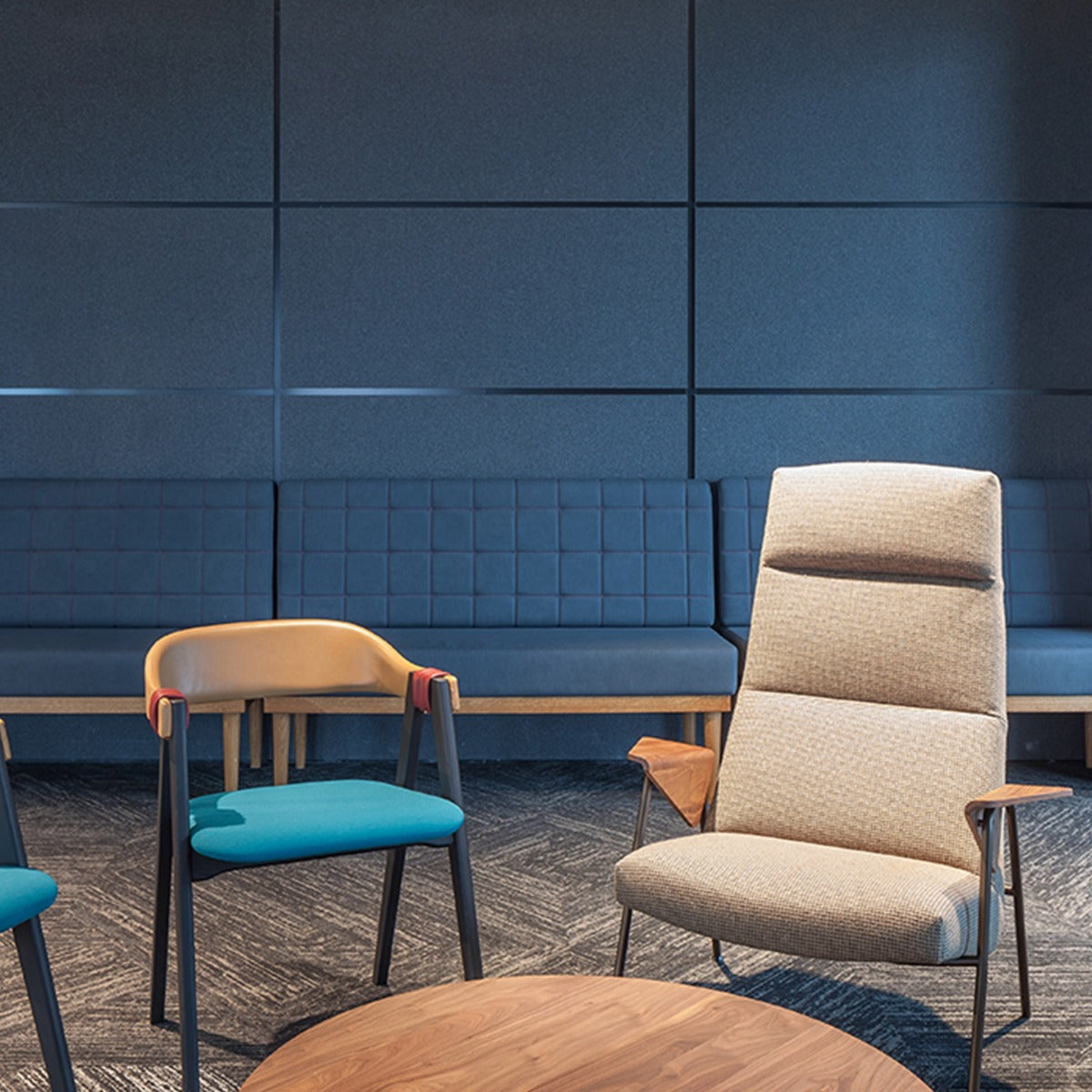
Where ceiling treatment alone is not enough, or the ceiling cannot be touched, fabric-wrapped wall panels are the natural next step. Made to order in the UK at custom sizes, SilentSpace panels can be specified to fit the wall areas you actually have, and the Class A (40mm) version delivers the highest absorption rating available. With a wide range of Camira fabric colours, they can be matched to a restaurant's interior — or made a deliberate feature of it.
- Class A (40mm) or Class C (25mm) sound absorption
- Made to order at custom sizes to suit any wall layout
- Wide palette of Camira Lucia and Sonus fabric colours
- Lightweight, with simple contact-adhesive installation

Prices start from around £99.95. View SilentSpace Rectangle Acoustic Panels or the Square format.
3. Autex Cube PET acoustic panels
For restaurants that want their acoustic treatment to be visibly part of the design, Autex Cube is a lightweight PET felt panel that can be cut, pressed, grooved and arranged into bespoke wall features. Made from polyester with a high recycled content, it suits the colour-led, design-conscious look of contemporary casual dining, and installs directly to the wall with no framing or finishing required.
- Lightweight PET felt with a minimum 60% recycled content
- Cut, shaped and arranged into custom wall features
- Wide range of solid colours; low VOC and non-toxic
- No framing needed — trimmed and installed directly on site

View Autex Cube PET Acoustic Panels.
4. Acoustic screens and hanging dividers
Screens solve a specific restaurant problem: they create quieter zones within an open room. A free-standing or hanging screen can break up a large dining space, soften the noise spilling from a busy section, and give a particular table or booth a greater sense of acoustic privacy — what designers call “acoustic intimacy.” They are also movable, which suits restaurants that reconfigure their layout for different services or events.
- Create calmer zones within an open dining room
- Hanging and free-standing options to suit different layouts
- Movable — useful for spaces that reconfigure regularly
- Double as visual dividers between sections or booths

Browse the acoustic screens range.
5. Acoustic lighting
Acoustic lighting does two jobs at once: it lights the space and absorbs sound. For restaurants where ceiling space is at a premium, or where the design calls for statement pendants over tables and bars anyway, it is an efficient way to add absorption without adding any extra visible “acoustic” hardware. It is a neat fit for dining rooms where every element is expected to earn its place aesthetically.
- Combines lighting and sound absorption in one fitting
- Adds absorption without extra ceiling clutter
- Statement pendants work well over tables and bar areas
- Keeps the acoustic treatment visually intentional

Browse the acoustic lighting range.
A practical plan for fixing a noisy restaurant
If you run a restaurant and want to tackle the noise, a sensible order of attack:
- Listen at peak service. Walk the room when it is full and note where it is worst — near the kitchen, under a hard ceiling, against a glazed wall.
- Start with the ceiling. It is usually the biggest win per pound spent. Rafts or baffles above the busiest section first.
- Add wall panels where needed. Target the large flat surfaces and the areas closest to hard features.
- Use screens for problem zones. A specific noisy corner or an exposed table is often best solved locally.
- Phase it if budget is tight. Acoustic treatment works cumulatively — you will hear an improvement after the first stage, and can add more later.
- Match the look. With the colour and format choice available now, panels can complement the interior rather than compromise it.
Not sure how much you need? Our acoustic calculator gives a tailored recommendation from your room dimensions, and ordering a sample first lets you check colours against your interior before you commit.
The bottom line
A noisy dining room costs a restaurant in ways that are easy to underestimate: shorter visits, lower spend, guests who do not return, food that tastes less of itself, and staff working a tiring shift in a wall of sound. Acoustic treatment is one of the highest-return improvements an owner can make — relatively low cost, quick to install, and felt by every guest from the first service.
Done well, it does not make a restaurant quiet. It makes it comfortable: a room that still feels busy and alive, but where a table can actually talk, laugh and enjoy the meal.
Ready to fix yours? Try our acoustic calculator, browse the full restaurant and bar acoustics collection, or contact our team for free acoustic advice tailored to your space.


